Van's Air Force

The definitive Van's Aircraft support community! Buying, building or flying an RV? Join our exclusive family of mentors and enthusiasts!

Oil Cooler shutter pictures?

Iluke

Well Known Member
Patron
I'm getting ready to order (once they are available again) and install an Anti-splat oil cooler shutter in my RV-7 (XIO-360 with cooler in stock position behind #4). I'd benefit from seeing photos of someone else's installation. If you have one and have pictures to share I'd appreciate it. If they are on your builder's log, just point me n that direction.

thanks
Ivan
 
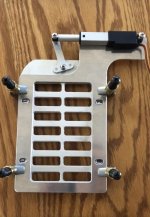
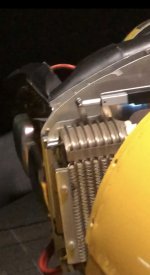
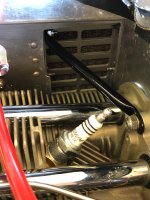
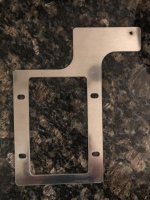
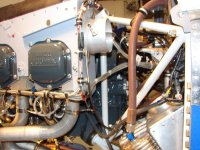
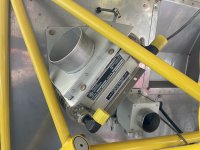
I cut a bracket on our water jet to go between the shutter and my cooler to mount a servo on (originally), but have since replaced the servo with a cable using the same bracket. Pretty simple and very effective and dialing in the oil temp you want. I actually use it all year round.
 

Attachments

  • Cooler 3.jpg
    Cooler 3.jpg
    153 KB · Views: 125
  • Cooler 2.jpg
    Cooler 2.jpg
    127.4 KB · Views: 117
  • Cooler 1.jpeg
    Cooler 1.jpeg
    1.4 MB · Views: 107
  • Cooler 4.jpg
    Cooler 4.jpg
    1.2 MB · Views: 113
I cut a bracket on our water jet to go between the shutter and my cooler to mount a servo on (originally), but have since replaced the servo with a cable using the same bracket. Pretty simple and very effective and dialing in the oil temp you want. I actually use it all year round.
 

Attachments

  • RV10 oil shutter.jpeg
    RV10 oil shutter.jpeg
    259.5 KB · Views: 93
My 2c, unless you fly in sub-freezing temps, the Vernatherm should effectively manage oil temps without the need for a shutter.
The downside is it also blocks air if you need additional cooling (ie: you live in PHX or TX)
 
My plane which has a Lycoming Clone IO-360 : even with a verified properly operating Vernatherm, needs it's Antisplat oilcooler shutter, to get a proper oil temperature.
 
My plane which has a Lycoming Clone IO-360 : even with a verified properly operating Vernatherm, needs it's Antisplat oilcooler shutter, to get a proper oil temperature.
Just for my education - which variant of IO-360? AV or PV and by extension, oil squirters or not?
 
My plane which has a Lycoming Clone IO-360 : even with a verified properly operating Vernatherm, needs it's Antisplat oilcooler shutter, to get a proper oil temperature.
What gauge do you have and what do you consider a “proper” temperature?
(The desired oil temperature range for Lycoming engines is from 165˚ to 220˚ F.)
 
Last edited:
I like to see 180 to 200F. If I see more than 200 during climb, I open the shutter a bit. I like these temps because I feel they help to burn of any moisture.
 
Just for my education - which variant of IO-360? AV or PV and by extension, oil squirters or not?
PV 180HP with piston oil squirters like a 200HP AV has. Up draft sump. Bendix FI. One mag+ one P-Mag. Originally assembled by Mattituck as a AM4 and changed to FI and a hollow crank so I could use a CS prop.
 
I'm getting ready to order (once they are available again) and install an Anti-splat oil cooler shutter in my RV-7 (XIO-360 with cooler in stock position behind #4). I'd benefit from seeing photos of someone else's installation. If you have one and have pictures to share I'd appreciate it. If they are on your builder's log, just point me n that direction.

thanks
Ivan
Let us know a little more of your engine. Angle valve or parallel valve makes a huge difference. Oil squirters the same.

As others have mentioned a shutter vs and flapper is a big difference in air flow. I prefer a flapper.
 
An oil cooler shutter is an absolute necessity on my 9, I struggled to get oil temps into the Lycoming limits, spoke to lycoming and they advised a shutter. The vernatherm still allows a percentage of oil through the cooler when cold and this needs to be blocked by the shutter.
Since fitting the shutter I have complete control all year round of my oil temp, and it gets the oil up to correct temp on start up quicker too.

(All temp probes G3X and verified to be reading correctly.)
 
Let us know a little more of your engine. Angle valve or parallel valve makes a huge difference. Oil squirters the same.

As others have mentioned a shutter vs and flapper is a big difference in air flow. I prefer a flapper.
Mine is the stock parallel valve experimental IO-360 purchased through vans. Flying now for 4 years, about 350 hours. It has always run cold, as lo as 125F with OATs in the 30s -40s and never more than 185F with OAT at 90F. I've been using tape to block the oil cooler in the winder and taking the tape off when it warms up, but I'm tired of that routine and want to be able to control flow from the cockpit. I have scrupulously verified that my oil temp sensor is accurate. I am considering removing and testing the vernatherm, but it seem rare for them to fail in the extended position. More often vernatherm failures result in high oil temps. So I'm ging to order the Anti-Splat shutter and install it and see how that works. I'm just looking for installation photos to review before I start.

 
Mine is the stock parallel valve experimental IO-360 purchased through vans. Flying now for 4 years, about 350 hours. It has always run cold, as lo as 125F with OATs in the 30s -40s and never more than 185F with OAT at 90F. I've been using tape to block the oil cooler in the winder and taking the tape off when it warms up, but I'm tired of that routine and want to be able to control flow from the cockpit. I have scrupulously verified that my oil temp sensor is accurate. I am considering removing and testing the vernatherm, but it seem rare for them to fail in the extended position. More often vernatherm failures result in high oil temps. So I'm ging to order the Anti-Splat shutter and install it and see how that works. I'm just looking for installation photos to review before I start.

Sounds like you are the candidate to need one. I have a flapper (TCW butterfly) on the 14 and 10 so pics probably would not help. On the 14 hardly ever needed (angle valve with oil squirters) and if so, just on the ground to warm the oil up quicker on a cold Ohio winter morning. (Plans oil cooler, 4 in SKEET tube) The 10 I use the oil cooler flapper to help reduce CHT's on climb especially on a hot Florida day. I see ~25 deg F reduction in CHT's when I do this vs leaving the flapper open. Typically, I can get to ~ 3,000 to 4,000 ft before the oil gets to 200 F and then I open the flapper and let the cooler air at altitude cool the engine and oil. (Going LOP helps) Also 4 in SKEET tube with plans oil cooler. Good luck !
 
My 2c, unless you fly in sub-freezing temps, the Vernatherm should effectively manage oil temps without the need for a shutter.
The downside is it also blocks air if you need additional cooling (ie: you live in PHX or TX)
I use the shutter even in summer months when flying up high where it's cold and I can't get the oil temps up to 180F. It's simple and very effective.
 
I probably missed it, but where is your oil cooler and which one?
I have a 4" flange on the #4 baffle. Flange has a butterfly valve to Bowden control. Most of the time it's barely open. Totally closed, I get 220 so I leave it cracked and manage it in flight. So far it's not been more than 1/2 open. I have a remote RV10 cooler.
 
My vernatherm seems to open at 187*. I installed a shutter and have since removed it. Below 187*, opening or closing the shutter had no effect on oil temperature. Above 187* closing the shutter raised the temperature. Opening the shutter lowered the temp to 187*, where it stayed.
 
My vernatherm seems to open at 187*. I installed a shutter and have since removed it. Below 187*, opening or closing the shutter had no effect on oil temperature. Above 187* closing the shutter raised the temperature. Opening the shutter lowered the temp to 187*, where it stayed.
Sounds about right... 86°C => 186.8°F
 
My 2c, unless you fly in sub-freezing temps, the Vernatherm should effectively manage oil temps without the need for a shutter.
The downside is it also blocks air if you need additional cooling (ie: you live in PHX or TX)
That is why I went with a butterfly valve. It is closed at first start and only opened when warning appears on screen.

This allows more airflow to keep head temps down during departure..... Way more important than cooling oil during this time.
 
Back
Top