Van's Air Force

The definitive Van's Aircraft support community! Buying, building or flying an RV? Join our exclusive family of mentors and enthusiasts!

Concerning Compression Check?

At every condition inspection the compressions on my 912 ULS have showed at least 79/80 on all 4 cylinders. I just had the condition inspection done this year and they were 78 74 72 76. The engine had a little over 560 hours on it. Is this something to be concerned about? I haven't talked to my A&P about it yet as I'm picking the plane up tomorrow and he had sent me the numbers through text. I'm hoping he did the check while the engine was cold and this is the reason for the lower numbers.
 
I wouldn’t worry about it.
I have found the Rotax 912 engines to be a bit fickle at times regarding compression.

I do not know the reason, but I have seen instances where after an engine has sat for a bit, turning the prop by hand feels like compression is low in some cylinders, but run it for just a few minutes and they are totally back to normal.
 
Last edited:
My advice would be the same as Scott's. Something weird was going on with the test, your speculation about it being done cold could be the answer. It could also be something wrong with the test equipment, or an impatient mechanic being sloppy about TDC but seeing 'good enough' to proceed. Some guys that work on Rotax a lot end up seeing the compression test as just 'checking the box'.

The strongest indicator for me that it's the test and not the engine, is suddenly getting variance like that across multiple cylinders. I understand that would generally be a cause for legitimate concern on legacy GA engines, but it's a little different way of thinking with the 912.

If you really need to feel better about it you could always test again under different circumstances. Keep flying, ask around, you'll eventually come across someone with the tester who's willing to run through it with you.
 
I asked Lockwood about cold vs. warm engine for compression testing and was told the tolerances are so tight between the cylinder and piston that it would pass the test without rings. I’ve tested mine twice now cold with 79/80 or 80/80 readings for all cylinders. I’ll be doing my third one at 600 hrs this coming week, so hope to continue that trend.
 
I haven't talked to my A&P about it yet as I'm picking the plane up tomorrow and he had sent me the numbers through text.
Is this the first Rotax compression check for this A&P? The Rotax requires a different set of gauges than other engines and should be performed at 87 psi.

79/80 would be seen as an error/unbelievable for an A&P that sees Lycomings every day. I see 79/80 every single check.
 
Is this the first Rotax compression check for this A&P? The Rotax requires a different set of gauges than other engines and should be performed at 87 psi.

79/80 would be seen as an error/unbelievable for an A&P that sees Lycomings every day. I see 79/80 every single check.
He's known as the Rotax guy in my area. He did my condition inspection last year too. He told me he just did it cold though and it wasn't acceptable numbers cold he would have done it hot
 
He's known as the Rotax guy in my area. He did my condition inspection last year too. He told me he just did it cold though and it wasn't acceptable numbers cold he would have done it hot
For trending purposes, wouldn't you want always the hot or always the cold?
 
Is this the first Rotax compression check for this A&P? The Rotax requires a different set of gauges than other engines and should be performed at 87 psi.
I believe this is incorrect.
The orifice size that Rotax specifies is the same as the size specified for Lycoming
The only difference is the rotax specified reference pressure is 87 psi instead of 80.
 
It could also be possible that several ring gaps became aligned causing the lower numbers, a 5-10 minute run will mix them up again. I have had that exact same set of numbers. After a rerun they were fine.
 
The orifice size that Rotax specifies is the same as the size specified for Lycoming

Compression 912.jpg

Lycoming uses a 0.04 orifice? I already had a "regular" differential compression gauge and was told by Lockwood that I needed to buy a 0.04 in gauge set.
 
I believe this is incorrect.
The orifice size that Rotax specifies is the same as the size specified for Lycoming
The only difference is the rotax specified reference pressure is 87 psi instead of 80.
One should always be wary of contradicting Scott but here goes! :)

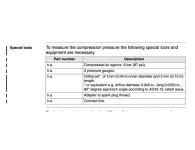
The Rotax Line Maintenance Manual Rev 2 Ed. 04 (June 01 2025), which is the latest I've been able to find, still shows using 80 - 87 psi.

1777212971123.png

From everything I've seen both are OK. Of course 80 psi is what is commonly used in the US. I suspect 87 psi is used elsewhere because 87 psi is 6.0 bar, a nice even number that someone chose.
 
I don't know much of nuttin about Rotax but at our Rainbow Aviation LSRI course they said anyone who says a Rotax compression reading of x/80 also doesn't know much of nuttin about Rotax.
 
I don't know much of nuttin about Rotax but at our Rainbow Aviation LSRI course they said anyone who says a Rotax compression reading of x/80 also doesn't know much of nuttin about Rotax.
At the Lockwood training class Dean Vogel says either 80 or 87 is fine. The official Rotax Line Maintenance Manual says 80 to 87 is fine. If you have something more authoritative than the official Rotax manual that says 87 is the only proper pressure then please point me to it. So far all I have heard is hearsay.
 
At the Lockwood training class Dean Vogel says either 80 or 87 is fine. The official Rotax Line Maintenance Manual says 80 to 87 is fine. If you have something more authoritative than the official Rotax manual that says 87 is the only proper pressure then please point me to it. So far all I have heard is hearsay.
Interesting there's a difference we're hearing from reputable sources. Brian at Rainbow Aviation also stated during my LSRI course that Rotax used a different orifice in the compression tester than is used on Lycomings.
 
Interesting there's a difference we're hearing from reputable sources. Brian at Rainbow Aviation also stated during my LSRI course that Rotax used a different orifice in the compression tester than is used on Lycomings.
Look closely at the text in the snip from the manual posted above. Technically it's true that a different orifice is specified by Rotax since there is a difference in length. The standard length orifice is also approved.
 
Seems we have had this conversation before. I tend to be a by the book person and in the IRMT course I attended which was being audited by Rotax, 87 psi was definitely stated to be used. It was also made clear that what we call "compression check" was actually a differential pressure leak down test. The reason given for 87 psi base pressure was the inherent close tolerances in the cylinder and piston fit make it possible no measurable leak-by would occur at 80 psi. A pure compression check is a dead end maximum pressure generated by the cylinder and the manual describes that test as well for diagnostic purposes. The normal compression test result should be 103-174 psi with no more than a 2 psi difference between cylinders. The absolute minimum compression test value allowed is 87 psi. (sound familiar?) A twisted crank (Rotax uses multi-piece press fit and pinned cranks) can result in enough timing difference that a valve may leak even though piston is at TDC. This is another notable difference in Rotax service vs Lycoming. A bad leak down test in a Rotax may be be more complex than just a bad cylinder. Yes the test should be always done with the engine warmed to an operating oil temp. No cold tests!
 
One should always be wary of contradicting Scott but here goes! :)

The Rotax Line Maintenance Manual Rev 2 Ed. 04 (June 01 2025), which is the latest I've been able to find, still shows using 80 - 87 psi.

View attachment 116098

From everything I've seen both are OK. Of course 80 psi is what is commonly used in the US. I suspect 87 psi is used elsewhere because 87 psi is 6.0 bar, a nice even number that someone chose.
I was going from memory and 87 is what I have always used, but I think my statement was still mostly correct about it being the only difference…. Because it is a difference. 😏

I guess the important thing to keep in mind is to be sure the same reference is always used if it is not always the same person doing the test.
 
Back
Top