

Van's Air Force
You are using an out of date browser. It may not display this or other websites correctly.
You should upgrade or use an alternative browser.
You should upgrade or use an alternative browser.
RV9 ALTERNATOR-replacement suggestion
- Thread starter richpezz
- Start date


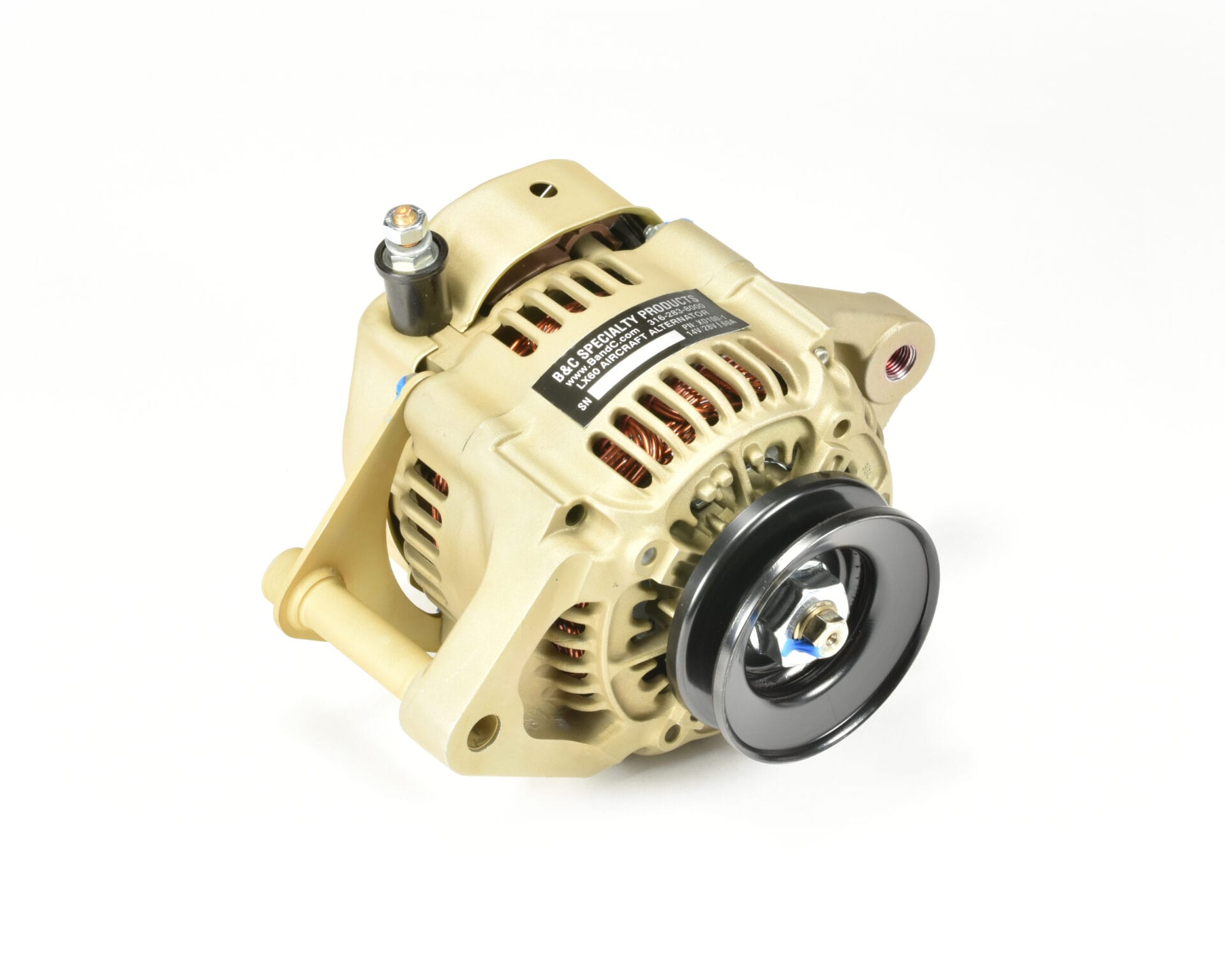
LX60 Alternator SYSTEM, 60 Amps (Homebuilt) - B&C Specialty Products
An unshakable commitment to excellence and an unchanging focus on providing genuine value — those are the roots of our new LX60 Alternator. Built on the reliability of our acclaimed L-60 and the superior efficiency of our BC460-H, the LX60 combines robust 60A output and unmatched durability in...
 bandc.com
Pretty easy choice.
Thanks Peter, we will go in that direction!LX60 Alternator SYSTEM, 60 Amps (Homebuilt) - B&C Specialty Products
An unshakable commitment to excellence and an unchanging focus on providing genuine value — those are the roots of our new LX60 Alternator. Built on the reliability of our acclaimed L-60 and the superior efficiency of our BC460-H, the LX60 combines robust 60A output and unmatched durability in...
Pretty easy choice.
Thanks Brian. What would cause an alternator to fail? I’m not savvy when it comes to electrical issues?Without understanding root cause, you're destined to repeat the experience...just sayin'

What alternator type and mount is currently on the airplane, when was the airplane completed, and did it use Vans FWF kit? You might need to replace the mount too depending on what you have. At one time, Vans supplied the Nippon Denso Lester #14684 (1985-1989 Suzuki Samurai), 60A internally regulated alternator with their FWF kits for the RV-7/A, RV-8/A and RV-9/A but then switched to the Plane Power alternator. I've been running my original Nippon Denso for nearly 22-years now, and it's still running very strong. The only thing I've done is replace the V-Belt -- very reliable low cost alternator for under $200 brand new. B&C make excellent alternators and starters but are pricey. And, Plane Power alternators don't have a very good reputation for reliability.
I tend to agree. Having a root cause is nice, but these things die for many different reasons and determining which one is not really relevant IMO. The PP's seem to have relatively poor reliability when compared to either the auto versions or the B&C, both at a fraction of the cost. I would just move away from PP and don't look back. Its pretty rare to have something wrong in your electrical system that will cause an alt to fail. B&C will also repair their units and sell parts. PP wants you to buy a new one each time they fail. Though apparently they do sell the VR/brush assy.What alternator type and mount is currently on the airplane, when was the airplane completed, and did it use Vans FWF kit? You might need to replace the mount too depending on what you have. At one time, Vans supplied the Nippon Denso Lester #14684 (1985-1989 Suzuki Samurai), 60A internally regulated alternator with their FWF kits for the RV-7/A, RV-8/A and RV-9/A but then switched to the Plane Power alternator. I've been running my original Nippon Denso for nearly 22-years now, and it's still running very strong. The only thing I've done is replace the V-Belt -- very reliable low cost alternator for under $200 brand new. B&C make excellent alternators and starters but are pricey. And, Plane Power alternators don't have a very good reputation for reliability.
Last edited:

This! Head to Autozone or O’Reilly Auto, get one for these for 125-ish bucks and don’t look back. Plus, lifetime warranty… at least for my Autozone unit.…Vans supplied the Nippon Denso Lester #14684 (1985-1989 Suzuki Samurai), 60A internally regulated alternator with their FWF kits for the RV-7/A, RV-8/A and RV-9/A but then switched to the Plane Power alternator. I've been running my original Nippon Denso for nearly 22-years now…
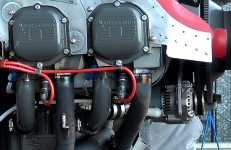
If it's the Nippon Denso Lester #14684 (1985-1989 Suzuki Samurai), 60A internally regulated alternator, it would look exactly like this. The B&C and Plane Power should both have nameplates. But, the Nippon Denso from Vans I don't believe did. You can get these nearly anywhere that sells auto parts.
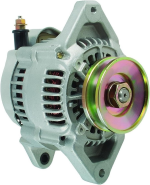
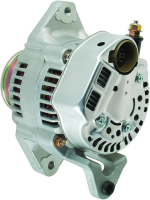
If you already have a Nippon Denso Lester #14684, you will need a new mounting system to install a B&C. Here's what my Nippon Denso install looks like. However, it looks like the B&C LX60 comes with a Lycoming Alternator mount. "Each LX60 includes either Boss-mount or Case-mount brackets for Lycoming engines, attachment hardware, belt tension arm & belt, and a pre-wired field connector assembly".We greatly appreciate all the valuable input! It appears B&C is our top choice albeit there are many other options.
Also, I think the B&C requires a separate external regulator (doesn't come with the B&C alternator), whereas the Nippon Denso is fully internally regulated.
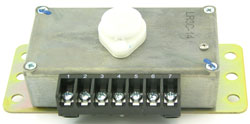
B&C Model LR3E-14 Linear Regulator - 14V | Aircraft Spruce ®
B&C Model LR3E-14 Linear Regulator - 14V More than a voltage regulator, LR3D is an alternator control system. This combination of features is normally available only as separately purchased and installed items.
Last edited:

Only one of the alternator failures I've seen were electrical in nature and that was a secondary failure mode. I've done a few autopsies and posted the results on here -- search for "Thoughts on Plane Power".Thanks Brian. What would cause an alternator to fail? I’m not savvy when it comes to electrical issues?
In a nutshell here they are:
1. Pin&Wire interface fatigue failure - inside the 3 pin plug at the back of the alternator. This is caused by vibration and a cost reduction by Hartzell omitting the rubber isolators on the wires
2. Heat induced regulator failure
3. Heat induced rectifier failure
4. Heat and Installation error induced rear bearing/case-bracket (SRE) failure
5. Builder modification errors, loose screws upon reassembly.
Resolutions/Remediations:
1. Easy fix - add the isolators or fill the cavities with neutral cure silicone (eg. GE Silicone II)
2. & 3. fixes -
* add a 1" blast tube pointed at the back of the alternator -- as required by the installation instructions from Hartzell/Plane Power - builders tend to skip this.
* If a crossover exhaust header runs underneath/behind the alternator (IO-360-B, M engines with Crossover exhaust) - put a Heat Shield on the header...keep the alternator from "seeing" that heat.
4. Pulley tension & alignment -- not too tight, not too loose, and 0 degrees misalignment of the belt.
5. Nuts/Screws tight?
6. Terminations solid and secure? <100mOhm resistance between Battery (-) and Engine/Alternator case?
Heat shield -- good man...If you already have a Nippon Denso Lester #14684, you will need a new mounting system to install a B&C. Here's what my Nippon Denso install looks like.
View attachment 114926
Anywhere along the back-side of the alternator that faces an exhaust stack, I installed heat shields. Excessive heat can kill an alternator, especially on the rectifier/regulator side of an internally regulated alternator like this.Heat shield -- good man...
Last edited:
I tend to agree. Having a root cause is nice, but these things die for many different reasons and determining which one is not really relevant IMO. The PP's seem to have relatively poor reliability when compared to either the auto versions or the B&C, both at a fraction of the cost. I would just move away from PP and don't look back. Its pretty rare to have something wrong in your electrical system that will cause an alt to fail. B&C will also repair their units and sell parts. PP wants you to buy a new one each time they fail. Though apparently they do sell the VR/brush assy.
"Those who cannot remember the past are condemned to repeat it."
As to the plane power reliability question, I just don't see that in the data (factual and anecdotal) -- it's not like these units are spontaneously failing. Analysis of all the failure modes reported *always* points to one or more of the causes in the pareto I posted in the prior reply...
Yes -- and since the B&C has an external regulator, you can mount that in a cooler location. However, I believe the B&C still has an internal rectifier but with an external regulator, so probably still need to keep the backside of a B&C from excessive heating due to the cross-over exhaust stack proximity."Those who cannot remember the past are condemned to repeat it."
As to the plane power reliability question, I just don't see that in the data (factual and anecdotal) -- it's not like these units are spontaneously failing. Analysis of all the failure modes reported *always* points to one or more of the causes in the pareto I posted in the prior reply...
B&C Model LR3E-14 Linear Regulator - 14V | Aircraft Spruce ®
B&C Model LR3E-14 Linear Regulator - 14V More than a voltage regulator, LR3D is an alternator control system. This combination of features is normally available only as separately purchased and installed items.

Last edited:

There is this poll. It’s a little old and there’s the statistics issues but:"Those who cannot remember the past are condemned to repeat it."
As to the plane power reliability question, I just don't see that in the data (factual and anecdotal) -- it's not like these units are spontaneously failing. Analysis of all the failure modes reported *always* points to one or more of the causes in the pareto I posted in the prior reply...
44 percent of the people using Plane Power report failures
2 percent of the people using B&C reported failures
Alternator Reliability Poll
That's either due to the fact that they almost never OV in the first place or the OV protection within the IR is really good. Apparently some OEMs include overvoltage protection with Denso alternators. Example below, first pop up in a Google search... .
vansairforce.net
The poll doesn’t take into account the installed base of each type, therefore you cannot determine the quality or reliability of either.There is this poll. It’s a little old and there’s the statistics issues but:
44 percent of the people using Plane Power report failures
2 percent of the people using B&C reported failures
Alternator Reliability Poll
That's either due to the fact that they almost never OV in the first place or the OV protection within the IR is really good. Apparently some OEMs include overvoltage protection with Denso alternators. Example below, first pop up in a Google search... .vansairforce.net
If you knew the actual installed units of each type, then you could determine relative failure rates.
It's nice to know that B&C makes an internally regulated alternator (SF601) and for less money ($595), too. However, that model looks very much like my Nippon Denso Lester #14684, which costs $150 and also has great reliability!I would recommend you talk to TJ at bandc. LX60 is great but it would not fit my cowl. He is super helpful. You can send him pics of the cowl and he can tell you if LX60 fits or if SF601 (internal regulator) is a better fit.
BoydBirchler
Well Known Member
I replaced my 800+ hour PlanePower with an Indy Alt, alternator with over volt. It runs an unwavering 14.2 volts. I am very satisfied with the unit. It was easy to install; I was able to reuse, the still viable, PlanePower's belt, there by avoiding pulling the prop.
I like the fact that I could get overvolt protection; that gives me piece of mind...I would hate to have to replace $25K of avionics because an over voltage event could fry them.
I had an overvolt, with a certified alternator, in one of my Christen Eagles, the damage it caused was not cheap.
I like the fact that I could get overvolt protection; that gives me piece of mind...I would hate to have to replace $25K of avionics because an over voltage event could fry them.
I had an overvolt, with a certified alternator, in one of my Christen Eagles, the damage it caused was not cheap.

well that one has internal OV protection and is still way cheaper than the plane power.It's nice to know that B&C makes an internally regulated alternator (SF601) and for less money ($595), too. However, that model looks very much like my Nippon Denso Lester #14684, which costs $150 and also has great reliability!

Check out the Monksworkz 30A thingy. Made by (in no way affiliated) Bill, one of us, outstanding service, lightweight... shed that antiquated flywheel groove and belt, and fly, lighter and safer.
Used mine now as primary only and close to 250h, more than satisfied
Used mine now as primary only and close to 250h, more than satisfied
Last edited:
IndyAlt does not document or explain how their over voltage detection/protection functions.I replaced my 800+ hour PlanePower with an Indy Alt, alternator with over volt. It runs an unwavering 14.2 volts. I am very satisfied with the unit. It was easy to install; I was able to reuse, the still viable, PlanePower's belt, there by avoiding pulling the prop.
I like the fact that I could get overvolt protection; that gives me piece of mind...I would hate to have to replace $25K of avionics because an over voltage event could fry them.
I had an overvolt, with a certified alternator, in one of my Christen Eagles, the damage it caused was not cheap.
…Mystery protection…
My original Vans Nippon Denso Lester #14684 been working rock-solid at 14.3 volts for nearly 22-years now. I do have 2-1/4 inch dedicated color faced analog voltage and current gauges along with a dedicated Potter Brumfield breaker/switch for my alternator field current, so I can switch-OFF the alternator in that event. In addition, I always scan all my engine gauges while flying for such things. Also, in the many cars I've owned over the years with internally regulated alternators -- when the alternator fails, I always seem to lose charging capability and the battery goes dead -- never an over voltage condition.I like the fact that I could get overvolt protection; that gives me piece of mind...I would hate to have to replace $25K of avionics because an over voltage event could fry them.
I had an overvolt, with a certified alternator, in one of my Christen Eagles, the damage it caused was not cheap.
Thread drift - my apologies to the OP and mods. There was an RV-6 that suffered an off-field/hard landing as a result of an uncontrolled over voltage condition — the NTSB tested the ND alternator, and it was stuck at > 18v. Unfortunately, they didn’t further root cause the failure mode. Interestingly, the regulator wasn’t an OE part, but aftermarket Transpo IN218 (iirc…).My original Vans Nippon Denso Lester #14684 been working rock-solid at 14.3 volts for nearly 22-years now. I do have 2-1/4 inch dedicated color faced analog voltage and current gauges along with a dedicated Potter Brumfield breaker/switch for my alternator field current, so I can switch-OFF the alternator in that event. In addition, I always scan all my engine gauges while flying for such things. Also, in the many cars I've owned over the years with internally regulated alternators -- when the alternator fails, I always seem to lose charging capability and the battery goes dead -- never an over voltage condition.
btw https://earthxbatteries.com/product/ovpd-tm-over-voltage-protection-device-with-test-mode/
pretty much shorts that alt field CB on OV (if you are using one of those alternators with no OV protection may be an option)
pretty much shorts that alt field CB on OV (if you are using one of those alternators with no OV protection may be an option)
I remember the older FAA approved 35-Amp aircraft alternators (many older certified aircraft have them) that where originally taken from the old Chevy pickup trucks. They had an adjustable external regulator and over voltage protection relay, which would cut-out the field current when the battery voltage would exceed 15.5 to 16 volts. But generally, it was because the regulators were adjusted-up too high. Modern crowbar OP circuits don't really thrill me.Thread drift - my apologies to the OP and mods. There was an RV-6 that suffered an off-field/hard landing as a result of an uncontrolled over voltage condition — the NTSB tested the ND alternator, and it was stuck at > 18v. Unfortunately, they didn’t further root cause the failure mode. Interestingly, the regulator wasn’t an OE part, but aftermarket Transpo IN218 (iirc…).
Last edited:
I apologize for a dumb question..... but why would an "uncontrolled Over-voltage" condition force an off-field landing - assuming it didn't cause a fire?Thread drift - my apologies to the OP and mods. There was an RV-6 that suffered an off-field/hard landing as a result of an uncontrolled over voltage condition — the NTSB tested the ND alternator, and it was stuck at > 18v. Unfortunately, they didn’t further root cause the failure mode. Interestingly, the regulator wasn’t an OE part, but aftermarket Transpo IN218 (iirc…).
I apologize for a dumb question..... but why would an "uncontrolled Over-voltage" condition force an off-field landing - assuming it didn't cause a fire?
There is a whole thread on earthX requiring OV protection.
Over voltage required for EarthX battery
Dear Van’s Forum readers: Safety is of top importance to EarthX as we know it is to you too. If you are using an EarthX battery and have an alternator/generator that puts out more than 20 amps, please read. After careful consideration, as we know this is the experimental community and not the...
vansairforce.net

I am "guessing" the Earth-X BMS went off-line and from there events went down-hill. The issue I see is we have these wonderful monitoring systems but need to be properly programmed and tested. I have seen over and over builders not programming proper alarm levels to help one understand early on what the status of our electrical systems are.There is a whole thread on earthX requiring OV protection.
Over voltage required for EarthX battery
Dear Van’s Forum readers: Safety is of top importance to EarthX as we know it is to you too. If you are using an EarthX battery and have an alternator/generator that puts out more than 20 amps, please read. After careful consideration, as we know this is the experimental community and not the...vansairforce.net
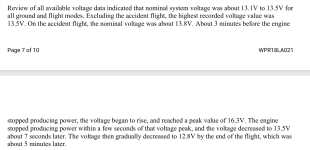
I am NOT trying to second guess this accident, but it seems voltage rising to 16.3 volts without a way to shut down the alternator is a recipe for disaster. There was not a method to turn the alternator off? Was there appropriate voltage alarms set up? If so, did the electrical design really not provide a way to turn off the alternator once a CAS alarm was initiated?
Was this a case of no over-voltage protection (switch) or a case where the pilot did not realize he had an over-voltage condition until it was too late? Very different root cause and solution scenarios.
Yep, and it also sounds like he had no battery backup for the electronic ignition other than the Earth-X main battery. That alone would make me nervous.I am "guessing" the Earth-X BMS went off-line and from there events went down-hill. The issue I see is we have these wonderful monitoring systems but need to be properly programmed and tested. I have seen over and over builders not programming proper alarm levels to help one understand early on what the status of our electrical systems are.
View attachment 114970
I am NOT trying to second guess this accident, but it seems voltage rising to 16.3 volts without a way to shut down the alternator is a recipe for disaster. There was not a method to turn the alternator off? Was there appropriate voltage alarms set up? If so, did the electrical design really not provide a way to turn off the alternator once a CAS alarm was initiated?
Was this a case of no over-voltage protection (switch) or a case where the pilot did not realize he had an over-voltage condition until it was too late? Very different root cause and solution scenarios.
His alternator probably did not have the OV crowbar protection. Alarms are nice to have but if your electronics just power-off when something like this happens you may never see that alarm to take an action. Some of the auto alternators are self exciting once engine reaches a certain rpm meaning they no longer need a field at that point. I am not sure what action you can take if the alternator cannot be turned off. In most wiring diagrams I have seen there is no way to disconnect the B lead.
So, turning off his PRIMARY ALTERNATOR FIELD does not shut down his alternator output? SCARYHis alternator probably did not have the OV crowbar protection. Alarms are nice to have but if your electronics just power-off when something like this happens you may never see that alarm to take an action. Some of the auto alternators are self exciting once engine reaches a certain rpm meaning they no longer need a field at that point. I am not sure what action you can take if the alternator cannot be turned off. In most wiring diagrams I have seen there is no way to disconnect the B lead.

"Some of the auto alternators are self-exciting once engine reaches a certain rpm", can you provide documentation that states this?

This is a risk of an automotive alternator that cannot be turned off by de-powering the ig/control/enable/wake-up wire which some may mistake as field power wire.His alternator probably did not have the OV crowbar protection. Alarms are nice to have but if your electronics just power-off when something like this happens you may never see that alarm to take an action. Some of the auto alternators are self exciting once engine reaches a certain rpm meaning they no longer need a field at that point. I am not sure what action you can take if the alternator cannot be turned off. In most wiring diagrams I have seen there is no way to disconnect the B lead.
Allan Nimmo of Anti-Splat had this happen, OV runaway alternator, cruising at 14,500, he turned off the mags and pitched up to stop the prop in order to turn the alternator off, then pitched down to windmill restart the engine, he had magnetos - no electronic ignition to be destroyed by the OV event.
Another lesson from this incident is bad terminal crimp on what sounds like a “fat” wire.
Allan’s post: https://vansairforce.net/community/showpost.php?p=1415585&postcount=9https://vansairforce.net/community/showpost.php?p=1415585&postcount=9
Another post from the same thread: https://vansairforce.net/threads/need-help-with-alternator-theory.180549/#post-1415509
My notes on Allan’s incident: https://docs.google.com/document/d/1Kran0Ay6_lCk8ji-esrwUHcLtm5VYXGT0DZrWh6eeGI/edit?usp=drivesdk
Last edited:
Self-exiting alternators are very rare for cars and GA aircraft applications for two reasons -- they generally require permanent magnets to start them, and the volage regulator requires a steady bias voltage to operate the electronics. If you have an alternator field winding switch, then you don't have a self-exciting alternator. Therefore, you can simply turn-OFF the alternator field switch to stop the alternator from producing battery charging current.Look up self exciting alternators. once triggered it uses its own power to keep the field energized.
I believe if you use a standard auto alternator without the mods they could still have a failure mode when the regulator goes bad. This is what I found from an old aeroelectric article. (removes the always-on B-plus feed of the field coil and replaces it with the "IG" terminal, which is typically switched and fused 5A in the airplane wiring.)Self-exiting alternators are very rare for cars and GA aircraft applications for two reasons -- they generally require permanent magnets to start them, and the volage regulator requires a steady bias voltage to operate the electronics. If you have an alternator field winding switch, then you don't have a self-exciting alternator. Therefore, you can simply turn-OFF the alternator field switch to stop the alternator from producing battery charging current.
From your notes " I used another heavy duty continuous hold relay... the alternator B lead is switched via this relay. The alternator switch now controls this relay." -- I think this is the only fool proof way to ensure the alternator is disconnected.This a risk of an automotive alternator that cannot be turned off by de-powering the control/enable/wake-up wire which some may mistake as field power wire.
Allan Nimmo of Anti-Splat had this happen, OV runaway alternator, cruising at 14,500, he turned off the mags and pitched up to stop the prop in order to turn the alternator off, then pitched down to windmill restart the engine, no electronic ignition to be destroyed.
Another lesson from this incident is bad terminal crimp on what sounds like a “fat” wire.
Allan’s post: https://vansairforce.net/community/showpost.php?p=1415585&postcount=9https://vansairforce.net/community/showpost.php?p=1415585&postcount=9
My notes on Allan’s incident: https://docs.google.com/document/d/1Kran0Ay6_lCk8ji-esrwUHcLtm5VYXGT0DZrWh6eeGI/edit?usp=drivesdk
I gather from Post #6 you have Nippon Denso Lester #14684. Have you verified you can turn it off via a switch on the instrument panel? Thanks.Self-exiting alternators are very rare for cars and GA aircraft applications for two reasons -- they generally require permanent magnets to start them, and the volage regulator requires a steady bias voltage to operate the electronics. If you have an alternator field winding switch, then you don't have a self-exciting alternator. Therefore, you can simply turn-OFF the alternator field switch to stop the alternator from producing battery charging current.
I have seen posters here that are on their third PP alternator. Does that not also fit your qoute? What about “… repeating the same behavior looking for a different result.” I am not saying they are universal junk. But i see a fair number of folks coming here reporting problems with their pp alternators; many failing after 100-200 hours. I just never hear that about others. Certainly anecdotal data, but just don’t see how you can ignore the significant number of posts with pp problems and the lack of same with others."Those who cannot remember the past are condemned to repeat it."
Which is why i use externally regulated auto alternators. Full on off control.This a risk of an automotive alternator that cannot be turned off by de-powering the control/enable/wake-up wire which some may mistake as field power wire.
Allan Nimmo of Anti-Splat had this happen, OV runaway alternator, cruising at 14,500, he turned off the mags and pitched up to stop the prop in order to turn the alternator off, then pitched down to windmill restart the engine, no electronic ignition to be destroyed.
Another lesson from this incident is bad terminal crimp on what sounds like a “fat” wire.
Allan’s post: https://vansairforce.net/community/showpost.php?p=1415585&postcount=9https://vansairforce.net/community/showpost.php?p=1415585&postcount=9
My notes on Allan’s incident: https://docs.google.com/document/d/1Kran0Ay6_lCk8ji-esrwUHcLtm5VYXGT0DZrWh6eeGI/edit?usp=drivesdk
Yes, I installed Vans FWF kit back in 2003, which came with the Nippon Denso Lester #14684 alternator and kit (many RV's have them). I test few the airplane in 2004 and have been flying my 9'er regularly for nearly 22-years now. So, yes I have tested that my alternator field switch/breaker de-energizes the field windings in the alternator and then stops charging the battery, the battery voltage meter drops and the amp meter shows a discharge indication -- I built and tested the panel myself. I guess being a professional electrical engineer for 36-years, it only makes sense to me. Alternators with field windings simply can't energize themselves without the application of field current.I gather from Post #6 you have Nippon Denso Lester #14684. Have you verified you can turn it off via a switch on the instrument panel? Thanks.
In my experience, the Nippon Denso Lester #14684 alternator is VERY reliable. I do have heat shields on the cross-over exhaust stacks that face the back-side of my alternator, which I believe is "key" to long term alternator reliability. The Nippon Denso Lester #14684 alternator was proven on literally millions of Japanese vehicles over many years, and these cars don't even have an alternator field switch -- right.

BTW -- I take anything that Allan Nimmo of "Anti-Splat" has to say "with a grain of salt".

Last edited:
There is really something to be said here about having magnetos running your engine, independent of your battery and alternator -- that's what I have. Also, an alternator field-switch and/or breaker along with meters to monitor the condition of your battery and charging system is just as important as monitoring your oil temp and pressure! And, having a back-up handheld comm radio in the plane isn't such a bad idea either.I am "guessing" the Earth-X BMS went off-line and from there events went down-hill. The issue I see is we have these wonderful monitoring systems but need to be properly programmed and tested. I have seen over and over builders not programming proper alarm levels to help one understand early on what the status of our electrical systems are.
View attachment 114970
I am NOT trying to second guess this accident, but it seems voltage rising to 16.3 volts without a way to shut down the alternator is a recipe for disaster. There was not a method to turn the alternator off? Was there appropriate voltage alarms set up? If so, did the electrical design really not provide a way to turn off the alternator once a CAS alarm was initiated?
Was this a case of no over-voltage protection (switch) or a case where the pilot did not realize he had an over-voltage condition until it was too late? Very different root cause and solution scenarios.
Last edited:
Always willing to learn. The report said "About 3 minutes before the engine stopped producing power, the voltage began to rise, and reached a peak value of 16.3 V." My yellow CAS alert is set at 14.8 volts for both my primary and pad mount alternator (B&C) and I would get a red CAS alert at 15.0 volts. Since his EFIS recorded the voltage, he would have received alarms and if possible, turned off his field. I also have CAS alarms for low voltage that I test in flight every few months by turning off each field to the alternator. I am making this point as I have seen over and over builders not setting CAS alarms for critical and possible lifesaving, voltage, temperature and amperage conditions.Alarms are nice to have but if your electronics just power-off when something like this happens you may never see that alarm to take an action.
mchalla said:
Some of the auto alternators are self exciting once engine reaches a certain rpm meaning they no longer need a field at that point.
From the report I cannot tell if he was using an alternator that was self-exciting. It did say it was an automotive alternator. I have never heard of one being used (Self-exciting) in an aircraft and if he did shows he fully did not understand the danger or his system. I am glad he made it down and lives to fly another day.
I dismissed them when I first saw their ads, looks like China clone of Denso.IndyAlt does not document or explain how their over voltage detection/protection functions.
…Mystery protection…
Yes, I installed Vans FWF kit back in 2003, which came with the Nippon Denso Lester #14684 alternator and kit (many RV's have them). I test few the airplane in 2004 and have been flying my 9'er regularly for nearly 22-years now. So, yes I have tested that my alternator field switch/breaker de-energizes the field windings in the alternator and then stops charging the battery, the battery voltage meter drops and the amp meter shows a discharge indication -- I built and tested the panel myself. I guess being a professional electrical engineer for 36-years, it only makes sense to me. Alternators with field windings simply can't energize themselves without the application of field current.
In my experience, the Nippon Denso Lester #14684 alternator is VERY reliable. I do have heat shields on the cross-over exhaust stacks that face the back-side of my alternator, which I believe is "key" to long term alternator reliability. The Nippon Denso Lester #14684 alternator was proven on literally millions of Japanese vehicles over many years, and these cars don't even have an alternator field switch -- right.
BTW -- I take anything that Allan Nimmo of "Anti-Splat" has to say "with a grain of salt".
You are correct in that an alternator will not produce power unless the rotor field is energized & regulated. However, there are no shortage of "1-wire" and "Single Wire" and "Ignition Activated" alternators out there that energize the field and A-circuit by Battery (B+) or Ign voltage and then drive the field current. It's all in the regulator.
Here are the ND Unit Numbers that can be Self Exciting -- (Honda)
100211-1050
100211-1090
100211-1091
100211-1130
100211-1131
100211-1150
100211-1180
100211-1200
100211-1201
The Regulators used in the above are ND --
126000-0340
126000-0400
126000-0510
126000-0650
126000-0700
126000-0731
Also see WAI/Transpo IN220SE.
Y'all be careful out there.
