Jacob@advanced
I'm New Here
Hey Everyone! Working on an RV-8 and we discovered during the condition inspection the flap rods where chaffing on the fuselage pretty significantly.
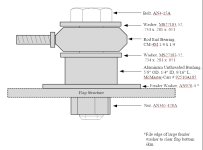
When I was reading through the build manual and drawings I see the build manual references to DWG RV8-14B for building the flaps and then DWG RV8-80 for attaching the flap rods to the flaps. I am also seeing some references to DWG RV8-14A but not in the flap build or attachment. This airplane's flaps, specifically the end rib (FL-704) web direction and Plate (FL-406B) attachment seem to be accomplished as DWG 14A reflects.. See photo and dwgs. Furthering, I cannot seem to find any reference for how to attach the flap rods to the flaps if they are completed how 14A reflects. I spoke with VANS and i've received two opposite answers (no the flaps are wrong and yes that's fine). Does anyone know what the history is on these drawings? Is 14A the "old way" and 14B the new way or was 14A inserted for reference to another item but the flaps should be completed by 14B? Is it acceptable to have the "14A" completed flaps on an RV-8? And is there an attachment reference for the flap rods for "14A flaps" (currently the 90 degree rod end has a nylock that is almost impossible to get purchase on aside from a crows foot)? Thanks!!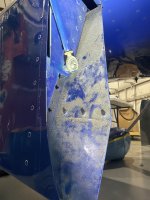
When I was reading through the build manual and drawings I see the build manual references to DWG RV8-14B for building the flaps and then DWG RV8-80 for attaching the flap rods to the flaps. I am also seeing some references to DWG RV8-14A but not in the flap build or attachment. This airplane's flaps, specifically the end rib (FL-704) web direction and Plate (FL-406B) attachment seem to be accomplished as DWG 14A reflects.. See photo and dwgs. Furthering, I cannot seem to find any reference for how to attach the flap rods to the flaps if they are completed how 14A reflects. I spoke with VANS and i've received two opposite answers (no the flaps are wrong and yes that's fine). Does anyone know what the history is on these drawings? Is 14A the "old way" and 14B the new way or was 14A inserted for reference to another item but the flaps should be completed by 14B? Is it acceptable to have the "14A" completed flaps on an RV-8? And is there an attachment reference for the flap rods for "14A flaps" (currently the 90 degree rod end has a nylock that is almost impossible to get purchase on aside from a crows foot)? Thanks!!