Van's Air Force

The definitive Van's Aircraft support community! Buying, building or flying an RV? Join our exclusive family of mentors and enthusiasts!

Prekote and rattle can

Fenderbean

Well Known Member
Just making sure, before money is spent. Is this product pointless with a self etching primer? If you do use this product is it okay to use a regular non etching primer?

Planning to do metal contact priming for internal tail. Thanks
 
I'm just wondering if the prekote is a waste with etching primers? I would be all about getting a standard primer vs the etching if the prekote made it stick.
 
I'm just wondering if the prekote is a waste with etching primers? I would be all about getting a standard primer vs the etching if the prekote made it stick.
Not telling you what you should do, just relating my experience - when I use self-etching primers (I use them a lot), I scotchbrite, then clean the dust with acetone, then shoot the primer - nothing else. I’ve got interrior pieces that see a lot of use that are dirty after 20+ years, but not chipping, flaking, or peeling.
 
Not telling you what you should do, just relating my experience - when I use self-etching primers (I use them a lot), I scotchbrite, then clean the dust with acetone, then shoot the primer - nothing else. I’ve got interrior pieces that see a lot of use that are dirty after 20+ years, but not chipping, flaking, or peeling.
Nope you are fine, trying to decide since its not cheap for the prekote. Which self etch do u use? THanks
 
Just adding my $0.02 here. I wrote about this some time ago. When we were building the stub spars, aileron hinges, and other brackets for the composite tapered wings on Bob Mills' Rocket 6, We used Prekote, following the instructions the best we could, and then coated with AKZO.
My opinion was/is the Prekote is just a plecebo to get you to scrub well with scotchbright and rinse. We were barely ever able to raise any lather, and I don't think we ever got a 'water break free' surface. We would scrub and scrub and scrub some more. Finally just rinsed, dried, and primed. It all turned out ok, but honestly, we could have been using plain water and I think we would have gotten identical results.

 
As another data point, I did a test where I did a rather half-a**ed job of scuffing on alclad parts and sprayed with SEM. I got rather poor adhesion. So I don't think you can rely 'only' on the self-etching property. I think you have to get the surface clean, and have scour/scrub marks (scratches) that promote adhesion ('tooth').
 
Just adding my $0.02 here. I wrote about this some time ago. When we were building the stub spars, aileron hinges, and other brackets for the composite tapered wings on Bob Mills' Rocket 6, We used Prekote, following the instructions the best we could, and then coated with AKZO.
My opinion was/is the Prekote is just a plecebo to get you to scrub well with scotchbright and rinse. We were barely ever able to raise any lather, and I don't think we ever got a 'water break free' surface. We would scrub and scrub and scrub some more. Finally just rinsed, dried, and primed. It all turned out ok, but honestly, we could have been using plain water and I think we would have gotten identical results.

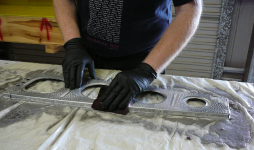
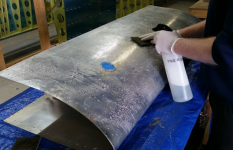
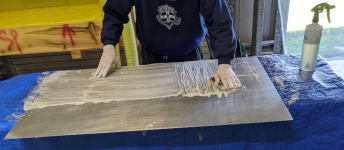
Not sure why there was a difference, but my PreKote foamed up quite well and carried off plenty of contaminants. I typically required 2 cycles of PreKote, Scotch-Brite scrub, water rinse and repeat to get a reasonable break free surface. Sometimes 3 cycles on particularly tough surfaces. I was using potable bore water to rinse, so maybe water from a different source would have had a different result. Here are a few examples:

wings_2018-06-07_01.png

wings_2020-06-22_02.png

wings_2020-08-23_02.png
 
Thanks everyone, from the post I think I will go with some etching primer with a good cleaning/scrub before. If I have any issues with it sticking, I will keep prekote in mind. It would be a no brainer if the cost of it was more along the lines of a cleaner.
 
As another data point, I did a test where I did a rather half-a**ed job of scuffing on alclad parts and sprayed with SEM. I got rather poor adhesion. So I don't think you can rely 'only' on the self-etching property. I think you have to get the surface clean, and have scour/scrub marks (scratches) that promote adhesion ('tooth').
+1

No magic bullet here, excluding the nasty chemicals like alodine. Surface must be well abraded for a good bond. Two kinds of bonds, chemical and mechanical (creating peaks & valleys for grip). Don't know what is in prekote, but Acid etch will never give a bond of the same quality as mechanical on Aluminum. Lots of guys used to use Ospho on cars (steel). It is basically phosphoric acid. In theory, it creates a layer that is an adhesion promoter. Paint makers found it creates bonding problems with their primers (not all of the acid gets converted and leaves the acid on the surface) and recommend against using it. Many still use it for rust conversion, but it then needs to be washed off before primer. pre mixing the acid with the paint doesn't change anything. May be fine for rattle can paint, but that doesn't have anywhere near the bond strength of epoxy primers.

As long as you scuff (mechanical etching) along with some type of pre cleaning process or using detergents along with the scuffing, there is no benefit to chemical etching; only downsides. I just use a maroon pad with bon ami and scuff untill break free, then rinse. Creates good adhesion.

In addition to the etching process, with aluminum, you have the step of removing the oxidation layer that forms (both accomplished during the scuffing). Be advised that this starts to come back immediately after removal, so parts need to be coated within hours of prep. A much longer discussion.
 
Last edited:
At Larry's suggestion I also just use a maroon pad with bon ami and scuff untill break free, then rinse. Inexpensive and no toxic chemicals. Never had an adhesive issue.
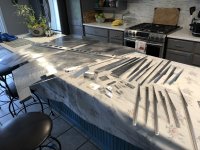
Wife lets me do most parts in the laundry tub and then layout on counter to dry.

IMG_0341.jpeg
 
Note, I was planning to prime contact areas unless it's an outer part that is exposed directly to element. Seems a good scrub with the 3m pads, clean and prime is the way to go. Its better to use something like a degreaser, soapy water, or acetone?
 
At Larry's suggestion I also just use a maroon pad with bon ami and scuff untill break free, then rinse. Inexpensive and no toxic chemicals. Never had an adhesive issue.
Wife lets me do most parts in the laundry tub and then layout on counter to dry.

View attachment 112132
Bingo! Give that guy a bone. Finally. Bon Ami works. It's cheap. No environmental impact. No shipping costs.
 
So this seems promising, it’s much thinner and you can spray and scrub. I will test it and see how works for the cleaning and priming. Not expensive either
 

Attachments

  • IMG_2363.jpeg
    IMG_2363.jpeg
    2.7 MB · Views: 17
I need to do my baffling, this looks good. What product and prep?
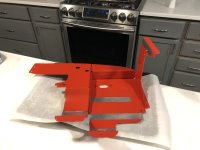
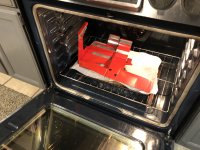
Prep was maroon pad with bon ami. The paint was off the shelf rattle can engine paint. I wanted to heat it up to harden it prior to installation. I cannot remember the brand.
 
I used Prekote on my 10 and using it on my 14. Nothing magic it’s basically a diluted solvent to help clean. You can check out the MDS and make it yourself. I’m into planes not chemistry so I bought a jug.
 
I originally primed mine P60G2, but they got pretty beat up so I took them apart and had them powder coated. Also matches my color scheme because the fasteners are visible.
 
I used Prekote on my 10 and using it on my 14. Nothing magic it’s basically a diluted solvent to help clean. You can check out the MDS and make it yourself. I’m into planes not chemistry so I bought a jug.
For the last two aircraft, I purchased the raw chemicals, plus litmus paper and mixed up my own. What you end up is an industrial cleaner/degreaser. Scrubbed with scotchbrite, rinsed. Primed with Super Koropon.
 
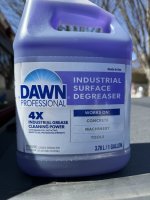
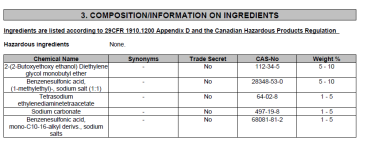
Hey guys, got to looking the degreaser I bought above says not use use on aluminum. If I’m scrubbing to prime would this matter? I think it says this to prevent removing protective coatings from aluminums. Thoughts? I’m sure I’m over thinking it just seems odd to it said no aluminum
 
Hey guys, got to looking the degreaser I bought above says not use use on aluminum. If I’m scrubbing to prime would this matter? I think it says this to prevent removing protective coatings from aluminums. Thoughts? I’m sure I’m over thinking it just seems odd to it said no aluminum
Talking out of my butt here, a recognized superpower of mine. Without know the ingredients, hard to say. Probably because of potential chemical attack, most likely acidic/alkaline. If true , rinsing alone would not be sufficient. It would require neutralization or parent material would (eventually) corrode.
 
Talking out of my butt here, a recognized superpower of mine. Without know the ingredients, hard to say. Probably because of potential chemical attack, most likely acidic/alkaline. If true , rinsing alone would not be sufficient. It would require neutralization or parent material would (eventually) corrode.
You may be on to something, the chemicals listed on the SDS seem pretty aggressive, but I have no clue
 

Attachments

  • Screenshot 2026-04-01 123422.png
    Screenshot 2026-04-01 123422.png
    48.5 KB · Views: 13
I bought some stuff that is aluminum safe and some Dawn so I will give these a try with some test runs on some scraps.
 
hey everyone had another question since I am about to prime some parts and rivet them. I have seen people do a line of primer along the outside rivet lines and I was wondering what the reason would be since this are is painted on the outside. Are they just trying to get some primer under the rivets? Thanks
 
hey everyone had another question since I am about to prime some parts and rivet them. I have seen people do a line of primer along the outside rivet lines and I was wondering what the reason would be since this are is painted on the outside. Are they just trying to get some primer under the rivets? Thanks
Not sure I understand. If you refer to overlap areas on skins, it's a common practice to prime the overlap fay surfaces. Maybe the builder just sprayed a little beyond the overlap?
Just a thought.
 
no on the outside of the skin follow the rivet lines, inside i get. People do that to prime matting surfaces but I saw a couple that did the same on the outside of the surface?
 
Back
Top