Van's Air Force

The definitive Van's Aircraft support community! Buying, building or flying an RV? Join our exclusive family of mentors and enthusiasts!

A/F vs EGT?

Mac_49

I'm New Here
New pilot here so please bare with me on this. Would there be any advantage to using an A/F gauge inside in correlation with an EGT?
Pros/Cons/Completely worthless?
I was just curious as you get to manually leaning things out that having an A/F gauge gives you instant feedback vs waiting for an EGT to register and you could be leaned incorrectly but within a certain tolerance that's "acceptable".
Anywho, would love to hear thoughts and get knowledge on the idea or told as to why it wouldn't be a great idea.
 
New pilot here so please bare with me on this. Would there be any advantage to using an A/F gauge inside in correlation with an EGT?
Pros/Cons/Completely worthless?
I was just curious as you get to manually leaning things out that having an A/F gauge gives you instant feedback vs waiting for an EGT to register and you could be leaned incorrectly but within a certain tolerance that's "acceptable".
Anywho, would love to hear thoughts and get knowledge on the idea or told as to why it wouldn't be a great idea.
I have one and used it to tune my engine. (EFII in a IO390 and IO540) There are some better O2 sensors out there that seem to be more tolerant to lead. The key is not buying a knockoff Bosch sensor. I was going through sensors every 15-20 hours and once I purchased a true Bosch sensor this one has lasted over 60 hrs. Maybe just a coincidence.

This is a shop where you can find genuine parts and not knock offs. https://www.bmotorsports.com/, Excellent service.

This thread gives a lot of the trials and tribulations of builders trying to use AFR:


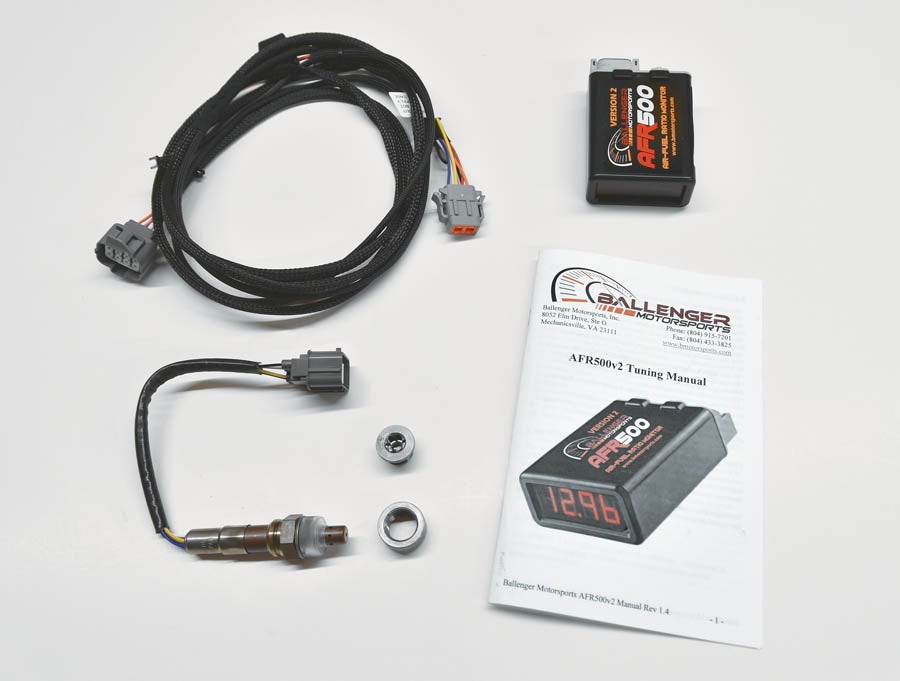
What SEEMS to be working better is AFR500v2 which uses a sensor by NTK. (Note I have only used the PLX that uses the Bosch sensor)

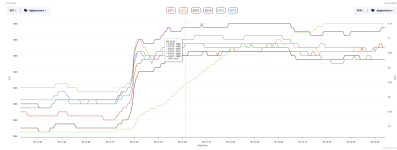
If you install one, make sure to run the output to your EFIS for data plotting later on:

Screenshot 2026-03-23 130830.png
 
Last edited:
I run Bosch sensors and get between 5 and 20 hours before they fail…

Once I figured out and tuned my map (EFII), the AFR has become an info only measurement, when it works.
 
I have one and used it to tune my engine. (EFII in a IO390 and IO540) There are some better O2 sensors out there that seem to be more tolerant to lead. The key is not buying a knockoff Bosch sensor. I was going through sensors every 15-20 hours and once I purchased a true Bosch sensor this one has last over 60 hrs.

This is a shop where you can find genuine parts and not knock offs. https://www.bmotorsports.com/, Excellent service.

If you install one, make sure to run the output to your EFIS for data plotting later one:

View attachment 113197
I have one in my -10 and it lasts between 5 and 20 hours. It is a Bosch product and that has been the history over the last 6+ years.

That said, now that my fuel map has been tuned, the AFR is just a secondary info instrument, when it works…
 
Mac, welcome aboard the good ship VAF :D

I have an O2 sensor in our plane, and it is great for initial setup (SDS EFII system) and for leaning when in cruise.

As stated, short life due to lead fouling is an issue.
 
Running mostly unleaded fuel as I do, the sensor is more useful - but yes the short life when exposed to lead is a significant drawback for most. I usually kill one sensor per year on lead poisoning and always keep a spare to put in when they eventually die. I do use it as my primary leaning indicator because of the instant response and precision of setting the mixture where I want.
 
I have one and used it to tune my engine. (EFII in a IO390 and IO540) There are some better O2 sensors out there that seem to be more tolerant to lead. The key is not buying a knockoff Bosch sensor. I was going through sensors every 15-20 hours and once I purchased a true Bosch sensor this one has lasted over 60 hrs. Maybe just a coincidence.

This is a shop where you can find genuine parts and not knock offs. https://www.bmotorsports.com/, Excellent service.

This thread gives a lot of the trials and tribulations of builders trying to use AFR:


What SEEMS to be working better is AFR500v2 which uses a sensor by NTK. (Note I have only used the PLX that uses the Bosch sensor)

If you install one, make sure to run the output to your EFIS for data plotting later on:

View attachment 113197
The ntk’s do much better than bosch with lead. Not great, vut better
 
New pilot here so please bare with me on this.
I was just curious as you get to manually leaning things out that having an A/F gauge gives you instant feedback vs waiting for an EGT to register and you could be leaned incorrectly but within a certain tolerance that's "acceptable".

EGT is reliable and precise.
 
Operationally, what difference does it make? Is the fuel saving worth the complexity and workload? And the distraction?
 
Operationally, what difference does it make? Is the fuel saving worth the complexity and workload? And the distraction?
Only the builder can answer those questions.

I have it installed but as stated, the sensor doesn’t last long. Not sure you could put a fuel savings number on it as most folks probably do not run at the leanest possible mixture, in favor of a balance between performance and fuel flow.

If I did it again, I doubt I would install one, at least with the current technology.
 
This sensor is “lead resistant “. My Bosch 4.9 is still going strong, so I haven’t had a chance to test it yet.

AEM/FAE WIDEBAND "REPLACEMENT" SENSOR​

PART # 30-2404
 
17 posts in and no indication of what is a A/F sensor for many that maybe wondering. Please identify acronyms as most on this forum are not as knowledgeable as others. I am guessing it is Air/fuel mixture sensor.
 
When you're building a plane, there's a real temptation to add all sorts of extra stuff just because it's kinda cool. For some of it, the juice is worth the squeeze, for some, it' firmly planted in the kinda cool, but not much practical value camp. Only you can answer if the added complexity, weight and yet more stuff to spend money on is worth it.

In this case, if it were me I'd pass. But then again, I grew up in the era of no CHT or EGT indications whatsoever until you got into something with a turbo.
 
When you're building a plane, there's a real temptation to add all sorts of extra stuff just because it's kinda cool. For some of it, the juice is worth the squeeze, for some, it' firmly planted in the kinda cool, but not much practical value camp.
As always, depends on the circumstances. I’m currently flying under some of the busiest airspace in the world and have frquent step climbs to get to 8k feet. 100LL now over $10 gallon.

When I started flying with AFR (air fuel ratio), it quickly became a very valuable tool to me. Several pilots that fly with me (guys that fly warbirds to airlines) quickly became converts. The sensors pay for themselves in less than 10 hours, using my calculations.

With AFR, you don’t have to dwell in the bad GAMI “Red Box” of harmful mixture because the sensors gave you almost an instantaneous response. Given the ridiculous price of engines now, hopefully I’m also treating my engine a little more nicely. I lean as much as possible on the ground and go LOP (lean of peak) as soon as I’m cleaned up and in the climb, which likely has been a material factor and extending my sensor life. YMMV
 
Last edited:
This is a pretty good recap of A/F sensors but like the other links above you need to click on it to learn more about. :unsure:


Are they twice as good, as the price would indicate?
Don't have enough experience. Under 50 hours on the one I installed. In doing research, the Mfr discusses making efforts in the design to tolerate lead better than others. Ross also indicated his experience was that they last longer than bosch and more uniform; He had seen some boschs last 30 hours and others 150.
 
17 posts in and no indication of what is a A/F sensor for many that maybe wondering. Please identify acronyms as most on this forum are not as knowledgeable as others. I am guessing it is Air/fuel mixture sensor.
More commonly known as a Wideband O2 or Lambda sensor. Essentially measures the amount of O2 in the exhaust stream. Based on the Lambda for the specific fuel type gives you a precise measurement of your mixture vs stoichiometric (14.7:1 by mass for gasoline).
 
With AFR, you don’t have to dwell in the bad GAMI “Red Box” of harmful mixture because the sensors gave you almost an instantaneous response.

Ahh yes, fear the Red Box, and the beasties and ghoulies and things that go bump in the night.

Kidding aside, no one needs to dwell in the scary Bad Box, assuming it actually exists with a well cooled normally aspirated Lycoming with stock CR. Use the constant EGT method from the first RPM reduction to cruise altitude. Set cruise power at 70% or less and pull to a fuel flow known from prior flight to be near peak EGT. Now you have three or four hours to play with exactly where you are on the rich or lean side.

Plan B: Set cruise power, pull mixture until it gets rough, richen until smooth. No EGT. No A/F meter. And save the red box for the wife's next birthday.

ScreenHunter_2923 Aug. 21 23.23.jpg
 
Ahh yes, fear the Red Box, and the beasties and ghoulies and things that go bump in the night.

Kidding aside, no one needs to dwell in the scary Bad Box, assuming it actually exists with a well cooled normally aspirated Lycoming with stock CR. Use the constant EGT method from the first RPM reduction to cruise altitude. Set cruise power at 70% or less and pull to a fuel flow known from prior flight to be near peak EGT. Now you have three or four hours to play with exactly where you are on the rich or lean side.

Plan B: Set cruise power, pull mixture until it gets rough, richen until smooth. No EGT. No A/F meter. And save the red box for the wife's next birthday.

View attachment 113288
Haha yes, plan B is a very easy method, and close enough!
 

Let's try this again - With the NTK wideband sensors you are good for many hundreds of hours. Your results may vary, but I have over 400 hours on mine (Lyc I/O-390) since writing this article, and the indicated A/F numbers are still exactly the same for the same settings. And the convenience is awesome - just lean to your desired A/F number be it lean of peak op or best power. The Ballenger A/F system has an analog output that you can shove into your EIS and set up a gauge with markers for your desired operating points. While non wide band and many other sensors won't last, there are some that do and are designed to do so and the categorical condemnation is in the category of old wives tales IMO.
 
I have about 200 hrs on my Bosch wideband O2 sensor. I think Bob Mills has about 400 hrs on his.

When you run really lean all the time, the sensors seem to last a long time. I run typically 60--80F LOP, sometimes 100F LOP.
 

Let's try this again - With the NTK wideband sensors you are good for many hundreds of hours. Your results may vary, but I have over 400 hours on mine (Lyc I/O-390) since writing this article, and the indicated A/F numbers are still exactly the same for the same settings. And the convenience is awesome - just lean to your desired A/F number be it lean of peak op or best power. The Ballenger A/F system has an analog output that you can shove into your EIS and set up a gauge with markers for your desired operating points. While non wide band and many other sensors won't last, there are some that do and are designed to do so and the categorical condemnation is in the category of old wives tales IMO.

You must be really lucky, the NTK I tried lasted 17 hours. Certainly more the my worst one at 5 but a far cry from 400…

Yes I run LOP…
 
You must be really lucky, the NTK I tried lasted 17 hours. Certainly more the my worst one at 5 but a far cry from 400…

Yes I run LOP…
I'm gonna say you're doing something wrong. There's no luck involved in this. There are a number of others who have had the same positive experience. Are you using the Ballenger recommended NTK sensor? NTK makes many sensors. And where in the exhaust path is it mounted?
 
I'm gonna say you're doing something wrong. There's no luck involved in this. There are a number of others who have had the same positive experience. Are you using the Ballenger recommended NTK sensor? NTK makes many sensors. And where in the exhaust path is it mounted?
...and there are many others that have experienced very short unit life. Honestly, I think that the location of the sensor makes more of a difference than the sensor itself. Reading the installation instructions for various sensors would indicate that the location should be 4-6 inches downstream of the collector and have 18-24 inches of pipe after the sensor. Well, that's not going to happen, especially in my case. I have the Custom Aircraft exhaust system on my -10. Basically a set of 3 into 1 headers on each side with about 16 inches of exhaust pipe...no mufflers, just a short collector. I'm guessing that is part of the problem.

Not that it really matters...I pretty much am doing what DanH posted. I climb to cruise and then lean to a known fuel flow. I then have plenty of time to tweak it if I so choose.

I would also say that for everyone claiming high sensor lifetimes, there is an equal or greater number of short lifetimes...
 
The other thing that kills these sensors quickly is thermal shock. The controller heats the sensor. If the sensor is heated prior to engine start then it will get thermal shocked which will lead to cracking of the ceramic element. Powering on the controller/sensor a second or two before start shouldn't be an issue, but if its 20-30 seconds you might be running into the issue.
 
I would also say that for everyone claiming high sensor lifetimes, there is an equal or greater number of short lifetimes...
And with which sensors? And - re-Walkman, actually, the Ballenger system pre-heats the sensor and specifies that one should let the pre heat complete before engine start, exactly to reduce the thermal shock of engine start.

One of my hangar neighbors has the Balenger system and NTK sensor on his 10 right at the downturn curve after the muffler on the right side only about 10" before exit, and it has been working fine. It would be interesting and useful to see tests and data to get to the bottom of what leads to failures and what ensures longevity.
 
I had the AEM air fuel system with the Bosch 4.9 Wideband sensor in my 7 for about 700 hrs. It was installed about 18" downstream of the closest exhaust port at an angle of 10* from vertical. The unit was powered on with the master so it was on before engine start, all as per the mfg instructions. It was still working fine when I sold the plane. I installed the same system and sensor in my 8 which has just over 100 hrs to date so I will see how this one lasts in the long term. I only run 100LL. Both were 360 PV engines with the 7 a carb and the 8 injected. I always run LOP except for TO.
 
Back
Top