Van's Air Force

The definitive Van's Aircraft support community! Buying, building or flying an RV? Join our exclusive family of mentors and enthusiasts!

On Weight and TAS

bjdecker

Well Known Member
Ambassador
Totally unscientific findings, but I thought I would share...

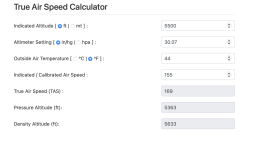
In March 2025, I weighed 260lbs. I flew from KGTU to KCXO with full fuel at 5500 Ft. The OAT was 44°F and the Baro was 30.07". The engine was configured for 2500 RPM, WOT, 40°F LOP, 10.6gph. The True Airspeed was 169Kts.

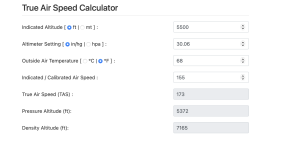
A year and a week later, I now weigh 220Llbs,, and I took the exact same flight, full fuel, 5500ft. The OAT was 68°F and the Baro was 30.06". The engine configured the same as above flight. True Airspeed was 174Kts.

Soooo...40lbs is equivalent to ~4-5 Knots of true airspeed. Very interesting, and a pleasant surprise...
 
Totally unscientific findings, but I thought I would share...

In March 2025, I weighed 260lbs. I flew from KGTU to KCXO with full fuel at 5500 Ft. The OAT was 44°F and the Baro was 30.07". The engine was configured for 2500 RPM, WOT, 40°F LOP, 10.6gph. The True Airspeed was 169Kts.

A year and a week later, I now weigh 220Llbs,, and I took the exact same flight, full fuel, 5500ft. The OAT was 68°F and the Baro was 30.06". The engine configured the same as above flight. True Airspeed was 174Kts.

Soooo...40lbs is equivalent to ~4-5 Knots of true airspeed. Very interesting, and a pleasant surprise...
Nice thought but the 24 degree temperature difference made the most difference.

Congrats on the weight loss!
 
I respectfully disagree that weight (within reason) does not affect TAS. A higher weight, such as the extra 40 lbs the original poster used to load on his plane required a greater angle of attack to produce sufficient lift to carry that extra 40lbs. A higher angle of attack of course creates more drag. Congratulations bjdecker on losing the 40lbs of extra muscles.
 
Nice thought but the 24 degree temperature difference made the most difference.

Congrats on the weight loss!
Thanks - so here's the debate, I guess, the OAT will affect charge density and available power -- ergo , colder temp => more power, warmer temp => less power. BUT, the colder temps means the airframe produces more drag (or am I mis-remembering this from Aero 101), so gains in power are offset somewhat by increases in drag.

But despite all this, In the example flights, the aircraft was faster when it was warmer (less power, but less drag). So is the +20F delta T responsible for the increase in TAS?

And thanks - shedding the equivalent of a 40 lb. bag of water softener salt also helps getting into and out of the airplane, better on the knees & ankles, etc.
 
Totally unscientific findings, but I thought I would share...
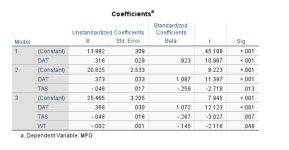
Well, interesting idea. The laws of physics in fact do agree with your idea that weight matters....there is no free lunch. All else equal, more weight requires more lift, a higher angle of attack, and more drag. The question is at cruise speeds, how much does it matter? I teach statistics for my day job and had my students tackle the reams of data produced by the G3X in my RV-10. I've approached this particular question by calculating fuel efficiency (nm/gal) and then fitting a multiple regression model using weight, along with density altitude, TAS, CG (trim), and RPM. Multiple regression tests which factors have a significant effect on fuel efficiency while taking into account all the other factors. Sixteen different flights.

Results show that the effects of density altitude, TAS, and weight are significant (P < 0.05). Density altitude has the largest effect, with a coefficient of 0.37 (each thousand feet of altitude improves fuel efficiency by 0.37 mpg). TAS has the second largest effect, with a coefficient of - 0.05 (each knot faster costs you 1/20th of a NMPG). And weight also has a negative effect, with a coefficient of -0.002. Thinking about the RV-10, the difference between a very light load and a very heavy load is 800 lbs, which would translate into a fuel burn difference of 1.6 NMPG, a substantial difference. 40 lbs weight loss would get you about 0.1NMPG. This would translate into just a knot or two of airspeed, if you want to look at it like that. So, the take home is that weight matters, but only a little bit.
 

Attachments

  • wtandmpg.png
    wtandmpg.png
    111.3 KB · Views: 15
I respectfully disagree that weight (within reason) does not affect TAS. A higher weight, such as the extra 40 lbs the original poster used to load on his plane required a greater angle of attack to produce sufficient lift to carry that extra 40lbs. A higher angle of attack of course creates more drag. Congratulations bjdecker on losing the 40lbs of extra muscles.
All you have to do is plug his numbers into a TAS calculator to see the difference in TAS was the temperature difference.


Screenshot 2026-03-22 at 8.35.55 PM.png


Screenshot 2026-03-22 at 8.36.41 PM.png
 
Great work getting some extra useful load!

I never noticed that much of a performance difference between light and near gross weights in my 7.
The 10 on the other hand is comfortably 3-4 Kts slower at max gross than it is solo with a light fuel load.
 
This seems like it should be pretty easy to test. With X amount of fuel and Y weight on board, go fly. Land, put 40 pounds of weight in, replace fuel burned, and go fly again under the same or similar conditions, at the same power setting and altitude, etc.

Compare data from the two flights.
 
Av gas is about 6 lb per gal. So, on one of these flights, how much faster were you at the start, versus 40 minutes later, when you had burned off 40 lbs of gas? Not zero, but so small as to be hard to measure.
 
Thanks - so here's the debate, I guess, the OAT will affect charge density and available power -- ergo , colder temp => more power, warmer temp => less power. BUT, the colder temps means the airframe produces more drag (or am I mis-remembering this from Aero 101), so gains in power are offset somewhat by increases in drag.

But despite all this, In the example flights, the aircraft was faster when it was warmer (less power, but less drag). So is the +20F delta T responsible for the increase in TAS?

And thanks - shedding the equivalent of a 40 lb. bag of water softener salt also helps getting into and out of the airplane, better on the knees & ankles, etc.
Colder air is more dense. This allows engine to make more power, allows wings to create more lift, though does increase some forms of drag. I climb 3-400 fpm more in the winter months than i do in summer. No way, IMO, does 40 lbs create a measurable impact on cruise speed. I am no faster near the end of a long flight than at the beginning and that iss 100’s of pounds. Some other reason for the difference.

Don’t forget about vertical air movement. I can see as much as 3-5 knots speed difference on the same flight. When I fly to see my son in denver, as i get within 1-200 miles, i start to see airspeed go up and down as much as 30+ knots on autopilot. On one flight it was 50 knots.

Congrats on the weight loss. While it may may not increase ctuise speed, it will provide many rewards in the health dept.
 
Great work getting some extra useful load!

I never noticed that much of a performance difference between light and near gross weights in my 7.
The 10 on the other hand is comfortably 3-4 Kts slower at max gross than it is solo with a light fuel load.
I think that is more about the increased AOA caused by the tail heavy condition vs the lower aoa from the nose heavy condition. At least that was my speculation.
 
I think that is more about the increased AOA caused by the tail heavy condition vs the lower aoa from the nose heavy condition. At least that was my speculation.
I think you’ve got it backwards. As you move weight aft, the down force on the elevator is reduced, allowing the AOA to be slightly reduced. The long haul airlines constantly pump fuel around, trying to keep the cg as far aft as allowed. Better fuel economy.
 
I think that is more about the increased AOA caused by the tail heavy condition vs the lower aoa from the nose heavy condition. At least that was my speculation.
Lift = mass
Drag = thrust
More mass requires more lift. More lift means more drag.
For us effectively that means a higher AOA to get more lift.
I don’t think there’s any question that all other things equal that more weight slows you down. Just in my experience it’s not all that noticeable in a 7 whereas it’s easily observed in the 10

Edit: Vans own numbers suggest that at 75% cruise 500lbs costs you 4mph in a 10 whereas 200lb costs you 1mph in a 7. I wonder whether the 4mph would be materially less if the CG remained in the middle. We don’t have that information from the factory.
 
Totally unscientific findings, but I thought I would share...

In March 2025, I weighed 260lbs. I flew from KGTU to KCXO with full fuel at 5500 Ft. The OAT was 44°F and the Baro was 30.07". The engine was configured for 2500 RPM, WOT, 40°F LOP, 10.6gph. The True Airspeed was 169Kts.

A year and a week later, I now weigh 220Llbs,, and I took the exact same flight, full fuel, 5500ft. The OAT was 68°F and the Baro was 30.06". The engine configured the same as above flight. True Airspeed was 174Kts.

Soooo...40lbs is equivalent to ~4-5 Knots of true airspeed. Very interesting, and a pleasant surprise...
Thank you Brian for that parameter that many of us should consider. The pilot losing weight is no different than building light. Affects TAS, but also everything else, including handling qualities related to light weight airplane of similar construction. So many on this forum praise the benefits of a light weight battery that saves maybe 15 pounds. Or a light weight prop or minimal paint job. It all helps, but the pilot losing 40 pounds might have a dual benefit, because it only costs individual commitments + resolve and can justify other options you may want to consider for upgrades that might swing the pendulum the other way slightly. Its clearly obvious that gross weight affects every part of our performance envelope.
 
Lift = mass
Drag = thrust
More mass requires more lift. More lift means more drag.
For us effectively that means a higher AOA to get more lift.
I don’t think there’s any question that all other things equal that more weight slows you down. Just in my experience it’s not all that noticeable in a 7 whereas it’s easily observed in the 10

Edit: Vans own numbers suggest that at 75% cruise 500lbs costs you 4mph in a 10 whereas 200lb costs you 1mph in a 7. I wonder whether the 4mph would be materially less if the CG remained in the middle. We don’t have that information from the factory.
Richard,
I did this equation for my old -4. Trying to calculate if lighter was faster, or aft C of G was faster for the AirVenture Air race.
I went with lighter.
Daddyman58
 
I think you’ve got it backwards. As you move weight aft, the down force on the elevator is reduced, allowing the AOA to be slightly reduced. The long haul airlines constantly pump fuel around, trying to keep the cg as far aft as allowed. Better fuel economy.

Lift = mass
Drag = thrust
More mass requires more lift. More lift means more drag.
For us effectively that means a higher AOA to get more lift.
I don’t think there’s any question that all other things equal that more weight slows you down. Just in my experience it’s not all that noticeable in a 7 whereas it’s easily observed in the 10

Edit: Vans own numbers suggest that at 75% cruise 500lbs costs you 4mph in a 10 whereas 200lb costs you 1mph in a 7. I wonder whether the 4mph would be materially less if the CG remained in the middle. We don’t have that information from the factory.
Thanks. Didn't really think that through before writing it.
 
Av gas is about 6 lb per gal. So, on one of these flights, how much faster were you at the start, versus 40 minutes later, when you had burned off 40 lbs of gas? Not zero, but so small as to be hard to measure.
Bob F.T.W.

I checked a number of flights where altitude, OAT and other parameters were constant - avg. starting TAS was 169, and after about 1 hour flight time, TAS was up to 171. Fuel burn was ~10 gallons, or ~60lbs.

OAT definitely plays a role, much larger than I had considered -- on some flights, where the OAT more than a few degrees, you can really see the TAS change.
 
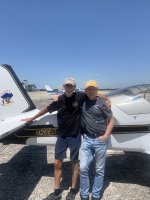
the real test is to drop another 40 lbs and get real healthy and see what happens. i dropped 50 lbs but never saw any big gains in flying performance. i am now hovering around 143 lbs.
 

Attachments

  • IMG_7198.jpeg
    IMG_7198.jpeg
    1.6 MB · Views: 23
Back
Top