Van's Air Force

The definitive Van's Aircraft support community! Buying, building or flying an RV? Join our exclusive family of mentors and enthusiasts!

Aero classic tires sidewall cracking

DanFrazer

Active Member
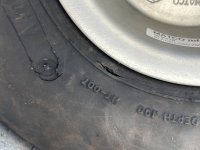
I was checking my wheels during a preflight yesterday and noticed these tears in the tire sidewall. My plane has 27 hours on it. NOT HAPPY. There is 1 tear per tire, both similar in size.

According to the date stamp on the tire, they were made in Nov 2022.

The only additional air I’ve put in them was maybe 3 psi when it got super cold in Ohio, otherwise they’ve been right at the spec. I wonder if the cold weather operations could have cracked the rubber just due to being more brittle.

I will say that this recent preflight was the most thorough I’ve done on the gear besides the first few flights. I am wondering if the tears could have been there for a few weeks. I plan to replace the tires with some Michelin Air tires.

Half of the tires life with wheel pants and other half without.IMG_8716.jpeg

IMG_8718.jpeg
 
Had the same thing happen. Mine was on the inside and saw it when I went to reverse the tires after about 50 hrs. Was on a RV 12 that Van’s have you keep a lower psi. Switched to air hawk and like a lot better
 
Had the same thing happen. Mine was on the inside and saw it when I went to reverse the tires after about 50 hrs. Was on a RV 12 that Van’s have you keep a lower psi. Switched to air hawk and like a lot better
Did you attempt to get a warranty claim from the manufacturer? This is ridiculous
 
A few years back I was running Desser retreads and the sidewall on one of the mains had cracks after about a years of use, 1/2 tread wear. I sent pics to Desser and they replaced it free. The only problem was I had to buy another for the other side so they were matched in tread wear.
 
I was checking my wheels during a preflight yesterday and noticed these tears in the tire sidewall. My plane has 27 hours on it. NOT HAPPY. There is 1 tear per tire, both similar in size.

Although not a good finding, that was a very good find! Excellent preflight skills!
 
I’ve seen more than a couple of ugly separations on Aero Classic tires in other forums. The 11x4x5 seem to be the more frequent offenders. One ugly separation (below) recently on the Glasair FB forum. Your diligent inspections paid off here.
 

Attachments

  • IMG_5624.jpeg
    IMG_5624.jpeg
    671.7 KB · Views: 110
Those tires would NOT be airworthy for me.
Don't really need tires in the air. I'm calling it not landing-worthy. :)

Admittedly, it could have been like this for at least a few flights. As unhappy as I am after only 27 hours, I will swap out the tires for new ones before flying again. Aircraft Spruce are getting them to me next day. Really love the service they have. I just need to learn how to jack the plane up and work on wheels sooner than I would have thought.

Looking back at pictures of when I assembled and installed the wheels reminds me that I'm not building a brand new airplane anymore. There's brake dust all over the place compared to the brand new appearance it had when I assembled it.
 
Aero classic stuff is junk IMO… I had 10 year old Michelin Airstop tubes that had absolutely zero pressure loss between inspections. Due to age I replaced the Michelins for aero classic tubes and they are down 5-10psi between inspections.
 
From my experience, Michelin or Goodyear tires with Michelin Airstop tubes will solve this problem entirely!
 
I use the Goodyear tires now. The Goodyear tires have stiffer sidewall and wear longer than the Aero classic. Also because of the thicker and stiffer sidewall, the tires keep their integrity better in the case of low tire pressure, adding more margin against blow out.
 
I actually like the Aero Classic tires. I do use Michelin tubes inside them but the tires are fine and at a lower price point.
 
I use the Goodyear tires now. The Goodyear tires have stiffer sidewall and wear longer than the Aero classic. Also because of the thicker and stiffer sidewall, the tires keep their integrity better in the case of low tire pressure, adding more margin against blow out.
Not necessarily a good thing.
Particularly on a real light airplane like the RV-12.
A lot of people are unaware, but the sidewall flex of a tire is part of the load absorption system of the landing gear.
The very specific tire pressure specified for the RV-12 is based on the amount of tire flex that is needed for a specific drop condition.
So changing to a much stiffer tire will change the ratio of load transfer into the gear legs and the associated fuselage structure.
 
Engineering is the art of looking at all of the subtle, non-obvious variables and accounting for them in the final product. "The sidewall flex is part of the load absorption system" is a great example of fine engineering.
 
Not necessarily a good thing.
Particularly on a real light airplane like the RV-12.
A lot of people are unaware, but the sidewall flex of a tire is part of the load absorption system of the landing gear.
The very specific tire pressure specified for the RV-12 is based on the amount of tire flex that is needed for a specific drop condition.
So changing to a much stiffer tire will change the ratio of load transfer into the gear legs and the associated fuselage structure.
I've seen enough blow out at my home airport to warrant the use of stiffer tires. At least it forces me to land not as hard. I still bounce my RV8 once in a while but the chance of me stranded at an airport far from home is a lot less with the Goodyear tires.
 
Back
Top