Russ, walk us through your world. What do you like for fast tube prep? Like a particular rod? Straight argon or something else? Got a rule of thumb for a base amps setting vs wall thickness. Etc, etc. etc....
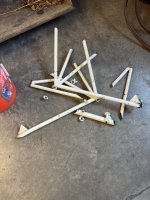
Tube prep,,,, As little as wiping off the oil and welding, not ideal. Everything seen in here was washed in a Gray Mills hot tank that uses water and a Gray Mills solution, I don't remember the number off hand, it's a degreaser and corrosion inhibitor. then A quick spin by hand on the 4" belt sander with an 80-grit belt, the belt has to only be used for this purpose, so it sands evenly across its width, they last a while, when they don't sand tubes well any more they get demoted to general use, I even sharpen my electrodes on the belt sander with the same 80-grit belts.
ER70S2 filler rod, it's the industry standard, I've used lots of different brands, they all seem a little different but they all work fine, you can get it from your local welding store or off Amazon, I've tried them all, the one with the right price and availability is the best one.
Pure Argon.
Base amp setting? Well there is a general rule of thumb, 1 amp per thousandth of wall thickness. That's nice and all, and maybe gets a guy started, set the machine at 35amps to weld .035 tubing and just floor the pedal and start off when it's ready, but that's not how it's done in the real world once you know how to weld.
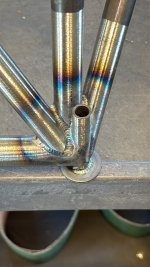
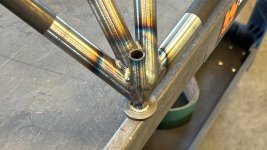
I'm always using a pedal to control amperage, and I always want some overhead. Most of the tubing on that mount is .049", My amperage was set to 111 for most of it and 121 for the area on the inside in the bottom corners, a lot of stuff comes together down there along with the heaver gear socket tube, that spot needs all of the 121 amps. Why 111 or 121 instead of 110 or 120? It wouldn't make any difference, I just have numbers I like, I'm not superstitious but it just seems like bad luck to set it on an even number.
So now I've put the amperage control in the hands of the operator along with the manipulation of the torch and the filler rod, so I'm in complete control of the heat, the travel speed, how to apply the filler and how much filler, along with torch angle and movement. The heat, torch and filler are all fluid, meaning, I change between methods, heat, torch angles, lay wire or dipping all on the fly, nothing is set in stone, and the book is often wrong and almost nothing I weld is "in position" it's all "out of position" it's never just lying flat on the bench. You use the heat, the angle of the torch and how you apply the filler in whatever way you can to get the weld puddle to lay where and how you want it to lay.
40 years of TIG welding, 35 years building parts for Van's, That's a lot of practice. Not to say a guy can't get pretty good at it before the 40-year mark, you definitely can, lots of young guys out there doing great work.




 IMG_7492.jpeg3.7 MB · Views: 129
 IMG_7504.jpeg1,001.8 KB · Views: 113
 IMG_7503.jpeg1.6 MB · Views: 96
 IMG_7499.jpeg954.9 KB · Views: 89
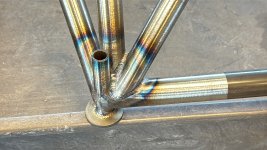 IMG_7502.jpeg1.8 MB · Views: 90
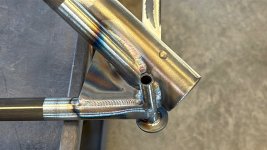 IMG_7501.jpeg1.5 MB · Views: 89
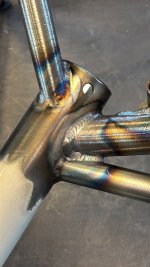 IMG_7500.jpeg1,014.4 KB · Views: 91
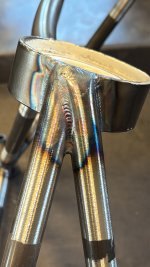 IMG_7498.jpeg1,001.8 KB · Views: 86
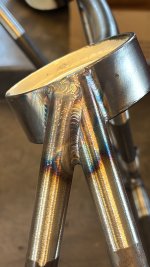 IMG_7497.jpeg1 MB · Views: 88
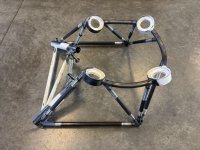 IMG_7496.jpeg4.8 MB · Views: 91
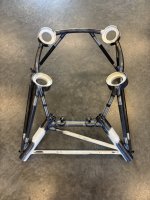 IMG_7495.jpeg3.9 MB · Views: 85
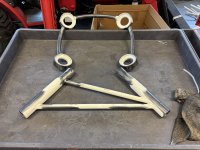 IMG_7493.jpeg5.1 MB · Views: 123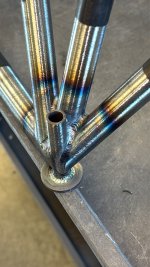
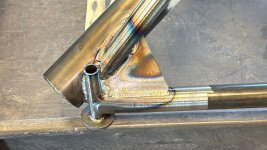
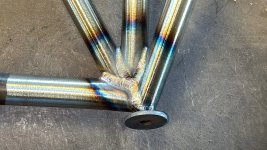


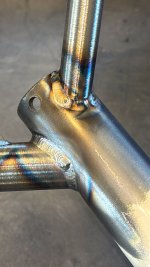
 consider me officially envious. Such even heat signatures. Sign of a real pro.


