Van's Air Force

The definitive Van's Aircraft support community! Buying, building or flying an RV? Join our exclusive family of mentors and enthusiasts!

3D printing for EAB aircraft parts

BillTC

Member
Sponsor
I decided to start a new thread for explaining some of the basics of 3D printing, how the different processes work and how to apply for EAB aircraft. This is a powerful tool that is only getting better so lets learn to use it.

I will copy some posts I made on other threads to put them all in one place.
 
copy from before:

After nearly 20 years of lurking I was asked to finally contribute and comment on this. (Hi Mike!). I suppose it's time for me to give back to the community

So:
Yes, there is a 3D printer expert on the forum, he's always listened rather than talked.
Yes, 3D printed parts are appropriate for aircraft
Yes, you can use 3D printed parts fire wall forward. Ive done it for over a decade.
And no, you shouldn't do it if you dont know what you are doing (just like anything)

I've been in the RP, 3D printing, Additive Manufacturing business since 1996. I also happen to own a 3D printer development startup which includes a print service bureau with industrial printers.

3D printing is like any other manufacturing process. Success of any design requires a combination of the right geometry, the right material, the right production process, and sufficient testing. No one would say that sheet metal is not appropriate for aircraft construction after the LCP problems. No one would say sheet metal is not acceptable for aircraft constriction if someone made wing ribs out lead sheet rather than aluminum. 3D printing is just the same. It's just gotten more accessible recently and there is a lot of poor understanding, lack of information, and many, many uninformed opinions floating around.

I'll try to start simply (if not briefly):

FDM printing has materials that work firewall forward and are strong. Here's the biggest problem: When you buy aluminum you are buying to international standards so you know what properties you are getting. There are NO international standards for polymers and that's just for raw pellets. 3D printing filament is even worse. Properties vary all over the map for materials that are sold claiming to be known resin types like ABS, ASA, PC etc. If you are buying internet filament you have no idea what you are getting. Allow me to explain.

When we print layered parts, thermal expansion or shrink that takes place as the part cools will distort your part. When we lay down a layer it will bond to the layer below then shrink. This is like a bi-metal spring where the layers now want to be different sizes. The result is warp, curl and other distortion. There is only 1 definitive solution for this on FDM parts: build the parts at a temperature where those warp forces can anneal out before they add up to enough to ruin the part. This is why production FDM printers build inside a heated oven at controlled temps. This has been well understood since the early 1990s and is very effective. For high performance polymers these warp forces can be enormous and any support structures for overhang are actually designed to stop upward warp rather than downward droop due to gravity.

There are also many forms of mitigation in use but they only work some time. (Very open fills, zig/ zag fills, some fiber filling, heated build plates, low Tg materials, etc.). These have become common place since the explosion of consumer 3D printers on the market that us mortals can afford and for hobby use that is fine. But it is mitigation not a cure. Low Tg materials are the norm here.

The scary thing now is we see "special 3D printing grade formulas" of filament claiming to be specific materials. The special formula is a common base material (like ABS) doped full of plasticizers or impact modifiers. The purpose is to make them print successfully on low temperature or open frame printers and it works. Unfortunately, the thermal and mechanical properties are also affected and sometimes drastically.

Take the recent UK crash. ABS typically has a Tg of 100C - 115C so it needs a printer with oven temp 90C or above. But, this material was tested to have a Tg between 50C and 55C. It was heavily doped material. It gets worse. When we test materials purchased off the internet, we get different properties on different spools or the same part number material. If you are buying "PEI". (polyetherimide) off the internet are sure you know what you are getting?


So what to do? A couple of things.

1) for firewall forward I would not use any material that is not brand name Ultem. It is eye watering expensive as filament ($300/ kg). The pellets alone cost more than $50/kg and it is finicky to turn into accurate filament. Add consistency and traceability and yeah, it adds up. Choose wisely.

2) Do not use an FDM part in an application that requires temp greater than 10 degrees below the build chamber temp that it was printed at. If its stress relieving at 60C in the printer it will always distort at 60C.

3) Dont believe that when you buy filament as something sold as ABS, PEI, PC, etc that you know what you are getting . You do not know what you're getting.

4) Prototype on your home printer than pay a real print shop to make a part for you. Xometery and others are fine. It won't be cheap.

Feel free to ask more.

I apoligize for the length and preachiness of this post. There is a lot to cover and this is just the beginning. I can cover powder based parts in another post. PBF, SLS, HSS, MJF, SAF, etc are all trade names for powder bed fusion parts that have their own can of worms.

It's the Wild West out there. Be careful.
 
Before we get into powder printing let’s talk about materials. I’ll stick to thermoplastic polymers and leave photo cure polymers and metals for another day.


Thermoplastics are melt processable polymers and come in 2 broad categories: Amorphous and Semi-crystaline and we see both types in every day life.

Amorphous polymers include: ABS, ASA, PC, PPO, PEI, PPSF, and more

Semi-crystaline polymers include: PA (polyamide or Nylon), PE (poly ethylene), PP (poly propylene), POM (Delrin), PEEK and more.


There are some oddities like nylon which comes in both crystalline or amorphous flavors and PLA which is a strange low temperature, low crystallinity resin used extensively in consumer FDM printers.


Filling polymers with fibers can increase stiffness and ultimate strength but they become more brittle and less tough. Because the semi-crystalline polymers are very tough they are commonly filled. Fibers also help control shrink for some purposes. As in all things, fiber filling is a trade off but is often a beneficial one for molded parts. Almost all auto intake systems are glass filled nylon these days.


The properties of these polymers will determine what applications they are appropriate for and which 3D printing technology they are compatible with.


FDM printing uses amorphous polymers almost exclusively (PLA being the big exception). These resins are lower shrink which helps with distortion.


But there is a bigger reason. In FDM printers we print in a heated oven or chamber to anneal out differential shrink stresses as the part is printing. For this process to work there MUST be a process temperature window where oven temperature is high enough for the stress to anneal out but is low enough that the parts do not sag or distorting due to gravity. The amorphous polymers typically have a window where this can be done successfully. The semi-crystalline polymers typically do not have a process window for this to work. For special geometries and small parts you can make it semi-crystalines work in some cases but they are rare. Nylons that you find for FDM printers are typically amorphous nylons or blends.


Powder printing is different. I will go into more detail about that process in another post but that process of sintering powder together is dependent on the polymer melting to low viscosity so the adjacent particles can “wet” out and bond together. This requirement favors the semi-crystalline materials since they quickly melt to low viscosity. Amorphous materials dont really work in this process. Powder printers use nylons (polyamides) exclusively because they have low melt viscosity and they are cost effective since there is already a commodity nylon powder milling industry for metal powder coating. There are a few polypropylene powders used now but they are fairly rare.

Since the 2 most common 3d printing technologies use different classes of polymers they have different properties, different advantages, and different limitations.
 
I finally had some time to get back to this:


Now we can talk about powder printers.

Powder based 3D printers are a mature technology that has been around for more than 30 years and are used for both metals and polymers. Let’s stick to polymers for now.

Powder printers are sold under different names and slightly different technology brands but at the core they are mostly the same. The generic name for powder printing is PBF (powder bed fusion) but you will also see: SLS, HSS, MJF, and SAF depending on the brand.

The PBF process has these steps:

1] Lower the Z stage into the heated powder chamber 1 layer. Then use a roller to pack a single layer of powder onto the Z stage.

2]. Selectively sinter the areas of the powder surface that are the sections of the desired parts. (There are typically many parts being built in the powder bed at the same time since this process is inefficient to run at 1 part at a time.)

Repeat steps 1 and 2 until all of the parts are completed resulting in a chamber filled with packed powder with the parts buried inside.
Then:

3] Slowly cool the powder chamber with the powder cake either in the printer or in an external cooling system.

4] Post process by extracting the parts from the powder cake and clean them up with compressed air and grit blasting. A well packed powder bed will be ~20% parts and the rest is unused powder.

The main difference between different PBF printers is how to selectively sinter only the part of the powder surface that is desired.

The traditional process known as SLS uses a high power laser to rapidly scan the powder surface where the part sintering is desired. The laser is fixed and the beam rapidly scans the desired areas for sintering using mirrors.

A newer alternative known as HSS uses a 2 step process.

Step 1: ink jet print an IR absorber on the areas of the powder surface to sinter.
Step 2: pass a strong IR lamp of over the entire bed.

The differential of IR absorption rates between the jetted and non jetted regions will sinter only the regions jetted with IR absorber. The IR absorbers can be opaque (black) or clear and the process needs to be well controlled to get the desired results. HP uses a “detailing agent” (mostly water) jetted on the powder adjacent to the IR absorbers which stops that powder from sintering. The HSS patents have been licensed by more than one company and is sold as MJF or SAF. The process is the same on both of these with minor differences in implementation.

An important difference between PBF and FDM is the materials that they use. The PBF process requires semi-crystalline polymers for reasons I’ll skip for now and almost all PBF printing is Nylon. Most of the advantages and limitations of PBF vs FDM are largely related to the materials that they use. These technologies are complementary and suitable for different purposes.


The pros of PBF apply to all of PBF printers :
  • High resolution
  • consistent strength in X,Y,Z
  • Self supporting- no support structures needed
  • High through-put
  • No support structures
  • Parts are usually printed by experienced professionals
Powder printed parts are high resolution, have Z strength (and strain) matched better to X and Y. The process has high through put as long as the powder bed is densely packed with parts. A well packed chamber is about 20% parts. The rest is unused powder.

These are expensive printers with expensive installation at more than $200,000 per printer. That is a benefit to us because these expensive installations are typically run by skilled users at service bureaus. The results tend to be more professional than just buying parts from a guy with a printer and some filament. They know the details about how and where to pack for best consistency and accuracy for different size parts.

The nylon powder can be neat or fiber filled. The fibers will increase stiffness and strength in x-Y at a sacrifice of some toughness. In general the powders come from only a few vendors and are much more consistent and known than internet FDM filament.

Since the parts are built in a packed powder keg no supports are needed and the only support removal needed is to remove the un-sintered powder. This is usually easy unless it is trapped inside the geometry with no way out.

The Cons also apply to all of the printers:
  • Limited materials choice
  • Limited color choices
  • Shrink, distortion, and accuracy.
  • Long time to part
  • Part variation based on chamber placement
  • Layer orientation may change in subsequent orders if not specified.
  • Powder waste, reuse, and consistency
Due to the process requirements nearly all PBF parts are nylon or fiber filled nylon. There is some polypropylene (PP) available but the properties aren’t amazingly different. Even though limited materials is a drawback, these are great materials. (Hidden auto interior parts are molded out of PP and auto intake manifold parts are nearly all molded glass filled nylon and are happy under the hood. Note that the auto intake parts are carefully designed with ribs and reinforcements to work in this application Do Not feel comfortable printing FF forward parts unless you have measured the temperature and understand the loads the parts must endure AT PEAK TEMPERATURE!)

Laser based PBF parts are nearly all white and the ink jet based ones are mostly charcoal grey so no real color choices. If using the white parts there are dying systems to create colors but this is expensive and niche. Other than dying there aren’t really color options.

Because PBF prints an entire, full powder chamber we never print just one part. Combine this with cooling times plus post processing and the TTP (time to part) is usually 20 hours or more vs printing a single, small FDM part. Even though TTP can be high there is high thruput since many parts are printed at the same time. This makes PBF an attractive option for higher volumes of parts but when ordering from a service bureau it might take a few days to get your parts depending on when they can fit them into a build.

The biggest downside of PBF printing is part accuracy and distortion. The high shrink rates of the semi-crystallin materials and thermal gradients as the powder cake cools means that larger or flatter parts will distort. Dimensional accuracy also rapidly declines as parts get bigger. We typically think of PBF being good for parts about the size of your hand. Also, distortion can vary depending on the placement and orientation of the part in the powder cake. A skilled operator will pack parts carefully but there will be variations. Most parts are sliced while the printer is printing so there is also no guarantee that the parts will be printed in the same orientation unless you specify this with your vendor. FDM parts usually have a clear optimal orientation to minimize time or supports but that is not true with PBF parts.

While the powder itself tends to be quite consistent from major vendors there is the problem of powder reuse. A well packed printer will be 20% parts and 80% scrap powder. The question is how much of the scrap powder can be reused? There are various claims from various manufacturers but one should be skeptical. Most shops blend a mix of virgin and sifted, used powder in some ratio. Low cost vendors like Shapeways used nearly all used powder. Many aerospace companies spec all new or carefully controlled ratios. Most professional shops will do a decent balancing act but be careful. Ask for data if you can.

Summary

PBF is a great technology for manufacturing parts that are strong, have high detail, and cost effective. There are a few flavors of the technology (SLS, SAF, MJF, etc) but the advantages and disadvantages are largely the same. While the material choices are limited, the materials are capable. Due to shrink, distortion, cost, and consistency PBF technology is typically used for smaller parts. We typically think size of your hand or smaller but there are exceptions. Colors are limited but for many applications we dont care.

This technology is complementary with FDM which has other tradeoffs and neither one will displace the other.

There are some newer, lower cost PBF options on the market for around $50k (Formlabs). These are not quite up to the same standard as their more expensive cousins.


My apologies for the long post. This is a rich subject and I have done my best to summarize but that also means leaving out some details. Feel free to ask questions.

 
Seriously, thanks.

For FWF, my strategy is your #4, namely prototype the part at home then use a service bureau for the final material and process.

FWIW, we have a Bambu lab H2D which is considered pretty high end for a home printer and the chamber can only go to 65C.
 
This is awesome. Thanks for sharing your knowledge! And please don't apologize for being long-winded. We appreciate that!

I've had variable results with large and flat-ish SLS parts re: warpage. Sometimes the parts are near-perfect, and other times I have to heat them in an oven and reshape. This is with similar parts made by various vendors, which tells me that some don't let the cake cool as long as they should before de-powdering.
 
I'm close to pulling the trigger for an at home, low duty, but capable printer. I've pretty much decided on the snapmaker artisan 3 in 1 thats a dual extruder, 40W + IR Laser, CNC head. My goal is to be able to of course print the occasional 3d part, but really to do my entire panel myself. With the CNC option, 400x400 workbed, and the two lasers, I should be able to do the entire 310 panel. I may even be able to do my own switches as I've found the source for the common rockers.

Any thoughts on this? bad idea? sounds good?
 
I'm close to pulling the trigger for an at home, low duty, but capable printer. I've pretty much decided on the snapmaker artisan 3 in 1 thats a dual extruder, 40W + IR Laser, CNC head. My goal is to be able to of course print the occasional 3d part, but really to do my entire panel myself. With the CNC option, 400x400 workbed, and the two lasers, I should be able to do the entire 310 panel. I may even be able to do my own switches as I've found the source for the common rockers.

Any thoughts on this? bad idea? sounds good?
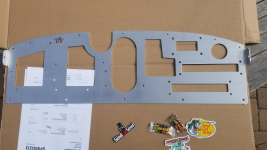
Your idea sounds good from an "education" standpoint, and to able to say you did it "all" (and maybe that's really important to you, and if so, nevermind the rest here).... but personally I'd send my panel design as a dxf to SendCutSend and in 4 days have an excellent panel. They cut sheet metal via laser, plus do bending. They're amazingly accurate and low cost and fast. We used SCS to make the panels plus the behind-the-panel support parts on the Sling demo planes (the gray ones which were at OSH the last 2 years).

1769640135557.png

As to a 3d printer, as @BillTC said, send the stl's or stp's to a print house and have made via SLS or MJF. So many out there nowadays!
 
Your idea sounds good from an "education" standpoint, and to able to say you did it "all" (and maybe that's really important to you, and if so, nevermind the rest here).... but personally I'd send my panel design as a dxf to SendCutSend and in 4 days have an excellent panel. They cut sheet metal via laser, plus do bending. They're amazingly accurate and low cost and fast. We used SCS to make the panels plus the behind-the-panel support parts on the Sling demo planes (the gray ones which were at OSH the last 2 years).

View attachment 108462

As to a 3d printer, as @BillTC said, send the stl's or stp's to a print house and have made via SLS or MJF. So many out there nowadays!
I know of all the vendors, and its certainly something to consider from a cost perspective but I keep finding more and more things I'd want to do with it.. So with that I'm trying to see how quickly I can tally up things to justify doing my own. WIth the 310 panel the inserts should fit fine in the workspace. I could also order carbon fiber sheets from amazon if I wanted to use those over aluminum and really save some money vs SCS.

I also expect a lot of trial and error, so working with a print vendor becomes very expensive and time consuming. My gut check here was more on the assumption I want to do it in house, is this a viable choice for those that have worked with this product or the competition.
 
I'm close to pulling the trigger for an at home, low duty, but capable printer. I've pretty much decided on the snapmaker artisan 3 in 1 thats a dual extruder, 40W + IR Laser, CNC head. My goal is to be able to of course print the occasional 3d part, but really to do my entire panel myself. With the CNC option, 400x400 workbed, and the two lasers, I should be able to do the entire 310 panel. I may even be able to do my own switches as I've found the source for the common rockers.

Any thoughts on this? bad idea? sounds good?
The 3-in-1 kind of reminds me of the ShopSmith 5-in-1 multi-tool, jack of all trades, master of none. I would tend to go the individual tool route just because of setup and tuning time. I was an X-Carve fan for CNC before they dropped the build it yourself kit and went the Pro route at $5K, but still lots of other options at various price points. I think Prusa is pushing the non-industrial 3D FDM market with the new Core One+ with the INDX print head. The software for design/generating G-code is just important as the machine specs. I have used SendCutSend in the past and got great service at a reasonable price.
 
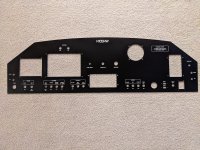
Another option is Frontpanelexpress.com. They did my whole panel in black anodize with engraved lettering with white infill 3 years ago for less than $300. It looks like it would be $388 today.
 

Attachments

  • PXL_20211112_225257080 (1).jpg
    PXL_20211112_225257080 (1).jpg
    2.8 MB · Views: 36
Back
Top