Van's Air Force

The definitive Van's Aircraft support community! Buying, building or flying an RV? Join our exclusive family of mentors and enthusiasts!

Dual G5s or GRT Mini II's

paulsmeds

Well Known Member
Friend
I'm wrestling with installing dual G5s or dual GRT Mini II's. Goal is eventual IFR capable on a tight budget. Currently have old steam gauges with a solid EDM and all engine data. The original plan was dual stacked G5s, OAT and Magnetometer shared through CAN bus. Then I saw the GRX Mini II and it seems like it has more to offer including future expansion. Pricing everything out, a dual GRX Mini II with OAT & Magnetometer comes in about $1,000 less than the G5 solution.

Questions:
1. Can I stack two GRX Mini II's in the existing 3-1/8 holes where the current steam AI and DG are located? The G5s will fit stacked but I can only find a reference that the Mini is 1" wider and taller and can't verify. If so, there isn't enough room to stack two in the existing 3-1/8" holes I believe. Has anyone stacked them in as replacements in a standard 6 pack 3-1/8 panel?

2. Has anyone been able to output serial data from an EDM to the GRX Mini? The Mini documentation says it needs a GRT EFI to feed engine data. Seems a shame to not be able to read the EDM engine data stream as well as it is all there and functional.

If I can't stack two Mini's in the existing holes, a thought would be to do a Sport EX EFIS (7") for Primary and then use the a Mini as the secondary. Adds another $900 but still less cost than dual G5s.

I've heard nothing but good things about the G5s. But more and more I'm hearing good things about the GRT Mini and recently got to see one up close. I was planning on single G5 install in a couple of months with the inspection but now I'm wondering about the Mini instead. I wish I had the budget for huge avionics overhaul but I'd be happy with either dual G5s or dual GRT Mini's and an updated GPS over the next two years. Any advice and opinions are welcome as I'm on the fence.

This is what I have so far for comparisons of costs and equipment.

Single G5:
1. G5 Base Unit: $1,660
2. GMU 11 magnetometer: $410
3. CAN terminator/kit: $124
4. GAD 13 OAT Module: $170
5. Davtron OAT Probe $185
6. Backup Battery: $280
Cost: $2,659 + tax/shipping
Second G5:
1. G5 Base Unit: $1,660
2. Battery Backup: $280
G5 Total Cost for 2 w/OAT and Magnetometer: $5,318 + tax/shipping

Single GRT Mini #1:

1. Mini EFIS Gen II: $1,730 (or Sport EX Basic Package $2,530)
2. GRT OAT Probe: $116
3. GRT Magnetometer: $300
4. Backup Battery: $275
Mini Cost: $2,421 + tax/shipping or
Sport Ex Cost: $3,221 + tax/shipping
Second GRT Mini #2:
1. Mini EFIS Gen II $1,730
2. Backup Battery: $275
Cost: $2,005 + tax/shipping
Mini Total Cost for 2 w/OAT and Magnetometer: $4,426 + tax/shipping
Sport Ex + Mini w/OAT and Magnetometer: $5,226 + tax/shipping
 
I'm wrestling with installing dual G5s or dual GRT Mini II's. Goal is eventual IFR capable on a tight budget. Currently have old steam gauges with a solid EDM and all engine data. The original plan was dual stacked G5s, OAT and Magnetometer shared through CAN bus. Then I saw the GRX Mini II and it seems like it has more to offer including future expansion. Pricing everything out, a dual GRX Mini II with OAT & Magnetometer comes in about $1,000 less than the G5 solution.

Questions:
1. Can I stack two GRX Mini II's in the existing 3-1/8 holes where the current steam AI and DG are located? The G5s will fit stacked but I can only find a reference that the Mini is 1" wider and taller and can't verify. If so, there isn't enough room to stack two in the existing 3-1/8" holes I believe. Has anyone stacked them in as replacements in a standard 6 pack 3-1/8 panel?

2. Has anyone been able to output serial data from an EDM to the GRX Mini? The Mini documentation says it needs a GRT EFI to feed engine data. Seems a shame to not be able to read the EDM engine data stream as well as it is all there and functional.

If I can't stack two Mini's in the existing holes, a thought would be to do a Sport EX EFIS (7") for Primary and then use the a Mini as the secondary. Adds another $900 but still less cost than dual G5s.

I've heard nothing but good things about the G5s. But more and more I'm hearing good things about the GRT Mini and recently got to see one up close. I was planning on single G5 install in a couple of months with the inspection but now I'm wondering about the Mini instead. I wish I had the budget for huge avionics overhaul but I'd be happy with either dual G5s or dual GRT Mini's and an updated GPS over the next two years. Any advice and opinions are welcome as I'm on the fence.

This is what I have so far for comparisons of costs and equipment.

Single G5:
1. G5 Base Unit: $1,660
2. GMU 11 magnetometer: $410
3. CAN terminator/kit: $124
4. GAD 13 OAT Module: $170
5. Davtron OAT Probe $185
6. Backup Battery: $280
Cost: $2,659 + tax/shipping
Second G5:
1. G5 Base Unit: $1,660
2. Battery Backup: $280
G5 Total Cost for 2 w/OAT and Magnetometer: $5,318 + tax/shipping

Single GRT Mini #1:

1. Mini EFIS Gen II: $1,730 (or Sport EX Basic Package $2,530)
2. GRT OAT Probe: $116
3. GRT Magnetometer: $300
4. Backup Battery: $275
Mini Cost: $2,421 + tax/shipping or
Sport Ex Cost: $3,221 + tax/shipping
Second GRT Mini #2:
1. Mini EFIS Gen II $1,730
2. Backup Battery: $275
Cost: $2,005 + tax/shipping
Mini Total Cost for 2 w/OAT and Magnetometer: $4,426 + tax/shipping
Sport Ex + Mini w/OAT and Magnetometer: $5,226 + tax/shipping
The digital magnetometer signal can be shared with both units to save money. That is the direction I will have with my Mini and Sport WS.
 
The G5 is a rock solid unit. You wouldn't necessarily need the second battery if you didn't want to put it in (I didn't even put it in the primary unit). Also note that the GAD13 and GMU11 don't come with connector kits.The GPS 20A connector kits are cheaper and the exact same thing they also come with the CAN terminators, so you can skip that kit.
 
Buy the G5’s and live happily ever after. As a backup, consider two av30’s. I like them both for different reasons. Garmin is the gold standard in ifr and resell value.
This is how I rolled, two G5's. Seems anytime I look at integrating a complimentary piece of electronic equipment, their instructions start with how to integrate with Garmin.

Or maybe I just remember it that way as a fanboy. :giggle:
 
The front faceplate of a GRT mini is 3.95” high, 4.35”wide. The body behind the panel fits thru a standard 3 1/8” hole. Data is on the GRT web page.
 
The Mini is 3.94" tall, so if your 3-1/8 holes are at least 4" center to center they should stack.
I have a Mini II and a Sport EX and they work fine. There is no charge for database updates if you add the map option.
It took me a little bit to fully understand how the two units share data when they are connected together via serial data link.
They independently calculate nav / heading ADHRS solutions. You can feed the magnetometer to both units, but only one can power the magnetometer. Both units read the raw data and calculate heading independently, but the calibration can be shared during setup.
The serial link allows sharing of user inputs (barro alt, heading select, altitude select, and autopilot modes).
 
The Mini is 3.94" tall, so if your 3-1/8 holes are at least 4" center to center they should stack.
I have a Mini II and a Sport EX and they work fine. There is no charge for database updates if you add the map option.
It took me a little bit to fully understand how the two units share data when they are connected together via serial data link.
They independently calculate nav / heading ADHRS solutions. You can feed the magnetometer to both units, but only one can power the magnetometer. Both units read the raw data and calculate heading independently, but the calibration can be shared during setup.
The serial link allows sharing of user inputs (barro alt, heading select, altitude select, and autopilot modes).
I'm wrestling with installing dual G5s or dual GRT Mini II's. Goal is eventual IFR capable on a tight budget. Currently have old steam gauges with a solid EDM and all engine data. The original plan was dual stacked G5s, OAT and Magnetometer shared through CAN bus. Then I saw the GRX Mini II and it seems like it has more to offer including future expansion. Pricing everything out, a dual GRX Mini II with OAT & Magnetometer comes in about $1,000 less than the G5 solution.

Questions:
1. Can I stack two GRX Mini II's in the existing 3-1/8 holes where the current steam AI and DG are located? The G5s will fit stacked but I can only find a reference that the Mini is 1" wider and taller and can't verify. If so, there isn't enough room to stack two in the existing 3-1/8" holes I believe. Has anyone stacked them in as replacements in a standard 6 pack 3-1/8 panel?

2. Has anyone been able to output serial data from an EDM to the GRX Mini? The Mini documentation says it needs a GRT EFI to feed engine data. Seems a shame to not be able to read the EDM engine data stream as well as it is all there and functional.

If I can't stack two Mini's in the existing holes, a thought would be to do a Sport EX EFIS (7") for Primary and then use the a Mini as the secondary. Adds another $900 but still less cost than dual G5s.

I've heard nothing but good things about the G5s. But more and more I'm hearing good things about the GRT Mini and recently got to see one up close. I was planning on single G5 install in a couple of months with the inspection but now I'm wondering about the Mini instead. I wish I had the budget for huge avionics overhaul but I'd be happy with either dual G5s or dual GRT Mini's and an updated GPS over the next two years. Any advice and opinions are welcome as I'm on the fence.

This is what I have so far for comparisons of costs and equipment.

Single G5:
1. G5 Base Unit: $1,660
2. GMU 11 magnetometer: $410
3. CAN terminator/kit: $124
4. GAD 13 OAT Module: $170
5. Davtron OAT Probe $185
6. Backup Battery: $280
Cost: $2,659 + tax/shipping
Second G5:
1. G5 Base Unit: $1,660
2. Battery Backup: $280
G5 Total Cost for 2 w/OAT and Magnetometer: $5,318 + tax/shipping

Single GRT Mini #1:

1. Mini EFIS Gen II: $1,730 (or Sport EX Basic Package $2,530)
2. GRT OAT Probe: $116
3. GRT Magnetometer: $300
4. Backup Battery: $275
Mini Cost: $2,421 + tax/shipping or
Sport Ex Cost: $3,221 + tax/shipping
Second GRT Mini #2:
1. Mini EFIS Gen II $1,730
2. Backup Battery: $275
Cost: $2,005 + tax/shipping
Mini Total Cost for 2 w/OAT and Magnetometer: $4,426 + tax/shipping
Sport Ex + Mini w/OAT and Magnetometer: $5,226 + tax/shipping
Having done this at least 3 times - I am more in the Grt camp - wiring; adding autopilot servos; connecting to adsb etc all is much simpler as well as the wiring to transponder.

Garmin is a fine option but you will end up with higher cost for the same features and more complex wiring. Nothing wrong with that approach if you want a full Garmin panel long term but it will be a lot more expensive by the time you add all the bells and whistles with Garmin along with the installation time and cost.

I have done both and actually like both directions for different reasons.

Advanced ifr panel with all the bells and whistles - Garmin

Simple and more value fully functional ifr panel - Grt will be cheaper and better value
 
Having done this at least 3 times - I am more in the Grt camp - wiring; adding autopilot servos; connecting to adsb etc all is much simpler as well as the wiring to transponder.

Garmin is a fine option but you will end up with higher cost for the same features and more complex wiring. Nothing wrong with that approach if you want a full Garmin panel long term but it will be a lot more expensive by the time you add all the bells and whistles with Garmin along with the installation time and cost.

I have done both and actually like both directions for different reasons.

Advanced ifr panel with all the bells and whistles - Garmin

Simple and more value fully functional ifr panel - Grt will be cheaper and better value
I'm trying to figure out what you mean by more complex wiring? The G5 is all CAN bus, everything gets power, ground, and a two wire can bus connection for integration.
 
You wouldn't necessarily need the second battery if you didn't want to put it in (I didn't even put it in the primary unit)
I highly recommend a backup battery for at least one G5 or Mini. Huge bang for the buck in terms of redundancy & safety. I was very very glad to have such a backup battery one dark (and fortunately not stormy) night….
 
If you plan on a Garmin navigator for your future IFR capability, I’d just make everything Garmin. Easier integration, hard to beat the user interface, and of course better resale later.
 
Thank you everyone for your opinions. For me the tipping point is all the added capabilities of the GRT (synthetic vision, moving map, engine monitor display, in addition to the AI and DG/HSI functions). If I can get the EDM live data stream to feed the GRT then I gain all the engine monitor displays that the G5 can't display.

GRT support has provided me mixed info that the interface won't work but referred to the wrong EDM fuel data stream interface. EDM support says it should work using their live data stream which is a different connector and is "standard" rs-232, 9600 baud and is specifically used for "streaming live data to EFIS systems". Then GRT came back and changed their tune a little stating that JPI hasn't ever requested to make the interface work so they can't confirm and don't think it will work suggesting I purchase their EIS module.

I like the G5s but I agree with @tectweaker's statement: "Advanced ifr panel with all the bells and whistles - Garmin Simple and more value fully functional ifr panel - Grt will be cheaper and better value"

Unless something changes, I think I'll go with 1 GRT Mini for now. If I can get everything to work and like it, I can add a GRT Sport later and if needed get the GRT EIS engine monitor module - or not if I can get the EDM interface to work. I don't have plans on going full Garmin as nice as that solution is it's just not in the budget and mission looking into the future.

If anyone has interfaced an EDM with GRT please let me know how it went.
 
Last edited:
  • Like
Reactions: Mel
Are you sure the EDM outputs engine data? I don't know anything about the EDM series, but I did a quick review of their technical documents. They talk about interfacing to a GPS. It looks like it receives waypoint and groundspeed data from a GPS or sends fuel flow data to a GPS. Nowhere does it describe sending full engine data. If it does send engine data and someone has the communication data format, I would be interested in seeing it. You should be able to send GPS data from the Mini to the EDM, if that is what you want.
One thing to note, on the Mini you need to change screens to get to the engine data. On the Sport EX you can display engine data at the bottom of the PFD or Map or PFD+Map screens.
 
Thank you everyone for your opinions. For me the tipping point is all the added capabilities of the GRT (synthetic vision, moving map, engine monitor display, in addition to the AI and DG/HSI functions). If I can get the EDM live data stream to feed the GRT then I gain all the engine monitor displays that the G5 can't display.

GRT support has provided me mixed info that the interface won't work but referred to the wrong EDM fuel data stream interface. EDM support says it should work using their live data stream which is a different connector and is "standard" rs-232, 9600 baud and is specifically used for "streaming live data to EFIS systems". Then GRT came back and changed their tune a little stating that JPI hasn't ever requested to make the interface work so they can't confirm and don't think it will work suggesting I purchase their EIS module.

I like the G5s but I agree with @tectweaker's statement: "Advanced ifr panel with all the bells and whistles - Garmin Simple and more value fully functional ifr panel - Grt will be cheaper and better value"

Unless something changes, I think I'll go with 1 GRT Mini for now. If I can get everything to work and like it, I can add a GRT Sport later and if needed get the GRT EIS engine monitor module - or not if I can get the EDM interface to work. I don't have plans on going full Garmin as nice as that solution is it's just not in the budget and mission looking into the future.

If anyone has interfaced an EDM with GRT please let me know how it went.
@paulsmeds - if you are interested in looking at mini and sport ex installs - I have a mini in my biplane and just installed a sport ex in my rv. Happy to show them to you if you want to head over to Klvk sometime ..
 
Are you sure the EDM outputs engine data? I don't know anything about the EDM series, but I did a quick review of their technical documents. They talk about interfacing to a GPS. It looks like it receives waypoint and groundspeed data from a GPS or sends fuel flow data to a GPS. Nowhere does it describe sending full engine data. If it does send engine data and someone has the communication data format, I would be interested in seeing it. You should be able to send GPS data from the Mini to the EDM, if that is what you want.
One thing to note, on the Mini you need to change screens to get to the engine data. On the Sport EX you can display engine data at the bottom of the PFD or Map or PFD+Map screens.
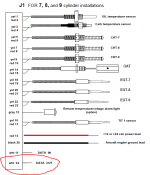
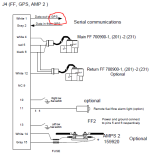
I had this same issue with their documentation which is incomplete. The EDM to GPS data (fuel info only) is on connector P4 Pin 1 (white) "Data out to GPS". The full live data stream of all sensors connected to the EDM is on connector P1 Pin 24 (white) "DATA OUT". The manual never mention the Data Out and In on connector P1 except to show it on the diagram below. It only mentions the GPS Data Out and In on connector P4. I've been in contact back and for with JPI support and they confirmed the "DATA OUT" provides a constant stream out of all connected sensors at a fixed serial 9600 baud. They said there is nothing to configure that the EDM is blindly spitting out all the data regardless if something is connected. I missed it because the title of the wiring diagram they provide says "J1 for 7, 8, and 9 cylinder installations" and is not on the 4 cylinder installation diagram so I just skipped over it and missed it.

To verify, I'm going to connect up a laptop with Putty (terminal emulator) and should be able to see the data stream. I'm pretty sure this is all true but I'm not sure if the data stream is in a format that the GRT will understand. The data stream would just be a bonus especially adding a Sport with a larger display in the future. Worst case it doesn't work and I can plan to install GRT's engine monitor module somewhere down the road. But it will be fun to futz around with it and see if I can get it to work.

1769629935372.png

1769629989668.png
 
@paulsmeds - if you are interested in looking at mini and sport ex installs - I have a mini in my biplane and just installed a sport ex in my rv. Happy to show them to you if you want to head over to Klvk sometime ..
I'm hoping to drop by KLVK later in the Spring and would love to stop in and see your setup. I recently was able to see the same installation a really nice RV-7 and it really looked great.
 
I had this same issue with their documentation which is incomplete. The EDM to GPS data (fuel info only) is on connector P4 Pin 1 (white) "Data out to GPS". The full live data stream of all sensors connected to the EDM is on connector P1 Pin 24 (white) "DATA OUT". The manual never mention the Data Out and In on connector P1 except to show it on the diagram below. It only mentions the GPS Data Out and In on connector P4. I've been in contact back and for with JPI support and they confirmed the "DATA OUT" provides a constant stream out of all connected sensors at a fixed serial 9600 baud. They said there is nothing to configure that the EDM is blindly spitting out all the data regardless if something is connected. I missed it because the title of the wiring diagram they provide says "J1 for 7, 8, and 9 cylinder installations" and is not on the 4 cylinder installation diagram so I just skipped over it and missed it.

To verify, I'm going to connect up a laptop with Putty (terminal emulator) and should be able to see the data stream. I'm pretty sure this is all true but I'm not sure if the data stream is in a format that the GRT will understand. The data stream would just be a bonus especially adding a Sport with a larger display in the future. Worst case it doesn't work and I can plan to install GRT's engine monitor module somewhere down the road. But it will be fun to futz around with it and see if I can get it to work.

View attachment 108447

View attachment 108448
I can almost 100% guarantee that the two will not communicate. I did find a post to GRT's EIS data format on their forum https://www.grtavionics.com/forum/viewtopic.php?t=372
It is raw binary data not ASCII, so it will look like gibberish in PuTTY. If you can get the data format for the EDM, it would be a fun project to program an Arduino nano to convert the data. I did something similar to get the MGL VOR CDI data from their Razor to display correctly on the GRT. MGL has the CDI deflection backwards and hasn't fixed it, so I put an Arduino nano in the cable and fixed it. It works great.
 
I can't stand G5's personally so I would choose the minis if that was my only option. It wouldn't be much extra cost or possibly cheaper though to just do a single sport EX. That is what I did for mine starting out, and added a second sport EX later.
 
I can almost 100% guarantee that the two will not communicate. I did find a post to GRT's EIS data format on their forum https://www.grtavionics.com/forum/viewtopic.php?t=372
It is raw binary data not ASCII, so it will look like gibberish in PuTTY. If you can get the data format for the EDM, it would be a fun project to program an Arduino nano to convert the data. I did something similar to get the MGL VOR CDI data from their Razor to display correctly on the GRT. MGL has the CDI deflection backwards and hasn't fixed it, so I put an Arduino nano in the cable and fixed it. It works great.
Great link. Two possibilities: 1 is that the EDM stream is also in binary and somehow these two companies came up with the same formatting (unlikely) and 2 is that the GRT has multiple serial inputs possibly programmable to accept the EDM stream (also unlikely)? I can't tell yet if the GRT ports are configurable for different input formats. I wasn't expecting the EDM to have the same exact output as the GRT EIS but that possibly one of the GRT ports could be programmed to accept the EDM format - whatever that is. Step #1 I'll get Putty connected up and see what the EDM stream looks like.

The Arduino nano working as translator is interesting. Other than a challenging project, cost and time wise at that point I think it would make more sense to sell the EDM-350 w/sensors not compatible with GRT an then install GRT sensors with the GRT EIS.

It just seems like this should work. Lots of folks out there spent good $$ on EDM systems they are happy with and Garmin, Dynon, GRT, etc. should just be able to accept their data stream without ripping everything out and starting over. Some of us have limited disposable budgets!
 
For those interested, GRT support got back to me and said they would contact JPI to get the description of their data feed. I'm also going to capture an output using a Laptop and Putty and send over as requested. I'm sure they are busy and this is nowhere near the top of their list but impressive support that they would even be interested in figuring out an interface. It would save me around $5,000 to utilize the existing and fully functional engine monitor and sensors (4 CHT, 4EGT, Fuel Flow, OAT, Oil Pressure, Oil Temp, Fuel Pressure, RPM, MP, left tank level, right tank level). It would give me the excuse to upsize from the mini to the Sport or larger to have it all displayed on one screen for these old eyes.
 
If you intend to add autopilot capability in the future, I would really give the dual G5 setup some additional thought. The Garmin 500 series autopilots are well thought out with excellent tuning guides. Personally the overarching factor is the ability to add a GFC507 control panel to the radio stack. I’m not a fan of selecting AP modes from a touch screen or EFIS screen in general.
 
Paul, let me toss out a few thoughts...

Some companies own backup battery solutions are overpriced. Take a look at ETX104 from EarthX. I found it to be cheaper in some scenarios.

A comment was made about 'ifr navigator integration easier garmin <-> garmin'. The garmin ifr navigators I've seen all output ARINC (which is a standard), and it talks nice with Dynon equipment and also with TruTrak autopilot heads (that had the ARINC option installed). There really shouldn't be an issue having the navigator drive the PFD & autopilot of your choice. [So long as they support GPSS (turn anticipation), sensitivity scaling, and GPS vertical guidance.]

Which brings me to autopilots... easy to drop a LOT of $$$$ there. Lots of people ripping out TruTraks to put in full Garmin. The TruTrak is decent and can be picked up for a good price. I've helped install three now. One nice thing about it is if the PFDs all go offline the TruTrak box is still working. If interested, PM me I have some more details about them.
 
Which brings me to autopilots... easy to drop a LOT of $$$$ there. Lots of people ripping out TruTraks to put in full Garmin. The TruTrak is decent and can be picked up for a good price. I've helped install three now. One nice thing about it is if the PFDs all go offline the TruTrak box is still working. If interested, PM me I have some more details about them.
+1
I’ve flown behind a Garmin 500 series AP, and it is a very good AP (except, maybe, for the ‘envelope protection’ stuff which, as a cfi, I dislike). However, as stated above, it does not increase redundancy for IFR, because it needs a working efis to send it attitude data. In the -10, I have a Trio Pro w/ auto trim. It is, IMHO, every bit as good as the Garmin 500, maybe a bit better, and at a lower cost. And it is truly redundant. If all the EFIS boxes drop off line, the Trio can still shoot an LPV approach.
 
Which reminds me, usually you need an ARINC interface box, such as a Garmin GAD29. To connect the IFR navigator to the PFD/HSI. Similarly for the Dynon and GRT systems.
Of course it depends on specifics, as you said. But for the record the GRT Hx I have has ARINC built in.
 
If all the EFIS boxes drop off line, the Trio can still shoot an LPV approach.
I use a Garmin autopilot and really wish it had this redundancy. My old S-TEC in the Warrior also would run independent of anything else (assuming it had power of course).
 
+1
I’ve flown behind a Garmin 500 series AP [...] it does not increase redundancy for IFR, because it needs a working efis to send it attitude data.

Just to clarify a bit... depending on your choice of equipment, the loss of a display may or may not affect autopilot availability.

The autopilot needs a working source of attitude data (ADAHRS), which may or may not be built into a display unit. A G5 combines an ADAHRS and a display, whereas with a G3X system the ADAHRS (GSU 25) is separate from the display(s) (GDU 4xx). If you wanted to, you could install as many as 5 sources of attitude data: 3 GSU 25s and 2 G5s.

The autopilot also needs a way to way to control it. In a certified installation, this requires at least one working display (GDU or G5) plus a GMC controller. In non-certified installations like our RVs, the GMC is optional if you have a working GDU. And, all displays are optional in a non-certified installation if you have a working GMC, as the GMC supports basic wings-level and altitude-hold modes all by itself with no display whatsoever, as long as you still have at least one working source of attitude data.
 
I don't know anything about GRT hardware, however, I do follow the resale market quite closely. If resale matters, you'll likely get none of your money back from the GRT stuff. It seems like it's almost valued as low as steam, unfortunately. I've heard very good things about it as an actual interface so no dig on the product itself, just talking about resale.
 
+1
I’ve flown behind a Garmin 500 series AP, and it is a very good AP (except, maybe, for the ‘envelope protection’ stuff which, as a cfi, I dislike). However, as stated above, it does not increase redundancy for IFR, because it needs a working efis to send it attitude data. In the -10, I have a Trio Pro w/ auto trim. It is, IMHO, every bit as good as the Garmin 500, maybe a bit better, and at a lower cost. And it is truly redundant. If all the EFIS boxes drop off line, the Trio can still shoot an LPV approach.
This is great to hear as I have the Trio autopilot already and very satisfied with it. I'm not worried about resale. This will more than likely be my last plane and I want to make it something I'm comfortable with.
 
I don't know anything about GRT hardware, however, I do follow the resale market quite closely. If resale matters, you'll likely get none of your money back from the GRT stuff. It seems like it's almost valued as low as steam, unfortunately. I've heard very good things about it as an actual interface so no dig on the product itself, just talking about resale.
And it depends upon who is doing the buying.

Some buyers appreciate a well-built, properly configured GRT system.

(I have flown GRT, Garmin, and Dynon. Each has its pluses and minuses.)
 
Back
Top