Van's Air Force

The definitive Van's Aircraft support community! Buying, building or flying an RV? Join our exclusive family of mentors and enthusiasts!

How do you file out D shaped holes?

inktomi

Well Known Member
Sponsor
Hi -

I've messed up twice now, and want to get it right. If you're able to file out holes with a flat edge for a connector, tell me how you do it. Break it down for me.

I'm trying to drill out a smaller hole, then file it up to size but with the flat in it - it's not working and I end up with a hole that, while it has the flat, is too big to stop the connector from rotating. There's obviously an art to this. I have a whole wing skin to practice on now.. so what are the tips and tricks to filing out D shaped holes?

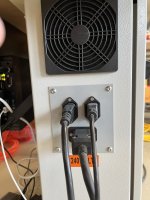
Here's an example, from the connector I'm going to use to bring USB power out to the mast for a camera on the wingtip... How would you attack this hole?
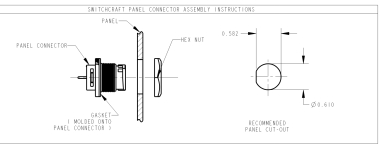

Screenshot 2026-01-21 at 8.34.51 PM.png
 
Would you use something like a Starret 277-6 to scribe the circle for the connector, and then from the center point measure out the flat side and make a line there.. then just file out to the marks?

Of course, probably the scribed line should be in painters tape, and not the panel itself.
 
Would you use something like a Starret 277-6 to scribe the circle for the connector, and then from the center point measure out the flat side and make a line there.. then just file out to the marks?

Of course, probably the scribed line should be in painters tape, and not the panel itself.
I would use a rotary table on a mill. Without that I would do it as you described. However i would use a burr in a die grinder to get vert close to the lines, then file. No way I would file it all.
 
I would make a thin cardboard cutout of the hole. Then put masking tape over the hole location. Use a sharpie to draw the outline of the hole. Drill a 9/16" or 1/2" hole (whatever you have). Then carefully use a Dremel tool then a fine 1/2 round file to cut the hole out to the outline of the marker. Go slow and test fit often.
 
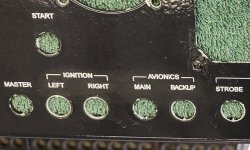
My method: draw it out with a sharpie, drill slightly undersized with a step drill, then progressively file it out to shape with curved and flat jewelers files, checking the fit frequently with the switch or connector. I did it in my original and and also current panel, just creeping up on it. Tedious but really only 15 minutes or so for each hole. The one on the upper left in this pic is a D-shaped - a bit trickier were all the ones with the little tit for key notch in the threads (bottom row).

panel_holes.jpg
 
Not to be a smart a$$ but with a D shaped file. The curve was just right for the round part and the flat for the straight part.
Look for a small half round file that’s about 1/2” in width.
 
Not to be a smart a$$ but with a D shaped file. The curve was just right for the round part and the flat for the straight part.
Look for a small half round file that’s about 1/2” in width.
If I had to do it by hand, I'd do this.

But if possible I'd probably try to incorporate it (or a small bracket with it) in a batch of parts and have it done by sendcutsend.
 
Similar to others. Use as close to the .582 drill as you have or under. Cheat it to the right so its cut touches the right side of your line. File the flat with small flat file.
You will be left with two crescent shaped pieces to remove. File these with a half round file. Check fit as you get close.
I would lay odds that I can get that hole done in five minutes or less on an aluminum panel. The key is the right files. Aluminum is soft and easy.
I’ll send pics of my file assortment when I get to the hangar so you have an idea.
 
The D shaped file is a nice idea.

The next weirdo connectors up are the LEMO jacks, which will be fun as they're double flat..

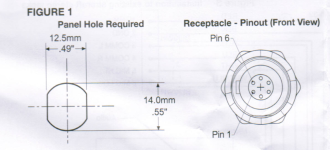
Seems like for these, you'd drill a .49" hole, then file from there?

Screenshot 2026-01-22 at 7.26.15 AM.png
 
The D shaped file is a nice idea.

The next weirdo connectors up are the LEMO jacks, which will be fun as they're double flat..

Seems like for these, you'd drill a .49" hole, then file from there?

View attachment 107889
I would with the exception that there will be enough meat left you could take a chunk or two out carefully with a nibbler. Save some filing.
 
The D shaped file is a nice idea.

The next weirdo connectors up are the LEMO jacks, which will be fun as they're double flat..

Seems like for these, you'd drill a .49" hole, then file from there?

View attachment 107889
While I understand wanting to utilize the flats on the connector housing so you don't need access to the back of the connector to snug up the nut if it ever comes loose, even the jets I work on just have a round hole for these. Unless getting to the back of the connector will be especially difficult in your installation, I'd just punch a round hole and be done with it. That's what I did in my RV, but they're near the bottom edge of the instrument panel where it's easy enough to grab if I ever need to snug them up (hasn't happened yet).
 
you know they make things like this, right?

https://www.digikey.com/en/products...If10ua5dVbqrPMk7dkzsCxzAJcRZvJ-hoCYj0QAvD_BwE

MFG_AT515H_sml.jpg
 
These item with d or double d shapped cutouts were intended to be punched out. There are punches for the various sizes, but they are very expensive for a single use. That leaves most of us with drilling and filing of some sort.
 
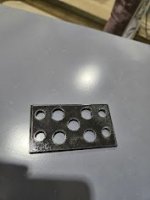
I have been 3D printing templates, drilling the center and then just filing the rest of the way (round on the curves, straight on the lines). If the edge of the material is flush to the 3D printed fixture, it's done.
 

Attachments

  • 20260113_165212.jpg
    20260113_165212.jpg
    7 KB · Views: 30
  • 20260113_164554.jpg
    20260113_164554.jpg
    119.9 KB · Views: 30
I have been 3D printing templates, drilling the center and then just filing the rest of the way (round on the curves, straight on the lines). If the edge of the material is flush to the 3D printed fixture, it's done.
With a template like that, you could also use a trim router with a 3/16" flush trim bit after drilling a 1/4" hole in the middle. Not something I'd want to do in the airplane, but on the bench it would be no big deal. May still need a file to get into the corners, but it'd only be a couple swipes.
 
Consider mounting all switches to a separate rectangular piece of aluminum which is fastened to the forward side of the instrument panel with just 2 screws. If a switch requires replacing, remove the two screws and the whole switch assembly comes out where it is easy to work on. The switches can be installed in round holes with a little dab of E-6000 to prevent turning. Looks is irrelevant because very little of each switch can be seen through the instrument panel.
 

Attachments

  • Switches.png
    Switches.png
    1.3 MB · Views: 19
This is the perfect opportunity for a new tool purchase, CNC router. ;)
If I could use it for all the D and Double D holes I need, I would buy it! I don't think it would work for some of the ones on already installed parts, though.

I am using a 30 pin Amphenol connector for the wing roots, it's a big but basic D shape. I've got the two pin Switchcraft connector at the wing tip for USB power, and then two two double d lemo jacks to install inside the plane somewhere.
 
If I could use it for all the D and Double D holes I need, I would buy it! I don't think it would work for some of the ones on already installed parts, though.

I am using a 30 pin Amphenol connector for the wing roots, it's a big but basic D shape. I've got the two pin Switchcraft connector at the wing tip for USB power, and then two two double d lemo jacks to install inside the plane somewhere.
The easiest way to deal with this kind of concern, is to add a secondary connector plate that goes over the existing one. That may not work/look good for your main panel, but for sub panels or hidden stuff, it can work great. Just cut a hole in the existing plate that will accommodate the connectors you are adding and then add some screws, or rivets to secure the new connector plate.
 
Last edited:
The easiest way to deal with this kind of concern, is to add a secondary connector plat that goes over the existing one. That may not work/look good for your main panel, but for sub panels or hidden stuff, it can work great. Just cut a hole in the existing plate that will accommodate the connectors you are adding and then add some screws, or rivets to secure the new connector plate.
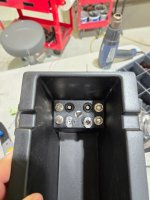
Here is an example of what I’m talking about:
IMG_3446.jpeg
 
Thats a good idea, I could make a plate in the right shape that gets mounted behind the panel which has a circular hole. Something to keep in mind if I mess up the hole.
 
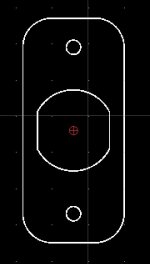
I'm thinking about getting a couple of these plates laser cut out of 0.025 2024-T3 or 0.040" 5052-H32 or 6061-T6 to mount my audio panel LEMO connectors in the -14A baggage floor behind the seats. The hole is 14 mm with 12.5 mm across the flats as shown in post #9 above. I'd drill a 14 mm hole in the baggage floor and put this plate on the underside of the floor. The small holes are for AN4XXAD3 rivets. The rivet holes may seem to be spaced more widely than necessary but that's to allow for (i.e. clear) the back nut, which is 17 mm across the flats and about 20 mm across the corners. I can get 36 of these plates made out of 2024-T3 for just under $1 each. Or I can get 2 made for around $18 each. Or 48 made out of 0.040" 5052-H32 for about 75 cents each (with AZ sales tax).

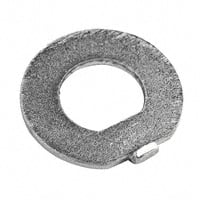
Or I could just get a couple of door lock strike plates and use the shrink ray machine. If I can just remember where I put it.

LEMO connector D-hole plate.jpg
 
Last edited:
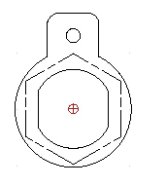
Actually, I prefer this design. The dashed hex represents the back nut. Price is within a penny or two of the other design.
LEMO connector D-hole plate V2.jpg
I made a couple of small tweaks to this design and ordered 18 of them and another item from SendCutSend to meet their minimum order requirements.
 
Last edited:
Back
Top