Van's Air Force

The definitive Van's Aircraft support community! Buying, building or flying an RV? Join our exclusive family of mentors and enthusiasts!

EZ Cool Cowl Flap

Scott Hersha

Well Known Member
Friend
I’m looking for comments/advice on anyone that has tried the ASA EZ cowl flap mod on your RV. I have an RV6 with a carbed O-360, and a Sensenich GA prop. My engine runs hot (CHT’s), especially this time of year during full power climbs at normal initial climb speeds - 100-115 KIAS. I usually have to pull the throttle back to about 25” and lower my nose to increase speed for cooling. I have my prop pitched to achieve 2700 RPM in level flight at wide open throttle. My static RPM on takeoff is about 2280, slowly increasing as I accelerate. Yesterday here in the Cincinnati area, we had a You g Eagles day, and the OAT was above 90*F. On my second sortie, I saw above 400* on three of my cylinders and I didn’t go above 2500’. As soon as I level off, the temps come down fairly quickly. Normal cruise CHT’s are all around 350-360, so climb is the only problem.

Things I’ve done about that: I’ve addressed my baffle seals as well as can be done (no light leakage anywhere using a strong light inside the cowl in a dark hangar). I sent my carb to Michigan to have the “Mooney Mod” installed. This increased my full power climb speed fuel flow from ~12.7 to ~13.7 gph and helped a little. When I get my cruise climb airspeed up to 135K, I’ll see 14.5 gph, but that’s the highest I ever see.

So, question is - has anyone that has installed a cowl flap seen an improvement in lowering climb CHT’s? Did you install one or two, and where did you install it/them? Pics would help.

Incidentally,I have no issue at all with high oil temps. I’ve never seen above 195* OT, and that was in the summer with my oil cooler door mistakenly mostly closed.
 
I installed one cowl flap on the right side of my cowl and saw a definitive decrease in CHT's on my -9A on those cylinders. I purchased and installed (wired in parallel) a second one on the right side. (I recommend just purchasing two to begin with.) I've seen a decrease of at least 20 degrees on CHT's with the cowl flaps.

They are worth the cost and effort, IMO.
 
Yes. Two cowl flaps on my -7. And what Fred said. Install of the flat flap plate onto a slightly curved bottom cowl is a challenge but can be addressed. One note, I get about 300-400 hours on the actuators before they go out. Have placed heat tape all around and supported the wiring as recommended. Have accepted that replacement cycle and have a spare ready when needed.
Overall, would recommend the cowl flaps if you have high CHT's.
 
I installed one on left side of cowl on my 9a. Had similar hot CHTs in summer heat if 90 degrees in Denver and had to step climb. The cowl flap was well worth it. Agree it helps in summer heat. Not too hard to install.
Cal
 
FF still low, let me guess Pmags?
Personally I don’t understand why so many need to resort to cowl flaps to keep things cool.
The fact that the majority of RV’s don’t need them indicates it’s really a band aid.
 
Last edited:
FF still low, let me guess Pmags?
Personally I don’t understand why so many need to resort to cowl flaps to keep things cool.
The fact that the majority of RV’s don’t need them indicates it’s really a band aid.
Walt, here is why . . .
Flying a well designed sport plane with performance well beyond certified planes is frustrating when, to keep CHT's cool, the pilot has to flatten out the climb and/or throttle back to climb rates equivalent to a heavy span can. A 500 ft/min climb in an RV due to CHT limits is not what I built the -7 for. Maybe you can do a 1000 ft/min climb in the summer without issue. Good for you. But many of us cant. Even after extensive baffling fixes, intake and exit port mods and everything possible under the cowl. Band Aid, no. Last resort, yes.
 
FF still low, let me guess Pmags?
Personally I don’t understand why so many need to resort to cowl flaps to keep things cool.
The fact that the majority of RV’s don’t need them indicates it’s really a band aid.
Walt - nope, no Pmags. One SureFly, one Slick. At first I had my SureFly set at 25* fixed. Changing that to variable had no noticeable change other than leaning seemed a little better. I agree and wish my fuel flow was higher, but what else can I do about that? The modified carb is now the 4164 (new data plate on it) - previously 3678. The problem, or one of them, is the airspeed and RPM. When I get my airspeed up to about 135 KIAS (still climbing at 1000 fpm solo), my RPM is up to around 2400-2450 and the CHT comes down. Funny thing is, if I level off and accelerate, the temps come down, and then I can go back into a full throttle climb and the temps all stay below 400. My #4 is my hottest and the first and usually only one to reach 400 because of a power reduction and acceleration. During my baffle tweaking I found a poor seal in the nose area behind the spinner. When I corrected that - and now that whole region is tightly sealed - the most noticeable difference was a reduction in climb CHT on #4.

This is my sixth RV and the only time I’ve seen this issue before was on my first RV6 25 years ago. I didn’t have a problem with either of my RV8’s or either of my RV4’s. All but one of them had O-360’s or IO-360’s, 3 fixed pitch, 3 CS. I think the cowl flaps might help.
 
Walt - nope, no Pmags. One SureFly, one Slick. At first I had my SureFly set at 25* fixed. Changing that to variable had no noticeable change other than leaning seemed a little better. I agree and wish my fuel flow was higher, but what else can I do about that? The modified carb is now the 4164 (new data plate on it) - previously 3678. The problem, or one of them, is the airspeed and RPM. When I get my airspeed up to about 135 KIAS (still climbing at 1000 fpm solo), my RPM is up to around 2400-2450 and the CHT comes down. Funny thing is, if I level off and accelerate, the temps come down, and then I can go back into a full throttle climb and the temps all stay below 400. My #4 is my hottest and the first and usually only one to reach 400 because of a power reduction and acceleration. During my baffle tweaking I found a poor seal in the nose area behind the spinner. When I corrected that - and now that whole region is tightly sealed - the most noticeable difference was a reduction in climb CHT on #4.

This is my sixth RV and the only time I’ve seen this issue before was on my first RV6 25 years ago. I didn’t have a problem with either of my RV8’s or either of my RV4’s. All but one of them had O-360’s or IO-360’s, 3 fixed pitch, 3 CS. I think the cowl flaps might help.
I see your point, RV6 FP is a different animal compared to 7/8 with a CS. I forget that the lower RPM associated with the FP = lowered HP/FF.
I think there is one other carb PN that flows even more than the 4164 but don’t remember the number off hand.
What does it flow at 2700?
 
Walt, here is why . . .
Flying a well designed sport plane with performance well beyond certified planes is frustrating when, to keep CHT's cool, the pilot has to flatten out the climb and/or throttle back to climb rates equivalent to a heavy span can. A 500 ft/min climb in an RV due to CHT limits is not what I built the -7 for. Maybe you can do a 1000 ft/min climb in the summer without issue. Good for you. But many of us cant. Even after extensive baffling fixes, intake and exit port mods and everything possible under the cowl. Band Aid, no. Last resort, yes.
So the question remains, if I can do it why can’t you? Same engine/aiframe? (other than my obviously superior intellect in all things mechanical ;) )
 
I see your point, RV6 FP is a different animal compared to 7/8 with a CS. I forget that the lower RPM associated with the FP = lowered HP/FF.
I think there is one other carb PN that flows even more than the 4164 but don’t remember the number off hand.
What does it flow at 2700?
The most I’ve seen is about 14.5 gph, even at 2700. At that power setting I’m full throttle and level, with a much higher airspeed. At 8,000’ firewalled, I can still get 2700 RPM and my speed is hitting my redline or higher depending on gross weight and temperature (182 KTAS).

I’ll research any other carb jet mods I can make. Maybe call my guy up in Michigan and get his take on it. D & G Supply, Niles, MI.
 
The most I’ve seen is about 14.5 gph, even at 2700. At that power setting I’m full throttle and level, with a much higher airspeed. At 8,000’ firewalled, I can still get 2700 RPM and my speed is hitting my redline or higher depending on gross weight and temperature (182 KTAS).

I’ll research any other carb jet mods I can make. Maybe call my guy up in Michigan and get his take on it. D & G Supply, Niles, MI.
I usually figure around .9 gph per 10 hp, so around 16-17 for 180hp.
 
I’m looking for comments/advice on anyone that has tried the ASA EZ cowl flap mod on your RV. I have an RV6 with a carbed O-360, and a Sensenich GA prop. My engine runs hot (CHT’s), especially this time of year during full power climbs at normal initial climb speeds - 100-115 KIAS. I usually have to pull the throttle back to about 25” and lower my nose to increase speed for cooling. I have my prop pitched to achieve 2700 RPM in level flight at wide open throttle. My static RPM on takeoff is about 2280, slowly increasing as I accelerate. Yesterday here in the Cincinnati area, we had a You g Eagles day, and the OAT was above 90*F. On my second sortie, I saw above 400* on three of my cylinders and I didn’t go above 2500’. As soon as I level off, the temps come down fairly quickly. Normal cruise CHT’s are all around 350-360, so climb is the only problem.

Things I’ve done about that: I’ve addressed my baffle seals as well as can be done (no light leakage anywhere using a strong light inside the cowl in a dark hangar). I sent my carb to Michigan to have the “Mooney Mod” installed. This increased my full power climb speed fuel flow from ~12.7 to ~13.7 gph and helped a little. When I get my cruise climb airspeed up to 135K, I’ll see 14.5 gph, but that’s the highest I ever see.

So, question is - has anyone that has installed a cowl flap seen an improvement in lowering climb CHT’s? Did you install one or two, and where did you install it/them? Pics would help.

Incidentally,I have no issue at all with high oil temps. I’ve never seen above 195* OT, and that was in the summer with my oil cooler door mistakenly mostly closed.
What is the pitch of your fixed pitch prop? This could cause issues if you have a pitch designed for cruise. If you are climbing out at 2300 or less RPM, you are working the engine hard and not getting as much bite with the prop. Try flattening your climb angle to increase the RPM and you might actually see your rate of climb INCREASE while your temps DECREASE. THRUST IS ABOUT TORQUE! We need to transfer the energy the engine is putting out (HP) to Work the propeller is performing (TORQUE). In a cruise fixed pitch prop, the engine RPM will drive the prop to its peak performance. Less than that peak performance RPM and the energy will not be transferred to torque at the prop. Instead, the energy is converted to heat.
 
Scott,

I put a Anti-splat cowl flap in my RV-8 after I significantly reduced the cowl exit area. It does indeed help with cooling when it is open - so much so that I rarely need it. In hind sight, I could have made the cowl exit even smaller, since the cowl flap cools so well.

BUT....

You should read this post:
where I discuss the modifications/improvements I made to mine. As delivered, it was not built to my standards.
 
What is the pitch of your fixed pitch prop? This could cause issues if you have a pitch designed for cruise. If you are climbing out at 2300 or less RPM, you are working the engine hard and not getting as much bite with the prop. Try flattening your climb angle to increase the RPM and you might actually see your rate of climb INCREASE while your temps DECREASE. THRUST IS ABOUT TORQUE! We need to transfer the energy the engine is putting out (HP) to Work the propeller is performing (TORQUE). In a cruise fixed pitch prop, the engine RPM will drive the prop to its peak performance. Less than that peak performance RPM and the energy will not be transferred to torque at the prop. Instead, the energy is converted to heat.
Yep, that’s correct. I could reduce my prop pitch and get better runway and initial climb performance. But in so doing, I’m limiting my potential cruise performance, unless I’m comfortable with overspeeding my Lycoming’s recommended maximum RPM - which I’m not. At my bigger bite with my pitch setting, I still get off the ground on a paved runway in less than 500’. I would rather deal with high CHT with better cooling, and/or more fuel flow. I might start with a temporary experimental cowl lip on my existing cowl exit to see if that makes a difference.
 
Yep, that’s correct. I could reduce my prop pitch and get better runway and initial climb performance. But in so doing, I’m limiting my potential cruise performance, unless I’m comfortable with overspeeding my Lycoming’s recommended maximum RPM - which I’m not. At my bigger bite with my pitch setting, I still get off the ground on a paved runway in less than 500’. I would rather deal with high CHT with better cooling, and/or more fuel flow. I might start with a temporary experimental cowl lip on my existing cowl exit to see if that makes a difference.
My comments were not meant to suggest you change props to change pitch. I am saying experiment with how steeply you climb out with the prop you have. By changing the rate of climb pitch, you may find you can increase the RPMs your engine will turn the prop. You will thus increase the thrust the prop will produce which can increase your rate of climb, while also decreasing your engine temperatures. Temperatures should decrease because you will be increasing the air flow through your cylinders.
 
The most I’ve seen is about 14.5 gph, even at 2700. At that power setting I’m full throttle and level, with a much higher airspeed. At 8,000’ firewalled, I can still get 2700 RPM and my speed is hitting my redline or higher depending on gross weight and temperature (182 KTAS).

I’ll research any other carb jet mods I can make. Maybe call my guy up in Michigan and get his take on it. D & G Supply, Niles, MI.
Call the Marvel Schleber (sp?) factory repair shop in NC. They can ream your jet oversized to whatever you want. I'd say you need another gallon or two per hour on takeoff, and if it's too much, you have a mixture knob to fix that.
 
I did the Mooney mod to my 3878 carb. My fuel flow increased to 15.6 US gph on my O-360 180 hp stock engine at WOT with an 85"pitch Sensenich prop. Your FF still seems low.
 
Steve from SDI is right - if you increase your climb airspeed, you'll run cooler and actually climb at least as well. With our old 6A O-320 FP, we got about 2300 on takeoff. I always did more of a cruise climb once out of the pattern. About 140kts groundspeed (didn't have TAS indication and didn't even really look at indicated AS) and got 700fpm or better climb. At 110kt GS, I'd get a very similar climb rate and higher CHTs. Operating under a Class C ceiling, it just made sense to cruise climb anyway. Getting over nearby mountains would change the situation for sure.

More airspeed = more cooling air and more lift and more RPM which = more torque which all equals better rate of climb.

Ed
 
Fitted 2 of them during the Winter, facilitates prolonged climbs at good climb speeds over the Alps after the usual pizza joint run. They work well, but I still need to get their closed or open indication on the 3GX.


IMG_7001.jpgIMG_7032.jpg
 
My comments were not meant to suggest you change props to change pitch. I am saying experiment with how steeply you climb out with the prop you have. By changing the rate of climb pitch, you may find you can increase the RPMs your engine will turn the prop. You will thus increase the thrust the prop will produce which can increase your rate of climb, while also decreasing your engine temperatures. Temperatures should decrease because you will be increasing the air flow through your cylinders.
I don’t have to change props to change pitch. It is a Sensenich GA (ground adjustable) carbon fiber 2-blade prop.

I do usually do cruise climbs, but on short turn around YE flights, with several aircraft in line for takeoff seeming to need a 15 minute runup, my motor can get pretty hot just waiting. Yesterday I was hitting 400 on my #4 cylinder by the time I got to pattern altitude. I just think I can do better than that. The conga line for takeoff at Oshkosh was really challenging. The 4164 mod to my carburetor was more than just a larger main jet.
 
Last edited:
Scott,

I put a Anti-splat cowl flap in my RV-8 after I significantly reduced the cowl exit area. It does indeed help with cooling when it is open - so much so that I rarely need it. In hind sight, I could have made the cowl exit even smaller, since the cowl flap cools so well.

BUT....

You should read this post:
where I discuss the modifications/improvements I made to mine. As delivered, it was not built to my standards.
I’ve debated on putting them on my 8 as well to help out with cooling at idle. When it’s warm, my engine likes to cough or *pop* out of the exhaust. We know what the issue is (hot fuel vaporizing in the lines). The battle is to get the heat out. I’ve wondered if cowl flaps would be a viable solution to it.
 
Fitted 2 of them during the Winter, facilitates prolonged climbs at good climb speeds over the Alps after the usual pizza joint run. They work well, but I still need to get their closed or open indication on the 3GX.


View attachment 95229View attachment 95230
That’s what I was looking for. Thank you Daniel. Those areas are wide open in my cowl, which looks just like yours - small exhaust pipe “rub” on the left near the edge of the tunnel? Looks good. Attached with pro seal?
 
More airspeed = more cooling air and more lift and more RPM which = more torque which all equals better rate of climb.
Certainly true statement about cooling, but not true for rate of climb.

Just like best glide speed, best climb speed is about minimizing drag - well, sort of. Actually best climb angle is where drag is minimum. best climb rate is where drag is increasing at the same rate as the speed.

For fixed shaft horsepower, the thrust from the propeller decreases as you speed up. P=T*V

Of course, P increases some with speed for a fixed-pitch prop, because the RPM goes up. (until you get to max RPM). The increase in power and the increase in velocity may be considered to approximately cancel, so that thrust is roughly constant over the small speed range of interest here.

Rate of Climb = V(T-D)/W.

D is a somewhat complicated function of velocity (the induced drag decreases in proportion to V^2 while profile drag increases in proportion to V^2). So I'm not going to calculate the optimum here, but you can see that as you increase speed, both V and D go up. The best rate of climb happens at the point where D is increasing at the same rate as V. Any faster than that, and the drag increases faster than V and the rate of climb goes down.

All this is just to say that it is not true that your rate of climb will increase if you increase speed above the speed for best rate of climb - typically about 100--105 kts for RV's
 
Science carries the day - again. That said, a cruise climb works really well for keeping CHTs/oil temp in check and gets you further down route while still yielding a decent rate of climb. You'll be higher and further than the Cessna/Piper that took off ahead of you in just a few minutes. I've outrun and outclimbed twins with this approach all with an O-320. I used to claim that I could beat any Bonanza that didn't know we were racing. ;-)

Ed
 
On my second sortie, I saw above 400* on three of my cylinders and I didn’t go above 2500’.
How far above 400? No authoritative source, including Lycoming, thinks 400 is any sort of limit for temps on climb-out. FWIW.
 
How far above 400? No authoritative source, including Lycoming, thinks 400 is any sort of limit for temps on climb-out. FWIW.
I was going to mention that. While I think this is a healthy number to start thinking about pushing the nose/pulling power, I don’t get concerned until I see numbers climbing above 410-415. The O-360 in the Tiger with good baffles and plenty of exit area hit 408 on cylinder 3 during initial climb on a 100deg day at sea level; that’s when the nose went down and power came back to stop the temperature rise. Keep in mind lycomings number is 450; temps below 425 leave plenty of margin.
 
Dan what kind of reflective material is that?
Not sure Vlad. I'm not the builder of this 20 year old ship, only its caretaker :)
ACS stuff probably, though it is also available at some auto or composite shops. It's held pretty good thru the years, and I hiTsiliconed the edges recently to prevent them lifting from the surface.
 
I was going to mention that. While I think this is a healthy number to start thinking about pushing the nose/pulling power, I don’t get concerned until I see numbers climbing above 410-415. The O-360 in the Tiger with good baffles and plenty of exit area hit 408 on cylinder 3 during initial climb on a 100deg day at sea level; that’s when the nose went down and power came back to stop the temperature rise. Keep in mind lycomings number is 450; temps below 425 leave plenty of margin.
Exactly. My O-320 manual (3d edition 2006, perhaps it’s been superseded?) says 500 is the redline and:

For maximum service life, cylinder head temperatures should be maintained below 435°F (224°C) during high performance cruise operation and below 400°F (205°C) for economy cruise powers.

So Lycoming wouldn’t bat an eye at climb-out temps above 400, and I don’t see why we should. Unless I’m reading this wrong, climb-out temps of 435 or even 450 (!) would be no big deal in the opinion of the people who built the engine.

I confess that 435 would raise my eyebrows. Mike Busch suggests treating 400-420 as the yellow arc for Lycoming CHTs, and given Lycoming’s limits that seems sensible and still extremely conservative to me.

And we should be conservative—engines are expensive, and their reliability is important! But whatever the magic worry number for climb-out is, I see zero evidence that it ought to be 400.
 
Last edited:
How far above 400? No authoritative source, including Lycoming, thinks 400 is any sort of limit for temps on climb-out. FWIW.
That’s true, and it’s pretty much the reason I haven’t added cowl flaps - yet. This last weekend was the worst I’ve seen, but it was 95* with very high humidity, and after a quick turn I had 3 cylinders above 400 by the time I hit pattern altitude and shoved the nose over. The hottest - #4 - got to 427. I’ve been flying for three years and have 230 hours on my airplane and engine, and I’ve been able to manage it well by either reducing power, or accelerating quickly to 130-135 KIAS for climb. We are about to start cooling off here in Cinci starting next week theoretically, so maybe I’ll hold off on the cowl flaps for now.
I think I’ll experiment with duct taping a bent lip to the exit opening and see what that does since we still have a week of 90* temps, so it could be a good test.

I’m retired and need something to do. However, spending $1,000 sort of triggers my cheapskate button….
 
That’s true, and it’s pretty much the reason I haven’t added cowl flaps - yet. This last weekend was the worst I’ve seen, but it was 95* with very high humidity, and after a quick turn I had 3 cylinders above 400 by the time I hit pattern altitude and shoved the nose over. The hottest - #4 - got to 427. I’ve been flying for three years and have 230 hours on my airplane and engine, and I’ve been able to manage it well by either reducing power, or accelerating quickly to 130-135 KIAS for climb. We are about to start cooling off here in Cinci starting next week theoretically, so maybe I’ll hold off on the cowl flaps for now.
I think I’ll experiment with duct taping a bent lip to the exit opening and see what that does since we still have a week of 90* temps, so it could be a good test.

I’m retired and need something to do. However, spending $1,000 sort of triggers my cheapskate button….
The summertime quick turn is always the worst! But with one cylinder at only 427 in basically a worst case scenario, I can’t see where you have a $1,000 problem. At least not according to Lycoming. I don’t think Mike Busch would be bothered, either, according to his article. He’d probably agree that reaching pattern altitude was a good time to lower the nose. 😃
 
Last edited:
I started with two when they just became available, and when one failed (the structure cracked), I reverted back to one. I've replaced one actuator. I wrap them in adhesive foil backed insulation. But having the cowl flap is defintely worthwhile for me; especially with the 360 parallel valve engine. Gives you options. 99% of my flying is in warmer/hotter areas, and it's nice to be able to add a little cooling action with a switch, then retract it and get 2-3 knots back when you don't need it. As for cost, it wouldn't be too crazy hard to make your own. Especially if you're retired and have time. If I were to do this, I'd beef up the structure a bit.

2 cents on CHTs - 400 is a hard deck for me. I do something immediately to control below these temps.
 
Reading the Mike Busch article - it seems like another relevant contribution to high CHT’s especially in the IO 360 is ignition timing.

Get a little bit into Mike’s article and he mentions his advice for experimental RV owners to consider retarding the timing to 20° before top dead center instead of 25°, and mentions an advisory bulletin to that effect issued by Lycoming

According to the article, it had insignificant effect on horsepower, but significant benefit to CHTs
 
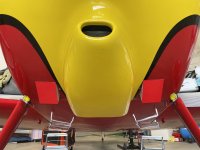
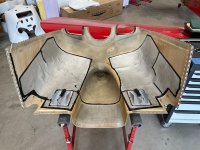
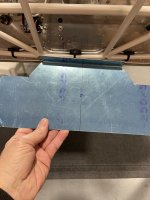
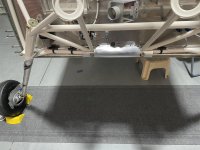
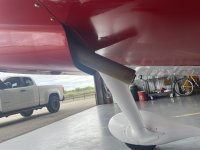
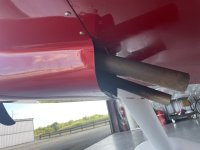
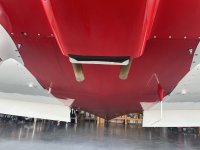
Well, I’m not claiming victory, but it’s a place to start further testing. I slightly modified my cowl exit opening today, and added a bent aluminum lip to see if the would make any difference. Well…. it did make a difference, and I’m skeptical about my results, so further testing is in the works. Here’s what I did - I cut the bottom of my fiberglass cowl exit to make it straight/vertical with the firewall and cowl juncture. This is how it is supposed to be, but when I was building my cowl I had some extra length in that dropped down exit area, so I just left it there and tapered it forward to match the edge of the firewall. It gave that opening a sort of “raked” look, and I thought that was cool. Well,,,, shame on me for being so shallow and putting form over function. Today I cut 3/4” off the bottom of the cowl exit and added a bent lip, in theory to encourage increased exit velocity. Did cutting back that exit bottom cowl make any difference? I don’t know, but when I look at my firewall mounted exit Venturi that I fabricated, it seems like not opening up that space on the bottom of my cowl fully, where the air is trying to exit, might minimize the efficiency of the exit Venturi. Maybe that didn’t have any effect, but something did. It was probably the bent aluminum lip that I duct taped to that area. The pictures show the Venturi that I made (RV6), and a couple pics of the bent Al lip that I duct taped in place. If I decide to make this more semi-permanent, I’ll use screws to mount it. The duct tape on the bottom was slightly giving way when I stopped for fuel, but the inside gorilla tape held on.

So here’s what I found: takeoff OAT was 91* (2* less than what I had on Saturday). OAT at 3000’ msl was 81* (same as what I had on Saturday). KHAO - field elevation 640’. Full power climb to about 3,000’, power reduced to stay under the CVG Class B, then full power climb to 6500’ msl. Highest CHT didn’t exceed 386. Two days ago, I don’t think that would have happened, I would have had one, or maybe cylinders above 400 (not that that’s bad….). At 6500’ I went to full power, 2680 RPM, not sure what the MP was, and initial fuel flow eventually reached 15.2 gph full rich. I leaned to about 12.5-13.0 gph, indicating 80% power. My KTAS was 187 - 5K above my redline, so I don’t think the cowl lip had a noticeable affect on speed (if it was still attached). Landed at KOXD (Miami University/Oxford) for fuel. Quick turn for fuel, still 91* on the ground, cowl lip still there, but the bottom layer of duct tape had loosened. I took off with full fuel, so my weight was about the same as what I had on my second Saturday young eagle flight under almost identical weather conditions. This time, trying to mimic what I did on Saturday, the highest CHT I experienced was 395 (vs 437 on Saturday). It was more humid on Saturday, so I don’t know how much that affects it, but I was impressed with what I saw. In fact, I don’t know if I believe such a small change can have that much effect, so more testing is in my near future. Maybe the cutback had an effect, maybe the cowl lip did, who knows - maybe my testing is faulty. More of that to come.

First cowl pic is the original “raked” exit. After that is the cut parallel exit with the lip. Did any of this make a difference? Who knows, but so far it works for me.
 

Attachments

  • IMG_2093.jpeg
    IMG_2093.jpeg
    1.9 MB · Views: 249
  • IMG_2095.jpeg
    IMG_2095.jpeg
    3 MB · Views: 242
  • IMG_3823.jpeg
    IMG_3823.jpeg
    2.2 MB · Views: 221
  • IMG_3826.jpeg
    IMG_3826.jpeg
    2 MB · Views: 209
  • IMG_3825.jpeg
    IMG_3825.jpeg
    2.4 MB · Views: 247
Fitted 2 of them during the Winter, facilitates prolonged climbs at good climb speeds over the Alps after the usual pizza joint run. They work well, but I still need to get their closed or open indication on the 3GX.


View attachment 95229View attachment 95230
What's your plan for displaying their position on the G3X? Is there a way to switch them through the G3X interface so I wont have to drill a hole in my new panel? I'm about to tackle the same task in my 7A.
 
What's your plan for displaying their position on the G3X? Is there a way to switch them through the G3X interface so I wont have to drill a hole in my new panel? I'm about to tackle the same task in my 7A.
@AHemi , as usual there's a previous sister thread with several people explaining how to display the flaps position on their G3X.

PS
Unfortunately doesn't work in my case as my G3X is EIS/MFD only, and I'm missing the menu options.
 
I’m looking for comments/advice on anyone that has tried the ASA EZ cowl flap mod on your RV. I have an RV6 with a carbed O-360, and a Sensenich GA prop. My engine runs hot (CHT’s), especially this time of year during full power climbs at normal initial climb speeds - 100-115 KIAS. I usually have to pull the throttle back to about 25” and lower my nose to increase speed for cooling. I have my prop pitched to achieve 2700 RPM in level flight at wide open throttle. My static RPM on takeoff is about 2280, slowly increasing as I accelerate. Yesterday here in the Cincinnati area, we had a You g Eagles day, and the OAT was above 90*F. On my second sortie, I saw above 400* on three of my cylinders and I didn’t go above 2500’. As soon as I level off, the temps come down fairly quickly. Normal cruise CHT’s are all around 350-360, so climb is the only problem.

Things I’ve done about that: I’ve addressed my baffle seals as well as can be done (no light leakage anywhere using a strong light inside the cowl in a dark hangar). I sent my carb to Michigan to have the “Mooney Mod” installed. This increased my full power climb speed fuel flow from ~12.7 to ~13.7 gph and helped a little. When I get my cruise climb airspeed up to 135K, I’ll see 14.5 gph, but that’s the highest I ever see.

So, question is - has anyone that has installed a cowl flap seen an improvement in lowering climb CHT’s? Did you install one or two, and where did you install it/them? Pics would help.

Incidentally,I have no issue at all with high oil temps. I’ve never seen above 195* OT, and that was in the summer with my oil cooler door mistakenly mostly closed.
Scott,
Just installed one for the same reasons as you.
Just a great product.
Approximately 40 F decrease with it open. ( bought just 1).
Easy to install.
Fit & finish was exceptional.
Now I can use all my performance.

Go for it.

Daddyman58
 
Did any of this make a difference? Who knows, but so far it works for me.
@Scott Hersha, any news, now that it's been a few months?

Also, could you point me to some info on what this lip is supposed to do? I have high CHTs, and I'd rather not do an entire cowl flap just as an experiment, if a cheaper lip would give me a temp fix first.
 
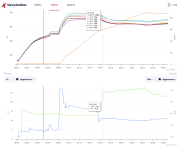
I'm still learning my PV 540 but my technique for long cross countries is to climb at ~ 1,000 FPM then when my CHT's get close to 400 F go LOP. That immediately drops CHT's while fuel flow drops to 10.9 GPH. I have seen many adding cowl flaps but that seems like a waste when I can do the same thing with LOP and decreases drag HP by 15 by not having cowl flaps. At that point my climb rate is more cruise-climb and yes takes a little longer to get to assigned altitude but over a 3-hour cross country not a big deal. My angle valve 390 similar performance (but better) and see 168 knots TAS at ~8 GPH. Also, no cowl flaps which seems a waste of drag to cylinder cooling. 210 HP IO-390. (750 hrs. and up to now no sticky valves 🤞)

Screenshot 2025-12-22 190312.png
 
Last edited:
@Scott Hersha, any news, now that it's been a few months?

Also, could you point me to some info on what this lip is supposed to do? I have high CHTs, and I'd rather not do an entire cowl flap just as an experiment, if a cheaper lip would give me a temp fix first.
Kenpilot,
Oh yeah.
I open it prior to take off, and my engine no longer overheats!
Full power available!
My estimate (somewhat dependent on OAT), but I get temps 65F cooler. Prior to the install, I would reduce power, lower the rate of climb, and still over >410F and on occasion, too hot.
Now 365-378 on climb.
I had done some research on why, and measured my lower plenum opening. It was adequate as a percentage of inflow, but did NOT account for the exhaust tubes. When those were subtracted, I was only at 100% of inflow, and hence way to small.
I should also note that I too am "thrifty" and only bought a single one from Anti splat. Some install 2.
Bottom line: I am very happy with the results.

As for the use of a lip (I tried, and then tried lip removal) without success.
Hope that PIREP helps.
Merry Christmas,
Daddyman58
 
@Scott Hersha, any news, now that it's been a few months?

Also, could you point me to some info on what this lip is supposed to do? I have high CHTs, and I'd rather not do an entire cowl flap just as an experiment, if a cheaper lip would give me a temp fix first.
Scott,
Today, I climbed out at 2,850 ft/min to pattern alt.
Daddyman58
 
@Scott Hersha, any news, now that it's been a few months?

Also, could you point me to some info on what this lip is supposed to do? I have high CHTs, and I'd rather not do an entire cowl flap just as an experiment, if a cheaper lip would give me a temp fix first.
After a few months, it looks like it helps. Probably not as much as a cowl flap, but in my airplane, the lip did make a difference. Hot climb CHT’s are about 10-15 degrees cooler than before. I almost never see a 400 CHT on climb out now. Of course it’s cold now, so no problem at all with full power climbs as high as I want. Why did this work? I think the cowl lip created a certain amount of negative pressure increase at the cowl exit area. As if there’s a little more suction in that area, maybe increases the differential pressure in the cowl increasing cooling airflow through the cylinder fins. I didn’t notice any speed decrease caused by the slight increase of drag because of that lip. There are several production airplanes with a similar lip on the bottom of the cowl in the exit area.

If you want to try it first to see if it helps, just make the lip (I used .025 aluminum) and tape it in position as I did before making the install more permanent.
 
Since I'm not the original builder couldn't say... heat reflecting material probably from Vans or ACS... purchased 20+ years ago...
 
After a few months, it looks like it helps. Probably not as much as a cowl flap, but in my airplane, the lip did make a difference. Hot climb CHT’s are about 10-15 degrees cooler than before. I almost never see a 400 CHT on climb out now. Of course it’s cold now, so no problem at all with full power climbs as high as I want. Why did this work? I think the cowl lip created a certain amount of negative pressure increase at the cowl exit area. As if there’s a little more suction in that area, maybe increases the differential pressure in the cowl increasing cooling airflow through the cylinder fins. I didn’t notice any speed decrease caused by the slight increase of drag because of that lip. There are several production airplanes with a similar lip on the bottom of the cowl in the exit area.

If you want to try it first to see if it helps, just make the lip (I used .025 aluminum) and tape it in position as I did before making the install more permanent.
Scott, with your approach, did you track oil temps? I have oil cooler on back baffling and I'm always running higher oils temps.
 
Back
Top