
Winterization Kit for ULS! Van's is out of stock. It was 8 degrees this morning when I went flying. I froze. The CHT's were 140. The cabin heat control when pilled blew cold air. Does anyone have a winterization kit they would be willing to sell me?

Van's Air Force
You are using an out of date browser. It may not display this or other websites correctly.
You should upgrade or use an alternative browser.
You should upgrade or use an alternative browser.
I'm freezing
- Thread starter glenadavis
- Start date

A lot of folks have copied John Bender's design of an adjustable airflow control to the coolant radiator. Cheap to do but lots of fiddling to get it right. I did one on my previous RV12 and now on my current RV12. Works well to get coolant temp up enough to have heat. For the oil radiator you can just make a plate to cover enough to get the oil temp up a bit.Winterization Kit for ULS! Van's is out of stock. It was 8 degrees this morning when I went flying. I froze. The CHT's were 140. The cabin heat control when pilled blew cold air. Does anyone have a winterization kit they would be willing to sell me?
I have photos of mine and others of you would like.
Mitch


Not an RV12, but the same situation no matter what airplane you are flying. I have an RV6 with my oil cooler mounted on the firewall, fed through a 3” scat tube from the #4 baffle. I have a butterfly valve in the scat tube feed controlled from the cockpit. This time of year in southern Ohio, it’s closed all the way 100% of the time, and I never see above 160* OT. The last week or so with ice cold OAT’s, I don’t get above about 145. The butterfly shuts off all of the air, so the only other thing I could try is to cut off oil supply to the cooler. Not willing to do that - too many failure points. An experienced aircraft engine guru from here told me that if I’m seeing 160*, I have nothing to worry about. Internal crankcase pressure is slightly lower, so is the boiling point of moisture. But mostly there are hot surfaces inside the engine that will flash off moisture in an instant. Like piston skirts that get splash oil every revolution. They can be as high as 500-600*. Lycoming agrees, because their recommendation for long term engine health is to maintain oil temps above 160. I’m planning on flying tomorrow during our “heat wave” - temps may hit 35* and it’s supposed to be sunny. Even though temps around here have been sub-zero lately, my hangar temp doesn’t dip below 40* usually. I still preheat, so my goal is to see how hot I can get my oil - 160 or above - and hold it there for 20-30 minutes. All engines, including Rotaxes, should behave similarly relative to operating oil temperature vs moisture.
No real Rotax experience with this, but winter flying the Turbo Subie, we tried the aluminum tape trick but it didn't do much for us. We than tried corrugated cardboard wrapped in aluminum tape which worked really well to the point we were able to block less percentage of the rad/cooler cores so we had a bit more tolerance for warmer days as well acceptable warmth on colder days.

Aside from the oil temperature, which appears has been advised above, you might try a heated vest rather than trying to deal with the heat. I have a Searey and it is very breezy with ineffective heat and this is a great, easy solution plus I wear them all the time when it is cold. There are gobs of them at all price ranges.


The Ace Copilot has on MANY occasions declared the heated vest I got her to be “the best present ever.” Heated clothing solves so many problems, and also works on the ramp!Aside from the oil temperature, which appears has been advised above, you might try a heated vest rather than trying to deal with the heat. I have a Searey and it is very breezy with ineffective heat and this is a great, easy solution plus I wear them all the time when it is cold. There are gobs of them at all price ranges.
View attachment 104833
Finally - decided on a Christmas present for my wife. Thanks!The Ace Copilot has on MANY occasions declared the heated vest I got her to be “the best present ever.” Heated clothing solves so many problems, and also works on the ramp!
I own an Ororo vest and absolutely love it. Wear it daily this time of year. Another nice thing about them is that they are machine washable. Has three temp settings, usually I keep it on the white setting which is medium. I would suggest a second battery if you plan on really long days in the hangar. I get an entire 8 hr day with a single battery and then just remove and charge when Im home or in the car on the drive home. A really nice product.
A
A

Place the tape vertically with a lot of excess. Average plenum pressure will peel it right off.Aluminum tape over a portion of the coolers works great.
See below, this did not work well either, Oil temps only 140F with 30F OAT
I have the shutter to install, soon, very soon. Other pic did not work at all peeled right off since it was short of the bottom of the oil cooler
Attachments
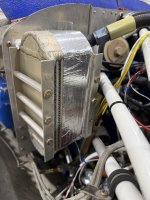
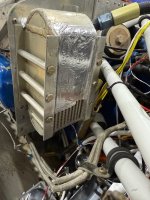

You may want to consider installing the RV-12 Thermostasis oil kit to ensure your oil temps are in the correct range. If you are due for the 5-year oil hose change, it would be a great way to accomplish both.Probably more important than warming your bum is to keep oil temp high enough to bake out moisture. At 8F... I'd say you'll need to cover 40% of the oil cooler.

RV-12 Oil Thermostasis Kit | Aircraft Spruce ®
RV-12 Oil Thermostasis Kit This complete kit is designed to be a direct installation in the RV-12 aircraft and is adaptable to any aircraft utilizing the Rotax 912 Engine.
Sealing the cabin air leaks really reduced the draftiness on cold days. Sealing the fuselage openings around the gear legs with foam was a big improvement, along with adding foam tri-angles to each of the F-1207F baggage bulkhead corrugations. Check out this thread on installing the Van's RV-12iS gearleg seals in the ULS version if you want a factory solution.
Retro-fit iS Main Gear Seals to Legacy 12
For background, yes, I do know that intersection fairings are available and can be adapted. I am not interested in those, but have been interested in the RV12iS main gear seals since I saw them on the prototype iS airplane at Aurora. The hole in the fuselage for the main gear leg is large and...
vansairforce.net
