
380 and 400 are NOT limits for any parallel valve four cyl Lycoming that I know of. I don't track info for H series or 235 and 290 series. 400 is a arbitrary limit for break in that is more conservative than Lycoming procedures.This. If anyone has data suggesting that 400-450 in a climb is bad in any way, I’ve never seen it. Lycoming certainly doesn’t think it’s a problem, at least per the O-360 manual I’ve got.
That manual is dated 2007. Did they change this guidance perhaps? Trying to figure out where the 400 and 380 “limits” came from.

Van's Air Force
You are using an out of date browser. It may not display this or other websites correctly.
You should upgrade or use an alternative browser.
You should upgrade or use an alternative browser.
Some questions - climb and CHT.
- Thread starter JohnStirling
- Start date


https://www.aopa.org/news-and-media/all-news/2021/october/pilot/savvy-maintenance-hot-heads
Also ... if Lycoming did decide that something less than 500 is too hot... what would the implications be? Changing the markings on every CHT gauge of every existing aircraft with that engine? Now there's a disincentive. ... just hypothesizing ....
Also ... if Lycoming did decide that something less than 500 is too hot... what would the implications be? Changing the markings on every CHT gauge of every existing aircraft with that engine? Now there's a disincentive. ... just hypothesizing ....
Last edited:

Thank you for your reply, and yes, I am reading lots of what you are saying, and yep, I am always open to learning new things.This is my opinion. You can listen to it, or ignore it. Either is your prerogative.
You are over thinking these temperature issues. 400-450 deg CHTs do NOT hurt your engine. Obsessing over keeping them below 400 is causing you great concern that is unwarranted. The picture of your instrumentation in post #38 shows CHT numbers that look fairly normal. You have a carb. It is going to be difficult to get all 4 cylinder’s CHTs to be as close as an engine with fuel injection. 385, 389, 398, 392 CHTs are all actually pretty tight for cruise, especially for a carbed engine. Plus, they are NOT running hot for running the engine pretty hard at 4500 ft.
On climb out, those temperatures may climb above 400 deg but don’t lose sleep over worrying about them. If they climb up to 420, or such, know that when you level off in cruise they will settle back down. I might suggest doing some configuration on your instrument to place the fuel burn (gal/hr or lt/hr) to show on your engine display. I did not see that anywhere on your display in post #38. That will be helpful information for your analysis of engine performance more so than the nm/lt you are currently displaying.
As others have posted, perhaps you can clean up your baffling some and see improvement but what you show is not a real problem. Keep flying and keep learning about your engine. You are asking questions and many are giving you good advice. Learn from the questions, and the subsequent responses, but don’t over think it all. As time behind the stick progresses you will become more familiar with how your plane performs and less baffled (I think there is a pun there somewhere) by unknowns.
Live Long and Prosper!
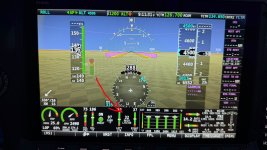
The Lph is on the glass - I have highlighted in the first attached image.
My Dynon starts to vocally alert me at 420.
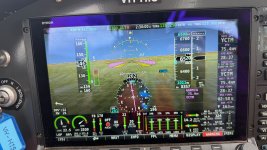
On the cruise it's great! See second photo. This is 2 hours in to a 3 hour flight to bring the aircraft home. TAS up towards 160 knots and 30Lph.
I am not too worried, as I can manage temps in a climb, and I am fine with that.
I will have a look at what I can do with the baffles around the ring etc, but I agree with you, overall, I think all is good.
What I really need to learn now is speeds in the circuit. I was told by the previous owner to keep it above 75 on final, but I am starting to think that is too fast, as my landings are quite long.
Cheers
J
Attachments

I think this is a very sensible article recommending an extremely conservative approach. Note there’s no suggestion that 380 or 400 are limits, much less in a climb on a hot day. The idea of a mental yellow arc from 400 to 420—with no real cause for drama if that’s exceeded—seems reasonable enough.
I suppose it’s possible that Lycoming secretly concluded that the 500 redline is too hot, but has chosen not to reveal this discovery because changing CHT markings in the fleet would cause too much trouble and expense.Also ... if Lycoming did decide that 500 is too hot... what would the implications be? Changing the markings on every CHT gauge of every existing aircraft with that engine? Now there's a disincentive. ... just hypothesizing ....
Or perhaps the engineers who designed the engine knew what they were doing, the 500 limit and the other limits in the manual are sensible, and there’s decades and decades of experience suggesting cylinder heads don’t self destruct below 500.
I think the latter is more likely, but I’ll remain open-minded.


Well, my apologies. I did not see that on your panel. I guess I was not accustomed to seeing L/hr.Thank you for your reply, and yes, I am reading lots of what you are saying, and yep, I am always open to learning new things.
The Lph is on the glass - I have highlighted in the first attached image.
My Dynon starts to vocally alert me at 420.
On the cruise it's great! See second photo. This is 2 hours in to a 3 hour flight to bring the aircraft home. TAS up towards 160 knots and 30Lph.
I am not too worried, as I can manage temps in a climb, and I am fine with that.
I will have a look at what I can do with the baffles around the ring etc, but I agree with you, overall, I think all is good.
What I really need to learn now is speeds in the circuit. I was told by the previous owner to keep it above 75 on final, but I am starting to think that is too fast, as my landings are quite long.
Cheers
J
As for landing, try aiming closer to 1.3 of stall.
Well, my apologies. I did not see that on your panel. I guess I was not accustomed to seeing L/hr.
As for landing, try aiming closer to 1.3 of stall.
I am waiting for nice weather and I will take it up and stall the crap out of it, so I can understand its speeds etc. The weather here has been nothing short of awful!

Your Dynon panel shows an AOA. I would recalibrate it's display points. (see the Dynon instructions)I am waiting for nice weather and I will take it up and stall the crap out of it, so I can understand its speeds etc. The weather here has been nothing short of awful!
Fill the tanks with fuel add a chunky buddy, add some baggage and do the math to get her to as close to your published maximum gross weight as possible.
(The CG window is so narrow the difference of stall speed from max aft to max fwd CG is negligible of our calculations)
At altitude do a few landing configuration stalls and video or note stall speed.
Multiply it by 1.3 and that can be your "On Speed" velocity. (30% above Vso)
75 kts seems smoking fast for a RV series aircraft on final. (maybe ~ 65 kts for a 50 knot stall speed ?)
Let's remember that a 10% increase in approach speed will cause 21% increase in landing distance required. (NAVWEPS 00-80T-80 page 200)
Mike Seager teaches 75 kts on final for the RV7. Mike is the universally accepted expert, having given more dual instruction in RV's than pretty much anybody else on the planet. But, his canned numbers have to cover a pretty broad experience spectrum so it seems like it would make sense that they might be padded a bit.
Once I got comfy in my 7 I started slowing it down because yeah, coming over the fence at 75, it floats a bit.
Once I got comfy in my 7 I started slowing it down because yeah, coming over the fence at 75, it floats a bit.
Or perhaps the engineers who designed the engine knew what they were doing, the 500 limit and the other limits in the manual are sensible, and there’s decades and decades of experience suggesting cylinder heads don’t self destruct below 500.
I think the latter is more likely, but I’ll remain open-minded.
Personally I don't think the cylinders will tolerate hundreds of hours at 495 degrees, and fail instantly at 505. Probably not what you meant

The unknown point is: how much is cylinder lifetime reduced by consistently operating *near* max temperature? Mike Busch seems to believe / have data (?) that consistent operation in the upper 400's does no good for cylinder lifetime. Me, I don't have any data. But I do know a little about metal fatigue - fewer cycles at a larger deflection is equal to more cycles at a lesser deflection. Is that concept applicable to cylinders? I don't know.
I do know that the core engine we were going to rebuild (just 600 hours in a training 172 in Southern California) had 4 unserviceable cracked cylinders. No 4 point engine monitor, so who knows how hot it got. [Leakdown test was fine]
See the notes about “for maximum service life for continuous cruise..”
All the caution stems from the rapid loss of aluminums tensile strength at temps above 400 degrees.
All the caution stems from the rapid loss of aluminums tensile strength at temps above 400 degrees.

I like all the data I have read so far. I will only add that I fly from high altitude (Flagstaff) with my RV9A. Instead of settling on a couple of fixed climb speed numbers from my Cessna ownership years, I vary them quite a bit. I initially climb the RV quite steep, in the event of failure, my options are enhanced. After a 1000 agl I drop the nose for cooling. After seeing the CHT's drop, I pitch up again. This "step climb" technique gives me full control over temperatures even on summer days. I feel safer getting high quickly after leaving the ground. And I keep everything below 400 degrees. It's a 35 year old Lycoming and running strong.Personally I don't think the cylinders will tolerate hundreds of hours at 495 degrees, and fail instantly at 505. Probably not what you meant
The unknown point is: how much is cylinder lifetime reduced by consistently operating *near* max temperature? Mike Busch seems to believe / have data (?) that consistent operation in the upper 400's does no good for cylinder lifetime. Me, I don't have any data. But I do know a little about metal fatigue - fewer cycles at a larger deflection is equal to more cycles at a lesser deflection. Is that concept applicable to cylinders? I don't know.
I do know that the core engine we were going to rebuild (just 600 hours in a training 172 in Southern California) had 4 unserviceable cracked cylinders. No 4 point engine monitor, so who knows how hot it got. [Leakdown test was fine]
I don’t think Busch has data either. At least, he’s never cited or described it, to my knowledge.Mike Busch seems to believe / have data (?) that consistent operation in the upper 400's does no good for cylinder lifetime. Me, I don't have any data.
See also this data-free claim of his:

Savvy Maintenance
Preheating is important. A single cold start without proper preheating can produce more wear on your engine in less than a minute than 500 hours of normal cruise operation.
www.aopa.org
I mean, maybe. But where does that number even come from?
Exactly. And you won’t see 380 mentioned anywhere, even for continuous cruise.See the notes about “for maximum service life for continuous cruise..”
Makes sense. It just seems to me that Lycoming probably knew about this phenomenon and took it into account when they decided on the limits. Perhaps not.All the caution stems from the rapid loss of aluminums tensile strength at temps above 400 degrees.
Last edited:
I thought that was carsons speed.Vy is the speed with the minimum total drag, sum of parasite and induced drag. Can an RV have two different speeds with the same total drag? That is a very interesting aerodynamics question!
I don’t really know and definitely not trying to start a debate. Happy to say this was just an error on my part. I found it odd also, as i thought there could only be one Vy speed. But as i said, i get really good climb performance at that 140.
Last edited:
Imho there is a difference between redline limits and limits that optimize longevity. That just makes sense. Lets say your camry has a redline of 6000 rpm and you can expect to get around 250,000 miles out of it driving as most do. We probably wouldn’t expect to get that kind of use if it constantly ran 6000 rpm. I am not a scientist, but i really have to wonder how well those aluminum heads would do after 2000 hours at 500*. Not questioning that it can handle 500*, but that is not the same as saying it will last for 4000 hours or two tbo cycles running at that temp. From what i have read about alum castings is it’s not like steel and high temps can create weakness over time. Also read that the hot cold cycle count factor in as well. I certainly don’t have any answers nor pretend to like Mike, but my suspicion is that running at 500 will reduce their lifespan. The big question is what is a realistic guideline to keep temps below. Pretty confident it is 400+, but we are all just guessing what it is.Exactly. And you won’t see 380 mentioned anywhere, even for continuous cruise.
Makes sense. It just seems to me that Lycoming probably knew about this phenomenon and took it into account when they decided on the limits. Perhaps not.
Only real way to test these is put them in ovens for 100’s of hours with countless cool down cycles, then stress test them. I speculate lyc may have done that, but doubt they would ever share the results. They are not shy about sharing recommendations on max temp for longevity which gives clues into their findings.
Last edited:
He has a fixed pitch prop. At 100 mph, the prop is probably turning 2300 rpm and delivering 130 hp. At 140 mph, it is turning substantially faster and delivering more power. Also, the prop's helix is probably in a more efficient zone. All of that is <apparently> enough to offset the drag penalty of going 40mph faster.You get the best vertical speed (ft/min) at both 100 and 140 MPH at full power?
Good points that make sense. Its a catto, so wouldn’t be surprised that it is biased closer to cruise speed in exchange for a small cimb performance hit. Better cruise performance sells props.He has a fixed pitch prop. At 100 mph, the prop is probably turning 2300 rpm and delivering 130 hp. At 140 mph, it is turning substantially faster and delivering more power. Also, the prop's helix is probably in a more efficient zone. All of that is <apparently> enough to offset the drag penalty of going 40mph faster.

140 knots or mph ?I thought that was carsons speed.
I don’t really know and definitely not trying to start a debate. Happy to say this was just an error on my part. I found it odd also, as i thought there could only be one Vy speed. But as i said, i get really good climb performance at that 140.
Mph140 knots or mph ?

OK. Some photos lads.
Needs a lot of work. Sealing is entirely ineffective across the front, from inlet to inlet. Big leak at the center of the real wall too. There's easily a 20F reduction available.
PPS- from my experience most people who say they’ve sealed the baffles fully, haven’t, despite using a light to show the ‘holes’.
Easily among the top three things most often done badly.

As a baffled novice first time builder it is a bit of a mystery trying to understand what a good installation should look like. In another VAF thread people have been commenting about the standard of Van's drawings and the construction manuals. In the case of the baffle kit, these types of comments apply x10! There is almost NO detail on how to properly cut and fit the baffle seals, particularly in the area behind the ring gear. Same goes for where to apply silicone in the region around the dipstick, the "washer" trick for #3/#5 etc. So it's probably not surprising that many installations are not perfect... whatever that might look like. There are bits and pieces of helpful info in various posts on VAF, but I haven't come across a comprehensive summary anywhere yet, though it would be reasonable for Vans to offer a bit more guidance with the baffle kit.
They've started doing that on the new models. The baffle kit for the 14 comes with the rubbers pre-punched and the Instructions look like they came with Ikea furniture.As a baffled novice first time builder it is a bit of a mystery trying to understand what a good installation should look like. In another VAF thread people have been commenting about the standard of Van's drawings and the construction manuals. In the case of the baffle kit, these types of comments apply x10! There is almost NO detail on how to properly cut and fit the baffle seals, particularly in the area behind the ring gear. Same goes for where to apply silicone in the region around the dipstick, the "washer" trick for #3/#5 etc. So it's probably not surprising that many installations are not perfect... whatever that might look like. There are bits and pieces of helpful info in various posts on VAF, but I haven't come across a comprehensive summary anywhere yet, though it would be reasonable for Vans to offer a bit more guidance with the baffle kit.
Agree completely.The big question is what is a realistic guideline to keep temps below. Pretty confident it is 400+, but we are all just guessing what it is.
Given that Lycoming is happy with the engine longevity provided by 435 for many hours at max continuous cruise, that would seem like a very defensible limit for the relatively brief time needed in a climb, unless I’m missing something.
Busch knocks 15 degrees off of that for… reasons. Which doesn’t seem wildly crazy to me, just extremely conservative.
But if there’s a basis in the manual or physics for the 380 and/or 400 OVAFCCT* that we see in this thread and others, it’s a mystery to me.
*Official VAF Consensus CHT Targets
That is my read as well. The fact that they say 400 in econ cruise makes me think 400 is better. But how much? a lot of that may be small differences. My feeling is keeping under 400 is a good goal to have for cruise, where you spend a lot of time and 435 is a good goal to have for TO & climb where you spend little time relative to total. That doesn't mean going over 435 for a few minutes is a big deal though. These are goals, not limits. The lyc recommendation of 435 is for extended periods, not intermittent.Given that Lycoming is happy with the engine longevity provided by 435 for many hours at max continuous cruise, that would seem like a very defensible limit for the relatively brief time needed in a climb, unless I’m missing something.
Agreed. Meanwhile, I’ll boldly reveal my engine ignorance with a related question:That is my read as well. The fact that they say 400 in econ cruise makes me think 400 is better. But how much? a lot of that may be small differences. My feeling is keeping under 400 is a good goal to have for cruise, where you spend a lot of time and 435 is a good goal to have for TO & climb where you spend little time relative to total. That doesn't mean going over 435 for a few minutes is a big deal though. These are goals, not limits. The lyc recommendation of 435 is for extended periods, not intermittent.
Any idea why Lycoming’s longevity temp limit is substantially lower for economy cruise? If the targeted problem is cylinder head damage from high temps, why does the amount of gas going through the engine matter? Perhaps the thinking is that, if you are hitting 400 at a low power setting, something else must be wrong?
But if there’s a basis in the manual or physics for the 380 and/or 400 OVAFCCT* that we see in this thread and others, it’s a mystery to me.
Well, ok.
Let's explore just one materials factor, the screwed head to barrel joint...in particular the effect of different CTE. It's a shrink fit. The factory heats the head casting to roughly 600F so it will expand enough to screw on the cylinder. Luckily, in operation the cylinder also expands, so the head tends to remain locked in place. That said, the coefficient of thermal expansion of the aluminum is almost double that of steel. Further, the CTE's both rise with increasing temperature. As a net result, the shrink interference decreases with temperature rise.
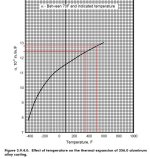
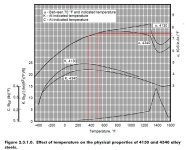
Run the math for thermal expansion of 5.125"D rings. It's not a completely correct model, but it's not far off either. We find the interference fit is reduced by 0.0114" as the temperature rises from 380F to 500F. It's roughly similar between 300F and 420F. That's more than a 1/4 of a millimeter if you're a metric man. It's a lot.
Now consider other CTE effects, like head castings cracking between a spark plug boss and a valve seat bore, or in the exhaust port. And aluminum does display a real loss of strength with temperature rise.
On other fronts, any thoughts on the buildup of material in the exhaust valve guide? Ever considered the effect of CHT on detonation margin? Or what happens to oil in contact with a very hot surface...inside a rocker box at high CHT?
Throw some human factors into the mix. Quality control slips a little, and the margins start to disappear. Consider SB 634 and similar.
*Official VAF Consensus CHT Targets
There's a consensus? Kinda forgetting about the angle valve engines. I think I got to 380...once, in test, in July, with the exit closed to 30 sq inches or so. This time of year a 300F cruise CHT isn't uncommon.
Personally I don't think the cylinders will tolerate hundreds of hours at 495 degrees, and fail instantly at 505. Probably not what you meant
The unknown point is: how much is cylinder lifetime reduced by consistently operating *near* max temperature?
Exactly. There is no good/bad line. The failure rate simply rises with temperature.
Last edited:
my guess is that 400 nets greater longevity with greater margins, yet unrealistic for the majority of planes to reach that goal at full power. So they needed a number that was realistic, yet still down the curve before risks ramp up. I have confidence there is some type of curve with temps on one access and risk of metalurgic issues on the other, not to mention the issues Dan mentioned. Also speculate that the number of heat / cool cycles plays a role, but nothing to back that up. I suspect Dan may have that in his extensive bag of great data.Any idea why Lycoming’s longevity temp limit is substantially lower for economy cruise? If the targeted problem is cylinder head damage from high temps, why does the amount of gas going through the engine matter? Perhaps the thinking is that, if you are hitting 400 at a low power setting, something else must be wrong?
Without a doubt cooler is better. I have nothing to prove that, but would be shocked to learn that was not true. But if lycoming starts listing more precise data, they start running risks of customers saying I never got over X degress, yet my head cracked and want a free replacement. Their incentive is to share as little data as possible imho.

I believe, if I remember my training with Mike, he taught 75 *MPH* on final.Mike Seager teaches 75 kts on final for the RV7. Mike is the universally accepted expert, having given more dual instruction in RV's than pretty much anybody else on the planet. But, his canned numbers have to cover a pretty broad experience spectrum so it seems like it would make sense that they might be padded a bit.
Once I got comfy in my 7 I started slowing it down because yeah, coming over the fence at 75, it floats a bit.
So that’s 65knots. Hmm.I believe, if I remember my training with Mike, he taught 75 *MPH* on final.
Ok lads. So we have identified an issue with the front of my baffles.
Any tips on the fix? Is there a How to, or a guide??
Cheers
J
Any tips on the fix? Is there a How to, or a guide??
Cheers
J

I believe, if I remember my training with Mike, he taught 75 *MPH* on final.
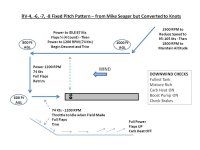
RV6 with indicated full flap stall of 52KT final approach at 1.3 equals 68KTS. Worked very well.Your Dynon panel shows an AOA. I would recalibrate it's display points. (see the Dynon instructions)
Fill the tanks with fuel add a chunky buddy, add some baggage and do the math to get her to as close to your published maximum gross weight as possible.
(The CG window is so narrow the difference of stall speed from max aft to max fwd CG is negligible of our calculations)
At altitude do a few landing configuration stalls and video or note stall speed.
Multiply it by 1.3 and that can be your "On Speed" velocity. (30% above Vso)
75 kts seems smoking fast for a RV series aircraft on final. (maybe ~ 65 kts for a 50 knot stall speed ?)
Let's remember that a 10% increase in approach speed will cause 21% increase in landing distance required. (NAVWEPS 00-80T-80 page 200)
A couple of comments:
Carb heat is not necessary on a Lycoming except under extreme conditions. Depending on how the system is built carb heat has the potential of ingesting trash into the engine and the carb. The speeds and flap settings are fine if you are alone in the pattern. If you need to extend to follow traffic it is much safer to be at half flap and 85KT until wings level and on 3 degree glideslope. There have been way too many stall spin accidents between the base to final turn and the end of the runway.
Reference the stall spin RV4 accident at Telluride CO. Two fatal.
Big picture, the goal is to install your rubber seals so they seal against the top of the cowl. It is important that the edges curve in towards the pressurized area over the engine so pressure seals them against the top cowl instead of opening up a gap. If you will post (or PM) your e-mail address, I'll send you a .PDF of Van's baffle instructions for the RV-10. Not your airplane/engine, but the concepts are identical.Ok lads. So we have identified an issue with the front of my baffles.
Any tips on the fix? Is there a How to, or a guide??
Cheers
J
I'm a believer in DMMS so if 52KT is full flap stall and you have FF it would be 52KT*1.404 or ~73 knots, same as Mike S.RV6 with indicated full flap stall of 52KT final approach at 1.3 equals 68KTS. Worked very well.

Look waaaaaay back into the bowels of this thread at Post #14. There's a VAF link that many contributed to, but look at Dan Horton's photos of baffle seals. It's as close to a "how-to" that I think you're gonna find. It's especially helpful for showing how the inlets and the area around the starter gear are done. Seriously, they're really good pics that I'm sure you'll find helpful.Ok lads. So we have identified an issue with the front of my baffles.
Any tips on the fix? Is there a How to, or a guide??
Cheers
J
Based on this comment I thought that maybe my memory had failed me, so I verified. When I did transition training with him, Mike gave me a 3 page cheat sheet of checklists he had typed up. It says "RV7 Information Sheet" at the top. I assume he gives on to everybody? I just looked at it again and It definitely says 75 KTS.I believe, if I remember my training with Mike, he taught 75 *MPH* on final.
Max fuel flow on takeoff ??I have records in my logs showing timing has been set to 25. Carby O360 with 275 hours on it.
Hmmm Not 100% but I think it's in the 50s Lph!Max fuel flow on takeoff ??
UPDATE...
So the weather turned out to be very nice this afternoon and took the RV up for some testing (and some fun)
I had a play around with the baffles and removed cable ties etc, and today all went pretty well. On the initial climb I set for 120 kts and the CHTs stabilized around 410 - but only on 1 and 3. 2 and 4 were in the green the entire time. Then at about 1000ft, I just eased back the throttle a poofteenth and the dropped below 400. Climbed out at about 900fpm. Just me, and full tanks. Happy wth that.
I did some testing and at 3000ft I levelled off and let the CHTs settle. Then went full noise and climbed out at 110 at around 1500fpm and the CHTs never hit the yellow. HAPPY!
Took it up and stalled the crap out of it. Clean - she let go around 53kts. Full flap was under 50.
Bashed some circuits and have dialled in my pattern speeds nicely. I have it on 75 on final, and then as I approach, slow down to 65 across the fence, and about 3 seconds before the wheels hit, I am at about 55 with the chirpies going off, and a nice smooth landing. Did that about 6 times to make sure it was not a fluke and am pretty happy!!
Will keep working my way through this machine, but I am really happy with how she performed today.
Thank you to everyone that commented here and added to the conversation. Very valuable.
Cheers all
J
So the weather turned out to be very nice this afternoon and took the RV up for some testing (and some fun)
I had a play around with the baffles and removed cable ties etc, and today all went pretty well. On the initial climb I set for 120 kts and the CHTs stabilized around 410 - but only on 1 and 3. 2 and 4 were in the green the entire time. Then at about 1000ft, I just eased back the throttle a poofteenth and the dropped below 400. Climbed out at about 900fpm. Just me, and full tanks. Happy wth that.
I did some testing and at 3000ft I levelled off and let the CHTs settle. Then went full noise and climbed out at 110 at around 1500fpm and the CHTs never hit the yellow. HAPPY!
Took it up and stalled the crap out of it. Clean - she let go around 53kts. Full flap was under 50.
Bashed some circuits and have dialled in my pattern speeds nicely. I have it on 75 on final, and then as I approach, slow down to 65 across the fence, and about 3 seconds before the wheels hit, I am at about 55 with the chirpies going off, and a nice smooth landing. Did that about 6 times to make sure it was not a fluke and am pretty happy!!
Will keep working my way through this machine, but I am really happy with how she performed today.
Thank you to everyone that commented here and added to the conversation. Very valuable.
Cheers all
J
Why 40% above stall speed?I'm a believer in DMMS so if 52KT is full flap stall and you have FF it would be 52KT*1.404 or ~73 knots, same as Mike S.
I certainly could have been wrong...I'll have to dig out the copy of a hand-drawn diagram that I got during transition training. It's filed away *somewhere*.Based on this comment I thought that maybe my memory had failed me, so I verified. When I did transition training with him, Mike gave me a 3 page cheat sheet of checklists he had typed up. It says "RV7 Information Sheet" at the top. I assume he gives on to everybody? I just looked at it again and It definitely says 75 KTS.

Hmmm Not 100% but I think it's in the 50s Lph!
I’ve sent you a DM
I'm a believer in DMMS so if 52KT is full flap stall and you have FF it would be 52KT*1.404 or ~73 knots, same as Mike S.
I see that this hasn't been answered yet. DMMS= "defined minimum maneuvering speed" it's an airline thing where you don't fly slower than 1.4 times the clean stall speed until all you turns in the pattern are done and you're established on final.Why 40% above stall speed?
I see that this hasn't been answered yet. DMMS= "defined minimum maneuvering speed" it's an airline thing where you don't fly slower than 1.4 times the clean stall speed until all you turns in the pattern are done and you're established on final.
That is exactly what I was doing yesterday. I am on 80+ on base to final. Then once established, slowing down to 70-75 and then let her settle on the runway somewhere around 55-60 with the chirpies going off.
I do basically the same thing. If I'm on speed I'm usually down and stopped in about 800' without any brake stomping heroics.That is exactly what I was doing yesterday. I am on 80+ on base to final. Then once established, slowing down to 70-75 and then let her settle on the runway somewhere around 55-60 with the chirpies going off.
Glad it's working out for you
OK, if I read this correctly... on climb #2 and #4 were 'in green', I suppose that means under 400. And #3 and #1 were hotter at around 410. Have you looked to see if there is either the 'washer trick' or the pounded out bulge on your baffle on the aft side of #3? The 'washer trick' (search the forum) is basically to put a washer between the baffle and the aft side of the #3 jug to allow a bit more air to flow around the rear side of the #3 cylinder.UPDATE...
So the weather turned out to be very nice this afternoon and took the RV up for some testing (and some fun)
I had a play around with the baffles and removed cable ties etc, and today all went pretty well. On the initial climb I set for 120 kts and the CHTs stabilized around 410 - but only on 1 and 3. 2 and 4 were in the green the entire time. Then at about 1000ft, I just eased back the throttle a poofteenth and the dropped below 400. Climbed out at about 900fpm. Just me, and full tanks. Happy wth that.
Still looking for your carb part number. Also, were the ambient temps about the same as your prior report? if it is 10 degrees cooler ambient you can expect cooler CHT numbers....
Hmm.. Washer trick. I will look that up.
Here is a screen shot from the GoPro. Can't read the numbers, but you can see they hit the yellow.
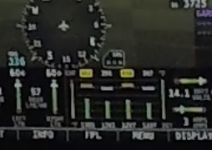
Here is a screen shot from the GoPro. Can't read the numbers, but you can see they hit the yellow.
