Van's Air Force

The definitive Van's Aircraft support community! Buying, building or flying an RV? Join our exclusive family of mentors and enthusiasts!

#2 cyl Air Dam RV-14 vs RV-10

supik

Well Known Member
Patron
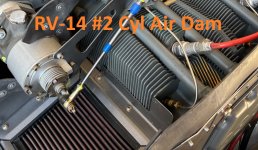
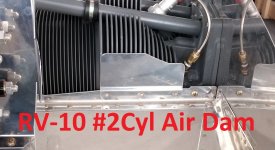
Comparing the RV-10 #2 cyl air dam with the RV-14; the air dam on the RV-14 covers the injector.
Is there some science behind this? Is this to prevent dirt/bugs hitting the injector's screen or is there any benefit in alternating the air pressure in that particular area?

NOTE: My nr. 2 cyl (RV-10, IO-540-D4A5) is the hottest in cruise. (air dam removed)
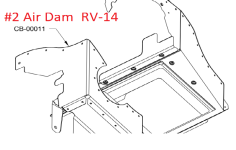
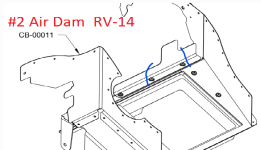
#2 Air Dam RV-14.png

rv-14 nr 2 front dam.jpg

IMG_20200418_184029.jpg
 
Last edited:
My #2 injector is partially covered also. I believe the injector vent functions better that way but not certain. Somebody else will soon clarify
 
Van's figured out that the #2 injector was getting slogged by incoming air in the fuel injected RV-8,7 and -10. The fix was to put the riser in front of the #2 injector (RV-14 - Circa 2014).

I retrofitted it to my AV RV-7, solved the blue fuel stains.
 
Van's figured out that the #2 injector was getting slogged by incoming air in the fuel injected RV-8,7 and -10. The fix was to put the riser in front of the #2 injector (RV-14 - Circa 2014).

I retrofitted it to my AV RV-7, solved the blue fuel stains.
Did that change fuel delivery performance or just eliminate staining. Wondering if I should consider wxtending the dam.
 
Did that change fuel delivery performance or just eliminate staining. Wondering if I should consider wxtending the dam.
The change was very slight -- almost counterintuitive. Before the modification, the #2 EGT rise was less pronounced and would linger for longer at peak EGT before falling over. After the modification, the #2 EGT temp and curve/rise tracked the same as the cohorts (same shape/area under the curve) and then would fall over more abruptly than prior.

My typical flight profile/SOP -- Climb to 6500ft, WOT, 2700 RPM to top of climb, thence - RPM to 2500, FF reduced until 50°F LOP...

RV-8 BAF Kit Standard temp risers -- FT 16:12

Immediately after the #2 riser modification -- FT 12:17
 
Last edited:
The change was very slight -- almost counterintuitive. Before the modification, the #2 EGT rise was less pronounced and would linger for longer at peak EGT before falling over. After the modification, the #2 EGT temp and curve/rise tracked the same as the cohorts (same shape/area under the curve) and then would fall over more abruptly than prior.

My typical flight profile/SOP -- Climb to 6500ft, WOT, 2700 RPM to top of climb, thence - RPM to 2500, FF reduced until 50°F LOP...

RV-8 BAF Kit Standard temp risers -- FT 16:12

Immediately after the #2 riser modification -- FT 12:17
thanks! sounds like its worth a bit of time to add it.
 
Van's figured out that the #2 injector was getting slogged by incoming air in the fuel injected RV-8,7 and -10. The fix was to put the riser in front of the #2 injector (RV-14 - Circa 2014).

I retrofitted it to my AV RV-7, solved the blue fuel stains.
Thanks!
 
The change was very slight -- almost counterintuitive. Before the modification, the #2 EGT rise was less pronounced and would linger for longer at peak EGT before falling over. After the modification, the #2 EGT temp and curve/rise tracked the same as the cohorts (same shape/area under the curve) and then would fall over more abruptly than prior.

My typical flight profile/SOP -- Climb to 6500ft, WOT, 2700 RPM to top of climb, thence - RPM to 2500, FF reduced until 50°F LOP...

RV-8 BAF Kit Standard temp risers -- FT 16:12

Immediately after the #2 riser modification -- FT 12:17
Hi Brian,

Did you have higher CHT temps on #2 Cylinder on the RV14 during climb and cruise?
 
Hi Brian,

Did you have higher CHT temps on #2 Cylinder on the RV14 during climb and cruise?
Estevan,

I certainly do. #2 is my hottest cylinder in climb and cruise, although the highest temp I've seen is 386 degrees.

Regarding the air dam, I had blue staining on bottom of the top of the cowl (painted white) and fought it though the first hundred hours or so. I tried taller dams, shorter dams, and slightly wider dams but nothing worked. I also had a lessor but similar problem on #3. I've installed turbo injectors (has the 90 degree arm), repainted the bottom of the top cowl so I could see if I'd solved the problem and it appears that the problem is gone.

I did not see a change in fuel flow, cylinder temp, EGT, or performance.
 
Last edited:
Hi Brian,

Did you have higher CHT temps on #2 Cylinder on the RV14 during climb and cruise?
For the record, this is an RV-7 with the RV-14 #2 riser + modifications + plenum -- so not exactly apples/apples...

During climb I hold 118Kias which yields about 1200fpm. #1 CHT hits ~350°F, #2 CHT ~342°F, #3 CHT ~347°F, #4 CHT 322°F.
Once established in cruise at around 50°F LOP, the CHTs "flip" and settle down with the power reduction, the increase airspeed and lower OAT. #1 301°F, #2 314°F, #3 310°F, #4 281°F.

So, no -- #2 is cooler than #1 in climb, then warmer in cruise.
 
For the record, this is an RV-7 with the RV-14 #2 riser + modifications + plenum -- so not exactly apples/apples...
On a std setup, the air is expanding into a larger volume just before the #2 inj. Have to wonder if the smaller height in a plenum arrangement is some how introducing a different dynamic here. The plenums I have seen are flat on the top in this area and through transition, but the std setups have that contoured air smoother on the under side of the upper cowl to transition the air with less turbulence. Never experienced blue staining on #2 in my 6 or 10. Both are non plenum.
 
On a std setup, the air is expanding into a larger volume just before the #2 inj. Have to wonder if the smaller height in a plenum arrangement is some how introducing a different dynamic here. The plenums I have seen are flat on the top in this area and through transition, but the std setups have that contoured air smoother on the under side of the upper cowl to transition the air with less turbulence. Never experienced blue staining on #2 in my 6 or 10. Both are non plenum.
Agree -- the "diffuser" in front of #2 is larger volume and depth than #1, all kinds of aerodynamic violence is happening here :)

This is OT, but why not -- current project is to remove the riser in front of #1. Then change the rivets out to AN426AD-4's, install a couple of plate-nuts and reinstall a riser of shorter height. I am going to make 6 different ones, going progressively shorter and see what happens to the temp spreads -- the goal is to get #1 cooler in climb, and reduce the overall temps in cruis and maybe -- just maybe -- get a better handle on why #4 is soooo cold.
 
Agree -- the "diffuser" in front of #2 is larger volume and depth than #1, all kinds of aerodynamic violence is happening here :)

This is OT, but why not -- current project is to remove the riser in front of #1. Then change the rivets out to AN426AD-4's, install a couple of plate-nuts and reinstall a riser of shorter height. I am going to make 6 different ones, going progressively shorter and see what happens to the temp spreads -- the goal is to get #1 cooler in climb, and reduce the overall temps in cruis and maybe -- just maybe -- get a better handle on why #4 is soooo cold.
Sounds like some good experimentation there. Looking forward to seeing what you find.
 
Good timing on this! I have been considering ways to further cool #2 in our 14. I decided to build a "minimalist" version of the air dam that retains only the portion directly in front of the injector and the flange encompassing one screw on either side (cuts on the blue lines below). Haven't tested it yet in flight but will report results when I do.

1764617454020.png
 
I have a vague recollection of reading a recommendation (but I don’t recall where) that the front cylinders’ injectors should not have their bleed air holes facing forward. Perhaps to avoid ram air pressurization?
 
Good timing on this! I have been considering ways to further cool #2 in our 14. I decided to build a "minimalist" version of the air dam that retains only the portion directly in front of the injector and the flange encompassing one screw on either side (cuts on the blue lines below). Haven't tested it yet in flight but will report results when I do.

View attachment 103601
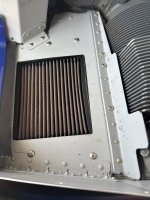
This is what I ended up with on the -7, #2 never gets above 350 in climb...

IMG_5283.jpeg
I have a vague recollection of reading a recommendation (but I don’t recall where) that the front cylinders’ injectors should not have their bleed air holes facing forward. Perhaps to avoid ram air pressurization?
SI 1275C talks about about the correct position of the air bleed hole in the normally aspirated injectors...Can't find the reference to the front two injectors tho....
 
Good timing on this! I have been considering ways to further cool #2 in our 14. I decided to build a "minimalist" version of the air dam that retains only the portion directly in front of the injector and the flange encompassing one screw on either side (cuts on the blue lines below). Haven't tested it yet in flight but will report results when I do.

View attachment 103601
I did exactly that and it did not work for me. Let us know your results
 
Back
Top