Van's Air Force

The definitive Van's Aircraft support community! Buying, building or flying an RV? Join our exclusive family of mentors and enthusiasts!

Silicone hose for cylinder drainback?

skirting_virga

Well Known Member
Patron
Textile reinforced rubber seems to be almost universal for cylinder drainback. Has anyone tried high temp silicone (maybe reinforced) instead? Is there a specific product or source you've used and recommend?

Edit: I'm reinstalling baffles soon and want to take care of it before they get hard to reach. Rubber fuel hose seems less durable than I would like.
 
Last edited:
You can use almost anything that's rated for Fuel+Oil+Heat, just use spring clamps (constant tension) instead of the "Breeze" worm clamps.
I have the clamps already. The engine shop used worm clamps and said the constant tension leak, but I'm still inclined to use them.
 
I have the clamps already. The engine shop used worm clamps and said the constant tension leak, but I'm still inclined to use them.
Vic Syracuse has a recommendation for a thicker rubber hose. I don’t recall the specs, but ACS has it. I used it with tbe appropriate sized constant tension clamps, and it seals very well.
 
The shop is wrong...
I felt that way at the time when he explained it to me and I'm wondering if that should be considered a red flag.

Vic Syracuse has a recommendation for a thicker rubber hose. I don’t recall the specs, but ACS has it. I used it with tbe appropriate sized constant tension clamps, and it seals very well.
I believe I read his recommendation and bought that hose before the overhaul, but I'm wondering if I could do better with silicone. Using rubber in such a hot area seems wrong...
 
What about this stuff?

fkm-blk_detail_ecbc5588-34d4-4d30-b472-c9eec2d35bb3.jpg

 
Unless anyone has any safety concerns, I'm going to give that stuff a try.
Unfortunately, I have to raise my hand, based on some recent search’s regarding silicone hose for petroleum based use - the majority of information I found said it is not compatible. I actually am not uncomfortable using it for something that isn’t critical (like a breather hose) and if it turns gooey, it isn’t a “take you out of the sky” problem - but I’d hate to use it for something that is part of the engine oil system. It probably wont fail catastrophically, but why not use something that you KNOW is designed to have oil contact all the time?
 
Power steering hose with constant tension clamps. Never leaks.
+1

Most rubber and silicone don't handle oil well. The rubber leaches the oil and the silicone gets gummy. PS return hose is not std rubber and therefore is oil resistant, so a good choice. I use Fuel Injection rated rubber hose, which also stands up well to oil in my experioence. 1600 hours on them in the 6 with constant tension clamps and no leaks or leaching. Easy to find at any auto store. Don't get fuel line; MUST be the FI rated stuff.
 
Last edited:
What about this stuff?

fkm-blk_detail_ecbc5588-34d4-4d30-b472-c9eec2d35bb3.jpg

Yes, IMO. it has an inner coating designed for oil tolerance.
 
Unfortunately, I have to raise my hand, based on some recent search’s regarding silicone hose for petroleum based use - the majority of information I found said it is not compatible. I actually am not uncomfortable using it for something that isn’t critical (like a breather hose) and if it turns gooey, it isn’t a “take you out of the sky” problem - but I’d hate to use it for something that is part of the engine oil system. It probably wont fail catastrophically, but why not use something that you KNOW is designed to have oil contact all the time?
Well, these are exactly the comments I'm here fishing for. But help me understand:

This appears to be fluorosilicone, which as I understand it is designed for fairly high chemical resistance. I have silicone valve cover gaskets, for example, which are in continuous contact with oil and have a reputation for remaining leak-free for a long time. We have silicone diaphragms and O-rings in many or all of the fuel system components, in direct contact with gasoline at all times.

The advertised purpose of the hose is:
- Fuel Return
- Fuel Ventilation
- Crankcase Ventilation
- Turbo Oil Return
- Power Steering Return
- Automatic Transmission Oil Cooler
REMARK
- Do NOT use the hose to handle alcohol fuel continuously
- Do NOT fully submerge the hose in fuel during use.


Now, obviously a company can say anything about any product, especially if it's for automotive use where it's unlikely to kill anyone if it fails, but it sounds a lot like this is intended for long-term containment of petroleum products, fuel and oil, provided it's non-ethanol. What I am I missing?

EDIT: Turbo oil returns, while low pressure, live in a pretty abusive environment. They take very hot oil in close proximity to a lot of radiant heat from the turbine housing.
 
Well -- there are now FAA approved high-temp silicon rocker cover gaskets and also a thicker version for the experimental market. I replaced mine two years ago on all 4-cylinders, and she remains "dry as a bone", which you certainly can't say about the old cork gaskets that get brittle and leak all over your beautiful engine. For drain back tubes, I also wonder if this new "lifetime" Teflon tubing might work even better because they are recommending this type for fuel and oil lines these days. Installed them as my fuel line replacements just this year -- they seem fine!
 
Use power steering return hose. This hose is on the low-pressure side and returns the oil from the steering gear back to the reservoir. It's specifically designed for hot oil under low pressure, as this application is. Also, use spring clamps instead of worm-drive. They maintain even pressure as the hose shrinks with age and don't have a single pressure point as worm clamps do.


1760809310062.jpeg
 
Use power steering return hose. This hose is on the low-pressure side and returns the oil from the steering gear back to the reservoir. It's specifically designed for hot oil under low pressure, as this application is. Also, use spring clamps instead of worm-drive. They maintain even pressure as the hose shrinks with age and don't have a single pressure point as worm clamps do.


View attachment 99794
Be sure to get good spring clamps. I've seen some on Amazon that you could sqeeze with your fingers.
 
Not all silicone is fuel resistant, typically I avoid silicone for fuel just to be safe. My return clamps are the worm gear type typical in automotive applications. Mine never leak but I would use the constant pressure spring clamps IF mine develope a leak
 
Vic Syracuse has a recommendation for a thicker rubber hose. I don’t recall the specs, but ACS has it. I used it with the appropriate sized constant tension clamps, and it seals very well.
MIL6000D spec hose, at ACS for $21.45 per foot, enough to do all 4 cylinders. I followed Vic's recommendation. Installed with constant pressure spring clamps.
 
I will note that the silicone hose supplied with the Anti Splat vacuum breather system is now weeping oil along its length, and cracking near hose clamps. Installed about 7 years ago. I'm going to replace with something more reliable. Not sure what yet.
 
A vendor here listed a special return plumbing that was quite impressive. Anybody have a link? .. I will try the search feature and report back.. edit: TSFlightlines but I can't find the product
 
Last edited:

There is no link. You have to call Tom directly. The cost of production is very high the hoses are not cheap. I installed his superb product a thousand hours ago on my second engine. I wish it was available earlier. I tried every possible combination of hoses/clamps and Tom's product is the best so far.

oil return hoses - 1 (1).jpeg
 
There is no link. You have to call Tom directly. The cost of production is very high the hoses are not cheap. I installed his superb product a thousand hours ago on my second engine. I wish it was available earlier. I tried every possible combination of hoses/clamps and Tom's product is the best so far.

View attachment 99822
Thanks.. that's the product I was referring to
 
There is no link. You have to call Tom directly. The cost of production is very high the hoses are not cheap. I installed his superb product a thousand hours ago on my second engine. I wish it was available earlier. I tried every possible combination of hoses/clamps and Tom's product is the best so far.

View attachment 99822
I'll just second this. My drainback lines leaked/seeped at the rubber connection for all the reasons we know. The only virtually permanent solution is the AS Flightlines Oil Drainback Kit. It's not inexpensive, but it permanently ended the seep/leak at the drainback lines. I like one-time solutions to minor problems which create constant annoyance. It's found with their other RV10 products. Plus a clean engine makes more serious concerns easier to spot.
 
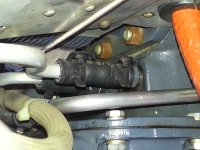
I'm still on the fence about what I want to do, but I pulled this off #1 today. This is basically a 0 hour overhauled engine and the rubber looks like that under the clamps. Not a fan of hose clamps and I'm fairly suspicious of rubber after seeing old/hardened/cracked rubber on car engines over the years.

hose_crop.jpg

Replaced with MIL 6000-6 hose from aircraft spruce (bought last year) with constant tension clamps. I'm trying to decide if I'll do the same to the other 3 or get TS Flightlines.
 
Replaced with MIL 6000-6 hose from aircraft spruce (bought last year) with constant tension clamps. I'm trying to decide if I'll do the same to the other 3 or get TS Flightlines.
I think that set will be leak free for many years. Expensive hoses are not required. Just use the correct rubber and correct clamps and your problems will vanish and and hold for the long haul. Not a drop in 1600 hours on my 6.
 
I have purchased the PN from the lycoming manual - they were stupidly expensive but I assumed the were the right thing to use. Perhaps not!


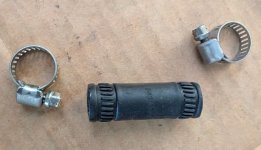
The shop uses standard automotive hose clamps like these:

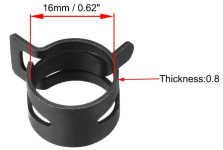
Can someone recommend a part number for the constant tension clamps? Would something like these do the job?
 
I have purchased the PN from the lycoming manual - they were stupidly expensive but I assumed the were the right thing to use. Perhaps not!


The shop uses standard automotive hose clamps like these:

Can someone recommend a part number for the constant tension clamps? Would something like these do the job?
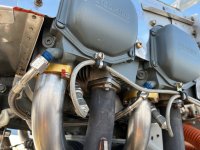
We just havent put the return lines on the website yet, ( we're working on just an engine section with items that are universal to all engines), but we have them for 320, 360 Parallel and Angle valve, and 540s. Pics below are of the 540 original install. Teflon, stainless hose ends. We include the case fittiings. Not for everyone, as some like the inexpensive route. If youre going to use the rubber hose, use 'good" constant tension clamps.
Tom
 

Attachments

  • IO540 DRAIN 1.jpg
    IO540 DRAIN 1.jpg
    269.4 KB · Views: 52
  • IO540 DRAIN 3.jpg
    IO540 DRAIN 3.jpg
    269.2 KB · Views: 52
  • IO540 DRAIN 5.jpg
    IO540 DRAIN 5.jpg
    204.6 KB · Views: 51
I have purchased the PN from the lycoming manual - they were stupidly expensive but I assumed the were the right thing to use. Perhaps not!


The shop uses standard automotive hose clamps like these:

Can someone recommend a part number for the constant tension clamps? Would something like these do the job?
I have used this style and they work very well with no leaks. They do, however, require ocassionally tightening as the rubber ages. They are fit by size though, so less convenient than classic worm gear clamps. The advantage of these over constant tension, is not having to get pliers into those cramped spaces.

https://www.summitracing.com/parts/...HchL0q4Zss90z7IWFnNsFTdcPM8UkbsBoCDWkQAvD_BwE
 
I'm still on the fence about what I want to do, but I pulled this off #1 today. This is basically a 0 hour overhauled engine and the rubber looks like that under the clamps. Not a fan of hose clamps and I'm fairly suspicious of rubber after seeing old/hardened/cracked rubber on car engines over the years.

View attachment 99823

Replaced with MIL 6000-6 hose from aircraft spruce (bought last year) with constant tension clamps. I'm trying to decide if I'll do the same to the other 3 or get TS Flightlines.
Keep in mind that the rubber hose is just a vibration isolator and doesn't carry much fluid under any pressure from point a to point b.

Tom (TS Flightlines) makes an excellent product, and his customer support/service is without equal. However, the braided steel/teflon lines & fittings do not route very well in the drainback application (IMHE). We tried a few different hose end angles (90's, 45's) but couldn't get a routing that would clear, with any confidence or margin, the various intake runners, headers on my IO-360-A1B6.

Simply replaced the hose with 3/8" ID fuel hose (Gates rubber) from O'Reilley's and changed to spring clamps from McMaster Carr. No leaks, and no deformation to speak of after 100 hours.
 
lr172 (post32) gave a link for my favorite hose clamps. Look at the band that compresses the hose, also they're extremely easy to adjust. Combine these clamps with automotive power steering return hose and have a cheap solution
 
Back
Top