Van's Air Force

The definitive Van's Aircraft support community! Buying, building or flying an RV? Join our exclusive family of mentors and enthusiasts!

Starter Contactor Power versus Ground

TASEsq

Well Known Member
Patron
I’m looking at contactors for battery and starter. The Van’s supplied parts can be gotten from Digikey at lower prices (and free shipping!) than I can get from US based vendors.

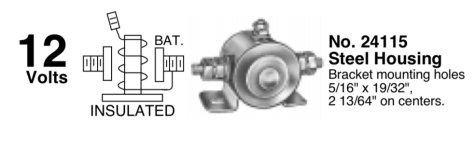
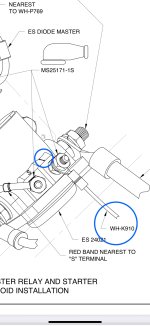
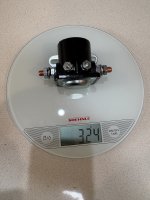
I believe this is the master contactor which comes from Vans:
IMG_8151.jpeg

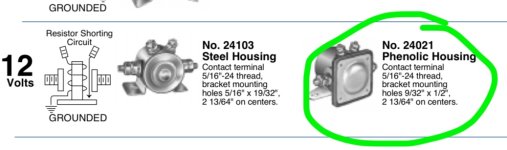
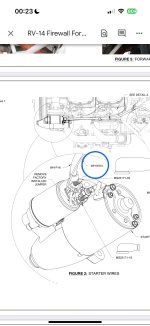
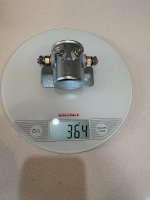
And this is the starter contactor:
IMG_8152.jpeg

This is described as:
“12v 500a grounded four stud solenoid with phenolic housing with ignition coil resistor shorting circuit”

The question:
All of the AEC diagrams show power being sent to the start contactor by the start switch, then it grounds via the case.

Why?

Why don’t we use a contactor which gets power straight from the battery lead to the contactor, then close the contactor by grounding at the start button? (Same as we do with the master contactor or any other relay).

Seems in the same range there are many options to do it this way.


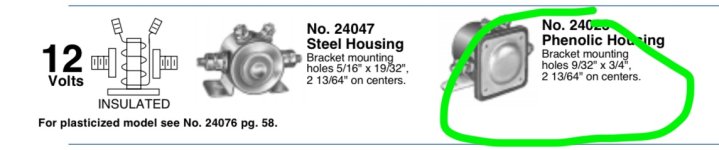
For instance - this one would get coil power from the battery lead (with a jumper) and just need a ground at the start switch (would need a fly back diode I think).
IMG_8154.jpeg

Also:
They make nice ones which are PVC coated:
I was thinking of using 3 of these - 2 for my battery Master relay’s, and 1 for the x-tie:
https://www.digikey.com.au/en/products/detail/littelfuse-commercial-vehicle-products/24117/6347078
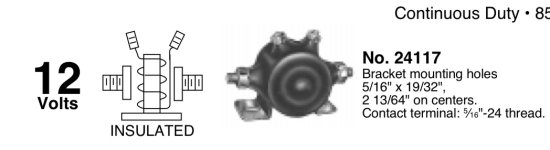
IMG_8153.jpeg
 
Last edited:
You probably could use other type contactors, the Vans contactors are automotive variety relatively low cost and have been in their catalogue snce at least 25 years ago!
Mouser is even cheaper in Aus for the 25021 Cole Hersee starter contactor, about $84 plus GST including postage. I ordered one on Friday and it left Texas on the same day and was delivered in rural Western Australia today, Wednesday, 5 days later, which is amazing service!

The original starter contactor was failing intermittently because the ground path is via the mounting bracket, which is riveted onto the solenoid body and after 1,500 hours the rivet had vibrated loose and there was no longer a reliable ground path. So I am sure that it is possible to improve upon the design and the components.
 
You probably could use other type contactors, the Vans contactors are automotive variety relatively low cost and have been in their catalogue snce at least 25 years ago!
Mouser is even cheaper in Aus for the 25021 Cole Hersee starter contactor, about $84 plus GST including postage. I ordered one on Friday and it left Texas on the same day and was delivered in rural Western Australia today, Wednesday, 5 days later, which is amazing service!

The original starter contactor was failing intermittently because the ground path is via the mounting bracket, which is riveted onto the solenoid body and after 1,500 hours the rivet had vibrated loose and there was no longer a reliable ground path. So I am sure that it is possible to improve upon the design and the components.
I looked at the gigavac units for a long time - high quality, modern etc. But when I mocked them up they were physically massive and didn’t fit the doubler and nutplates I already have. So decided to use similar ones to vans for the system contactors, and for some mini-gigavac ones for the engine bus relays.

Thanks for the tip - mouser is $35 a unit cheaper!
 
Why don’t we use a contactor which gets power straight from the battery lead to the contactor, then close the contactor by grounding at the start button? (Same as we do with the master contactor or any other relay).
Not saying this is the reason, just that it might have been a factor in aircraft electrical design at one time: If your start contactor is activated by applying power, you can disable it by pulling the associated breaker. Can't do that if it's a ground connection.
 
Not saying this is the reason, just that it might have been a factor in aircraft electrical design at one time: If your start contactor is activated by applying power, you can disable it by pulling the associated breaker. Can't do that if it's a ground connection.
Good point. In my case it will come from an inaccessible fuse.
 
The question:
All of the AEC diagrams show power being sent to the start contactor by the start switch, then it grounds via the case.

Why?

Why don’t we use a contactor which gets power straight from the battery lead to the contactor, then close the contactor by grounding at the start button? (Same as we do with the master contactor or any other relay).
These starter contactors were first developed for the early automobiles and this is just the way they did things back then. After a while, it becomes a standard.

Prior to the use of ECUs or silicon electronics in cars, the general covention was to switch everything on the positive side. Was very rare to see switching one the ground side back then.
 
If the start contactor was activated by a switch to ground, then if the wire going to that switch shorted to ground,
the propeller would unexpectedly spin. That is dangerous.
If the start contactor is activated by a switch to positive and if the wire going to that switch shorted to ground,
a fuse would blow. The prop would not spin unexpectedly.
 
If the start contactor was activated by a switch to ground, then if the wire going to that switch shorted to ground,
the propeller would unexpectedly spin. That is dangerous.
If the start contactor is activated by a switch to positive and if the wire going to that switch shorted to ground,
a fuse would blow. The prop would not spin unexpectedly.
What Mich48041 said + we were always taught (back in the Dark Ages) that the reasoning behind the two contactor electrical load paths was (is?) as follows:

You want to energize the Master Relay via a grounding switch, so if you had that wire "short" (to ground) your contactor would stay engaged, and you would't know anything was wrong until shut down - where you could pull a circuit breaker to trouble shoot.

You want to energize the Start Relay via a + feed switch, so that with the switch off (no power from switch to contactor), if a wire became compromised to ground - no harm no foul.

Two distinct paths to accomplish the same result (energize coil) for the safety of the airplane.

At least that's what I remember ...

HFS
 
Last edited:
For the master relay make sure you get the continuous duty type, the intermittent type are used for the starter. Other than whether it takes a positive or negative to close the relay is not the only determining factor. The intermittent relays typically draw more current to close the contacts and if used in a continuous duty cycle will cook themselves to death, and can drain your battery faster when checking things without the engine running.
 
Just to be clear, the starter is energised after the master contactor - so the wire to the switch accidentally being grounded would only be an issue with the master on.

The only reason I bring this is is due to my wire routing - I’ll end up with a 20awg positive wire running from the main bus fuse block, right past the firewall pass-through, snaking its way to the panel to the start switch then all the way back again!

Using a contactor with an isolated coil would mean only a single 20awg ground wire from the switch to the contactor.

Do many people wire an active high discrete to their EFIS for “starter engaged”? Is this what you would use the “I” post for? If I didn’t have an I post, I was wondering how to safely wire a discrete.
 
Just to be clear, the starter is energised after the master contactor - so the wire to the switch accidentally being grounded would only be an issue with the master on.

The only reason I bring this is is due to my wire routing - I’ll end up with a 20awg positive wire running from the main bus fuse block, right past the firewall pass-through, snaking its way to the panel to the start switch then all the way back again!

Using a contactor with an isolated coil would mean only a single 20awg ground wire from the switch to the contactor.

Do many people wire an active high discrete to their EFIS for “starter engaged”? Is this what you would use the “I” post for? If I didn’t have an I post, I was wondering how to safely wire a discrete.
The "I" terminal energizes the solenoid on the PM style starters and is intended to prevent "run on" starting conditions.
 
For the master relay make sure you get the continuous duty type, the intermittent type are used for the starter. Other than whether it takes a positive or negative to close the relay is not the only determining factor. The intermittent relays typically draw more current to close the contacts and if used in a continuous duty cycle will cook themselves to death, and can drain your battery faster when checking things without the engine running.

My 57 cessna uses the same part number relay for both the starter and the battery master, they both use a 200 amp continuous duty relay, is there a downside to using cont duty on a starter?
 
My 57 cessna uses the same part number relay for both the starter and the battery master, they both use a 200 amp continuous duty relay, is there a downside to using cont duty on a starter?
There is no down side that I can think of using a continuous duty relay for the stater as long as it has the current carrying capacity and as others have said the safest way is energized it with a positive voltage to prevent the accidental engaging the starter if the wire should be accidentally taken low.
 
There is no down side that I can think of using a continuous duty relay for the stater as long as it has the current carrying capacity and as others have said the safest way is energized it with a positive voltage to prevent the accidental engaging the starter if the wire should be accidentally taken low.
There’s the inductive load switching aspect to consider. When you cycle the master it’s switching the few amp avionics load. When you cycle the starter it’s switching a 150 amp+ inductive motor load.
My master coil draws about an amp. The starter coil draws 3.5 amps. I assumed the difference was to quickly close/interrupt the starter load to minimize the contact arcing. Having the starter contacts weld themselves closed could lead to a really bad scene.
 
Last edited:
These starter contactors were first developed for the early automobiles and this is just the way they did things back then. After a while, it becomes a standard.

Prior to the use of ECUs or silicon electronics in cars, the general covention was to switch everything on the positive side. Was very rare to see switching one the ground side back then.
With the notable except of horn relays. On all my old cars, the horn button at the steering wheel grounds the lead to the horn relay. The other couple I can think of was the overdrive engage relay on the old Laycock overdrives and the back-up lights switch in the gearbox. Occasionally I will see a modern car driving along with its backup lights on, and I assume that the wire lead to the transmission switch has shorted to ground somewhere it is not supposed to.
 
With the notable except of horn relays. On all my old cars, the horn button at the steering wheel grounds the lead to the horn relay. The other couple I can think of was the overdrive engage relay on the old Laycock overdrives and the back-up lights switch in the gearbox. Occasionally I will see a modern car driving along with its backup lights on, and I assume that the wire lead to the transmission switch has shorted to ground somewhere it is not supposed to.
Good points. Didn’t mean to imply 100% and yes, relays sometimes switched the ground. Things today are quite a bit different. Most switches are connected to electronics of some sort and the convention there is to switch the grounds.
 
Just to be clear, the starter is energised after the master contactor - so the wire to the switch accidentally being grounded would only be an issue with the master on.

The only reason I bring this is is due to my wire routing - I’ll end up with a 20awg positive wire running from the main bus fuse block, right past the firewall pass-through, snaking its way to the panel to the start switch then all the way back again!

Using a contactor with an isolated coil would mean only a single 20awg ground wire from the switch to the contactor.

Do many people wire an active high discrete to their EFIS for “starter engaged”? Is this what you would use the “I” post for? If I didn’t have an I post, I was wondering how to safely wire a discrete.
The I terminal is bridged to the contactor plate. So it sees battery voltage only when the contacts close.
 
AFAIK:
  • BTW contactors are relays but are called contactors to distinguish them from relays because contactors have dual-spreading contacts so the opening flame will be half therefore the break current rating higher versus a single-spreading relay.
  • 24115 master contactor is rated 85A but can handle starter current because it only sees starter current when closed and current rating is largely about opening and extinguishing the flame as the contacts open. Make versus brake rating is not specified. Coil is 17.5 ohms for initial current 0.8A at 14.4V, resistance rises as the coil self-heats in a short time, 0.6A with 170F case at room temp still air.
  • 24021 starter contactor is rated 750A make, 100A break, intermittent duty 10s on 20 min off (20 min seems very conservative IMO). Coil resistance is 3.8 ohms for current draw 2.6A at say 10V. Coil draws more current versus continuous duty contactor because the spring is stronger to reduce opening time to extinguish the flame faster.
  • Master contactor is energized by grounding its coil because main bus is cold. Starter contactor is energized by powering its coil so starter switch wire shorted to ground will not energize the starter.
  • BTW the “I” terminal means “ignition”. Back when cars did not have electronic ignition, the battery was 12V (change from 6V to 12V happened about 1955) and the ignition coil was 6V with a “ballast” resistor in series, the “I” terminal was used to bypass the resistor for stronger spark during cranking when battery voltage dropped.
 
Last edited:
This starter solenoid contactor #24021 failed recently in our 9A, after 1,500 hours. The symptom was intermittent or delayed action when the start key was turned. The contactor's coil is grounded to the airframe via the mounting bracket and it turns out that the SINGLE rivet (red arrow) that attaches the solenoid body to the bracket had worked itself loose, probably due to vibration. This prevented current from flowing and activating the contactor ==> confused and unhappy pilot.


20250918_152828.jpg

I think an alternative contactor that has a more robust mounting bracket would be a better option for an RV, e.g. this intermittent duty Cole Hersee part 24037. It does not have the "I" terminal, but that is not used anyway in an RV and the rest of the electrical specs are similar to 24021.


24037_SPL.webp
 
Thanks all!

I take the point about the ground wire engaging the starter being the reason why the contactor is closed with power rather than with a ground.

I’ll have a think about it and look at the physical wire runs. I may be able to simplify it.

Does anyone know what the part number of the starter solenoid sold by bandc and stein? That one seems to have an internal suppression diode.

https://bandc.com/product/intermittent-duty-starter-contactor/ $48 usd

https://bandc.com/product/bc-starter-contactor-12v/ $75 usd??

(Don’t know what the difference is between these two!)

https://www.steinair.com/product/starter-relay-12v/?v=8bcc25c96aa5 $60

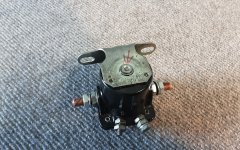
Kinda looks like this crappy thing:
 
Last edited:
Thanks all!

I take the point about the ground wire engaging the starter being the reason why the contactor is closed with power rather than with a ground.

I’ll have a think about it and look at the physical wire runs. I may be able to simplify it.

Does anyone know what the part number of the starter solenoid sold by bandc and stein? That one seems to have an internal suppression diode.

https://bandc.com/product/intermittent-duty-starter-contactor/ $48 usd

https://bandc.com/product/bc-starter-contactor-12v/ $75 usd??

(Don’t know what the difference is between these two!)

https://www.steinair.com/product/starter-relay-12v/?v=8bcc25c96aa5 $60

Kinda looks like this crappy thing:
Check the prices at your local automotive parts store, sometimes cheaper and no shipping.
 
This starter solenoid contactor #24021 failed recently in our 9A, after 1,500 hours. The symptom was intermittent or delayed action when the start key was turned. The contactor's coil is grounded to the airframe via the mounting bracket and it turns out that the SINGLE rivet (red arrow) that attaches the solenoid body to the bracket had worked itself loose, probably due to vibration. This prevented current from flowing and activating the contactor ==> confused and unhappy pilot.


View attachment 97568

I think an alternative contactor that has a more robust mounting bracket would be a better option for an RV, e.g. this intermittent duty Cole Hersee part 24037. It does not have the "I" terminal, but that is not used anyway in an RV and the rest of the electrical specs are similar to 24021.


View attachment 97569
The "I" terminal is used in RV 6,7,8,9 - see OP-10 -- described as the "Lightweight Starter CIrcuit", RV-14 Page 43-04, 43-11
 
Last edited:
The "I" terminal is used in RV 6,7,8,9 - see OP-10 -- described as the "Lightweight Starter CIrcuit"
I have the 149NL starter - which I believe you don’t need the I terminal for. There is no provision to remove the jumper etc.

It’s called out to be installed in the -14 plans as well.
 

Attachments

  • IMG_8163.jpeg
    IMG_8163.jpeg
    302.3 KB · Views: 48
  • IMG_8164.jpeg
    IMG_8164.jpeg
    357 KB · Views: 46
Last edited:
The "I" terminal is used in RV 6,7,8,9 - see OP-10 -- described as the "Lightweight Starter CIrcuit", RV-14 Page 43-04, 43-11
Ah OK thanks that's interesting, I must have another look at OP-10... my RV-6A has the B&C lightweight starter and the I terminal on the contactor is not used. The Littelfuse data sheet for the 24021 describes it as:

12 V 500 A Grounded Four-Stud Solenoid with Phenolic Housing with Ignition Coil Resistor Shorting Circuit

The I terminal is provided for connection to a classic automotive ignition coil so I'm curious to study OP-10 and see what it does there.
 
The I terminal is provided for connection to a classic automotive ignition coil so I'm curious to study OP-10 and see what it does there.
There are a few threads on here about his. Search for “starter run on”.

As my TLDR understanding goes, the I terminal outputs volts when the contactor is closed. The idea here is that you power the starter solenoid using this terminal, instead of from a jumper off the power feed to the starter. So when you take your finger off the button, the power to the solenoid is removed immediately. Otherwise as the starter winds down it can backfeed power to the starter solenoid and keep it engaged - which makes some kind of noise.

It’s a Van’s technique - Skytec doesn’t support that method. Or publish agreement as far as i know.

That’s my basic understanding anyway. It applies to the light weight starters I think only. The NL starter needs the jumper installed to work at 12v so can’t accept the wire from the I terminal!

Brain’s Trust please correct any misguided understanding I may have!
 
In the end i am about to order the following - can anyone see if these won't work?

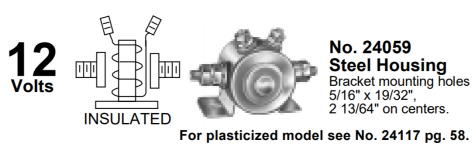
Master Battery x 2, and Cross-Feed x 1 - PN 24059
24059.png

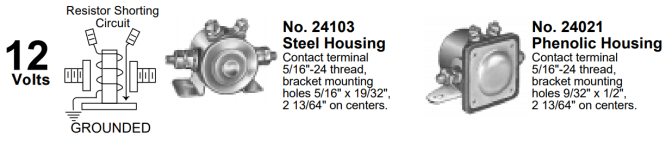
Starter Contactor (I think this is the same as Vans uses - PN 24021
24021.png
 
There are a few threads on here about his. Search for “starter run on”.

As my TLDR understanding goes, the I terminal outputs volts when the contactor is closed. The idea here is that you power the starter solenoid using this terminal, instead of from a jumper off the power feed to the starter. So when you take your finger off the button, the power to the solenoid is removed immediately. Otherwise as the starter winds down it can backfeed power to the starter solenoid and keep it engaged - which makes some kind of noise.

It’s a Van’s technique - Skytec doesn’t support that method. Or publish agreement as far as i know.

That’s my basic understanding anyway. It applies to the light weight starters I think only. The NL starter needs the jumper installed to work at 12v so can’t accept the wire from the I terminal!

Brain’s Trust please correct any misguided understanding I may have!
It is about separating the starters coil energize feed and the motor power feed. With pm starter motors, the motor will a actually generate its own power while still spinning from inertia after releasing the main solenoid. That starter has its own solenoid internally and if that solenoid line is bridged to the motor line, the power supplied by the spinning motor will supply the solenoid and keep the bendix gear engaged to the flywheel. By using the I term to feed the other solenoid instead of bridging them , you break the chain and the solenoid will retract the gear, even when the motor is still spinning.
 
In the end i am about to order the following…

Bottom line:

You are good with part number 24021 for starter and 24059 for 2 ea masters and 1 ea crossfeed.

————————————————————————

Details:

You are using Z14 or similar. (I have your “Feb 2025 V2” schematic)

Z14 shows 2 ea master contactors S701-1 and 1 ea crossfeed contactor S701-2.
  • These are the same continuous-duty contactor with different external diode arrangements pre-installed.
  • These are four-stud continuous-duty contactors.
  • These contactors are White-Rogers 70-902. BTW the mounting tangs are plastic overmolded so require longer mounting bolts compared to Cole Hersee.
  • Cole-Hersee 24059 is a proper substitute.
Four-stud vs three-stud continuous-duty contactors:
  • Two power studs plus either one or two coil studs.
  • With the three-stud version, one of the coil connections is made internally to one of the power studs. This means one must connect the correct power stud to the battery which reduces physical installation flexibility.
  • Z14 crossfeed contactor needs four-stud for the way the external diodes are wired.
  • Nice to have all three contactors the same to reduce part numbers for ordering and service reasons.
  • Common three-stud continuous-duty contactor is Cole-Hersee 24115, this is what Van’s sells.
  • Common four-stud continuous-duty contactor is Cole-Hersee 24059 or White-Rogers 70-902.
Intermittent-duty starter contactor:
  • Cole Hersee 24021 is commonly used and is what Van’s sells.
  • This is a different sort of four-stud contactor. Two power studs, plus a coil stud with the other coil connection internally connected to ground, plus an “I” (ignition) terminal originally used to bypass the “ballast” resistor during cranking when cars used 12V batteries and 6V ignition coils before electronic ignition.
 
Last edited:
Bottom line:

You are good with part number 24021 for starter and 24059 for 2 ea masters and 1 ea crossfeed.

————————————————————————

Details:

You are using Z14 or similar. (I have your “Feb 2025 V2” schematic)

Z14 shows 2 ea master contactors S701-1 and 1 ea crossfeed contactor S701-2.
  • These are the same continuous-duty contactor with different external diode arrangements pre-installed.
  • These are four-stud continuous-duty contactors.
  • These contactors are White-Rogers 70-902. BTW the mounting tangs are plastic overmolded so require longer mounting bolts compared to Cole Hersee.
  • Cole-Hersee 24059 is a proper substitute.
Four-stud vs three-stud continuous-duty contactors:
  • Two power studs plus either one or two coil studs.
  • With the three-stud version, one of the coil connections is made internally to one of the power studs. This means one must connect the correct power stud to the battery which reduces physical installation flexibility.
  • Z14 crossfeed contactor needs four-stud for the way the external diodes are wired.
  • Nice to have all three contactors the same to reduce part numbers for ordering and service reasons.
  • Common three-stud continuous-duty contactor is Cole-Hersee 24115, this is what Van’s sells.
  • Common four-stud continuous-duty contactor is Cole-Hersee 24059 or White-Rogers 70-902.
Intermittent-duty starter contactor:
  • Cole Hersee 24021 is commonly used and is what Van’s sells.
  • This is a different sort of four-stud contactor. Two power studs, plus a coil stud with the other coil connection internally connected to ground, plus an “I” (ignition) terminal originally used to bypass the “ballast” resistor during cranking when cars used 12V batteries and 6V ignition coils before electronic ignition.
That’s awesome John - thank you!
 
The contractors arrived!

I wasn’t prepared for how much they weigh!
 

Attachments

  • IMG_9278.jpeg
    IMG_9278.jpeg
    1.8 MB · Views: 24
  • IMG_9277.jpeg
    IMG_9277.jpeg
    1.8 MB · Views: 24
Back
Top