Van's Air Force

The definitive Van's Aircraft support community! Buying, building or flying an RV? Join our exclusive family of mentors and enthusiasts!

Idle mixture/rpm

aadamson

Well Known Member
Patron
@lr172 (or anyone else) I went looking for your min map procedure. I've got a new 390 that won't idle and so I'm wanting to try it.

Hoping I could get you to type it out here.

Mine I'm 99% sure is too rich, it idles like a Harley and I can manually pull the mixture *way* back and it improves, but 900 is lowest I can go at the moment. Maybe 800 rpm.

Ps. I'm not brave enough to do this with the engine running, so please think thru it from a stop start process (and any intermediate run cycle to setup for the next adjustment.)

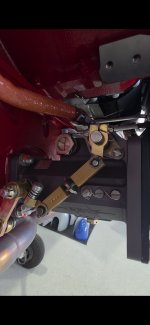
Pretty sure these are the two screws I need to focus on

Thanks in advance
 

Attachments
  • Screenshot_20250904_152631_Photos.jpg
    Screenshot_20250904_152631_Photos.jpg
    193.1 KB · Views: 149
Last edited:
@lr172 I went looking for your min map procedure. I've got a new 390 that won't idle and so I'm wanting to try it.

Hoping I could get you to type it out here.

Mine I'm 99% sure is too rich, it idles like a Harley and I can manually pull the mixture *way* back and it improves, but 900 is lowest I can go at the moment. Maybe 800 rpm.

Ps. I'm not brave enough to do this with the engine running, so please think thru it from a stop start process (and any intermediate run cycle to setup for the next adjustment.)

Pretty sure these are the two screws I need to focus on

Thanks in advance
I don't see the spring. Is it on the other side of the mixture control adjustment screw. The little divots in the adjustment screw are to hold it in position while the engine is running. Turn the adjustment control screw one flat at a time. To make the engine idle leaner, adjust the arms outward one flat at a time. Re test. As it gets leaner, you have to also lower the idle with the idle adjustment for the servo air intake butterfly. Test and re test as many times as it takes to get what you want for idle rpm's and acceleration responds. Idle should rise about 20 to 50 rpm's with idle cut off.
 
@lr172 (or anyone else) I went looking for your min map procedure. I've got a new 390 that won't idle and so I'm wanting to try it.

Hoping I could get you to type it out here.

Mine I'm 99% sure is too rich, it idles like a Harley and I can manually pull the mixture *way* back and it improves, but 900 is lowest I can go at the moment. Maybe 800 rpm.

Ps. I'm not brave enough to do this with the engine running, so please think thru it from a stop start process (and any intermediate run cycle to setup for the next adjustment.)

Pretty sure these are the two screws I need to focus on

Thanks in advance
Warm engine up fully. Set and hold 800 rpm and observe map. If you think you are rich, turn star adjuster (between the two square bars) opposite of the direction indicated on the bar (R->) a few turns. Return rpm back to 800 and observe map. Rinse and repeat untill you get the lowest map you can. You can stop the engine each time you make an adjustment. Easier with a helper in the cockpit. Once you think you are close, use one point on the star each time to dial it in. Once it starts heading in a different direction, go back one turn. Once done adjust the idle speed screw to desired rpm.

It is best to do this on a day with oat that is in the middle of the temp range you fly in. Cold oat wants richer and warm oat wants leaner. This is not mandatory.

The engine tells you what it wants. The highest vacuum at any given rpm tells you the mixture is optimized for best power. This is of course with all other variables held constant.
 
Last edited:
Thank you @lr172 ! I’ll also pre-verify that I’m stop to stop on both throttle and mixture before I dive in
For this test, leave mixture full rich. Throttle doesn’t have to be on a stop, just move it to whatever position gives 800. You can set the stop at the end, as each mixture chang will increase or decrease the rpm for any given throttle position and will need to move it each adjustment to get back to the 800
 
And lowest is defined as smallest number? E.g. 12.5 mp is lower than 14.2 mp as read on the map gauge?
 
Check the specs on your servo.
The rise on cut off fools a lot of folks as most wish to idle lower than spec for the servo. Hence, you wont see a rise on cutoff and can chase your tail expecting to see it.
 
Check the specs on your servo.
The rise on cut off fools a lot of folks as most wish to idle lower than spec for the servo. Hence, you wont see a rise on cutoff and can chase your tail expecting to see it.
I think that whole process (RPM rise technique) is challenging and think many folks get their mixture wrong because of it. I tried it the first time and found it very difficult to be anywhere near precise. I said to myself, I am just going to do this the way we did it on carb'ed vehicles back in the day. This procedure is far more foolproof for the average owner/builder IMHO.

With a good idle mixture setting, I never lean on the ground and never have problems related to rich idle, such as fouled plugs or excessive carbon deposits in the cyl. This is an important setting and there is value in getting it right. The lowest MAP process is very easy to understand and execute.
 
Last edited:
With a good idle mixture setting, I never lean on the ground and never have problems related to rich idle, such as fouled plugs or excessive carbon deposits in the cyl. This is an important setting and there is value in getting it right. The lowest MAP process is very easy to understand and execute.
I live at sea level and aggressively lean during ground operations. You’re still richer than I want to be. Could just be personal preference and I’m not arguing that you’re not “lean enough”.
I use a similar procedure to yours, per Don at AFP, to set idle mixture.
 
I think that whole process (RPM rise technique) is challenging and think many folks get their mixture wrong because of it. I tried it the first time and found it very difficult to be anywhere near precise. I said to myself, I am just going to do this the way we did it on carb'ed vehicles back in the day. This procedure is far more foolproof for the average owner/builder IMHO.

With a good idle mixture setting, I never lean on the ground and never have problems related to rich idle, such as fouled plugs or excessive carbon deposits in the cyl. This is an important setting and there is value in getting it right. The lowest MAP process is very easy to understand and execute.
What if anything changes if you are at 5000 ft (Utah), but also fly to sea level or higher (Colorado)? Won't altitude ( or DA) influence the setting?
 
Check the specs on your servo.
The rise on cut off fools a lot of folks as most wish to idle lower than spec for the servo. Hence, you wont see a rise on cutoff and can chase your tail expecting to see it.
This is interesting, I never knew that or the MAP trick.

I just spent a week chasing this, 2 items to note, Lycoming says to run the engine to 2000 RPM between adjustments to "clear the engine" whatever that means.

Larry did mention it, but it's not worth fiddling with until the engine is at full operating temp. I was trying to get my IO 360 to idle perfectly at 650 RPM cold and that's probably not going to happen. Lycoming recommends warming up at 1000 RPM anyway.

On taxi in I can Idle smoothly now at 650 which is plenty low for me.
 
What if anything changes if you are at 5000 ft (Utah), but also fly to sea level or higher (Colorado)? Won't altitude ( or DA) influence the setting?
going higher requires leaning. Generally if you set idle mixture at 1000’ msl you will be a bit rich at 5000, but will idle just fine. I am at 800’ and set my mixture for that altitude. I idle just fine in denver at 5500’, though i do lean for take off there.
 
Thanks Larry, I'm at 5k and travel to sea level and 7-8k airports at times so maybe I'll cheat one or two click or some such on the idle mixture once I have min map identified. I'll see once I get there
 
Last edited:
I live at sea level and aggressively lean during ground operations. You’re still richer than I want to be. Could just be personal preference and I’m not arguing that you’re not “lean enough”.
I use a similar procedure to yours, per Don at AFP, to set idle mixture.
We each have to follow our own gut. A key takeaway is that getting the mixture right prevents most of the issues. Though nothing wrong in taking that further. I now have 1600 hours on my 6. Idle set per my instructions above. Never pull the red knob on the ground. Have never had a fouled plug (pull a little ball or two at ci each year when i gap the plugs) and borescope shows very little carbon deposits. And no stuck valves. I also religiously fly lop. I remain convinced that proper idle mixture settings alone will solve fouling issues and encourage folks to take the time to get it right.
 
Last edited:
Thank Larry, I'm at 5k and dly to sea level and 7-8k airports at times so maybe I'll cheat one or two click or some such on the idle mixture once I have min map identified. I'll see once I get there
If i was setting my idle at 5k, i definitely would go a few clicks to the rich side of optimal. You can go a long way on the rich side (going to higher altitudes), but nowhere near as far on the lean side (going to lower altitude). If you get too lean, you may start to notice hesitation on acceleration off idle.
 
Last edited:
We each have to follow our own gut.
Not my gut.
Ground leaning is recommended by Lycoming, Mike Busch, and many contributors here. Lots of prior threads on the subject. I consider it to be a basic part of engine operation but what do I know….
No matter…..
I’m not saying you’re necessary wrong. It’s worked for you. In fact, my first airplane with a C-A65 didn’t even have a mixture control, and I had no issues.
 
Last edited:
Not my gut.
Ground leaning is recommended by Lycoming, Mike Busch, and many contributors here. Lots of prior threads on the subject.
It would take me many paragraphs to explain why that is only required if the mixture is not set correctly, which most planes aren’t, but don’t want to go through that debate again. Along with explaining how a mixture control circuit works and how you can’t effectively ground lean anyway across an rpm range with a carb. If your idle mixture is incorrectly set and is rich, then yes i agree that ground leaning is beneficial to correct that condition. Two ways to do it. Either set your idle mixture correctly or set it to be rich and use the coarse leaning function (red knob) to lean it back to where it belongs. Idle circuit covers up to 1100-1200 rpm.

I will add that the 50 rpm drop method leaves the mixture far too rich. Therefore most planes are too rich, so no surprise that folks recommend additional leaning to avoid the consequences of overly rich mixtures. My approach is to just set the mixture correctly and then no additional leaning required.

Suffice it to say that not everyone agrees with mike busch and all the other posters. Not sure i have ever seen lycoming recommend leaning on the ground.
 
Last edited:
Suffice it to say that not everyone agrees with mike busch and all the other posters.
Not a Busch fan either.
I read many of your posts and I am obviously out manned. You have probably forgotten more than I will ever know !
If by chance we meet, I’d love to pick ur brain.
 
It would take me many paragraphs to explain why that is only required if the mixture is not set correctly, which most planes aren’t, but don’t want to go through that debate again. Along with explaining how a mixture control circuit works and how you can’t effectively ground lean anyway across an rpm range with a carb. If your idle mixture is incorrectly set and is rich, then yes i agree that ground leaning is beneficial to correct that condition. Two ways to do it. Either set your idle mixture correctly or set it to be rich and use the coarse leaning function (red knob) to lean it back to where it belongs. Idle circuit covers up to 1100-1200 rpm.

I will add that the 50 rpm drop method leaves the mixture far too rich. Therefore most planes are too rich, so no surprise that folks recommend additional leaning to avoid the consequences of overly rich mixtures. My approach is to just set the mixture correctly and then no additional leaning required.

Suffice it to say that not everyone agrees with mike busch and all the other posters. Not sure i have ever seen lycoming recommend leaning on the ground.
Agree with the above, I shoot for 700 rpm with <50 rise or none at all, as long as it doesn't stumble on throttle application.
 
Does anyone have a specific procedure on how to set the idle mixture at a high DA. I've recently purchased an RV6 with an iO360 and been having a number of issues with my idle now that I've brought her up to Colorado altitudes. I had an issue with a rough idle and only running on 3 cylinders below 1200rpm which was fixed by overhauling the fuel spider/divider. I also had an issue with the engine dying on roll-out which I chalked up to the 3 cylinder problem.

I took my aircraft out for the first test flight after replacing the divider and went to do some stalls and as I slowed to a stall the engine died (my heart almost did too). Inflight restart, climbed up even higher, and it did it again.

Anyway, I think my idle mixture is set very rich. If I lean for best power at 1900rpm and pull back to idle, the engine will die. Similarly, if I lean for best power at idle, the engine won't accelerate, it just stumbles if I add power (until I richen).

I am planning on following @lr172 's minimum MAP procedure, but I'd appreciate advice on how to adapt this for doing the tuning at ~8000ft DA. Specifically:
1. where should I lean the engine to using the red knob, I assume best power at 1900rpm?
2. how many clicks richer should I set the idle mixture once I've found the minimum MAP?
 
Ground leaning is recommended by Lycoming, Mike Busch, and many contributors here.

Not by Don Rivera at AFP. No need to if idle mixture is set correctly.

See post #10 at
 
Last edited:
Not by Don Rivera at AFP. No need to if idle mixture is set correctly.

See post #10 at
He’ll tell you to still ground lean at altitude and he recommends even adjusting idle mixture between summer and winter.
We all do that right?
 
Does anyone have a specific procedure on how to set the idle mixture at a high DA. I've recently purchased an RV6 with an iO360 and been having a number of issues with my idle now that I've brought her up to Colorado altitudes. I had an issue with a rough idle and only running on 3 cylinders below 1200rpm which was fixed by overhauling the fuel spider/divider. I also had an issue with the engine dying on roll-out which I chalked up to the 3 cylinder problem.

I took my aircraft out for the first test flight after replacing the divider and went to do some stalls and as I slowed to a stall the engine died (my heart almost did too). Inflight restart, climbed up even higher, and it did it again.

Anyway, I think my idle mixture is set very rich. If I lean for best power at 1900rpm and pull back to idle, the engine will die. Similarly, if I lean for best power at idle, the engine won't accelerate, it just stumbles if I add power (until I richen).

I am planning on following @lr172 's minimum MAP procedure, but I'd appreciate advice on how to adapt this for doing the tuning at ~8000ft DA. Specifically:
1. where should I lean the engine to using the red knob, I assume best power at 1900rpm?
2. how many clicks richer should I set the idle mixture once I've found the minimum MAP?
So, if it dies going back to idle, then idle mixture is either too lean or too rich. hard to say based upon the limited details given. You can't lean at idle with the red knob and expect enough fuel to flow at 1900. It doesn't work that way. Don't feel like explaining the why again.

Just follow my procedure above at your home field. Be sure the engine is fully warmed up and everything is dopne with the idle mixture bar and red knob all the way in. I would probably go two clicks richer from thje lowest MAP setting to insure you don't have problems at lower altitudes. Don't listen to mike busch or all these other folks. Listen to Don, who has been designing and building these things fo 40 years. Set that idle mixture coreectly and thats it. Leave the ground leaning for those folks that don't understand the importance of properly setting your idle mixture correctly.

If you set the idle mixture correctly at 5500', I promise it will idle just fine at 8000'.
 
Last edited:
He’ll tell you to still ground lean at altitude and he recommends even adjusting idle mixture between summer and winter.
We all do that right?
I set my idle mixture to optimal at my home field - 800 MSL. I have no problems with idle at colorado airports I visit (5500' PA) with DA's as high as 11,000'. Never ground leaned and the engine purred like a kitten at idle. I definately lean for take off though.

If I were to set it via the 50 rpm rise method, I would likely need to ground lean though, so understand Dons recommendation. You can go much further to the rich side than you can to the lean side, which is why I recommend those optimizing at higher airports to leave it a bit richer than optimal, so they have no issues at SL.
 
Last edited:
If I were to set it via the 50 rpm rise method, I would likely need to ground lean though, so understand Dons recommendation.
Don prescribes the same manifold pressure technique as you have outlined.
 
Warm engine up fully. Set and hold 800 rpm and observe map. If you think you are rich, turn star adjuster (between the two square bars) opposite of the direction indicated on the bar (R->) a few turns. Return rpm back to 800 and observe map. Rinse and repeat untill you get the lowest map you can. You can stop the engine each time you make an adjustment. Easier with a helper in the cockpit. Once you think you are close, use one point on the star each time to dial it in. Once it starts heading in a different direction, go back one turn. Once done adjust the idle speed screw to desired rpm.

It is best to do this on a day with oat that is in the middle of the temp range you fly in. Cold oat wants richer and warm oat wants leaner. This is not mandatory.

The engine tells you what it wants. The highest vacuum at any given rpm tells you the mixture is optimized for best power. This is of course with all other variables held constant.

Larry,

I've just gotten my MA-4-5 (10-4164) carb back from the shop after a minor repair and want to use the approach you described above to set my idle mixture.
I've searched through other posts to try to equate the procedure you've detailed for the carb shown above to that for an MA-4-5 that has the little spring-loaded, knurled knob rather than the "star" adjuster and still have a question.

I figure "one point on the star" equates to "just rotate the knurled knob a little bit at a time when you're close to minimum MAP", so that part seems straight-forward.

The part that confuses me is to rotate the knob back one turn when the MAP reading has passed the minimum reading point and has begun to climb. Is that one full rotation of the knurled knob or is it just taking out that last little bit that caused the MAP to begin to increase again. If it's one full revolution, does that mean that we use the minimum MAP point as a reference, but really set the carb somewhat lean of that point.

If it matters, this is on an O-360 based at sea-level.

Thanks,
Rob
N706DR
 
Larry,

I've just gotten my MA-4-5 (10-4164) carb back from the shop after a minor repair and want to use the approach you described above to set my idle mixture.
I've searched through other posts to try to equate the procedure you've detailed for the carb shown above to that for an MA-4-5 that has the little spring-loaded, knurled knob rather than the "star" adjuster and still have a question.

I figure "one point on the star" equates to "just rotate the knurled knob a little bit at a time when you're close to minimum MAP", so that part seems straight-forward.

The part that confuses me is to rotate the knob back one turn when the MAP reading has passed the minimum reading point and has begun to climb. Is that one full rotation of the knurled knob or is it just taking out that last little bit that caused the MAP to begin to increase again. If it's one full revolution, does that mean that we use the minimum MAP point as a reference, but really set the carb somewhat lean of that point.

If it matters, this is on an O-360 based at sea-level.

Thanks,
Rob
N706DR
Sorry, that instruction was specific to servos. A good starting point on a carb is to run the needle (what is at the other end of that round knurled knob with the spring under it) all the way in - CW untill it stops, then back out 2 to 2.5 turns - CCW. I would start my adjustments at 1/4 turns pf the knob - CW for leaner and CCW for richer. As i got close to my target i would move to 1/8 turns. If map is dropping, you are turning in the right direction. If map is rising, you are turning the wrong way.

So lets say you keep turning in (CW) until you hit 10”, then the next turn CW takes you to 10.5”. Now you need to turn the knob the other way (CCW) to get back to 10. Then maybe a couple tiny turns either way to be sure you got the lowest. This doesn’t need to be precise down to .01”. Pretty close is fine.

Major key here is to always reset the rpm back to the baseline after each adjustment before observing the new map. If you let the rpm change it defeats the purpose. Each map observation must be done at the same rpm every time. This is where the helper comes in. They keep tweaking the throttle to maintain a constant rpm. Though you could do it yourself via the idle speed screw.
 
Last edited:
Sorry, that instruction was specific to servos. A good starting point on a carb is to run the needle (what is at the other end of that round knurled knob with the spring under it) all the way in - CW untill it stops, then back out 2 to 2.5 turns - CCW. I would start my adjustments at 1/4 turns pf the knob - CW for leaner and CCW for richer. As i got close to my target i would move to 1/8 turns. If map is dropping, you are turning in the right direction. If map is rising, you are turning the wrong way.

So lets say you keep turning in (CW) until you hit 10”, then the next turn CW takes you to 10.5”. Now you need to turn the knob the other way (CCW) to get back to 10. Then maybe a couple tiny turns either way to be sure you got the lowest. This doesn’t need to be precise down to .01”. Pretty close is fine.

Major key here is to always reset the rpm back to the baseline after each adjustment before observing the new map. If you let the rpm change it defeats the purpose. Each map observation must be done at the same rpm every time. This is where the helper comes in. They keep tweaking the throttle to maintain a constant rpm. Though you could do it yourself via the idle speed screw.

Larry,

Thanks for taking time to respond with the detailed procedure - it's appreciated.

Regards,
Rob
 
Back
Top