Van's Air Force

The definitive Van's Aircraft support community! Buying, building or flying an RV? Join our exclusive family of mentors and enthusiasts!

GAMI Nozzle For Lycoming

DanH

Legacy Member
Benefactor
Advertiser
Mentor
In a previous thread, Reflex posted about excessive fuel staining around the base of his GAMI-supplied nozzles. I asked if the "A" was facing down, a standard installation step, and the response was that the rep at GAMI said it was no longer required.

Yeah, that made me curious.

Background: After shutdown, fuel in the little stainless injector lines tends to boil into vapor due to heat. The volume expansion means it has to go somewhere. It can't flow back toward the servo, so it bubbles and squirts out through the injector nozzle into the intake tract near the valve. You can usually hear it. The excess fuel is why a hot start is difficult when the pilot fails to realize it is rich.

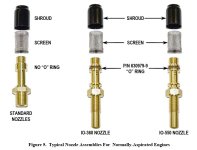
A standard nozzle has a small air bleed hole in the side of the barrel. The "A" is stamped on a wrench flat opposite the hole. If the "A" is facing down, the bleed hole is on top, facing up, and in theory, fuel is less likely to bubble from the bleed hole and appear as a stain around the outside of the nozzle.
Nozzle.jpg

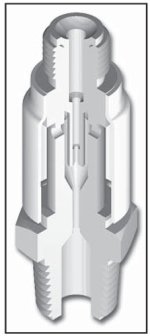
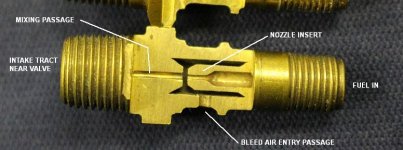
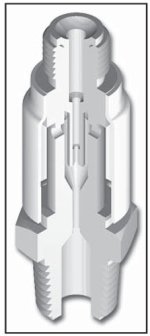
This AM, my daily dose of AvBrief included an advertisement for GAMIjectors. The illustration is kinda sketchy, and is obviously based on a CAD drawing of some kind. Still, what caught my attention was the pictured nozzle body had two bleed holes. I searched the web and came up with this slightly better image. However, it's a drawing, and not necessarily the real thing.

Does anyone happen to have a cutaway of a GAMIjector intended for a Lycoming application?
ScreenHunter_2910 Aug. 20 09.52.jpg
 
Considering that is a cutaway of unknown (likely 90-degree) angle cut, that could be 2 or 3 or even 4 bleed air passages... Interesting...
 
Got a shroud around it, turbo nozzle?

View attachment 95468

Mike, they all have a shroud. The NA nozzle is just a shroud and a screen. The shroud is intended to be non-removable, unlike the image below.

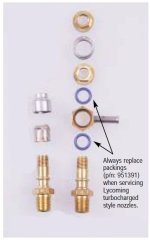
The turbo nozzle is a collection of parts, the result being air piped to the hose barb is sealed to the body, and thus to the bleed hole. The whole shroud assembly is removable so the o-rings can be replaced.

Std and Turbo Shrouds.jpg

Hey Dan, they say on their website that there are 4 bleed holes: https://gami.com/gamijectors/faq.php

Good catch Matt. Four holes would certainly explain why GAMI says rotational orientation doesn't matter.

I'd still love to see a cutaway of their version, as there are other little details.
 
Mike, they all have a shroud. The NA nozzle is just a shroud and a screen. The shroud is intended to be non-removable, unlike the image below.

The turbo nozzle is a collection of parts, the result being air piped to the hose barb is sealed to the body, and thus to the bleed hole. The whole shroud assembly is removable so the o-rings can be replaced.

View attachment 95478


Good catch Matt. Four holes would certainly explain why GAMI says rotational orientation doesn't matter.

I'd still love to see a cutaway of their version, as there are other little details.
Looks like they have more air bleed holes to mix more air with the fuel , then accelerate the mixture through a small orfice (larger then the restrictor) into a larger chamber to increase the pressure and inlarge the spray pattern into the intake chamber for better distribution. Wonder if its hard to adjust the idle down low enough if you haave an older throttle body that has some wear around the butterfly or the butterfly shaft?
 
In a previous thread, Reflex posted about excessive fuel staining around the base of his GAMI-supplied nozzles. I asked if the "A" was facing down, a standard installation step, and the response was that the rep at GAMI said it was no longer required.

Yeah, that made me curious.
Dan,

I don't have a cutaway of a GAMI injector, but I thought I'd follow-up with some additional information. To recap, I've been working with GAMI to try to get my IO-390 balanced out and have had conversations with John-Paul on several occasions. Right now, we're trying to get #3 leaned out and he sent another injector. In checking my engine log book, the GAMI injectors have been installed for 46.5 hours. I've noted fuel staining under the top cowl since the first run.

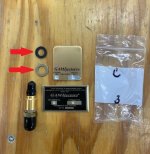
What's interesting is that when I received the latest injector, it had some additional parts in it. The parts consisted of two washers that had not been in previous packages. I called GAMI and spoke to Don as John-Paul was not available. According to Don, the washers are a nitrile washer and a .032 cadmium plated washer. He suggested I send a note to John-Paul for additional information. I sent a note to John-Paul asking about the parts and where they go as there were no instructions and asked why there was a change.

The response I got from John-Paul was short and to the point. It stated that, "There was a slight design change on the nozzle assembly. It MIGHT help with the fuel blowing issue. Place the rubber then the steel washer on top of the nozzle, between the shield and the fuel line".

I installed the injector last night, but haven't had a chance to fly or even run the engine to check for leaks.

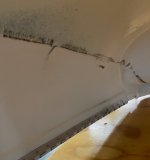
After careful examination, it appears that the staining is coming from the injector on #1 and is blowing back toward #3. Don at GAMI said that this is a common problem with front injectors on faster airplanes; specially those that have the injectors very close to the cowl intake.

The pictures below are of:

  • The injector assembly contents as they came out of the bag.
  • The upper left underside of the top cowl after 46.5 hours. (Note: this is why I painted the underside of my cowl white).
Washers.jpg
Fuel Stains.jpg
 
What's interesting is that when I received the latest injector, it had some additional parts in it. The parts consisted of two washers that had not been in previous packages. I called GAMI and spoke to Don as John-Paul was not available. According to Don, the washers are a nitrile washer and a .032 cadmium plated washer. He suggested I send a note to John-Paul for additional information. I sent a note to John-Paul asking about the parts and where they go as there were no instructions and asked why there was a change.

The response I got from John-Paul was short and to the point. It stated that, "There was a slight design change on the nozzle assembly. It MIGHT help with the fuel blowing issue. Place the rubber then the steel washer on top of the nozzle, between the shield and the fuel line".

I've never had reason to work with any injected Continentals, just the smaller carbed stuff like A-65's and O-200's, so this subject is interesting.

It appears GAMI is basing their nozzle design on a Continental pattern. I find photos in SB's showing what appears to be as many as eight air bleed holes, and the outlet on the standard nozzle does appear to be larger in diameter as compared to a Bendix/Lycoming nozzle.

ScreenHunter_2917 Aug. 21 09.22.jpg

Don't know if it's universal, but big Continentals seem to have nozzles oriented vertically, as below, which would negate any reason to have a bleed hole installed so it points up or down. Also check out the washers...

ScreenHunter_2919 Aug. 21 09.25.jpg

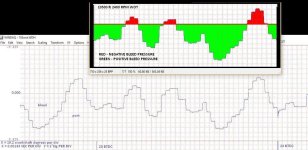
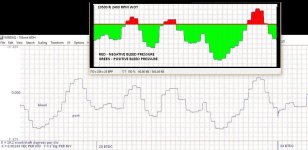
Regarding your fuel splatter, there can be periods in the 720 degree cycle where intake port pressure is higher than bleed pressure. To see it requires a fast differential pressure sensor hooked to something which can log in small time increments. Below, red denotes periods when bleed pressure is less than port pressure, i.e. it's possible to move some fuel and air out the bleed hole. The 23 BTDC ticks are for reference to position in the cycle; I used spark on a second channel as a marker.

Technically this plot is only valid for my own 390 installation. The deltaP would be different for another setup with greater or lesser intake pressure recovery, or different intake tuning, or different upper plenum pressure. Likewise, there could be differences in bleed pressure depending on cylinder location relative to a cowl inlet.

overlay.jpg
 
After careful examination, it appears that the staining is coming from the injector on #1 and is blowing back toward #3. Don at GAMI said that this is a common problem with front injectors on faster airplanes; specially those that have the injectors very close to the cowl intake.
Maybe the design is allowing ram air to flow into the bleed area at high speed. In theory, this could allow air to flow into one hole and push some fuel out the parallel hole, especially if the bleed area design allows the ram air to remain directional. something we never see with a single hole design and would explain why gami only sees it on fast planes. Could make a little shroud / air dam that sits in front of the #1 injector to divert air around it, possibly solving the issue.
 
Airflow which lowers local pressure in the vicinity of the nozzle would increase the chance of fuel exiting any or all of the bleed holes. #2 is a pretty good candidate in a Lycoming installation, in particular if the upper ramp is forms a narrow space above the front of the cylinder head.

BTW, turbo nozzles would be a fix for Fred's problem. Not cheap, but it would work.
 
Gentlemen,

Many thanks for your input. In reading and re-reading your posts, I realize that I made a significant error. I stated that after careful examination it appears that #1 is leaking and blowing back toward #3....that is absolutely incorrect. When I read Dan's statement about #2 being a good candidate in a Lycoming installation, I realized that I should have stated that #2 appears to be leaking and blowing back toward #4. This IS a Lycoming IO-390 <smacks head>. The picture of the inside of the cowl above is the upper left side of the engine.

I have #3 on the brain as it's what I replaced last evening.

Indeed the upper ramp forms a narrow space above the cylinder head on #2. Also as Dan surmised, GAMI has stated that turbo nozzles may solve the problem.

I also thought of Larry's idea about somehow shielding the nozzle/injector. Just not sure how I'd secure it, not change the cooling, or create a different problem.

Thanks again for all your input and my apologies for my engine lysdexia.
 
Last edited:
Gentlemen,

Many thanks for your input. In reading and re-reading your posts, I realize that I made a significant error. I stated that after careful examination it appears that #1 is leaking and blowing back toward #3....that is absolutely incorrect. When I read Dan's statement about #2 being a good candidate in a Lycoming installation, I realized that I should have stated that #2 appears to be leaking and blowing back toward #4. This IS a Lycoming IO-390 <smacks head>. The picture of the inside of the cowl above is the upper left side of the engine.

I have #3 on the brain as it's what I replaced last evening.

Indeed the upper ramp forms a narrow space above the cylinder head on #2. Also as Dan surmised, GAMI has stated that turbo nozzles may solve the problem.

I also thought of Larry's idea about somehow shielding the nozzle/injector. Just not sure how I'd secure it, not change the cooling, or create a different problem.

Thanks again for all your input and my apologies for my engine lysdexia.
I worked with GAMI on this problem about 15 years ago. The problem is the RV creates a bit of ram air effect, the internal pressure at the inlet port is at or slightly higher than the region around the injector body. Most certified aircraft do not suffer this very much. An upper deck system to Turbo GAMIjectors fixes this, by providing air at a higher pressure.

Airflow performance also sells an upper deck system.

In my experience with more RV's than I can remember, there is not one that does not benefit from an upper deck turbo injector system. Take a look at some Reno or other race planes where they have a flares tube at the air intakes. That is how many have solved this before.
 
GAMI makes great injectors--what do folks think about GAMI's G100UL fuel. Has anyone tried it yet? Our airport want to wait for Swift UL 100R.
 
Glad you like 'em. Got anything useful to share? As for fuel, perhaps you might start a thread.

David...happen have a good cutaway of the Lycoming version? Maybe some detail photos?
 
Gentlemen,

Many thanks for your input. In reading and re-reading your posts, I realize that I made a significant error. I stated that after careful examination it appears that #1 is leaking and blowing back toward #3....that is absolutely incorrect. When I read Dan's statement about #2 being a good candidate in a Lycoming installation, I realized that I should have stated that #2 appears to be leaking and blowing back toward #4. This IS a Lycoming IO-390 <smacks head>. The picture of the inside of the cowl above is the upper left side of the engine.

I have #3 on the brain as it's what I replaced last evening.

Indeed the upper ramp forms a narrow space above the cylinder head on #2. Also as Dan surmised, GAMI has stated that turbo nozzles may solve the problem.

I also thought of Larry's idea about somehow shielding the nozzle/injector. Just not sure how I'd secure it, not change the cooling, or create a different problem.

Thanks again for all your input and my apologies for my engine lysdexia.
Let us know what works. Then we can hypothesize all over again on why it did :)
 
I worked with GAMI on this problem about 15 years ago. The problem is the RV creates a bit of ram air effect, the internal pressure at the inlet port is at or slightly higher than the region around the injector body.

How did you determine pressures?

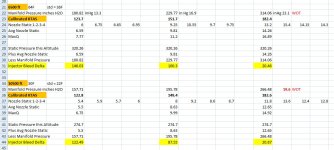
I started with bulk measurement using a two-port manometer, one tap to the aircraft static system and the other to a bubble rock at the nozzle. Used indicated manifold pressure for port pressure. Here's #2:

Bubble Rock #2.jpg

Partial data set. Static pressure at altitude corrected for temperature, TAS from NTPS method. There are a few takeaways.
1. Worst case for nozzle bleed blowback is WOT.
2. Very high bleed delta at part throttle down low. Explains why this system will run extremely LOP when loafing along down low...good nozzle atomization.
3. This is a low velocity ratio inlet, so there is no venturi "pinch" over #2. Instead of low local pressure at the nozzle, #2 is typically the highest.
4. No apparent run condition resulted in constant pressures conducive to nozzle bleed blowback. Worst case was 20" H20 positive pressure.

ScreenHunter_2921 Aug. 21 22.00.jpg

In order to find a negative pressure condition, I had to go to a fast sensor and a laptop to record individual 720 degree combustion cycles. installed a turbo rail to make bleed pressure measurement more precise, and tapped the other leg directly to the #1 primer port. Post 9 above is an example result. There are three periods with negative pressure, totaling about 24% of the 720 degree 4-stroke cycle. However, I have better than average upper plenum pressure recovery, so the short negative periods are not significant (only 2 to 3 inches H2O), and thus unlikely to move any fuel out of bleeds which point upwards in the standard Lycoming fashion.
 
Dan,

We did not go instrumenting at all. We knew from many years earlier GAMI did a lot of testing on curing the TCM front left cylinder problem resulting in very uneven cooling and egg shaped cylinders with round pistons. The GAMI baffle STC was born. In that it was very apparent how airflow moved and it was not as intuitive as you would expect. As you know, air moves from areas of high pressure to low, and there are random spots. That was clue 1.

The next thing noted was race planes running upper decks on NA engines. Clue 2.

I had done very simple tests way back in line with the GAMI Lean testing where WOT at say 7500, then set the same MAP at a much lower level like 3500 and test again. With being certain of no intake leaks which the test is designed to find, we found infinitely variable results. There was little logic. I do not have the notes any longer, but let's say that not even the first and last to peak were the same, let alone any in the middle. This was making it impossible to get a sub 0.5GPH spread as no two results were ever even similar. Clue 3.

I went and built a simple upper deck system, with a screen filter and not a paper one, to catch bugs and grass seeds kind of junk, and fitted turbo GAMI nozzles. Immediately repeatability appeared. Couple of injector sizes changed on the first round and its been awesome for 2000+ hours since. Every other RV I have been able to fit either a copy of my home grown setup, or the Airflow Performance upper deck system fitted with a forward facing flared tube or a plumbed system like mine from the air box has yield a consistent result.

What this proved was we did not need to do any more testing, it just solved the problem, every time.

Now, with the benefit of your data, it looks to me as it confirms what we expected. The Delta P is so low on the WOT case, that the injector is not getting enough bleed air in, and on some cylinders (6 of them in all my cases on Rockets and -10's) this could be even worse than your result of 20. As you correctly point out above, the atomisation benefits from a higher delta, or in the case of TC engines a force fed injector. J-PT and George both reasoned that this is why NA Lycomings are more troublesome to tune than the TC variants and for some reason more so than the TCM engines. To add to that the crossflow head 550's in a SR22 are more finicky than the 520/550 in all the Beech airframes.

Another note from the Beech community is that pulling a few tenths of MAP made for better LOP results, from memory on Barons but it may be Bonanzas or both. Again pointing to variables in nozzle surrounding pressure. You would expect dirty screens to make this happen, but it seems to be on brand new clean screens as well.

For those wondering, 20"H2O is not a lot of pressure. It is about 0.72PSI.

Dan, I think your point two highlights the issue well. This is what we suspected, but never measured like you have. Point four, while addressing injector bleed back as not likely in most cases, certainly backs the theory of poorer atomisation affects LOP ops at WOT where there is a very good ram air effect and low losses. Thank you for posting it up. Made me happy to see it.

One last "data point". Test flying a RV10 with a Lycoming thunderbolt 295HP, forward facing RSA10 (bigger throat than -5) with unfiltered ram air.....near impossible to get it to run LOP nicely regardless of the Don Rivera nozzles we changed. Again, pull an inch of MAP off and things played nicer. Must some truth to your data Dan ;-)

Thanks again.
 
I went and built a simple upper deck system, with a screen filter and not a paper one, to catch bugs and grass seeds kind of junk, and fitted turbo GAMI nozzles. Immediately repeatability appeared. Couple of injector sizes changed on the first round and its been awesome for 2000+ hours since. Every other RV I have been able to fit either a copy of my home grown setup, or the Airflow Performance upper deck system fitted with a forward facing flared tube or a plumbed system like mine from the air box has yield a consistent result.

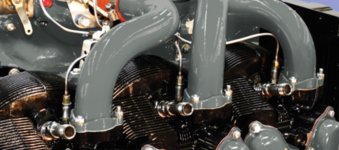
I fitted a forward facing tube system, and tapped the aft end of the 1-3 rail to get bleed supply numbers for the one-cycle measurements. The rails are still on the airplane. They equalize individual pairs (1-3 and 2-4), but until now I never considered tying them together.

Left Intake wRail.jpg

The real key here would be to boost bleed supply pressure to some level a lot higher than 20" H2O. Don and I even talked about plumbing an air pump just to see what happened, but I never did it.

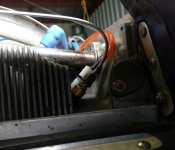
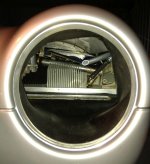
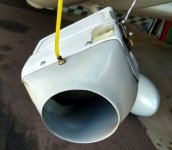
You mentioned using the airbox for your bleed pressure source. I rigged my airbox with a pressure tap and went flying to see if it might be a better source.

Airbox Tap.jpg

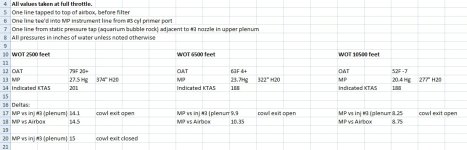
The results (compare lines 17 and 18, then 20):

ScreenHunter_2932 Aug. 25 08.23.jpg

In my application, the airbox was slightly better with the cowl exit open, and slightly worse with the cowl exit closed. However, I know the low Vi/Vo system with a small exit results in higher upper plenum pressure than a stock Vans cowl, by several inches. No measurements to prove it, but a tap to a good airbox is probably better with a Vans cowl.

It would not be a good as a separate pitot fed system. The available dynamic pressure at an airbox is based on freestream velocity less intake velocity. A pitot based feed would be based on freestream less only the bleed flow.

One last "data point". Test flying a RV10 with a Lycoming thunderbolt 295HP, forward facing RSA10 (bigger throat than -5) with unfiltered ram air.....near impossible to get it to run LOP nicely regardless of the Don Rivera nozzles we changed. Again, pull an inch of MAP off and things played nicer. Must some truth to your data Dan ;-)

I find that observation very interesting. Recall I modified a standard Lycoming horizontal sump with a larger intake to match the FM-200. The goal was to eliminate the adapter which previously squeezed it down to RSA-5 diameter. Turned out there was not a lot of difference in manifold pressure, but there was some; picked up a knot or so in WOT cruise. Until you mentioned it, I had not considered the effect on bleed delta...but it would be less than previous. Hmmm.

BTW, a side note. The pressures posted previously (post #18) compared upper plenum pressure at each nozzle location against indicated manifold pressure from my EFIS. The table immediately above (this post) compares source pressure to manifold pressure tapped directly from the #3 primer port. Note the latter says average bleed deltaP is only around 8" H2O at altitude, not the previously measured 20". Same for one-cycle measurements, which were also tapped directly to a port. At 10.5K the positive pressure was a little over 7" (below, the Y axis is 1" per increment). We're not working with much...

overlay.jpg
 
Last edited:
Really interest stuff. One question, and I have seen many EFIS/EMS MAP sensors with accuracy of +/- 0.5" and years ago I got the Dynon folk to add a trimming function in their sensor selection, so how accurate is your MAP sensor? Given your extreme lengths to gather good data I assume this is near spot on with good resolution, but I figured I would ask anyway.

You make a good argument for pressurising bleed air, perhaps we should just turbo normalise these things :-) Which one RV10 owner down here did.

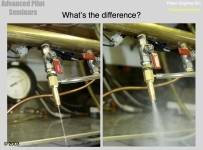
For a visual answer to that question this photo is from the APS engine management class. With no air Vs bleed air.

1756171676476.png
 
So, what is the pressure differential between the upper deck pressure and the nozzle bleed air pressure to make it atomize like that?
I take it that those are Continental Turbo Nozzles ?
 
Really interest stuff. One question, and I have seen many EFIS/EMS MAP sensors with accuracy of +/- 0.5" and years ago I got the Dynon folk to add a trimming function in their sensor selection, so how accurate is your MAP sensor? Given your extreme lengths to gather good data I assume this is near spot on with good resolution, but I figured I would ask anyway.

I don't recall making a serious effort to calibrate the MAP sensor.

For a visual answer to that question this photo is from the APS engine management class. With no air Vs bleed air.

Talk about a picture worth 1000 words!

So, what is the pressure differential between the upper deck pressure and the nozzle bleed air pressure to make it atomize like that?
I take it that those are Continental Turbo Nozzles ?

Definitely turbo shrouds. David, how much bleed pressure?

I may have to try that air pump...
 
Ha, now you have a whole new experiment to conduct, but do not blame me for it :)

The upper deck would only be 20PSI maximum I reckon, maybe even less but I do not recall what that photo had. If you think of a turbo system 38-40" is more than 15 PSI and less than 20. You won't need much.
 
I don't know where we can get 20 lbs. of upper deck pressure on a normally asperated engine. Ampient at sea level is only 14.7. (About 30 inch). You would have to be going about .7 mach to get that kind of ram pressure for the upper deck. The turbo bleed air into the turbo nozzles is there just to keep the fuel from coming out of the nozzle. Any higher pressure then what is in the intake port is going to raise the fuel pressure to the spider valve and reduce the flow out of the restricker in the nozzle. That is a fun looking picture, but you can't just pump air pressure into the nozzle bleed hole.
 
I don't know where we can get 20 lbs. of upper deck pressure on a normally asperated engine. Ampient at sea level is only 14.7. (About 30 inch).

We won't. The question was about deltaP for the nozzle on the flow bench.

The turbo bleed air into the turbo nozzles is there just to keep the fuel from coming out of the nozzle.

No. It's purpose is the same as with the NA nozzle, to assist atomization of the fuel stream.

Any higher pressure then what is in the intake port is going to raise the fuel pressure to the spider valve and reduce the flow out of the restrictor in the nozzle.

The pressure of significance is deltaP, port pressure vs bleed pressure. As I've posted above, the values are quite small, for example, a fuzz more than 7 inches of water, about 1/4 of a psi, or 0.5" mercury.

What David was saying above is that the deltaP wouldn't be higher than 5 psi, and is probably less. We see deltaP higher than that with an NA nozzle when the throttle is closed to any degree, and the same would be true with a turbo installation. He doesn't remember the deltaP used for the picture.
 
We won't. The question was about deltaP for the nozzle on the flow bench.
On my flow bench, the fuel pressure at the spider valve goes up proportionately to the manifold pressure and the fuel flow goes down.
No. It's purpose is the same as with the NA nozzle, to assist atomization of the fuel stream.
That is a given. I was just saying that the bleed air pressure has to be slightley higher then the intake port pressure to keep the fuel from blowing out of the aeration hole in the injection body.
 
Back
Top