

Van's Air Force
You are using an out of date browser. It may not display this or other websites correctly.
You should upgrade or use an alternative browser.
You should upgrade or use an alternative browser.
Oil twmp RV14 IO390 EXP
- Thread starter Wingit
- Start date


Yes, I'm running a viscosity valve plunger and spring right now. If you have the standard Lycoming oil filter adapter (filter horizontal and vernatherm vertical), there is no need to remove or modify the vernatherm. Just install the plunger and spring, with a new gasket under the cap.
Helps to whip up a custom wrench. Saw off a $1 socket from the pawn shop, weld on a handle.
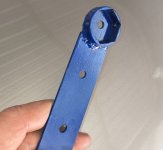
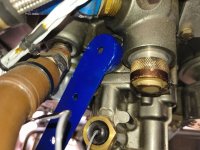
Helps to whip up a custom wrench. Saw off a $1 socket from the pawn shop, weld on a handle.
Thank you. Mine looks a little different. It is horizontal filter vertical vernatherm but vernathern at bottom of housing, temp probe on top .Yes, I'm running a viscosity valve plunger and spring right now. If you have the standard Lycoming oil filter adapter (filter horizontal and vernatherm vertical), there is no need to remove or modify the vernatherm. Just install the plunger and spring, with a new gasket under the cap.
Helps to whip up a custom wrench. Saw off a $1 socket from the pawn shop, weld on a handle.
View attachment 95307
View attachment 95308
The wrench is a great, i can probably get vernatherm out without removing housing, it is the ty wire that is problematic but doable.
As always this forum is the best. Thanks again
Dave
Thank you. Mine looks a little different. It is horizontal filter vertical vernatherm but vernathern at bottom of housing, temp probe on top .
You're describing the standard filter adapter. There is no need to remove the vernatherm. Leave it alone. It will not interfere with the new viscosity valve plunger.
The wrench in the photos is used to remove and replace the cap over the plunger and spring.

N10KE
Well Known Member
Does anyone know if I need to remove the Vernatherm to install a viscosity valve on an IO-540? I have oil temps higher than I think I should (205 normally at cruise to 210 occasionally running LOP) with a 2008X oil cooler fed by a 5" duct and Airflow Systems diffuser. I want to try the viscosity valve to see if there is any improvement.
Curious. Are you using a ball valve to meter flow to the cooler? Are you seeing benefits to this approach? I have considered it in the past as a method to reduce over cooling in the winter. I have the parts and used them to confirm that my original setrab cooler was too small a decade ago.Yes, I'm running a viscosity valve plunger and spring right now. If you have the standard Lycoming oil filter adapter (filter horizontal and vernatherm vertical), there is no need to remove or modify the vernatherm. Just install the plunger and spring, with a new gasket under the cap.
Helps to whip up a custom wrench. Saw off a $1 socket from the pawn shop, weld on a handle.
View attachment 95307
View attachment 95308
Fairly confident that the filter adapter is the same, as is the accy case oil routing passages. Dan i am sure will confirm.Does anyone know if I need to remove the Vernatherm to install a viscosity valve on an IO-540? I have oil temps higher than I think I should (205 normally at cruise to 210 occasionally running LOP) with a 2008X oil cooler fed by a 5" duct and Airflow Systems diffuser. I want to try the viscosity valve to see if there is any improvement.
Dan,You're describing the standard filter adapter. There is no need to remove the vernatherm. Leave it alone. It will not interfere with the new viscosity valve plunger.
The wrench in the photos is used to remove and replace the cap over the plunger and spring.
Can you please describe how a valve plunger work in conjunction with the vernatherm and its possible benefit. I did a search and did not find any pictures or info about it other than the old engines had this.
Sorry Mehrdad, missed your question.Can you please describe how a valve plunger work in conjunction with the vernatherm and its possible benefit. I did a search and did not find any pictures or info about it other than the old engines had this.
The basic concept is simple. When the oil is hot, i.e. low viscosity, the spring is able to push the plunger down the bore, fully blocking the cooler bypass port...which is normally a function of the vernatherm. A bad vernatherm fails to block that port.
When a bad vernatherm is suspected, the usual check is to remove it from the engine and warm it to something more than 185F to measure its extension. So far, it appears simply installing the plunger and spring is a faster, more sure method of diagnosis. In actual fact, my OT had recently run higher, and the viscosity valve put it right back down where it was before. I'm going to run the plunger on into the winter. With 15W-50 Aeroshell it may make OT too low.
N10KE
Well Known Member
Given that the viscosity valve returned the oil temperature to its previous level, what does that say about the Vernatherm?Sorry Mehrdad, missed your question.
The basic concept is simple. When the oil is hot, i.e. low viscosity, the spring is able to push the plunger down the bore, fully blocking the cooler bypass port...which is normally a function of the vernatherm. A bad vernatherm fails to block that port.
When a bad vernatherm is suspected, the usual check is to remove it from the engine and warm it to something more than 185F to measure its extension. So far, it appears simply installing the plunger and spring is a faster, more sure method of diagnosis. In actual fact, my OT had recently run higher, and the viscosity valve put it right back down where it was before. I'm going to run the plunger on into the winter. With 15W-50 Aeroshell it may make OT too low.
If the Vernatherm and/or its seat are now suspect, how does one verify which of the two (or both) are in need of replacement or refurbishment?
Given that the viscosity valve returned the oil temperature to its previous level, what does that say about the Vernatherm?
It was not closing the bypass port effectively.
If the Vernatherm and/or its seat are now suspect, how does one verify which of the two (or both) are in need of replacement or refurbishment?
Hot water, thermometer, and calipers for the vernatherm, or, as many do, just replace it. There is an old Lycoming document detailing how to re-cut the seat in an oil filter adapter, but I doubt anyone ever does it.
Reminder: do NOT install a plunger and spring if the oil filter adapter mounts the vernatherm horizontally, as the tip of the vernatherm extends into the bypass hole on the back of the accessory case, and can foul the plunger. Standard Lycoming adapter only, vernatherm vertical and filter horizontal.
Thank you Dan, I appreciate the info. This was my understanding of it but your earlier post (#4) suggest that the one can install the plunger in addition to the vernatherm. Is it me reading it incorrectly or is that actually the case. Given its location, that may in fact be the case and I would love to see a picture of one since I couldn't find any pix on the internet.Sorry Mehrdad, missed your question.
The basic concept is simple. When the oil is hot, i.e. low viscosity, the spring is able to push the plunger down the bore, fully blocking the cooler bypass port...which is normally a function of the vernatherm. A bad vernatherm fails to block that port.
When a bad vernatherm is suspected, the usual check is to remove it from the engine and warm it to something more than 185F to measure its extension. So far, it appears simply installing the plunger and spring is a faster, more sure method of diagnosis. In actual fact, my OT had recently run higher, and the viscosity valve put it right back down where it was before. I'm going to run the plunger on into the winter. With 15W-50 Aeroshell it may make OT too low.
Edit: P.S. I found an old post of yours with some good pictures and explanation of the system. It shows where the plunger exactly gets installed which is not in the oil filter adaptor. Now things make more sense for me, thank you.
Lycoming Accessory Case Oil Schematic
It is all too easy to be confused about the Lycoming vernatherm, oil filter, oil cooler, and accessory case oil flow, as the available Lycoming drawings are a bit sketchy. What we need around here is a good functional system schematic, so I sat down with a cup of coffee this AM and drew one...
vansairforce.net
Last edited:
