Van's Air Force

The definitive Van's Aircraft support community! Buying, building or flying an RV? Join our exclusive family of mentors and enthusiasts!

Talk me out of buying a RV10

As far as the zippered rudders go that you called BS on, as I mentioned in my post, there were a few rudders that had torn rivets at the trailing edge that failed during the windstorm a few years ago at OSH. There were posts here on VAF with info and pics.
Must have been one hell of a windstorm! A rudder-lock is always advised, especially on the larger rudders. Hey -- I see you're at Arlington (KAWO). We were hangered there for many years (north-end owned by Russ Keyes), but have been at Paine Field (KPAE) for the past 30-years. We should have coffee and pie sometime at Ellies Cafe on your field, which was once named The Prop Stop many years ago! (y):cool:(y)
 
This has all been hashed out in the past on VAF in various threads on the subject. No need to go through it all again here since we are well off-topic on this thread.

Point is, eight RV-7s have come apart in the air probably due to fin/rudder flutter, given the analysis by a few of the national aviation accident investigation agencies. To my knowledge no RV-8s have come apart due to fin/rudder flutter. Better pilots, better builders? I think not. Note that the Van’s RV-8 demonstrator did come apart, but that was due to a severe overload of the wing structure.
I remember that one too, where the wing broke off (mid-span) on the first RV-8 factory demonstrator when someone demo-testing the airplane apparently applied full aft elevator at nearly cruise speed thinking the RV-8 was an unlimited aerobatic airplane. In most airplanes that's okay only at or below VA (maneuvering speed). Now, exceeding VNE, and expecting the airplane to stay together, is a very bad thing to do with any airplane, including the RV-8. I think Vans also made the rudder bigger on the RV-7 for better yaw stability -- considerably bigger than the RV-6's small vertical tail.
 
Click bate worked? ;)

Hello guys and gals. I'm new to the forum and after 30 years of flying someone else's aircraft for a living, I'm looking into purchasing an aircraft. I've been doing a ton of research and I always end up back at the Van's RV-10. I have 2 boys interested in flying and the oldest (20) is working on on PPL and I though it would be great to buy and airplane and fly together. Not just for training and building time, but taking family trips and making memories. The Van's RV-10 seems to be a fit for our needs. Any thoughts, advice or words of wisdom would be appreciated. If you have one for sale, I would be very interested also.

Thanks in advance!
Not enough information to make a determination.
 
If you can afford an RV 10, by all means get one. They are great, but expensive. Advice: don't hurt your finances to get one. Buy what you can easily afford, not what will strain your financial picture.
 
If you can afford an RV 10, by all means get one. They are great, but expensive. Advice: don't hurt your finances to get one. Buy what you can easily afford, not what will strain your financial picture.
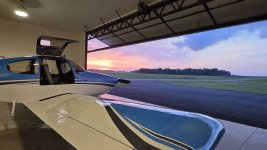
I believe we have found our dream RV-10. Builder is an A&P and this is his second build. It is EXTREMELY well built and equipped from the pictures I've seen. It's going through certification now and first flight should be soon. I am very excited to meet the builder in person and see the airplane up close. It's priced on the high end of what I was thinking to spend, but I think I can make it happen. Now, the hard part. Finding a hangar.
 
Now, the hard part. Finding a hangar.
Hangar is hard, but insurance if you want your sons to be able to fly the plane may be near impossible, given their low time. Call Jenny or Leah at Gallagher agency now, and have a free talk. They advertise on this site. In particular student-solo will be very expensive to insure, if even possible.
Also, just to be clear: you may not charge your sons. They may be co-owners, or fly with your permission for free. But no renting is allowed.
 
I believe we have found our dream RV-10. Builder is an A&P and this is his second build. It is EXTREMELY well built and equipped from the pictures I've seen. It's going through certification now and first flight should be soon. I am very excited to meet the builder in person and see the airplane up close. It's priced on the high end of what I was thinking to spend, but I think I can make it happen. Now, the hard part. Finding a hangar.
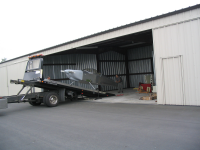
We are VERY happy for you and your family in finding an RV-10 that fits your mission and that was well built, too! Yes--finding a hangar can be a "bugaboo", especially a city or county hanger. However, many airports have private condo hangar too but tend to cost more than a city or county hanger. Getting your name on the waiting list at multiple airports is a good idea! When we were waiting for a county hangar at KPAE, we rented a private party condo hangar. Our airport manager here at KPAE said that when he starts calling names on the list, many people don't need the hangar any longer, so he could run through as many as 20-names before finding someone. So, the length of a waiting list is somewhat irrelevant. This is the private condo hangar we rented while waiting for a county hangar to become available at Paine Field.

1747681841341.png
 
Hangar is hard, but insurance if you want your sons to be able to fly the plane may be near impossible, given their low time. Call Jenny or Leah at Gallagher agency now, and have a free talk. They advertise on this site. In particular student-solo will be very expensive to insure, if even possible.
Also, just to be clear: you may not charge your sons. They may be co-owners, or fly with your permission for free. But no renting is allowed.
I second this; see my post regarding insurance quotes. Even if they are insurable (doubtful), the cost to insure with hull coverage will be astronomical.
 
Well it official! You guys couldn’t talk me out of purchasing a RV-10. :)

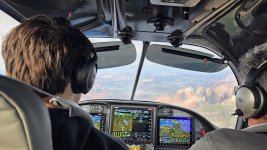
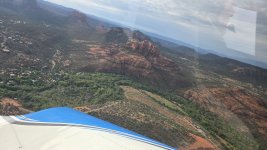
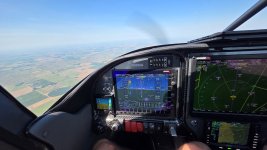
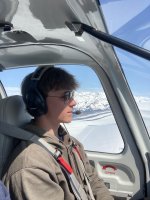
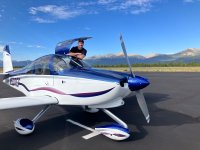
Last week on a beautiful morning in Illinois, my son and I picked up our RV10. New build, with 41 hours, and fully equipped. With the help of a new dear friend Leigh, we flew her to Arizona with some interesting stops for fuel. The best being Flagstaff and Sedona. Receive transition training along the way..now I have to learn not to flare starting at 30 feet. :)
Super happy with the purchase and looking forward to flying it to Oshkosh next year with my son. Sitting in the back seat and watching my son fly has been the highlight of my life. He will be the 3rd generation of pilots in our family..My father is looking down and smiling.

 

Attachments

  • IMG_2982.jpeg
    IMG_2982.jpeg
    1.2 MB · Views: 187
  • IMG_2977.jpeg
    IMG_2977.jpeg
    1.1 MB · Views: 178
  • IMG_2981.jpeg
    IMG_2981.jpeg
    1.7 MB · Views: 159
  • IMG_2979.jpeg
    IMG_2979.jpeg
    2.4 MB · Views: 170
  • IMG_2978.jpeg
    IMG_2978.jpeg
    1.3 MB · Views: 197
Last edited:
I am gobsmacked at the price of a good RV-10 or any good RV for that matter. I think a factory built RV-12is S-LSA is $190k to $232k loaded. I guess a RV-10 for $400k to $500k is not bad.... a Cirrus is over a million.... Glad to build my RV-7 before prices went up.
 
Well it official! You guys couldn’t talk me out of purchasing a RV-10. :)

Last week on a beautiful morning in Illinois, my son and I picked up our RV10. With the help of a new dear friend Leigh, we flew her to Arizona with some interesting stops for fuel. The best being Flagstaff and Sedona. Receive transition training along the way..now I have to learn not to flare starting at feet. :)
Super happy with the purchase and looking forward to flying it Oshkosh next year with my son. Sitting in the back seat and watching my son fly has been the highlight of my life. He will be 3rd generation of pilots in our family..My father is looking down and smiling.
Congratulations. If you have the standard 60 gal tanks search these forums for ‘lean of peak’ operations. For trips of a certain length, you can get there faster by going slower (skipping a fuel stop).
 
Well it official! You guys couldn’t talk me out of purchasing a RV-10. :)

Last week on a beautiful morning in Illinois, my son and I picked up our RV10. New build, with 41 hours, and fully equipped. With the help of a new dear friend Leigh, we flew her to Arizona with some interesting stops for fuel. The best being Flagstaff and Sedona. Receive transition training along the way..now I have to learn not to flare starting at 30 feet. :)
Super happy with the purchase and looking forward to flying it to Oshkosh next year with my son. Sitting in the back seat and watching my son fly has been the highlight of my life. He will be the 3rd generation of pilots in our family..My father is looking down and smiling.

Congratulations. I think you will be pleased with your choice. I’ve watched my sons grow up in the backseat of the -10, then move to the left seat, following a family lineage of pilots, so I understand the pride you feel. The RV-10 is an integral part of our family. You can’t put a price on that.

IMG_4589.jpegIMG_6675.jpeg
 
Last edited:
Big Congrats on your choice and successful purchase of a RV-10.
We flew my 10 to OSH this week and made a stop in Leadville Colorado, Elevation 9934 feet MSL, highest airport in the lower US.
The 10 handled take off at 11400feet density altitude superbly with room to spare, gross weight 2500lb.
My son does most of the flying now and he got insurance through (Gallagher) immediately after receiving his PPL and 10 hours of transition training . Total cost for both of us, about $3000 1mio liability and 280k hull.
The 10 is truly a ten.
 

Attachments

  • image_50404353.JPG
    image_50404353.JPG
    1.5 MB · Views: 45
  • image_50445057.JPG
    image_50445057.JPG
    590.7 KB · Views: 45
Well it official! You guys couldn’t talk me out of purchasing a RV-10. :)

Last week on a beautiful morning in Illinois, my son and I picked up our RV10. New build, with 41 hours, and fully equipped. With the help of a new dear friend Leigh, we flew her to Arizona with some interesting stops for fuel. The best being Flagstaff and Sedona. Receive transition training along the way..now I have to learn not to flare starting at 30 feet. :)
Super happy with the purchase and looking forward to flying it to Oshkosh next year with my son. Sitting in the back seat and watching my son fly has been the highlight of my life. He will be the 3rd generation of pilots in our family..My father is looking down and smiling.

Glad it all worked out well for you. I notice your chts are are high for 75% power and 70* oat. Find an expert local to you and get some assistance sealing up gaps in your baffling. I suspect you will struggle to stay below 420 down low in phoenix summer wx. And full power climbs may also be problematic in the high ambients there. Lots of good posts here to help you down that path. Most 10’s would have chts around 360-370 in that condition. In the interim suggest learning to lean. At 8K, i get 165 kts at 10.5-11. Save 3+ gph and only lose 8 knots.
 
Congrats on the purchase, looks like a good one. As you've already discovered, those -10s are fantastic machines, fun and easy to fly, good performers, spacey and real 4 seaters.

I do have a (dormant) A&P License

And that is one more advantage. It is one (crazy) thing to build an aircraft in some obscure secluded cellar for years on, but flying and getting to know (maybe make yours too...) your freshly purchased -10 by maintaining it will also be satisfying.

PS
Life's too short to build... go out and fly ;)
 
Glad it all worked out well for you. I notice your chts are are high for 75% power and 70* oat. Find an expert local to you and get some assistance sealing up gaps in your baffling. I suspect you will struggle to stay below 420 down low in phoenix summer wx. And full power climbs may also be problematic in the high ambients there. Lots of good posts here to help you down that path. Most 10’s would have chts around 360-370 in that condition. In the interim suggest learning to lean. At 8K, i get 165 kts at 10.5-11. Save 3+ gph and only lose 8 knots.
Also worth investigating how those pmag advance curves are setup. At that MAP, they are advancing (they assume you are LOP, where this advance is helpfull). If you plan to cruise ROP, then you should set them to a fixed advance. That will bring the temps down. Feel free to call me to discuss.
 
Well it official! You guys couldn’t talk me out of purchasing a RV-10. :)

Last week on a beautiful morning in Illinois, my son and I picked up our RV10. New build, with 41 hours, and fully equipped. With the help of a new dear friend Leigh, we flew her to Arizona with some interesting stops for fuel. The best being Flagstaff and Sedona. Receive transition training along the way..now I have to learn not to flare starting at 30 feet. :)
Super happy with the purchase and looking forward to flying it to Oshkosh next year with my son. Sitting in the back seat and watching my son fly has been the highlight of my life. He will be the 3rd generation of pilots in our family..My father is looking down and smiling.
Glad we failed :D
 
Also worth investigating how those pmag advance curves are setup. At that MAP, they are advancing (they assume you are LOP, where this advance is helpfull). If you plan to cruise ROP, then you should set them to a fixed advance. That will bring the temps down. Feel free to call me to discuss.
I too live in the high, dry hot Southwestern desert.

I always set Pmag Emags to the mild ignition advance curve. Which is accomplished with a jumper on the wiring connector between pin #s 2 and 3. I have direct experience with the aggressive excess vacuum advance curve (without the jumper in) resulting in loss of power, overheating, and damage to engine cylinders. The mild curve has been much friendlier to my 9:1 compression engine and I now have no heating issues. I didn't know there was something called "fixed advance" on Emags. Do tell. I know the Emag instructions always have manifold pressure hooked up to the unit and I assume there is always some advance curve active. The installation instructions state that operating an Emag without MAP connection or a break in the MAP line can cause damage, especially to high compression and / or turbocharged engines.

In a similar vein, on the competitive SureFly ignition modules I always set fixed timing per the engine data plate and leave the manifold pressure connection fully vented and open (Per SureFly IM). This is actually real fixed timing mode after the start sequence where the SureFly retards timing for starting. Fixed timing for angle-valve Lycomings or clones thereof has been recommended on other threads on VAF by engine people way above my pay grade.

I will gladly take a 3/4 gallon per hour hit in fuel consumption to avoid an engine IRAN or worse. Been there, done that and got the pre-COVID 16 AMU T-shirt from one of the best engine shops. Things have only gotten more expensive since COVID.

Then again I am not totally opposed to ignition timing curves. It comes down to mission profile. I might consider experimenting with vacuum advance curves with a high-teens altitude cross-country airplane using a full engine monitor. I do find it telling that SureFly specifically states not to use vacuum advance on turbo charged engines of any kind so it has the flavor of a catch 22.
 
Last edited:
I too live in the high, dry hot Southwestern desert.

I always set Pmag Emags to the mild ignition advance curve. Which is accomplished with a jumper on the wiring connector between pin #s 2 and 3. I have direct experience with the aggressive excess vacuum advance curve (without the jumper in) resulting in loss of power, overheating, and damage to engine cylinders. The mild curve has been much friendlier to my 9:1 compression engine and I now have no heating issues. I didn't know there was something called "fixed advance" on Emags. Do tell. I know the Emag instructions always have manifold pressure hooked up to the unit and I assume there is always some advance curve active. The installation instructions state that operating an Emag without MAP connection or a break in the MAP line can cause damage, especially to high compression and / or turbocharged engines.

In a similar vein, on the competitive SureFly ignition modules I always set fixed timing per the engine data plate and leave the manifold pressure connection fully vented and open (Per SureFly IM). This is actually real fixed timing mode after the start sequence where the SureFly retards timing for starting. Fixed timing for angle-valve Lycomings or clones thereof has been recommended on other threads on VAF by engine people way above my pay grade.

I will gladly take a 3/4 gallon per hour hit in fuel consumption to avoid an engine IRAN or worse. Been there, done that and got the pre-COVID 16 AMU T-shirt from one of the best engine shops. Things have only gotten more expensive since COVID.

Then again I am not totally opposed to ignition timing curves. It comes down to mission profile. I might consider experimenting with vacuum advance curves with a high-teens altitude cross-country airplane using a full engine monitor. I do find it telling that SureFly specifically states not to use vacuum advance on turbo charged engines of any kind so it has the flavor of a catch 22.
I did a prebuy on the op's plane. I worked with the seller trying to insure the jumper was in, as the temps were a bit higher than typical for a 10. We went through the manual and found no reference. I believe several things have changed on the 6 cyl model. Also thought I saw a reference to fixed timing. I would have no issues disconnecting the Map line from the pmag, as long as it had a filtered cap to keep debris out. Can't see how this would harm the pmag. Those instructions make no sense, excluding issues with TDC reset. Unsure how avoiding the advance curve would hurt a turbo engine, as I would expect the exact opposite. Not suggesting folks do that without some research or understanding why that warning is in place.
 
I did a prebuy on the op's plane. I worked with the seller trying to insure the jumper was in, as the temps were a bit higher than typical for a 10. We went through the manual and found no reference. I believe several things have changed on the 6 cyl model.

Correct, there is no jumper on the 6 cylinder E-mags. There is an option to wire-in a switch that forces fixed timing.

The default setting for advance is 9 degrees. The minimum advance that can be set is 6 degrees.
 
I worked with the seller trying to insure the jumper was in, as the temps were a bit higher than typical for a 10. We went through the manual and found no reference. I believe several things have changed on the 6 cyl model. Also thought I saw a reference to fixed timing. I would have no issues disconnecting the Map line from the pmag, as long as it had a filtered cap to keep debris out. Can't see how this would harm the pmag. Those instructions make no sense, excluding issues with TDC reset.
As been posted, the operator sets 6 cylinder pMag timing max advance on installation (there is no jumper like the 4 cylinder pMags). My data says there is no advantage (for a typical RV) for doing more than 9 degrees of advance. For a new engine I suggest setting timing advance at 6 degrees but flying the first few flights with the “Fixed/Variable” switch in the Fixed postion, then taking data in the Variable postion after you are pasted the initial Phase 1 checks. Explore timing up to 9 degrees later.

On leaving the manifold line disconnected, this is a trick done by some who do not want to tap into the manifold sender line. While I don’t recommend doing this, the results are:
- At WOT, the pMag is getting the about the same manifold pressure signal as it would with the manifold sender line connected.
- The pMag will see the drop in pressure with increasing altitude, just like you want it to do.
- At low manifold pressure conditions (higher vacuum) the pMag will have less advance compared to MP sender line connected so it acts more like a fixed mag.
- The pMag will still retard timing for engine start as this is an RPM driven function.

Carl
 
As been posted, the operator sets 6 cylinder pMag timing max advance on installation (there is no jumper like the 4 cylinder pMags). My data says there is no advantage (for a typical RV) for doing more than 9 degrees of advance. For a new engine I suggest setting timing advance at 6 degrees but flying the first few flights with the “Fixed/Variable” switch in the Fixed postion, then taking data in the Variable postion after you are pasted the initial Phase 1 checks. Explore timing up to 9 degrees later.

On leaving the manifold line disconnected, this is a trick done by some who do not want to tap into the manifold sender line. While I don’t recommend doing this, the results are:
- At WOT, the pMag is getting the about the same manifold pressure signal as it would with the manifold sender line connected.
- The pMag will see the drop in pressure with increasing altitude, just like you want it to do.
- At low manifold pressure conditions (higher vacuum) the pMag will have less advance compared to MP sender line connected so it acts more like a fixed mag.
- The pMag will still retard timing for engine start as this is an RPM driven function.

Carl
With a fixed timing option, there should be no need to mess with the map line. Thanks for confirming that.
 
With a fixed timing option, there should be no need to mess with the map line. Thanks for confirming that.
But flying in fixed timing all the time is not what I would do, nor recommend. If required to address a high CHTs issue I would first look to improper timing (just like I would for a mag), then the other “usual suspects”. For this plane I would not fly it without first doing installation verification (timing checks). I do recommend having the “Fix/Variable” switch installed.

Side note. I have years of flying behind dual pMags with base timing set at engine spec and a max of 9 degrees of advance with no CHT issues. This includes both four and six cylinder pMags.

Carl
 
But flying in fixed timing all the time is not what I would do, nor recommend. If required to address a high CHTs issue I would first look to improper timing (just like I would for a mag), then the other “usual suspects”. For this plane I would not fly it without first doing installation verification (timing checks). I do recommend having the “Fix/Variable” switch installed.

Side note. I have years of flying behind dual pMags with base timing set at engine spec and a max of 9 degrees of advance with no CHT issues. This includes both four and six cylinder pMags.

Carl
The OP is flying in cruise well rich of peak. There is little advantage to 6-9* of advance when ROP. Peak or LOP, I would agree that advance is beneficial. In his case it is just adding heat with little benefit.
 
I am gobsmacked at the price of a good RV-10 or any good RV for that matter. I think a factory built RV-12is S-LSA is $190k to $232k loaded. I guess a RV-10 for $400k to $500k is not bad.... a Cirrus is over a million.... Glad to build my RV-7 before prices went up.
If I recall, we spent about $70K completing our RV-9A in 2004, including the paint job, new Aero Sport engine and AP. It was also a lot easer paying the WA Use Tax on an RV build back then. However, there are many more goodies and gadgets that one can buy these days! But, one must realize the amount of labor that goes into any RV build or "sweat equality" if you build it yourself, which can bring the cost down considerably, too. (y):cool:(y)
 
Thanks to everyone for the discussion and input. I have much to learn on this topic, with zero experience with pmags.

Ive been operating jets for the last 26 years and certainly dont want to damage my new engine.

Phoenix is brutal this time of year and you guys are scaring me to go fly in this heat locally.

Time to hit the manuals..
 
Thanks to everyone for the discussion and input. I have much to learn on this topic, with zero experience with pmags.

Ive been operating jets for the last 26 years and certainly dont want to damage my new engine.

Phoenix is brutal this time of year and you guys are scaring me to go fly in this heat locally.

Time to hit the manuals..
Well--I think the bottom-line in terms of flying in a hotter climate, especially with the performance of an RV-10, is to climb at a higher indicated airspeed to keep the CHT's from getting too warm. Most RV's generally like climbing at 105-knots anyway and still achieve excellent climb performance! I know our RV-9A, even with its 160-HP Lycoming, performs great during in-route climbs at 105-knots! As a matter of fact, it actually helps increase your manifold pressure providing better climb performance in that way. It's really more about keeping your CHT's from getting to hot. I always run less than 350-degrees in climbs myself, but many people say 400-degrees is okay. Many pilots these days like running on the lean-side-of-peak EGT, especially if they have the matched flow GAMI Injectors. I personally operate at 75-degrees below rich-side-of-peak EGT, which is the "old school" way of doing things, but I have never had to top overhaul my engine early either. Fuel flow is an effective engine cooler as is mentioned in just about every private pilot handbook. We prefer to throttle-back a bit in cruise (65-percent power) and set the EGT to 1200 F to save money in that way. However, there are many opinions on this topic, and everyone thinks they are right! (y):cool:(y)
 
I'm in Tucson and get high temps also. Have 2 pmags also. Got A/C and just had a fairing made to scoop the air up into the cylinders . Also had cowl flaps installed, haven't tried them in the summer heat yet though. I use the regular/recommended set up. Had an A&P/IA do it.
 
I'm in Tucson and get high temps also. Have 2 pmags also. Got A/C and just had a fairing made to scoop the air up into the cylinders . Also had cowl flaps installed, haven't tried them in the summer heat yet though. I use the regular/recommended set up. Had an A&P/IA do it.
I would imagine cowl flaps would be a necessity in Arizona during the summer months. What exactly is better about pmags than conventional fixed timing mags on Lycoming engines? Advancing the timing on Lycoming engines is not really recommended. Here's what they say "While pmags offer the flexibility of timing advance on Lycoming engines, it's crucial to exercise caution and thoroughly understand the potential risks and benefits. It's recommended to consult with experienced aviation mechanics, particularly those familiar with electronic ignition systems on Lycoming engines, and to carefully monitor engine parameters to ensure safe and efficient operation". I do know that advancing the timing on Lycoming engines will cause them to run hotter than otherwise.
 
I would imagine cowl flaps would be a necessity in Arizona during the summer months.

For 16 years our -10 flew in PHX with the stock build/cowl so didn't have cowl flaps, but as long as you fly early and are back in the hangar before 10am, summer flying isn't that bad. Unfortunately when the ambient air on the ground at 5am is 90F+, staying cool is a mute point. What others have said about cruise-climb speeds of 105kts+ is the ticket. You can't avoid the heat but you can force more air past the cylinders.

So you live with the furnace in the summer but October through May is fantastic.
 
Back
Top