SmoothAirCruiser
Member
So I had that sad experience when I walked into the hanger the other day.
A flat tyre.
Sigh.
The tyre had only just been replaced by my mechanic a few weeks (few flights) back in the annual inspection.
Fortunately in the hanger, it is less painful that in the field. So I went through the process of jacking, wheel pants, brakes, remove wheel, depressurise, split rim remove tube and then all in reverse. Basically I used the time-window I had for flying to make the repair.
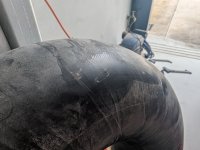
But where this gets interesting is when I examined the tube I removed I placed in in water to find the ‘hole’ and the shape was odd. So I took a photo.
Driving home it bugged me…..
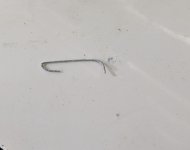
Then it finally dawned on me that the shape was familiar and then it really bugged me. It looked a lot like an office staple. But how? And where is it now… oh dear please don’t tell me I just ruined another very expensive leakguard tube.
Due to work/life commitments I had to leave it for a few days, but as soon as I had a chance I returned to find the tyre still inflated. Good start. But I just couldn’t risk the fact that it might still be in the tyre pressing against the new tube to surprise me another day.
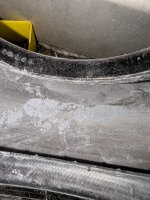
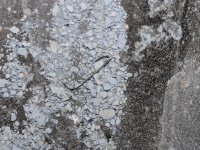
So I went through the process again; jacking, wheel pants, brakes, remove wheel, depressurise, split rim remove tube. (Getting good at it now) Couldn’t see any damage. Rolled the tyre around and shined a light in. Nothing but powdered and granular talc. Tapped and fumbled with my finger, couldn’t feel anything, but also couldn’t see past my hand. (It’s a small inner diameter really) so I reached for the nearest blunt tool to brush through the talc. This happened to be a Phillips head screw driver and it happened to be MAGNETIC. Culprit found and the shape matched exactly.
So, I’ll never know why. I suspect when the type was on a shelf somewhere someone pulled apart the pages of an invoice or shipping docket or something and just by bad luck the staple fell inside the tube. Once in there it was never going to fall out or even be seen. Is there a lesson here ? Maybe, maybe it’s that remote and unlikely thins are still possible. Maybe it’s that we should all closely inspect even new parts for faults, flaws and contamination.
I am not sure what conversation to have with my mechanic yet but I need to tell him.
A flat tyre.
Sigh.
The tyre had only just been replaced by my mechanic a few weeks (few flights) back in the annual inspection.
Fortunately in the hanger, it is less painful that in the field. So I went through the process of jacking, wheel pants, brakes, remove wheel, depressurise, split rim remove tube and then all in reverse. Basically I used the time-window I had for flying to make the repair.
But where this gets interesting is when I examined the tube I removed I placed in in water to find the ‘hole’ and the shape was odd. So I took a photo.
Driving home it bugged me…..
Then it finally dawned on me that the shape was familiar and then it really bugged me. It looked a lot like an office staple. But how? And where is it now… oh dear please don’t tell me I just ruined another very expensive leakguard tube.
Due to work/life commitments I had to leave it for a few days, but as soon as I had a chance I returned to find the tyre still inflated. Good start. But I just couldn’t risk the fact that it might still be in the tyre pressing against the new tube to surprise me another day.
So I went through the process again; jacking, wheel pants, brakes, remove wheel, depressurise, split rim remove tube. (Getting good at it now) Couldn’t see any damage. Rolled the tyre around and shined a light in. Nothing but powdered and granular talc. Tapped and fumbled with my finger, couldn’t feel anything, but also couldn’t see past my hand. (It’s a small inner diameter really) so I reached for the nearest blunt tool to brush through the talc. This happened to be a Phillips head screw driver and it happened to be MAGNETIC. Culprit found and the shape matched exactly.
So, I’ll never know why. I suspect when the type was on a shelf somewhere someone pulled apart the pages of an invoice or shipping docket or something and just by bad luck the staple fell inside the tube. Once in there it was never going to fall out or even be seen. Is there a lesson here ? Maybe, maybe it’s that remote and unlikely thins are still possible. Maybe it’s that we should all closely inspect even new parts for faults, flaws and contamination.
I am not sure what conversation to have with my mechanic yet but I need to tell him.