
Doing an RV-10 QB fuse and wings. Had originally decided to simplify things by forgoing interior paint as I'm planning on putting in an interior and thought that would cover everything. But now thinking there might be some exposed areas and am reconsidering. Been looking on the site but haven't found anything on point. Any thoughts appreciated.

Van's Air Force
You are using an out of date browser. It may not display this or other websites correctly.
You should upgrade or use an alternative browser.
You should upgrade or use an alternative browser.
Interior Paint?
- Thread starter burtw
- Start date


You'll get dozens of suggestions on which paint to use. I ended up using Sherwin Williams JetFlex WR. The color I chose was P09775 - Gray. I sprayed this over the Akzo I used to prime all my parts. Purchased it from Blend Supply in Texas.
No rattle can paint!
You need a durable epoxy or polyurethane paint so your surfaces don’t chip & look 30 years old in 2 years.
You need a durable epoxy or polyurethane paint so your surfaces don’t chip & look 30 years old in 2 years.
I also used JetFlex WR (black but it honestly seems more like really dark blue to me). Most of my interior will be covered by carpet and interior panels, but for me there will be a few exposed areas. Specifically:
Finally, as the proud owner of a flying RV-10 with over 1,000 hours on it, there are two places where I specifically have noticed a ton of wear:
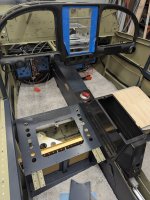
- The front of the area under the front seats is visible in most seating positions
- The seatback support for the rear seats and a few panels in the cargo area
- The inside of the two front doors plus the cargo door
- Possibly the flap covers in the back seat
- The inside of the cabin top (other than where the headliner will cover)
- Rudder pedals, control sticks, and windshield center support
Finally, as the proud owner of a flying RV-10 with over 1,000 hours on it, there are two places where I specifically have noticed a ton of wear:
- The door sills -- on my new build I'm using carbon fiber in this area (not yet installed in the photo below)
- The front portion under the front seats where they are stepped on upon entry -- on my new build I put some Wing Walk on there (see photo below)

Just getting ready to move the project from the basement shop down to the hangar. Many things rotate around interior painting. Some thoughts:
- The first RV-10 build I installed a marine grade vinyl backed foam ceiling liner on the inside of the cabin top. Worked well until the new owner took it to Florida and the heat got to it. For the new RV-10 build I took the time to do the fiberglass body work on the cabin top inside prepping it for paint.
- All non-removable interior parts were primed before fabrication. I’ll scuff them up with Scotch Brite and then do a wipe down with Coleman fuel.
- Even thought the interior is already primed, it will get another light coat of primer before top coat. Lesson learned from years ago.
- Interior top coat paint will be the same PPG medium gray urethane product that I’ve used on all the build. A single coat wears like iron - never had a chip or wear mark. I use the same paint but in a dark gray for the panel, powder coated parts and such. For powder coat parts I light sand with 200 grit paper, prime and top coat.
- All removable interior panels will be primed and show side top coated in the paint booth.
- The last step will be to put a high build primer on the exterior fiberglass parts. I already did a neat epoxy coat on the fiberglass and will light sand with 200 grip paper before priming. This will provide UV protection and give the paint shop something to block sand. I did the exterior painting on the first three builds - but will not for this last build
I have deferred the window install until after interior and cabin top paint. For this build I will be doing the Silkaflex process.
Side note - still looking for recommendations for a paint shop to do the exterior. Currently at the top of my short list is Fulltron Aviation in Springfield Missouri (3DW).
Carl
- The first RV-10 build I installed a marine grade vinyl backed foam ceiling liner on the inside of the cabin top. Worked well until the new owner took it to Florida and the heat got to it. For the new RV-10 build I took the time to do the fiberglass body work on the cabin top inside prepping it for paint.
- All non-removable interior parts were primed before fabrication. I’ll scuff them up with Scotch Brite and then do a wipe down with Coleman fuel.
- Even thought the interior is already primed, it will get another light coat of primer before top coat. Lesson learned from years ago.
- Interior top coat paint will be the same PPG medium gray urethane product that I’ve used on all the build. A single coat wears like iron - never had a chip or wear mark. I use the same paint but in a dark gray for the panel, powder coated parts and such. For powder coat parts I light sand with 200 grit paper, prime and top coat.
- All removable interior panels will be primed and show side top coated in the paint booth.
- The last step will be to put a high build primer on the exterior fiberglass parts. I already did a neat epoxy coat on the fiberglass and will light sand with 200 grip paper before priming. This will provide UV protection and give the paint shop something to block sand. I did the exterior painting on the first three builds - but will not for this last build
I have deferred the window install until after interior and cabin top paint. For this build I will be doing the Silkaflex process.
Side note - still looking for recommendations for a paint shop to do the exterior. Currently at the top of my short list is Fulltron Aviation in Springfield Missouri (3DW).
Carl
I have deferred the window install until after interior and cabin top paint. For this build I will be doing the Silkaflex process.
OK, interesting. I was going to do that (final cabin top paint before installing the windows) but then I'm worried about messing it up in the window install process. I'm doing the SilPruf method which for most people involves creating some small cleco holes around the windows. So I'm thinking I'll fully install the side windows and then do the interior paint.
I just wanted to ask if there was a reason why you were doing the windows after the paint in case I'm missing something. I believe the windows will have protective film on them during the painting process and I'll tape up any places where they need protection.
Thanks, Kirk. That's exactly what I was after. Since I was planning to install carpet and panels, I wasn't sure if i needed to paint the interior but apparently I do.I also used JetFlex WR (black but it honestly seems more like really dark blue to me). Most of my interior will be covered by carpet and interior panels, but for me there will be a few exposed areas. Specifically:
I want to highlight the last items specifically. I tried really hard to sand and paint these powder-coated steel pieces and I was NOT successful. I ended up taking them to a place to have them re-powder-coated black to match my interior.
- The front of the area under the front seats is visible in most seating positions
- The seatback support for the rear seats and a few panels in the cargo area
- The inside of the two front doors plus the cargo door
- Possibly the flap covers in the back seat
- The inside of the cabin top (other than where the headliner will cover)
- Rudder pedals, control sticks, and windshield center support
Finally, as the proud owner of a flying RV-10 with over 1,000 hours on it, there are two places where I specifically have noticed a ton of wear:
View attachment 93557
- The door sills -- on my new build I'm using carbon fiber in this area (not yet installed in the photo below)
- The front portion under the front seats where they are stepped on upon entry -- on my new build I put some Wing Walk on there (see photo below)
Just one less masking evolution. Masking gets old.OK, interesting. I was going to do that (final cabin top paint before installing the windows) but then I'm worried about messing it up in the window install process. I'm doing the SilPruf method which for most people involves creating some small cleco holes around the windows. So I'm thinking I'll fully install the side windows and then do the interior paint.
I just wanted to ask if there was a reason why you were doing the windows after the paint in case I'm missing something. I believe the windows will have protective film on them during the painting process and I'll tape up any places where they need protection.
Carl
I also used Sherwin Williams Jetflex WR. Primed (PPG Super Koropon) and Jetflex WR'd all of the interior parts prior to assembly so all of the rivets are highlighted (unpainted) which I like. This was much easier (I think) than trying to paint after assembly. Jetflex WR will produce everything from a smooth to a textured finish depending on how the gun is set up. This paint is recommended for interior use in jets by Sherwin Williams, probably good enough for my RV. Not flying yet but I have found the paint to be easy to apply and easy to clean up and it's a one part polyurethane (wear ppe respirator). No chips or wear evident even with about a million times (feels like that anyway) getting in and out working on wiring, panel etc. Mine is a light grey to match the old Vans powder coat color. I'd recommend a light color even if you use carpets and some interior in addition. Much easier to find dropped parts, small tools etc with a light color.You'll get dozens of suggestions on which paint to use. I ended up using Sherwin Williams JetFlex WR. The color I chose was P09775 - Gray. I sprayed this over the Akzo I used to prime all my parts. Purchased it from Blend Supply in Texas.

Really like using Southern Polyurethane's Epoxy Primer. Dries to sort of a satin. Currently available in White, Gray, Black, Sandstone, Primer Red Oxide. UV resistant. Goes on directly over bare metal. Very durable. https://www.southernpolyurethanes.com/products/primers/epoxy-primer/ Would certainly use it again.

Since somone brought it up.Really like using Southern Polyurethane's Epoxy Primer. Dries to sort of a satin. Currently available in White, Gray, Black, Sandstone, Primer Red Oxide. UV resistant. Goes on directly over bare metal. Very durable. https://www.southernpolyurethanes.com/products/primers/epoxy-primer/ Would certainly use it again.
Kirker EnduroPrime 2K Epoxy primer.
One paint. No top coat.
Comes in white, gray & black. Easy to mix any neutral shade.
Wheels of my Suzuki Samurai have been surviving CO sun, snow and salt. Still look like the day I sprayed them. Over 5 years. I'm not worried about the interior.
Really like using Southern Polyurethane's Epoxy Primer. Dries to sort of a satin.
I’ve read a lot of people saying in the forums that it dries glossy or semi glossy unless you reduce it. Did you reduce the epoxy before spraying? I’m about to spray my interior with this epoxy and want to make sure it’s not glossy at all.
No I didn't. On the SPI forum they note that it is glossy when first sprayed, but then the gloss lessens over a few days. However I do think I recall that using reducer will further decrease the gloss. Try a test panel, but be sure to wait a week before judging it.I’ve read a lot of people saying in the forums that it dries glossy or semi glossy unless you reduce it. Did you reduce the epoxy before spraying? I’m about to spray my interior with this epoxy and want to make sure it’s not glossy at all.
Make the first coat or two full strength. Thin the last coat to your sheen requirements. I alsoa used it on my dash. Thinned last coat 50% and got something just a hair glossier than flat. I would say that unthinned spi gives a semi gloss sheen. The benefits over flat paints is that it won’t burnish and chage sheen.I’ve read a lot of people saying in the forums that it dries glossy or semi glossy unless you reduce it. Did you reduce the epoxy before spraying? I’m about to spray my interior with this epoxy and want to make sure it’s not glossy at all.
