

Van's Air Force
You are using an out of date browser. It may not display this or other websites correctly.
You should upgrade or use an alternative browser.
You should upgrade or use an alternative browser.
SDSEFI shutdown procedure
- Thread starter Foghorn
- Start date



Toobuilder
Well Known Member
What is your SDSEFI shutdown procedure?
I shutdown by turning off the fuel pumps, then the coils and lastly the power. The engine is normally off before I have time to turn off the coils or power.
Anyone doing a different procedure?
Thanks,
I have an “on/off” switch on the engine bus. I select “OFF”.
You know, like a car….

N10KE
Well Known Member
Is there a failure mode of this single switch that can shut your engine down? Just curious as I have separate Honeywell switches for each ECU/IGN and fuel pumps.I have an “on/off” switch on the engine bus. I select “OFF”.
You know, like a car….
I know there have been some failures of the ACS switches used on many E-AB and certified airplanes that have grounded out both mags.
I'm not. I just turn fuel switch off, engine dies, then shut off the rest. Key and avionics switch and off with the headset. Then unbuckle and away I go.What is your SDSEFI shutdown procedure?
I shutdown by turning off the fuel pumps, then the coils and lastly the power. The engine is normally off before I have time to turn off the coils or power.
Anyone doing a different procedure?
Thanks,
0-360 converted to SDS EM-5F fuel and ignition
But my luck varies FIXIT
Last edited:

upperdeck
Well Known Member
I do exactly the same, except my system is an EFII. Pretty much the same components.I have an “on/off” switch on the engine bus. I select “OFF”.
You know, like a car….

I was planning out my switches so the power masters for the engine bus were on the top, then the fuel pumps (and ECU injector select) below them, then the igntition switches and the start button on the bottom.
This way the fuel pumps woudl go on before the igntion, and logic would say i would do the opposite to shut it down. Ignition off forst, (probably leave a pump on all the time, then the masters last.
Is there any issue with shutting down the engine using the ignition like this?
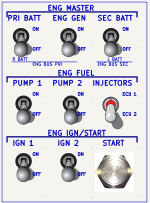
I may actually amend it to have the pumps on the top row, since they need to go on before the ECU's boot up for the powerup priming to happen. It just seems more natural to have the electric masters first.
This way the fuel pumps woudl go on before the igntion, and logic would say i would do the opposite to shut it down. Ignition off forst, (probably leave a pump on all the time, then the masters last.
Is there any issue with shutting down the engine using the ignition like this?
I may actually amend it to have the pumps on the top row, since they need to go on before the ECU's boot up for the powerup priming to happen. It just seems more natural to have the electric masters first.
Attachments
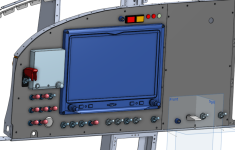
Yes.I was planning out my switches so the power masters for the engine bus were on the top, then the fuel pumps (and ECU injector select) below them, then the igntition switches and the start button on the bottom.
This way the fuel pumps woudl go on before the igntion, and logic would say i would do the opposite to shut it down. Ignition off forst, (probably leave a pump on all the time, then the masters last.
Is there any issue with shutting down the engine using the ignition like this?
View attachment 93299
I may actually amend it to have the pumps on the top row, since they need to go on before the ECU's boot up for the powerup priming to happen. It just seems more natural to have the electric masters first.
You do not want to turn the ignition off first. The ignition switches are just the coil power source. If you turn the ignition off, the ecu is still pumping fuel into the cylinder as it spins. Better to turn the ecu’s off first. That kills everything related to fuel and spark at the cylinders.
Pumping raw fuel into the cylinders at a significant volume dilutes the oil on the walls and leads to wear. Also loads up the exhaust with raw fuel and restsarting in a few minutes can lead to after fires.
If you shut down the ECU's, don't you lose RPM and other engine indications?Yes.
You do not want to turn the ignition off first. The ignition switches are just the coil power source. If you turn the ignition off, the ecu is still pumping fuel into the cylinder as it spins. Better to turn the ecu’s off first. That kills everything related to fuel and spark at the cylinders.
Pumping raw fuel into the cylinders at a significant volume dilutes the oil on the walls and leads to wear. Also loads up the exhaust with raw fuel and restsarting in a few minutes can lead to after fires.
Sounds like it woudld be better to have the fuel pumps at the top, then the electric masters, then the igntion. Top to bottom for start.
The shutdown, top to bottom again. Fuel off First, then engine buss off, then ignition off.
And why do you need rpm and other engine indications AFTER you shut it down? Shutting off pumps doesn’t relieve the pressure in the system. The ecu will still keep sending fuel as long as there is still pressure.If you shut down the ECU's, don't you lose RPM and other engine indications?
Sounds like it woudld be better to have the fuel pumps at the top, then the electric masters, then the igntion. Top to bottom for start.
The shutdown, top to bottom again. Fuel off First, then engine buss off, then ignition off.
I was just informing you how it works and side effects. It is your plane and should set it up as you think it should be.
No worries. Thanks.And why do you need rpm and other engine indications AFTER you shut it down? Shutting off pumps doesn’t relieve the pressure in the system. The ecu will still keep sending fuel as long as there is still pressure.
I was just informing you how it works and side effects. It is your plane and should set it up as you think it should be.
My understanding might be wrong here, but it should only add fuel when it is turning right? So shutting down the ignition it would, at most, send a few extra squirts of fuel while it slows down?
Shut down- throttle back to idle, fuel pumps off, coils off, module power off.
Prop spin down usually 1 to 1 1/2 revolutions till stopped.
Start- throttle at idle, module power on, coils on, pumps on, engage starter (usually 1.5 to 2 revolutions), engine starts & runs at low (start sequence) idle, about 500rpm, 5 seconds later idle increases to 600 by itself.
Starts just like my wife’s Buick except with more component switch flicking.
Prop spin down usually 1 to 1 1/2 revolutions till stopped.
Start- throttle at idle, module power on, coils on, pumps on, engage starter (usually 1.5 to 2 revolutions), engine starts & runs at low (start sequence) idle, about 500rpm, 5 seconds later idle increases to 600 by itself.
Starts just like my wife’s Buick except with more component switch flicking.
Toobuilder
Well Known Member
Is there a failure mode of this single switch that can shut your engine down?…
Yes.
There is also a single bolt holding the accessory gear train together which will shut the engine down if it backs out (which can and does happen). Unlike that single bolt however, there are ways to provide emergency power to a bus in the unlikely event a high quality mil spec switch fails in service. That is an Emergency procedure though - I’m assuming this thread is discussing “normal” ops.
Engine Start:
Master on
Engine bus on
Start
Engine Shutdown:
Engine bus off
Last edited:
N10KE
Well Known Member
Understood. And yes, there is a single camshaft, crankshaft and propeller too. I was just curious about the potential SPOF on the electrical side.Yes.
There is also a single bolt holding the accessory gear train together which will shut the engine down if it backs out (which can and does happen). Unlike that single bolt however, there are ways to provide emergency power to a bus in the unlikely event a high quality mil spec switch fails in service. That is an Emergency procedure though - I’m assuming this thread is discussing “normal” ops.
Engine Start:
Master on
Engine bus on
Start
Engine Shutdown:
Engine bus off
That is correct.No worries. Thanks.
My understanding might be wrong here, but it should only add fuel when it is turning right? So shutting down the ignition it would, at most, send a few extra squirts of fuel while it slows down?

I have my fuel pump come on with my EM6 ignition switch to manage turning on and off the selected fuel pump(s), so my procedure is "Ignition - OFF". If for some reason the ECU or whatever other widget fails, I have a redundant system. And then I also have an essential bus. I can turn off everything, and still switch on my E-bus to power a selected ECU (EFII system), a COM and G5 backup. As long as I have at least one of four power devices working (one belt driven alternator, one gear driven alternator and two batteries on separate buses), I have power to my ECU. Unfortunately, I still only have one pilot.
Last edited:
N10KE
Well Known Member
Yes and no. There is the priming feature 4 seconds after ECU boot up plus an additional “accelerator pump” feature you can access by pumping the throttle (uses the throttle position sensor for triggering).No worries. Thanks.
My understanding might be wrong here, but it should only add fuel when it is turning right? So shutting down the ignition it would, at most, send a few extra squirts of fuel while it slows down?
Toobuilder
Well Known Member
"Good" switches rarely fail in the context of our GA environment - especially compared to the years and years of abuse they suffer in military applications. I'm sure there are plenty of factory installed toggles still flying around in B-52's, decades after installation. Additionally, if they "DO" fail, its usually during activation. In our context, that means the engine wont start or it wont shut down. Inconvenient, yes, but rarely a flight emergency. And finally, adding an "emergency" circuit around a failed open switch is pretty simple.I was just curious about the potential SPOF on the electrical side.
I have yet to see a compelling reason we see Space Shuttle complexity in the addition of EFI for some of the installations - Do we really need a separate switch for fuel, ignition and ECU when ALL are required for the engine to run? Can anyone describe an in flight scenario where you shut off the fuel pump and leave the ignition and ECU hot?
I start with both pumps, take off with both, cruise with one (alternate between them for supposed longer pump longevity), landing sequence with both.
Only in the case of in flight fire would I ever shut both pumps off, I’d be shutting off EVERY other switch too! (& closing fuel valve too of course)
Only in the case of in flight fire would I ever shut both pumps off, I’d be shutting off EVERY other switch too! (& closing fuel valve too of course)
Thanks. I was meaning on shutdown. If i shutdown with the igntition - the pumps would still have pressure but they aren't going to put any fuel into the engine unless the crank magnets go past the sensor, which surely would only be a couple of times at most.Yes and no. There is the priming feature 4 seconds after ECU boot up plus an additional “accelerator pump” feature you can access by pumping the throttle (uses the throttle position sensor for triggering).
N10KE
Well Known Member
I routinely start and operate most of the time with both ECU’s and coil packs ON and one fuel pump OFF. Both pumps are only on for takeoff and landing. If an ECU goes flaky, I would turn it off (the associated coil is on the same three position Honeywell mil-spec switch) - but I would still want to operate both fuel pumps for the landing. So for me, there are several scenarios where the complexity of the additional switches adds some redundancy that I prefer.I have yet to see a compelling reason we see Space Shuttle complexity in the addition of EFI for some of the installations - Do we really need a separate switch for fuel, ignition and ECU when ALL are required for the engine to run? Can anyone describe an in flight scenario where you shut off the fuel pump and leave the ignition and ECU hot?
Well, in the case of sds, we need discrete ignition switches for run up testing to confirm that each ignition works. You also need discrete fuel pump switches to balance their usage and/or to test that each works. I agree fully that a master switch is just fine for start up and shut down and no need to work each switch individually. In fact, it is the preferred method and used in every automobile for the last 30 years."Good" switches rarely fail in the context of our GA environment - especially compared to the years and years of abuse they suffer in military applications. I'm sure there are plenty of factory installed toggles still flying around in B-52's, decades after installation. Additionally, if they "DO" fail, its usually during activation. In our context, that means the engine wont start or it wont shut down. Inconvenient, yes, but rarely a flight emergency. And finally, adding an "emergency" circuit around a failed open switch is pretty simple.
I have yet to see a compelling reason we see Space Shuttle complexity in the addition of EFI for some of the installations - Do we really need a separate switch for fuel, ignition and ECU when ALL are required for the engine to run? Can anyone describe an in flight scenario where you shut off the fuel pump and leave the ignition and ECU hot?

rmartingt
Well Known Member
Separate ignition switches have helped me identify fouled plugs on two occasions so far in my testing. I'm just now getting through break-in and don't know the engine well enough yet to tell if a plug or ignition is bad during runup without cycling power like a traditional mag check.Do we really need a separate switch for fuel, ignition and ECU when ALL are required for the engine to run? Can anyone describe an in flight scenario where you shut off the fuel pump and leave the ignition and ECU hot?
I also like being able to power up the ECU by itself for programming etc without running pumps. And there are maintenance procedures (defueling, primarily) where I want to run a pump but also want to be sure the engine won't fire.
4 seconds? By the sound my ECU does it as soon as power is available. It leads to a less than optimal start sequence right now that I'm still trying to figure out a better way around while still verifying the redundancy.There is the priming feature 4 seconds after ECU boot up
I'll admit the assumption that the ECU is the last item turned on (so there'd already be fuel pressure) seems backwards to my thinking and my assumptions when I planned my system--I always figured the controller would be the first thing powered. That's how the big airplanes at work do it; the engine and flight control systems are powered up very early and it's only much later when they get supplied with fuel/bleed air/hydraulics/etc.
Toobuilder
Well Known Member
Same here, but the second pump is on a pushbutton on the throttle, and used in the same manner as a boost pump on many GA aircraft. Its intermittent in use, and operated exactly as my initial muscle memory training would (hopefully) compel me to do in an emergency.I routinely start and operate most of the time with both ECU’s and coil packs ON and one fuel pump OFF. Both pumps are only on for takeoff and landing...
Toobuilder
Well Known Member
More than one way to skin that cat. My coils are on resettable mil spec breakers. I check each coil on taxi out. No "switches" needed.Well, in the case of sds, we need discrete ignition switches for run up testing to confirm that each ignition works...
Toobuilder
Well Known Member
I'll admit I struggled a bit with that one at first. But in the end that is simply a feature that eases maintenance activity and that does not "buy" the cost of additional switches for me.I also like being able to power up the ECU by itself for programming etc without running pumps.
N10KE
Well Known Member
I believe the 4 second delay was added in EM-6 due to multiple requests. Not sure if Barry can reflash EM-5 with this feature.Separate ignition switches have helped me identify fouled plugs on two occasions so far in my testing. I'm just now getting through break-in and don't know the engine well enough yet to tell if a plug or ignition is bad during runup without cycling power like a traditional mag check.
I also like being able to power up the ECU by itself for programming etc without running pumps. And there are maintenance procedures (defueling, primarily) where I want to run a pump but also want to be sure the engine won't fire.
4 seconds? By the sound my ECU does it as soon as power is available. It leads to a less than optimal start sequence right now that I'm still trying to figure out a better way around while still verifying the redundancy.
I'll admit the assumption that the ECU is the last item turned on (so there'd already be fuel pressure) seems backwards to my thinking and my assumptions when I planned my system--I always figured the controller would be the first thing powered. That's how the big airplanes at work do it; the engine and flight control systems are powered up very early and it's only much later when they get supplied with fuel/bleed air/hydraulics/etc.
rmartingt
Well Known Member
Mine's an EM6; I had it upgraded at the end of last year. I hear it fire the priming burst as soon as the power comes on and the fuel pressure (without pump on; I pressurized the system before cycling power) drops several PSI.I believe the 4 second delay was added in EM-6 due to multiple requests. Not sure if Barry can reflash EM-5 with this feature.
As you say, many ways to approach it. I used fuses for everything instead of breakers, so the switches allow for the ignition check.My coils are on resettable mil spec breakers. I check each coil on taxi out. No "switches" needed.
There is a configuration setting for the priming shot duration, i believe. You cannalso get more priming be pushing the throttle in and out. Each cycle does another shot.Separate ignition switches have helped me identify fouled plugs on two occasions so far in my testing. I'm just now getting through break-in and don't know the engine well enough yet to tell if a plug or ignition is bad during runup without cycling power like a traditional mag check.
I also like being able to power up the ECU by itself for programming etc without running pumps. And there are maintenance procedures (defueling, primarily) where I want to run a pump but also want to be sure the engine won't fire.
4 seconds? By the sound my ECU does it as soon as power is available. It leads to a less than optimal start sequence right now that I'm still trying to figure out a better way around while still verifying the redundancy.
I'll admit the assumption that the ECU is the last item turned on (so there'd already be fuel pressure) seems backwards to my thinking and my assumptions when I planned my system--I always figured the controller would be the first thing powered. That's how the big airplanes at work do it; the engine and flight control systems are powered up very early and it's only much later when they get supplied with fuel/bleed air/hydraulics/etc.

Here are my switches. SDS components are powered by Master, Eng Bus or Aux gen (MZ Gen). Once started I can turn off ALT/MSTR, AUX BUS, ENG BUS and continue flying on just the MZ Gen. MZ Gen is wired to power the ENG BUS. ENG BUS also has 1 radio, EFIS screens have IBBS backup battery to get me on the ground.
400 hours so far.
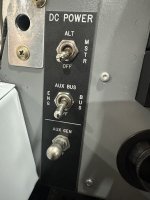
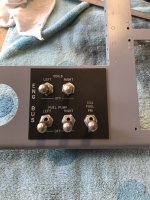
400 hours so far.

Not familiar with the "afterfire" you speak of... I shut down by killing the fuel pumps and leave the ignition on until the prop stops, usually very quickly. On a hot-start I power up the fuel pump only and leave it running while I'm strapping in the seat belts and powering up my panel (about 45 seconds or so) and that recircs cool fuel all the way up to the injectors coming off the fuel rail - then normal start. Never had a problem.Same here. For a hot start, I now leave the fuel pumps off which has reduced the afterfire I see occasionally. I turn a pump on as soon as the engine fires.
N10KE
Well Known Member
On a hot start, I frequently had an “after fire” - presumably from the SDS prime function and the wasted spark design. By leaving the fuel pump off for a hot start, I have been able to reduce the frequency of this occurring. Can’t say for sure what was causing it, but this technique seems to work for me.Not familiar with the "afterfire" you speak of... I shut down by killing the fuel pumps and leave the ignition on until the prop stops, usually very quickly. On a hot-start I power up the fuel pump only and leave it running while I'm strapping in the seat belts and powering up my panel (about 45 seconds or so) and that recircs cool fuel all the way up to the injectors coming off the fuel rail - then normal start. Never had a problem.

I do not understand what is happening here. I have about 1200 hours on the SDSEFI EM5 and have not encountered this situation.On a hot start, I frequently had an “after fire” - presumably from the SDS prime function and the wasted spark design. By leaving the fuel pump off for a hot start, I have been able to reduce the frequency of this occurring. Can’t say for sure what was causing it, but this technique seems to work for me.
1). What is your timing at 500RPM and what do you have set for CRANK IGN RETARD?
2). Have you verified your TDC with a strobe light?
This sounds like a timing issue, you want the total timing to be at least 5ATDC for starting. In other words your 500RPM value minus the CRANK IGN RETARD value must be at least 5ATDC. If you have not verified the TDC you may be on the BTDC side below 500RPM and that could cause kickback. If all is good with timing please verify normal full fuel system pressure before starting the engine.
My start procedure is simple:
1). Boost pump on wait for normal fuel system pressure
2). Both computers and coils on
3). Push start button
The reason I wait for full system pressure is when I turn on the computers they prime the cylinders. The EM6 has a delay in the prime to accomplish the full fuel system pressure step; however, there is an assumption that you have actually reached normal fuel pressure.
My procedure for first start of the day includes one extra step:
2a). After step 2 pump the throttle a few times (I use 3 times). This should have created the situation you address about priming and wasted spark and yet it has not.
My procedure for shutdown is to simply turn off the fuel pump in all cases the engine is ready for the next start. I sometimes turn off the computers and coils, they both work. The only difference is the latter leaves the fuel system pressurized and allows one to verify the fuel pump check valves are not leaking.
Since you are having difficulty could you please watch to see you have full fuel pressure before all starts and let us know if that helps in your starting issue? More likely, please check your spark timing.
Last edited:
Toobuilder
Well Known Member
FWIW, I’ve never “waited” for pressure indication (or anything else) as part of the start sequence. I flip on the engine bus and then hit the start button. Simple as that. Hot or cold, never an issue.
I agree… the reason I recommend fuel pressure is the computer could be pumping air and not fuel. Just trying to eliminate a self induced fault. The most likely issue for the OP is improper timing.FWIW, I’ve never “waited” for pressure indication (or anything else) as part of the start sequence. I flip on the engine bus and then hit the start button. Simple as that. Hot or cold, never an issue.
N10KE
Well Known Member
Not really having difficulty with hot starts. In fact, the engine starts better (quicker) hot versus cold. I only have 100 hours on the plane so far and probably need to tweak some on the start cycles, etc. configuration to get the cold start a little quicker. I haven't tried additional priming as the engine always seems rich (black smoke) on a cold start - and I've dialed the numbers way back. My issue is that the engine "pops" (afterfires) sometimes during the hot start and I seem to be able to reduce the occurrence of the afterfires by not turning the fuel pump on at all until the engines is running. I do shutdown the engine by turning off the fuel pump(s) but there is still enough residual pressure left for the subsequent restart.I do not understand what is happening here. I have about 1200 hours on the SDSEFI EM5 and have not encountered this situation.
1). What is your timing at 500RPM and what do you have set for CRANK IGN RETARD?
2). Have you verified your TDC with a strobe light?
This sounds like a timing issue, you want the total timing to be at least 5ATDC for starting. In other words your 500RPM value minus the CRANK IGN RETARD value must be at least 5ATDC. If you have not verified the TDC you may be on the BTDC side below 500RPM and that could cause kickback. If all is good with timing please verify normal full fuel system pressure before starting the engine.
My start procedure is simple:
1). Boost pump on wait for normal fuel system pressure
2). Both computers and coils on
3). Push start button
The reason I wait for full system pressure is when I turn on the computers they prime the cylinders. The EM6 has a delay in the prime to accomplish the full fuel system pressure step; however, there is an assumption that you have actually reached normal fuel pressure.
My procedure for first start of the day includes one extra step:
2a). After step 2 pump the throttle a few times (I use 3 times). This should have created the situation you address about priming and wasted spark and yet it has not.
My procedure for shutdown is to simply turn off the fuel pump in all cases the engine is ready for the next start. I sometimes turn off the computers and coils, they both work. The only difference is the latter leaves the fuel system pressurized and allows one to verify the fuel pump check valves are not leaking.
Since you are having difficulty could you please watch to see you have full fuel pressure before all starts and let us know if that helps in your starting issue? More likely, please check your spark timing.
To answer your questions - 1. Timing at 500 RPM is 10 degrees BTDC. Crank retard is set to 5 degrees ATDC. 2. Yes, we set both magnet positions using a timing light. Reading your comment again and checking the EM-6 manual, it appears you may have hit on something I did not realize. I assumed the Crank retard value was the absolute value being used during start - not a summation of the RPM timing plus the Crank retard. I will verify with Ross and/or Barry and if this is the case - I need to set the crank retard value higher. It's a great day when I learn something new! Thanks.
The SDS system (one of you guys jump in here if I'm wrong) does not fire the spark plugs until it establishes the orientation of the crankshaft by sensing the single positioning magnet on the flywheel, and then waits until the next trigger magnet is seen to fire the plugs. I do not know if the injection also operates that way, or if the injectors fire with the trigger magnet being seen prior to the positioning magnet. That could result in some excess fuel being sent through the cylinder unburned into the exhaust and result in that afterfire when the first cylinder lights off and torches the wasted charge.
I suspected something like that might happen early on in my SDS install, and just modified my shutdown procedure to shutting off the pumps first, let the pressure decay and the engine starves itself and dies, then shutdown everything else. I've never had an afterfire event (cold or hot) while shutting down this way. I did have a couple in early testing but I chalked that up to not yet getting all my mapping settings correct, I had timing curves all over the place and can't say for sure if my minor exhaust pops were related to this or not.
I suspected something like that might happen early on in my SDS install, and just modified my shutdown procedure to shutting off the pumps first, let the pressure decay and the engine starves itself and dies, then shutdown everything else. I've never had an afterfire event (cold or hot) while shutting down this way. I did have a couple in early testing but I chalked that up to not yet getting all my mapping settings correct, I had timing curves all over the place and can't say for sure if my minor exhaust pops were related to this or not.
