Van's Air Force

The definitive Van's Aircraft support community! Buying, building or flying an RV? Join our exclusive family of mentors and enthusiasts!

Mosaic Signed and Announced

Status
Not open for further replies.
I reached out to Rainbow about the maint topic. They said, ya take the course, fill out the FAA form, take the course approval, and form to the FSDO and add the eab plane. There does seem to be an issue if the plane is in an LLC or not. Anyone have any info on that topic?. E.g. a repairman can't add an LLC airplane because technically the repairman doesn't own it ... I'm curious if anyone has done this with an elsa in an LLC?
 
Question for me is if Van’s is offering factory build M LSA’s beyond the RV-12. This could be an entirely new sales channel for Van’s. And the new M LSA class could take away some market share from the bottom of the light GA market. Add a parachute to the RV-10 and you have a Cirrus SR fighter.
 
My read on it is that you would just need to take the Rainbow 2 day course for aircraft and then could do condition inspections on an EAB that you own.
I wonder if the insurers will be okay with this. One way to find out…
 
I wonder if the insurers will be okay with this. One way to find out…
Not that it should matter anyway, but you tell your insurance company who does your inspections?

In the ELSA world this is not a problem.
 
Not that it should matter anyway, but you tell your insurance company who does your inspections?

In the ELSA world this is not a problem.
Of course not. I’m talking about what future policy language may look like in a world where a bunch of nonbuilders are taking a 16-hour course then doing their own condition inspections year after year. Not sure I’d want to insure those hulls at the same rate as an airplane annually inspected by a professional with (at least) an A&P.

Perhaps the insurers will start requiring “A&P assisted owner inspections” 🤣
 
Of course not. I’m talking about what future policy language may look like in a world where a bunch of nonbuilders are taking a 16-hour course then doing their own condition inspections year after year. Not sure I’d want to insure those hulls at the same rate as an airplane annually inspected by a professional with (at least) an A&P.

Perhaps the insurers will start requiring “A&P assisted owner inspections” 🤣
I think people fail to realize. An inspection is not the repair or remedy of those items found to be out of compliance on the inspection. It’s simply the inspection. And those items found can be remedied by anyone ( this existed before this change today). So I fail to see why this has any new effect on insurance requirements
 
Of course not. I’m talking about what future policy language may look like in a world where a bunch of nonbuilders are taking a 16-hour course then doing their own condition inspections year after year. Not sure I’d want to insure those hulls at the same rate as an airplane annually inspected by a professional with (at least) an A&P.

Perhaps the insurers will start requiring “A&P assisted owner inspections” 🤣
The rule is built on the experience from
decades of light sport experience. This is not a new concept. I don’t mean to take anything away from qualified people but an A&P is possible with limited applicable knowledge for the average RV. They are not infallible gods of GA maintenance.

Fair point that a bunch of crappy maintenance and shortcut inspections could screw this up. I’m sure we all know a few guys that will exploit this.
 
Fair point that a bunch of crappy maintenance and shortcut inspections could screw this up. I’m sure we all know a few guys that will exploit this.
Yeah, this is my point. Not saying it will definitely happen.
 
So I fail to see why this has any new effect on insurance requirements
It won’t necessarily have any effect. But I think a world where inspections are mostly done by A&Ps and IAs is likely to be safer than a world in which huge numbers of inspections are done by 16-hour wonders on their own aircraft. I could well be wrong.
 
It won’t necessarily have any effect. But I think a world where inspections are mostly done by A&Ps and IAs is likely to be safer than a world in which huge numbers of inspections are done by 16-hour wonders on their own aircraft. I could well be wrong.
If you read thru the very long FAA document that was published today, they seem to disagree. Mostly due to a&p ia being more familiar with certified requirements, airplanes, etc and less with LSA and eab. Further suggesting that LSA and eab were closer in similarity and was some of the impetus of the change.
 
Last edited:
Add a parachute to the RV-10 and you have a Cirrus SR fighter.

I emailed Van’s today, telling them that if they approve a parachute installation as part of RV-10 certification, then I’m ready to put down my deposit for an RV-10 S-LSA. I’m dead serious. “Take my money”!
 
I have further confirmed with Carol at rainbow that aircraft in an LLC will not be allowed on a repairman's (inspection) cert. This because the airman isn't the owner. The LLC is. They tried to get this change in, but it didn't happen and she wasn't expecting that it might. So if you want to keep you eab in an LLC and you didn't build it, you'll have to get the 15 day course (maintenance) certificate, which can work on any LSA or eab owned or not.
 
I think we all welcome relaxed regulations. But one effect of these new pilot regs may well be an increase in insurance rates or at least different types of policies/riders. As regulations are relaxed and potentially "less qualified pilots" may be flying, there is more potential to increase incidents/accidents. The way insurance works is we all actually insure each other.
Thoughts?
 
I think we all welcome relaxed regulations. But one effect of these new pilot regs may well be an increase in insurance rates or at least different types of policies/riders. As regulations are relaxed and potentially "less qualified pilots" may be flying, there is more potential to increase incidents/accidents. The way insurance works is we all actually insure each other.
Thoughts?
Have you ever looked at how inexpensive existing LSA/sport pilot insurance rates are today? I'm not sure this really changes that much.
 
I'll add a view from "up north"... In Canada we have been able to carry out repairs and maintenance, including the required annual inspection of Amateur-Built aircraft which we own. The owner of an A-B aircraft is responsible for its maintenance and thus its airworthiness.

MOSAIC is getting much closer to the current Canadian rule. As a builder, owner and maintainer of Amateur-Built aircraft I have to believe this to be a very positive regulatory direction and I'm happy to see my friends to the south getting some relief from maintenance requirements which were becoming more and more difficult to meet.
 
I wonder if the insurers will be okay with this. One way to find out…
Scares me a bit. 16 hours doesn’t seem like enough knowledge transfer to effectively complete a solid inspection. That said it is the standard in the lsa world, so they have data on losses. I suspect no change, just as basic med didn’t change anything.
 
I think people fail to realize. An inspection is not the repair or remedy of those items found to be out of compliance on the inspection. It’s simply the inspection. And those items found can be remedied by anyone ( this existed before this change today). So I fail to see why this has any new effect on insurance requirements
ThT is true. However repairs don’t prevent accidents due to mechanical failure. Inspections do that. The whole point of routine inspections is to catch things before they hurt people or damage properly. Yes, one could argue that poor work creates failures, but we have plenty of professionals doing poor work. The real benefits when discussing the savings from bodily hatm and property damage is from regular inspections.
 
If you read thru the very long FAA document that was published today, they seem to disagree. Mostly due to a&p ia being more familiar with certified requirements, airplanes, etc and less with LSA and eab. Further suggesting that LSA and eab were closer in similarity and was some of the impetus of the change.
This I fully agree with and seen it first hand. Major hole needing to be filled here. Just concerned that a 16 hour course, likely with a quarter of it dedicated to regs and other junk, is not enough to make one competent to complete them. You see the kind of questions we get here from buyers. Think about allyou learned building and maintaining your plane and how it makes you competent to truly find things in a ci. Now imagine what someone will learn in 16 hours, with their core skill set not really extending beyond oil changes. Remember that this is an faa type course, so 4 hours on regs and at least two hours on safety wire.
 
Last edited:
Have you ever looked at how inexpensive existing LSA/sport pilot insurance rates are today? I'm not sure this really changes that much.
Actually, no, I've never looked at a light sport plane/sport pilot. I got my ticket in gliders 25 years ago and moved into certified power planes in 2005.
 
This I fully agree with and seen it first hand. Major hole needing to be filled here. Just concerned that a 16 hour course, likely with a quarter of it dedicated to regs and other junk, is not enough to make one competent to complete them. You see the kind of questions we get here from buyers. Think about allyou learned building and maintaining your plane and how it makes you competent to truly find things in a ci. Now imagine what someone will learn in 16 hours, with their core skill set not really extending beyond oil changes. Remember that this is an faa type course, so 4 hours on regs and at least two hours on safety wire.
When I first heard of the LSA Repairman M/I certification years ago, I kept re-reading it thinking I was misunderstanding. Surely the “Inspection” 16 hour course was an add-on… AFTER passing the 15 day maintenance course! But nope! I always thought that was dumb. I get the explanations, but my brain still says “that ain’t right!”
 
Not that it should matter anyway, but you tell your insurance company who does your inspections?

In the ELSA world this is not a problem.
Insurer and insured often interpret their insurance policies differently. Sometimes one doesn't find out out an insurance company's bottom-line policy exclusions until your claim is denied.
 
Insurer and insured often interpret their insurance policies differently. Sometimes one doesn't find out out an insurance company's bottom-line policy exclusions until your claim is denied.
Sadly, a true statement. This where a good agent, or broker in our case, really adds value. They see all that on a regular basis and a good one will process it all and store as knowledge and help guide and inform their their clients. Many don't, so choose wisely.

I have worked with some commercial insurance and the policy documents are 10's or 100's of pages long as the attorneys go back and forth clarifying all the details and"what if's." Our policies are barely 2 pages, leaving most things unstated. Guess which side the interpretations due to the vagueness will benefit?
 
Last edited:
So do I get to fly an early model TBM 700 (Vso 61 knots) on a driver’s license medical or not?!? With the 10,000-foot altitude limit, the fuel burn is going to be a beast, of course.

Everyone up to now has been commenting on the aircraft changes which is awesome. Does anyone know if there were changes to flying with a driver's license, which could attract more new pilots who previously couldn't fly because they needed to get some kind of expensive waiver to get their first medical certificate or to fly with BasicMed, so now wouldn't have to worry about that if they use a driver's license?

I could fly my 11' tall, 38' wide, 325hp, 4 seat, 35mph stall, Wilga with a driver's license ! :rolleyes:
 
Insurer and insured often interpret their insurance policies differently. Sometimes one doesn't find out out an insurance company's bottom-line policy exclusions until your claim is denied.
I'm going through that right now with my plane, trying to negotiate something with my insurer.

I just renewed my policy yesterday for the 2nd time. The cost hasn't increased since the first one but I do have the unusable open pilot waiver that is just for show because they require at least 25 hours in the Wilga. I'm also not permitted to teach with it so others can't learn how to fly it and get the time. So if my Flight Review lapses I'll have to go rent a 172 because no other CFI in the USA has 25 hours of Wilga time to be PIC, or fly to Poland or Thailand where they have a few.
 
Last edited:
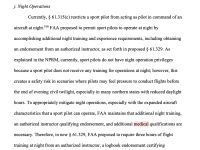
Need endorsements for controlled airspace B/C/D. No night, always <10k M.....
You can fly at night with training, an endorsement, and a medical certificate or Basic Med. It's all explained starting in this section
 

Attachments

  • Screenshot 2025-07-23 at 10.23.02 AM.png
    Screenshot 2025-07-23 at 10.23.02 AM.png
    293.7 KB · Views: 11
You can fly at night with training, an endorsement, and a medical certificate or Basic Med. It's all explained starting in this section
Which is completely useless (even though the FAA bends over backwards to claim otherwise in the document). If a sport pilot has a third class medical or BasicMed, they’d be better off just taking a PPL checkride and getting rid of all the sport restrictions at once. That’s what I’d do if it were me, anyway…
 
If a sport pilot has a third class medical or BasicMed, they’d be better off just taking a PPL checkride and getting rid of all the sport restrictions at once. That’s what I’d do if it were me, anyway…
So you think that getting a few hours of training and an endorsement to fly at night (maybe $500 total and could be done in less than a week) costs the same as a minimum of 20 more flight hours and a DPE checkride to get the PPL? That would take months and be around $3000 easily. What am I missing in your thoughts?
 
a medical certificate or Basic Med. It's all explained starting in this section
I was talking about the privileges of sport pilot with a drivers license medical instead of the burden of pursuing an FAA medical. Someone who can obtain a medical or BasicMed is much better off just taking the private pilot checkride and enjoying the expanded privileges.
 
I was talking about the privileges of sport pilot with a drivers license medical instead of the burden of pursuing an FAA medical. Someone who can obtain a medical or BasicMed is much better off just taking the private pilot checkride and enjoying the expanded privileges.
I was just addressing the "no night" part of your comment. Regarding your comment about a Sport Pilot being better off getting the PPL vs an endorsement to fly at night, I addressed that a few minutes ago. Not everyone has the time or money or needs more than a Sport Pilot certificate. Me, I'm a glutton for knowledge and have ATPs in 3 countries and a lot of CFI certs, but I had the means and the time.
 

Attachments

  • Screenshot 2025-07-23 at 11.46.20 AM.png
    Screenshot 2025-07-23 at 11.46.20 AM.png
    179.5 KB · Views: 2
So you think that getting a few hours of training and an endorsement to fly at night (maybe $500 total and could be done in less than a week) costs the same as a minimum of 20 more flight hours and a DPE checkride to get the PPL? That would take months and be around $3000 easily. What am I missing in your thoughts?
Worth noting, the minimum requirements to earn sport pilot or private pilot certificates are typically not representative of the actual time. The minimum of 20h and 40h respectively is effectively "on paper" and not in reality. Training to proficiency could easily take a sport pilot 40h or more. The other requirements could easily be incorporated into that additional time. Fly a slightly longer XC, to private pilot standards, etc.
 
Worth noting, the minimum requirements to earn sport pilot or private pilot certificates are typically not represetntative of the actual time. The minimum of 20h and 40h respectively is effectively "on paper" and not in reality. Training to proficiency could easily take a sport pilot 40h or more. The other requirements could easily be incorporated into that additional time. Fly a slightly longer XC, to private pilot standards, etc.
Even if that representative pilot didn't get his Sport Pilot at 20 hours and it took him 40 hours, if he were to continue to PPL, it doesn't change what I said previously : you would still need a "...minimum of 20 more flight hours and a DPE checkride to get the PPL..."., because if it took him 40 hours to learn the basic Sport Pilot training, he's not going to complete the PPL training in 20 hours more.

But I'll be very generous with this representative pilot who took twice as long to get his Sport Pilot. Forget all the additional flight hours he'll need to complete the PPL, just the DPE Checkride charge would be a lot more than the total cost for the night flight endorsement of a Sport Pilot.
 
Even if that representative pilot didn't get his Sport Pilot at 20 hours and it took him 40 hours, if he were to continue to PPL, it doesn't change what I said previously : you would still need a "...minimum of 20 more flight hours and a DPE checkride to get the PPL..."., because if it took him 40 hours to learn the basic Sport Pilot training, he's not going to complete the PPL training in 20 hours more.

The minimum hours are irrelevant, and I'll eat my metaphorical hat if anyone has ever gotten a sport certificate in 20.0 hours in an airplane comparable to the RV-12 and in an area with significant airspace. (A "fat ultralight" LSA on a grass strip in the middle of nowhere? I'd believe that.) Reports vary on the average time to reach PPL, but most of the claimed numbers that I see are in the 55 to 75 range. Most people simply won't develop the skills needed in 40 hours - what takes time is reaching proficiency in the knowledge and maneuvers, not just running out the clock.

And the difference between a private checkride and a sport checkride is very small. It's largely the same maneuvers, the same tolerances, and essentially the same knowledge base. There's no hood work on the sport checkride (but there is a requirement for hood time during training), and the PPL oral goes into more depth about weather, but that doesn't add up to double the time in training. It's theoretically possible to get a sport certificate without ever touching the radio, but anyone learning at a towered airport will get the sport B/C/D endorsement before solo - and anyone learning near a towered airport will likely do so before the checkride.

So, if we're talking about someone starting from scratch, at a towered airport, my argument is that the time and money required to get a sport certificate plus night endorsement is very close to the same as that to get a full PPL. I don't have any hard data, but searching around the internet I've found a number of comments supporting this. On the other hand, if we're talking about someone who's had their certificate for a while, then they ought to be fairly proficient on all the checkride maneuvers anyway, and they've probably logged sufficient solo and XC time in the course of enjoying their sport privileges - but I have to agree with you that the examiner fee alone would make for a significant cost difference.
 
I have to agree with you that the examiner fee alone would make for a significant cost difference.
Wait a minute - does a sport pilot not need to take a checkride with an examiner, or are those examiners just a lot cheaper for some reason?

EDIT: Not having to take a checkride doesn't make sense. Around here I think the prolific examiners that give sport checkrides also give checkrides in everything else from gliders to multi to CFII. I'd be surprised if it was much cheaper than private, since it takes a similar amount of time, but I could be wrong.
 
If I'm reading this right, this de-couples the definitions of "Sport Pilot" and "Light Sport Airplane" in an interesting way.
  • A Sport Pilot can only fly airplanes that stall at 59 knots or slower (clean).

  • If you want to certify an airplane as an S-LSA, it can have a stall speed as fast as 61 knots (dirty).
So: It is possible that there would be airplanes that will be certified as S-LSA, but that Sport Pilots would not be allowed to fly.

A real example: I'm pretty sure the RV-10 stalls faster than 59 knots clean but slower than 61 knots dirty. This means it could be certified as an S-LSA but could not be flown by a Sport Pilot.

... I think. Is that right?

View attachment 93146
correct
 
- but I have to agree with you that the examiner fee alone would make for a significant cost difference.
And that cost is why getting that night endorsement makes it the simple choice for Sport Pilots.

BTW, everything you mentioned above might be true for an airplane, but remember that Sport Pilots fly more than just airplanes, like powered parachutes, trikes, gliders, and gyroplanes, making it doable to get a Sport Pilot license in the allocated 20 hours.
 
Wait a minute - does a sport pilot not need to take a checkride with an examiner, or are those examiners just a lot cheaper for some reason?

EDIT: Not having to take a checkride doesn't make sense. Around here I think the prolific examiners that give sport checkrides also give checkrides in everything else from gliders to multi to CFII. I'd be surprised if it was much cheaper than private, since it takes a similar amount of time, but I could be wrong.
It depends.

Before MOSAIC:
- student pilot getting their first Sport Pilot license, needs to take a checkride with a Sport Pilot DPE
- Current Sport Pilot or a regular Pilot PPL and up can add another Sport Pilot category by getting training with one CFI and getting an endorsement, then getting a 2nd endorsement by another CFI. Then that Sport Pilot will be PIC in the additional category.

Now with MOSAIC:
- student pilot continues to need a checkride with a DPE
- Current Sport Pilot or a regular Pilot PPL and up, can go the 2 CFI route for some additional categories but to add an airplane or helicopter category, they'll need a checkride with a DPE

And DPEs that are only authorized to give sport Piilot checkrides can't give checkrides for any category, just like regular DPEs can't give checkrides for any certificate.

Those prolific DPEs you mention can't give a checkride in any category, they're specifically approved by the FAA, and none of them can give CFII checkrides because you don't have Sport Pilot CFI-I. It has to be one of us regular CFI-Is.
 
Last edited:
e-ab owner/nonbuilder can now do their own annual (condition) inspection from rainbow aviation two day course. anyone, even non pilotcan take the 15 day lsrm course and be a “mini me” a&p on any e-ab sel plane of the new lsa definition. amazing to non-builder owners and to bump the supply of a/p eligible condition inspectors. 👍👍
 
anyone, even non pilotcan take the 15 day lsrm course and be a “mini me” a&p on any e-ab sel plane of the new lsa definition. amazing to non-builder owners and to bump the supply of a/p eligible condition inspectors. 👍👍

Some of us took the long course with exactly that kind of thing in mind. I just love airplanes, and want to help out the owners that just want to fly. I know so many frustrated with the traditional inspection/maintenance paradigm. They aren't having any fun taking their airplanes to A&Ps that have limited knowledge and no interest in the experimental and light sport fleet.
 
And DPEs that are only authorized to give sport Piilot checkrides can't give checkrides for any category, just like regular DPEs can't give checkrides for any certificate.

Those prolific DPEs you mention can't give a checkride in any category, they're specifically approved by the FAA, and none of them can give CFII checkrides because you don't have Sport Pilot CFI-I. It has to be one of us regular CFI-Is.
I'm just saying - there are DPEs in my area that are approved to give most if not all of the common airplane (and sometimes glider) checkrides. I think they do primarily private/commercial and instructor checkrides, but are also authorized for sport pilot. Now if there are DPEs out there that only give sport pilot checkrides (and I would be surprised if there were many of these), I could see them being cheaper.
 
a traditional DPE here at Oshkosh is frustrated in that he doesn’t have the lsa time to become a s-DPE. But I wonder if all his past c-172 and c-152 DPE time must count under the new classification? Therefore his 3,000 hour time must qualify to be a s-DPE? 🧐
 
Worth noting, the minimum requirements to earn sport pilot or private pilot certificates are typically not representative of the actual time. The minimum of 20h and 40h respectively is effectively "on paper" and not in reality. Training to proficiency could easily take a sport pilot 40h or more. The other requirements could easily be incorporated into that additional time. Fly a slightly longer XC, to private pilot standards, etc.
It really depends on the pilot and instructor and i think a lot has to do with the students commitment. If you show up well prepared, things go quickly. If you expect the instructor to teach you everything, it goes slower. Pretty much everything my cfi taught or asked I already knew and he would always say are you sure you’re not with the faa? I got the sense that i was the first student he ever had that prepared/ learned everything before it was taught to me. I got my ppl years ago in 41 hours logged. My son did it 5 years ago in our 6a in 42 hours. Though in fairness , he was given 4 hours of instruction on how to land an rv (no touching of the nosewheel) before being handed off to the cfi. So it is realistic. I suspect some cfis may drag things out due to either being conservative or padding their hours. It took my other son considerably longer with a different instructor that seemed to want to repeat everything. I wasn’t there so can’t really say whether or not that was necessary.
 
Last edited:
All this confusion over 2 knots?

There are gonna be LSA aircraft that a sport pilot cannot fly?

How did something that should be so simple get so convoluted?

What a ridiculous and unnecessary mess!
Thank you, Brian. Your post captures exactly what I’ve been thinking.
 
Admittedly I haven’t had the time to closely read mosaic, but it would seem it references the LSRM (maintenance rating 2 week course) as having the ability to perform the conditional on a eab. Where does it say the inspection rating (16 hour course) can perform? I will double check when I am back at my desktop…

I have the LSRM-A 2 week course I did through blue ridge community college (not currently offered anymore). I loved the course, but in two weeks you cannot simply gain all the skills, it was great at exposing you to the skills. The class was also great at drilling into you how to find “approved data” and reference material - and finding things in 43.13z I am almost done with my 14 when I took the course so many of the skills were a review. There were some builders in the class but also some non builders. I wouldn’t feel doing the class as my prebuilder self would have qualified my to do an inspection on an eab.

I also got my LSRM because I was hoping mosaic would allow a faster route to transfer that to an AP, which around page 444, specifically excludes.
 
Admittedly I haven’t had the time to closely read mosaic, but it would seem it references the LSRM (maintenance rating 2 week course) as having the ability to perform the conditional on a eab. Where does it say the inspection rating (16 hour course) can perform? I will double check when I am back at my desktop…

I have the LSRM-A 2 week course I did through blue ridge community college (not currently offered anymore). I loved the course, but in two weeks you cannot simply gain all the skills, it was great at exposing you to the skills. The class was also great at drilling into you how to find “approved data” and reference material - and finding things in 43.13z I am almost done with my 14 when I took the course so many of the skills were a review. There were some builders in the class but also some non builders. I wouldn’t feel doing the class as my prebuilder self would have qualified my to do an inspection on an eab.

I also got my LSRM because I was hoping mosaic would allow a faster route to transfer that to an AP, which around page 444, specifically excludes.
This is one of those changes that I think had good intentions but has a real good possibility of creating a bad outcome. I have pretty good short term rote memory. I'm willing to bet I can pass that 2 weeks course and right after I'll be able to sign off condition inspections on E-ABs that aren't mine. What could go wrong ? :eek::eek::eek::eek::oops::oops::oops:(n)(n)(n)
 
This is one of those changes that I think had good intentions but has a real good possibility of creating a bad outcome. I have pretty good short term rote memory. I'm willing to bet I can pass that 2 weeks course and right after I'll be able to sign off condition inspections on E-ABs that aren't mine. What could go wrong ? :eek::eek::eek::eek::oops::oops::oops:(n)(n)(n)
Sorry you apparently missed your opportunity during the comment period. It's aviation, you could have informed the FAA about all kinds of things with the potential for a bad outcome! They probably shouldn't allow GA activities at all considering what could go wrong. :rolleyes:
 
I also got my LSRM because I was hoping mosaic would allow a faster route to transfer that to an AP, which around page 444, specifically excludes.

Not a fast route, but your LSRM does still give you some advantage to the AP that is not related to MOSAIC. You need to have the time and experience requirements met, but as a Repairman you are able to effectively certify your own experience when requesting the FSDO authorization to proceed with the tests. You don't need an IA or flight school to refer you.

The MOSAIC comments are clarifying that the class time and material itself does not apply directly to the A&P requirements.
 
Sorry you apparently missed your opportunity during the comment period. It's aviation, you could have informed the FAA about all kinds of things with the potential for a bad outcome! They probably shouldn't allow GA activities at all considering what could go wrong. :rolleyes:
Actually I did comment, but not regarding mechanics things because that's not my expertise. Since you seem to be an expert on this, I'd appreciate you telling me why my comment is incorrect, so I can learn.

Do you think that someone who has no previous training in maintenance and takes a 2 weeks course, has the knowledge to do a condition inspection and there's no risk to safety?


Here's what the people who give the course say:

"Unlike the Repairman-Inspection rating, a person with the Repairman-Maintenance rating can perform maintenance and inspections on anyone’s S-LSA or E-LSA and charge for his/her services. For this reason, he is sometimes referred to as a “Sport Mechanic.”

There are no prerequisites for the training course. In fact, a Repairman with a Maintenance rating need not even be a pilot. Additionally, the repairman may also keep a portfolio of his work and apply for authorization to take the A&P written and practical exams for general aviation after working in the field for 30 +months under his/her own supervision."
 
Last edited:
Actually I did comment, but not regarding mechanics things because that's not my expertise. Since you seem to be an expert on this, I'd appreciate you telling me why my comment is incorrect, so I can learn.

Do you think that someone who has no previous training in maintenance and takes a 2 weeks course, has the knowledge to do a condition inspection and there's no risk to safety?

First, to start with accurate facts, there is no 2 week course that is relevant to this discussion no matter how loosely you want to define terms. Based on the previous approved course at 120 hours it took 15 days of class, with federal guidelines that require days off it took 17 days. As to having the knowledge to doing a condition inspection, that's a matter of opinion or speculation. When I took the class there were a few "0 timers" in there, in my opinion some were competent at the and others were not. I spent 5 weeks in various types of aviation technical training last year and it included classmates that were just lowly LSRM like me up through IA. What I learned is that this 'some are competent and some aren't' idea applies to that entire spectrum. There were people fresh out of A&P schools that were completely clueless about GA aircraft. They were qualified to do your condition inspection, and could tell you all kinds of stuff about turbine engines but the Lycoming service info was going right over their heads. They were interested in learning more and I enjoyed learning along with them.

Something that you need to understand about the FAA perspective on safety, is that EABs sit below Light Sport on what they refer to as the 'safety continuum' (word search the rule for 'continuum' and you can learn more without needing to take my word for it). This concept plays heavily into a lot of the logic on MOSAIC. Light Sports are certificated and inspection is authorized at a higher level for LSAs than EABs. This may not seem intuitive or you could see it differently, but that's the data and structure that the FAA is working from. It is a tiered system were standard TC'ed aircraft sit above Light Sport, and Light Sport sits above EAB. This is why even a builder of an E-LSA had to get at least a 16 hour course and pass a test to inspect an aircraft that they build. What the FAA determined, after decades of data regarding safe LSA operation, was that the light sport criteria for inspection has a good track record and that it makes sense to extend the authorization to a lower tier of safety.


Making the judgement as to any individual being competent or not is difficult. If I think about the people I trained with, or the people I talk to doing professional maintenance, or the owners I listen to sharing their maintenance experiences it seems to me like it's all over the map. There are a lot of different motivations and experience levels out there. At the risk of going too far off on a tangent, consider that for an EAB the only requirement at all applies only to inspection. Anyone can do maintenance and modifications without any qualification at all. The 'trunk monkey' rule, says my 8 year old neighbor kid that has never touched an airplane can do anything they want to an EAB that anyone owns and if the CI is current it's legal to fly. If you're really concerned about safety risks that would probably be a much bigger hole to try and plug.
 
Last edited:
Status
Not open for further replies.
Back
Top