Van's Air Force

The definitive Van's Aircraft support community! Buying, building or flying an RV? Join our exclusive family of mentors and enthusiasts!

2216 epoxy peel strength

warmi

Active Member
I have been testing DP 190 gray ( which is basically repackaged 2216 ) and no matter preparation ( careful cleaning/etching followed by 120 grit sanding and final alcohol cleanup ) I get really low peel strength - after 10 days of curing , while tensile and shear strength seems to be quite impressive, I can separate two surfaces by peeling them off rather easily … is that to be expected with this adhesive ?

Thanks
 
I have been testing DP 190 gray ( which is basically repackaged 2216 ) and no matter preparation ( careful cleaning/etching followed by 120 grit sanding and final alcohol cleanup ) I get really low peel strength - after 10 days of curing , while tensile and shear strength seems to be quite impressive, I can separate two surfaces by peeling them off rather easily … is ,

I have been testing DP 190 gray ( which is basically repackaged 2216 ) and no matter preparation ( careful cleaning/etching followed by 120 grit sanding and final alcohol cleanup ) I get really low peel strength - after 10 days of curing , while tensile and shear strength seems to be quite impressive, I can separate two surfaces by peeling them off rather easily … is that to be expected with this adhesive ?

Thanks
What are you putting together with it ? Epoxy is not my choice for Aluminum or steel … Polyurethane Adhesive/ Fuel Tank Sealant / Sika Flex and Methacrylate Adhesive ( my first choice for metals ) are all better options.
The Methacrylate we use in my shop on stainless steel is a 10:1 that’s never coming off !
 
What are you putting together with it ? Epoxy is not my choice for Aluminum or steel … Polyurethane Adhesive/ Fuel Tank Sealant / Sika Flex and Methacrylate Adhesive ( my first choice for metals ) are all better options.
The Methacrylate we use in my shop on stainless steel is a 10:1 that’s never coming off !
2216 , as far as my research indicates, is one of the most commonly used structural adhesives for metals ( I was testing aluminum ) but after some additional research , 3M own docs indicate that peel strength loads are only in order 20 lb/inch while tensile strength is around 2750 lb/inch , which would explain my results …
That is pretty extreme difference so I think riveted joins , reinforced with epoxy for better load distribution, would probably work best.
 
2216 , as far as my research indicates, is one of the most commonly used structural adhesives for metals ( I was testing aluminum ) but after some additional research , 3M own docs indicate that peel strength loads are only in order 20 lb/inch while tensile strength is around 2750 lb/inch , which would explain my results …
That is pretty extreme difference so I think riveted joins , reinforced with epoxy for better load distribution, would probably work best.
What are you using the adhesive on ? Metal & part application. ?
 
What are you putting together with it ? Epoxy is not my choice for Aluminum or steel … Polyurethane Adhesive/ Fuel Tank Sealant / Sika Flex and Methacrylate Adhesive ( my first choice for metals ) are all better options.
The Methacrylate we use in my shop on stainless steel is a 10:1 that’s never coming off !
Agree, epoxy doesn’t bond well to aluminum. I also would go with polyurethane or polysulfide adhesives. Am told the west g flex was a redesigned epoxy to address this issue. Never used it but heard good reports.
 
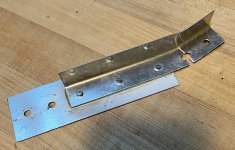
Here's an informal test sample showing G/flex bonded and riveted aluminum pulled to failure. The goal was mostly curiosity. I don't remember the strength but it was well beyond the rivet strength alone. I used G/flex and rivets to build my RV-3B fuselage. Prep for this and the fuselage was lacquer thinner, maroon Scotchbrite, lacquer thinner till the rag came clean, dry, glue and cleco, and rivet after curing.

Glue.jpeg

Gluing and riveting takes MUCH more time and attention than just riveting. Don't get too enthusiastic. Plus repair would be difficult at best.

My alternative glue was 2216, which was significantly more expensive. I had to get some 2216 eventually anyway, because it bonds to acrylic and I used it to glue my canopy to its fiberglass frame/fairing. The prep to acrylic is very easy, check the 2216 data sheet.

Dave
 
Here's an informal test sample showing G/flex bonded and riveted aluminum pulled to failure. The goal was mostly curiosity. I don't remember the strength but it was well beyond the rivet strength alone. I used G/flex and rivets to build my RV-3B fuselage. Prep for this and the fuselage was lacquer thinner, maroon Scotchbrite, lacquer thinner till the rag came clean, dry, glue and cleco, and rivet after curing.

View attachment 92562

Gluing and riveting takes MUCH more time and attention than just riveting. Don't get too enthusiastic. Plus repair would be difficult at best.

My alternative glue was 2216, which was significantly more expensive. I had to get some 2216 eventually anyway, because it bonds to acrylic and I used it to glue my canopy to its fiberglass frame/fairing. The prep to acrylic is very easy, check the 2216 data sheet.

Dave
Why were you riveting after curing , just curious ?
 
I used an "exoskeleton" to hold the skin smooth while it cured. Otherwise the clecos would locally squeeze the glue at the rivet holes, as would rivets. Once the glue cured, I could remove the exoskeleton and the skin was smooth and stood up to riveting. It gave me a smoother surface and was considerably less messy than trying to drive a -3 rivet that was gooped up with epoxy.

I'm omitting some steps here. The process instructions are several pages long and there are numerous subtleties which turn out to be rather important. Like I said, this takes a LOT of time to do. I don't recommend it if you want a flying airplane relatively expeditiously.

Dave
 
2216 is widely used in the Big Jet industry, and really shines when bonding dissimilar products, composite-to-aluminum/steel in particular. I have worked with 2216 for 30 years, and even bonded the glass flares to the steel body of my DeTomaso Pantera GT-5 in the mid 80's...it never showed any signs of letting go. It doesn't have peel strength because it can handle the different coefficient of expansion between the bonded materials without separation. I prefer to use Proseal for fay/bond media for most of my RV related stuff. After all, that's the go to for all the lap joints and structural build on the big jets, and I'm familiar with the reasons and results.
 
2216 is widely used in the Big Jet industry, and really shines when bonding dissimilar products, composite-to-aluminum/steel in particular. I have worked with 2216 for 30 years, and even bonded the glass flares to the steel body of my DeTomaso Pantera GT-5 in the mid 80's...it never showed any signs of letting go. It doesn't have peel strength because it can handle the different coefficient of expansion between the bonded materials without separation. I prefer to use Proseal for fay/bond media for most of my RV related stuff. After all, that's the go to for all the lap joints and structural build on the big jets, and I'm familiar with the reasons and results.
DeTomaso Pantera GT-5. Seriously. No one caught that. OMG! What a car!
 
DeTomaso Pantera GT-5. Seriously. No one caught that. OMG! What a car!
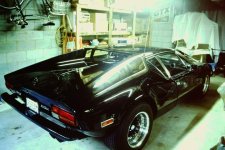
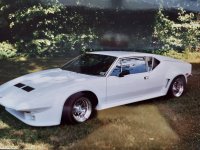
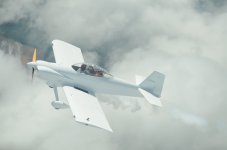
Good catch Larry..Before I built my RV4, I was doing lots of car stuff, and picked up my "dream car"..a 73 Pantera for 15K. in the late 80's, they could be found reasonable, and like Harleys, everyone did their own thing with them. I transformed mine from stock, to a GT5 minus the wing. I did all the work myself including paint. After finishing the Pantera, I started my RV-4, which as a blue collar airplane mechanic, was going to exceed toy funding. Reluctantly, I sold the Pantera for twice what I had into it. Now days, a GT5 goes six figures. BUT, I have a fantastic RV4 I've been flying for 16 years now! Here is a before and after of the Pantera. All the Fiberglass flares, skirts and front air dam are bonded to the steel with 2216. The factory Panteras used a much sub par adhesive, but they too were all bonded on to a stock body. In honor of the Pantera GT5, my RV4 (Casper) is also all white..and the cheek extensions are bonded with 2216.
 

Attachments

  • Pantera.jpg
    Pantera.jpg
    45.8 KB · Views: 19
  • Pantera GT5.jpg
    Pantera GT5.jpg
    1.5 MB · Views: 17
  • Casper in clouds.jpg
    Casper in clouds.jpg
    432 KB · Views: 18
Rotorway was using 2216 to bond the skins to the spar on their rotor blades if I recall correctly .
 
Interesting... the cheek extensions on my RV-3B are bonded, too, but with G/flex. I did use keeper rivets in the corners, though.

Dave
 
Back
Top