Van's Air Force

The definitive Van's Aircraft support community! Buying, building or flying an RV? Join our exclusive family of mentors and enthusiasts!

Fire (Brake during taxi)

RNB

Well Known Member
Sponsor
Winds were approaching 20, I was likely taxing with too much brakes. Wind was behind us. Turning onto 8000 foot runway we smelled rubber, lost brakes. I recognized this and we did not depart…called tower. Sat in plane but saw smoke, got out quick. People and stuff is all right. This might impact plans to fly to OSH and camp with the plane.

I question continuing to fly and build. But no decisions.

I don’t know full extent of damage and am not well insured. Another 30 seconds under control and we might have ended up bbq burnt ends.

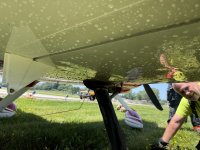
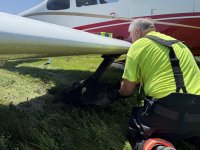
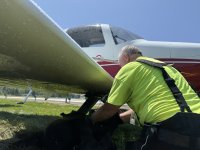
Rv10 photos. Wheel pant ripped off. Will hope local place can repair. Any general thoughts?

Long rental car ride home awaits.
 

Attachments

  • IMG_7886.jpeg
    IMG_7886.jpeg
    3.8 MB · Views: 608
  • IMG_7887.jpeg
    IMG_7887.jpeg
    2.7 MB · Views: 594
  • IMG_7888.jpeg
    IMG_7888.jpeg
    2.7 MB · Views: 608
Winds were approaching 20, I was likely taxing with too much brakes. Wind was behind us. Turning onto 8000 foot runway we smelled rubber, lost brakes. I recognized this and we did not depart…called tower. Sat in plane but saw smoke, got out quick. People and stuff is all right. This might impact plans to fly to OSH and camp with the plane.

I question continuing to fly and build. But no decisions.

I don’t know full extent of damage and am not well insured. Another 30 seconds under control and we might have ended up bbq burnt ends.

Rv10 photos. Wheel pant ripped off. Will hope local place can repair. Any general thoughts?

Long rental car ride home awaits.
Scary! Glad you are ok.
 
Yes, thank you for the update. I had brake fade about ten years back during a long Xwind taxi - quite an eye opener and changed how I taxi for sure. Made keeping the tailwheel center key properly maintained much more important to me.
v/r,dr
 
In general, the fly-home fix is a new caliper o-ring, a new tire, possibly a new tube, and possibly a section of tubing or hose. Repair person will need to refill and bleed the right brake.

Hey, don't feel bad. You're not the first and you won't be the last.
 
In general, the fly-home fix is a new caliper o-ring, a new tire, possibly a new tube, and possibly a section of tubing or hose. Repair person will need to refill and bleed the right brake.

Hey, don't feel bad. You're not the first and you won't be the last.

What type of brake fluid were you using? The Royco stuff has a much higher ignition temperature than the commonly used 5606 fluid.
 
Wow, sorry to read this.

I'm guessing you have 5606 hydraulic fluid in your brakes. It's flash point is 194 degrees F.
Look up Royco 782. It's flash point is 450 degrees F. Royco 782 is backwards compatible with 5606. I've been running it for years now without issues.
 
I recall my instructor telling me, handle the airplane so as to never have to use the brakes. And, return the airplane to where you found it with no additional wear and tear added. Obviously impossible, but that's the goal of how gently an airplane should be handled.
 
Just so you know you’re not alone: A commercial jet at Denver had a brake fire the other day. Seems they were over weight for takeoff, so the captain thought it was a good idea to burn off 1,000 lbs of fuel by taxiing around at modest power while controlling the speed with brakes. Even without wheel fairings, things got too hot.
 
I will build and fly on, thanks for concern and sharing. I thought things could have been well ruined but it got towed in its own tire. Fuel tank ok. Needs brake rebuild and leg exam

I don’t know the type of brake fluid other than reddish/pink…seems like it could have been both.

Faa expected to be notified. Perhaps the non fire main wheel hit a light.
 
Last edited:
Just so you know you’re not alone: A commercial jet at Denver had a brake fire the other day. Seems they were over weight for takeoff, so the captain thought it was a good idea to burn off 1,000 lbs of fuel by taxiing around at modest power while controlling the speed with brakes. Even without wheel fairings, things got too hot.
I seriously doubt the captain was doing that on purpose. SOP is to sit it one place with the parking brake set at a thrust setting slightly above idle ensuring no one is behind.. Running the APU helps too. Brake temps are indicated and they are on the forefront of most airline pilots' minds. We're so mindful of them that we avoid heating them up too much during landing and taxi back so the next crew doesn't have to wait for the brakes to cool.

The captain above may have had to reposition so as to not block traffic. Ground probably found them a quiet spot to sit until the fire. Brake fires can happen even when you're doing everything right. I've had dragging brakes and I've had brakes that aren't working causing an increased load on the good brakes.
 
Nope, it was on purpose. He’s lucky he still has a job. You can read about it here:
Yep, that was a 737 at my shop; when I read the report on that incident I wanted to punch that "captain" in the throat. Such moronic stupidity in what he did... deliberate high power taxi while riding the brakes with no brake temp indicators, the fleet doesn't have them. Then on takeoff, a reject with four blown tires and the wheels ground down to the hubs. Utter stupidity from that crew; where do we find such "pilots"??
 
Brake temps are indicated and they are on the forefront of most airline pilots' minds. We're so mindful of them that we avoid heating them up too much during landing and taxi back so the next crew doesn't have to wait for the brakes to cool.
Not on the guppy they're not. No BTMS. All the more reason to be extra, extra careful with them.
 
I seriously doubt the captain was doing that on purpose. SOP is to sit it one place with the parking brake set at a thrust setting slightly above idle ensuring no one is behind.. Running the APU helps too. Brake temps are indicated and they are on the forefront of most airline pilots' minds. We're so mindful of them that we avoid heating them up too much during landing and taxi back so the next crew doesn't have to wait for the brakes to cool.

The captain above may have had to reposition so as to not block traffic. Ground probably found them a quiet spot to sit until the fire. Brake fires can happen even when you're doing everything right. I've had dragging brakes and I've had brakes that aren't working causing an increased load on the good brakes.
Nope, the 737 does NOT have brake temperature displayed.

Also, at idle, the -900 burns about 700 lb/hr for each engine at idle. They would have had to sit for almost 45 minutes at idle to burn that 1000 lbs. Even at a higher power setting it likely would have been 20 minutes or so.
 
Yep, that was a 737 at my shop; when I read the report on that incident I wanted to punch that "captain" in the throat. Such moronic stupidity in what he did... deliberate high power taxi while riding the brakes with no brake temp indicators, the fleet doesn't have them. Then on takeoff, a reject with four blown tires and the wheels ground down to the hubs. Utter stupidity from that crew; where do we find such "pilots"??
bottom 10%
 
Nope, it was on purpose. He’s lucky he still has a job. You can read about it here:
Wow! I stand corrected. That's unbelievable. As a First Officer myself I would have seriously discouraged the Captain from doing that. If he had done it anyway, I would have refused the takeoff. If he took the runway, I would have shut down the engines right there and then. Case closed. I know not all FO's are as assertive.
 
Dragging the brakes is never a good idea, will always end up badly.
+1

I always apply brakes in increments, never drag them. You get more zig zagging that way, but it has to be done. We get spoiled in our cars. I see idiots holding their brakes down a 5000' mountain; can see the rotors glowing. They are engineered to handle that abuse without igniting. What we have in our planes is SOOO far from that.
 
Nope, the 737 does NOT have brake temperature displayed.

Also, at idle, the -900 burns about 700 lb/hr for each engine at idle. They would have had to sit for almost 45 minutes at idle to burn that 1000 lbs. Even at a higher power setting it likely would have been 20 minutes or so.
I can tell you that at my airline, most pilots would have been happy to sit there for 45 minutes and we would have had full support from the company. Not saying we would have sat there doing nothing. We would have tried to figure out a way to make it work if possible, smartly. Maybe tried thinking of other options. I have been there sitting, hoping for 1 knot of wind.
 
Unfortunately, the Nose wheel aircraft don't have directional control except via brakes, and even us TW airplanes can get the brakes hot on long taxi with downhill. I favor short pulses of brakes and let off for as long as I can until speed increases and avoid a continuous drag. I'm sure in the nose gear scenario there would be a lot of back and forth, but it may help. My brakes overheated at OSH a few years ago during the long taxi in, and it made my nylon lines leak badly. Flew home with only one functional brake, which was no bueno.
 
Unfortunately, the Nose wheel aircraft don't have directional control except via brakes, and even us TW airplanes can get the brakes hot on long taxi with downhill. I favor short pulses of brakes and let off for as long as I can until speed increases and avoid a continuous drag. I'm sure in the nose gear scenario there would be a lot of back and forth, but it may help. My brakes overheated at OSH a few years ago during the long taxi in, and it made my nylon lines leak badly. Flew home with only one functional brake, which was no bueno.
I’ve been wracking my brains on how to have better handled this.
1. I had not thought about overheating and made no adjustments for the situation.
2. I can try dial way back on power and just see if wind would push the plane.
3. Thank you for the brake pulse only ideas.
4. What else?
I am also building. Are any of the rv10 brake systems better in these situations?
 
Yes, thank you for the update. I had brake fade about ten years back during a long Xwind taxi - quite an eye opener and changed how I taxi for sure. Made keeping the tailwheel center key properly maintained much more important to me.
v/r,dr
How did you change your taxi?
 
I’ve been wracking my brains on how to have better handled this.
1. I had not thought about overheating and made no adjustments for the situation.
2. I can try dial way back on power and just see if wind would push the plane.
3. Thank you for the brake pulse only ideas.
4. What else?
I am also building. Are any of the rv10 brake systems better in these situations?

Basic rules of brake usage while taxiing (short of a need to make an emergency manuever):
  • No brakes to slow down unless power is already at idle
  • No differential brakes to turn unless rudder is already at full deflection
 
I can tell you that at my airline, most pilots would have been happy to sit there for 45 minutes and we would have had full support from the company. Not saying we would have sat there doing nothing. We would have tried to figure out a way to make it work if possible, smartly. Maybe tried thinking of other options. I have been there sitting, hoping for 1 knot of wind.
Yep…same here. My post was just to reference the approximate fuel burn and time involved…
 
I’ve been wracking my brains on how to have better handled this.
1. I had not thought about overheating and made no adjustments for the situation.
2. I can try dial way back on power and just see if wind would push the plane.
3. Thank you for the brake pulse only ideas.
4. What else?
I am also building. Are any of the rv10 brake systems better in these situations?
After my nylon line failure, I switched to all bradded SS lines. As others mentioned, the high temp fluids are more resistant to fire, but the seals can still fail and you have a hot mess. The RV wheelpants, typically fit by the builder are fairly tight and allow little cooling. My pants on my -4 are very tight, and low, so I have terrible cooling. If I ever re-do mine, the cut-out will be bigger, and the pant will sit higher. I'm a point in life where function vs speed leans toward function. Be cognizant of the power setting, as RV's need little thrust to move. I have my idle as low as it will stay running and I aggressively lean on ground taxi to prevent fowling. The brake "pulse" helps keep the pads off the rotor, hence less heat build-up and transfer into the puck/caliper...practice it.
 
I seriously doubt the captain was doing that on purpose. SOP is to sit it one place with the parking brake set at a thrust setting slightly above idle ensuring no one is behind.. Running the APU helps too. Brake temps are indicated and they are on the forefront of most airline pilots' minds. We're so mindful of them that we avoid heating them up too much during landing and taxi back so the next crew doesn't have to wait for the brakes to cool.

The captain above may have had to reposition so as to not block traffic. Ground probably found them a quiet spot to sit until the fire. Brake fires can happen even when you're doing everything right. I've had dragging brakes and I've had brakes that aren't working causing an increased load on the good brakes.
Actually it's more common than you think. Here's a Guppy that requested T/O from 16R in DEN in order to burn fuel off, riding the brakes the whole way. Substantial damage to the aircraft. You have to remember that these new Captains have not had the benefit of sitting in the right seat for more than 6 months (you read that right) and learning the stuff that's not in the FM.

Service letter from Vans recommends changing O-rings and brake fluid to the higher flashpoint Royco fluid. Glad to see OP damage was minimal. Like he said, it could have been A LOT worse.
 
I’ve been wracking my brains on how to have better handled this.
1. I had not thought about overheating and made no adjustments for the situation.
2. I can try dial way back on power and just see if wind would push the plane.
3. Thank you for the brake pulse only ideas.
4. What else?
I am also building. Are any of the rv10 brake systems better in these situations?
I have found that the evolution of headset design has people (including me if I don’t pay attention) idling at far higher rpm’s than they need becasue the simply don’t hear the engine anymore. So keep that in mind!

Also, make sure that your engine is truly tuned well for idle so that you can pull the throttle to the stop and have no fear of the engine quitting. Again - I find lots of airplanes that aren’t; tuned well down low, and the owner says not to pull it against the stop or it might quit (on the ground - its generally not a problem in flight becasue of windmilling).

Lastly - and this is really just for taildraggers with rod gear - lots of folks tame gear shimmy by dragging their brakes. If you have shimmy problems, address them with dampers or stiffeners so that you don’t have to do this!

So… tune your idle and pay attention to how much power you’re using when taxiing! And fix that shimmy….
 
Plenty of sources for viton o-rings in any size. However, do pay attention to compound number. Some seal better at low temperatures than others.

Brakes are energy storage devices, converting kinetic energy to heat, which is then dissipated by radiation and convection over time. The disk is the storage mass. A thicker disk will store the same energy at a lower temperature, so the caliper doesn't get heated so much. It's an option for the RV's with Cleveland 199-102 wheel and brake kits. Either purchase a Cleveland 199-93 kit (thicker disks, caliper shims, longer bolts, and new linings), or do it DIY with a set of Rapco RA164-09900 disks. With the Rapco disks you make your own shims and supply your own caliper bolts.

Kinetic energy rating goes from 117,500 to 155,000. I would absolutely install the thicker disks on an A-model, and any taildragger with 380-150-5 tires due to the larger rolling radius.

I don't know what is available for Grove and Matco, but the principle is the same.
 
I have found that the evolution of headset design has people (including me if I don’t pay attention) idling at far higher rpm’s than they need becasue the simply don’t hear the engine anymore. So keep that in mind!
This is a very good point. For this reason, I don't turn on noise cancellation until I'm at least 1000' AGL. I think hearing the engine is just as important as looking at the engine gauges.
 
I guess it's time to check out the latest headsets at Oshkosh..... I have no problem hearing my motor with my NC Lightspeed headphones.
During ground maneuvers, I control speed with throttle first and then brakes..... based on what I see, not what I hear.
 
I guess it's time to check out the latest headsets at Oshkosh..... I have no problem hearing my motor…
Me neither. But I do leave the headset off my head during engine start. If anyone responds to my call of ‘clear’ I’d like to hear it.
 
Anyone thought about building in a small naca vent in the wheel pants. Possibly even install a cooling fan on the rotors.

Just a thought.
 
Since experimental don’t have ADs like the certified world, all we Have are Service bulletins, service letters, and service instructions. Vans has published a Service Letter (SL-00047) addressing this. I really wish more owners and mechanics would just look these up and comply with them..


I would also add that it’s a great saftey engagement to replace the brake lines with steel braided Teflon lined versions.. TS probably makes a set just for your plane.
Learning to taxi and minimize brake usage (abuse) is also someone I’ve seen lacking out there. Like someone said above offering their technique, but sometimes the crosswinds just don’t allow it. On the 500x5 RVs, there’s a thicker disk mod that you can do.. I wonder if there’s a version for the larger 600x6 wheels?
Thread 'Cleveland upgrade kit 199-93'
https://vansairforce.net/threads/cleveland-upgrade-kit-199-93.153627/
 
Last edited:
Kinetic energy rating goes from 117,500 to 155,000. I would absolutely install the thicker disks on an A-model, and any taildragger with 380-150-5 tires due to the larger rolling radius.

I don't know what is available for Grove and Matco, but the principle is the same.

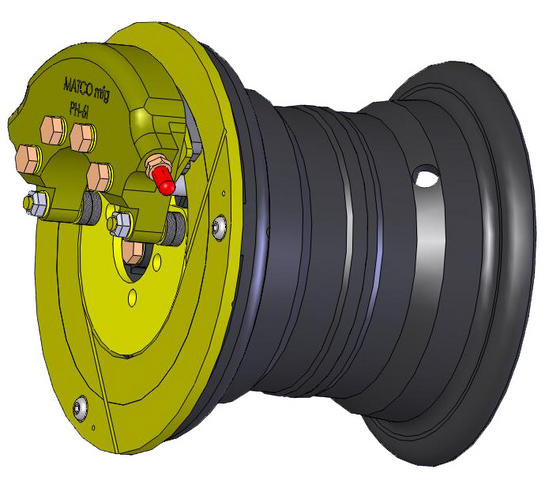
Matco brakes are a popular RV10 substitution for the vans stock - which I think are grove these days but don’t know for sure. The triple piston Matco WI600XLT is rated at 225k ft-lbs.

 
Me neither. But I do leave the headset off my head during engine start. If anyone responds to my call of ‘clear’ I’d like to hear it.
Do you mean that you actually wait for a response? Most times I hear "CLEAR", it is followed immediately by the starter engaging.
Somewhat of a sore spot with me!
 
Last edited:
Since experimental don’t have ADs like the certified world, all we Have are Service bulletins, service letters, and service instructions. Vans has published a Service Letter (SL-00047) addressing this. I really wish more owners and mechanics would just look these up and comply with them..


I would also add that it’s a great saftey engagement to replace the brake lines with steel braided Teflon lined versions.. TS probably makes a set just for your plane.
Learning to taxi and minimize brake usage (abuse) is also someone I’ve seen lacking out there. Like someone said above offering their technique, but sometimes the crosswinds just don’t allow it. On the 500x5 RVs, there’s a thicker disk mod that you can do.. I wonder if there’s a version for the larger 600x6 wheels?
Thread 'Cleveland upgrade kit 199-93'
https://vansairforce.net/threads/cleveland-upgrade-kit-199-93.153627/
Not sure I understand the recommendation for hose here. Both of my planes have aluminum lines out near the caliper, per plans. I would expect these lines to have a much higher melt temp than PTFE lines. Maybe the stainless braiding will absorb enough heat to actually make that not correct. Please elaborate.
 
Larry, I've not actually measured the temperature of a steel braided hose connected to something hot, but it is common to see them connected to smoke injectors.
 
Not sure I understand the recommendation for hose here. Both of my planes have aluminum lines out near the caliper, per plans. I would expect these lines to have a much higher melt temp than PTFE lines. Maybe the stainless braiding will absorb enough heat to actually make that not correct. Please elaborate.
I think the recommendation was for these as a replacement for the original plastic lines.
 
Larry, I've not actually measured the temperature of a steel braided hose connected to something hot, but it is common to see them connected to smoke injectors.
I suppose there is a lot of mass there so it would make sense the line could absorb a lot of heat before the PTFE became vulnerable. I was just surprised to see a recommendation to replace metal with plastic to mitigate excessive heat from brakes, but that may not have been the intent of the message, as spruce suggested.
 
Not sure I understand the recommendation for hose here. Both of my planes have aluminum lines out near the caliper, per plans. I would expect these lines to have a much higher melt temp than PTFE lines. Maybe the stainless braiding will absorb enough heat to actually make that not correct. Please elaborate.
I’ve seen the ones with nylon tubing.. that’s what I was referring to.. the caliper gets hot and the tubing either melts or extrudes out of its compression fitting.. even if a plane has the aluminum tubing, I still prefer the Teflon lined steel braided.. it’s more flexible, allows the caliper to float, allows the mechanic to remove and replace the pads without bending the aluminum line..
 
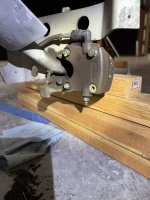
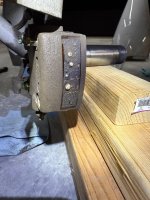
I recently had a brake incident that almost reached the fire stage as well in my RV-10. It was due to a newish pilot taxiing so heavier on the brake steering followed by heavy braking after an aborted takeoff. Shutting down it smelled like a semi truck descending a mountain path. Hoped out and the right brake was smoldering smoke out of the wheel pant. No flames and no damage but the brake master cylinder is now a nice brown patina and the label is all but melted off. The nyloc nuts took one for the team and I probably should have used all metal ones in the beginning.

During the build I replaced the o rings with vitton's, used the royco 782 fluid, and braided stainless brake lines. There is no doubt in my mind that had I not done the o ring and 782 swap the situation probably would have ended much differently. The o ring on the brake cylinder did not appear damaged but I replaced it anyway. The brake pads were just about at their limits and were swapped out. Fresh brake bleed and put it all back together. No issues now after several flights.

The Cleveland's are adequate until they are not. I am seriously considering the Matco upgrade. It seems with the upgrade the system may be able to withstand more heat before this sort of thing could happen. The question remains though would this same situation have caused an issue w/the matco's?
 

Attachments

  • IMG_6594.jpg
    IMG_6594.jpg
    275.2 KB · Views: 77
  • IMG_6595.jpg
    IMG_6595.jpg
    275.7 KB · Views: 76
I’ve seen the ones with nylon tubing.. that’s what I was referring to.. the caliper gets hot and the tubing either melts or extrudes out of its compression fitting.. even if a plane has the aluminum tubing, I still prefer the Teflon lined steel braided.. it’s more flexible, allows the caliper to float, allows the mechanic to remove and replace the pads without bending the aluminum line..
i can't understand how anyone would think a nylon tube is acceptable connected to a brake calipar. over time, i guess we see it all in EAB.
 
i can't understand how anyone would think a nylon tube is acceptable connected to a brake calipar. over time, i guess we see it all in EAB.
I think the nylon lines at the caliper were used many, many years ago, maybe in the RV-4 era. My 1999 RV-6 kit used looped aluminum lines at the calipers and I replaced them with stainless braided teflon lines from the firewall fittings a few years later which make it easier to move the caliper for brake servicing. My plane does have nylon lines on the low-pressure side of the system connected to the reservoir.
 
My '55 C180 has aluminum tube to the brake calipers. It allows sufficient flex so that the brakes move freely on their posts. The tube is inside a housing until shortly before leaving for the brake, certainly less than a foot of free tube, probably closer to 6". The tube is 1/4". I plan to use 3/16" for a similar tube on my RV-3B project.

Dave
 
I think the nylon lines at the caliper were used many, many years ago, maybe in the RV-4 era. My 1999 RV-6 kit used looped aluminum lines at the calipers and I replaced them with stainless braided teflon lines from the firewall fittings a few years later which make it easier to move the caliper for brake servicing. My plane does have nylon lines on the low-pressure side of the system connected to the reservoir.
yea, the only concern is nylon near the calipar, which can get very hot and melt the nylon, leading to a loss of braking. i have the nylon on the low pressure side and feel that is plenty safe.
 
Back
Top