


Van's Air Force

The definitive Van's Aircraft support community! Buying, building or flying an RV? Join our exclusive family of mentors and enthusiasts!

RV-10 Engine Mount / Nose gear leg play

AV8ER

Well Known Member
Patron
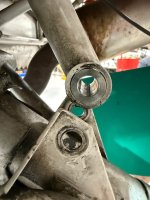
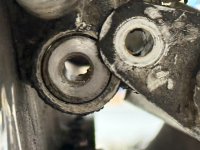
During the condition inspection I hoisted the nose using an engine hoist to work on the nose wheel and gave the original 2012 build nose gear leg a wiggle test. The nose gear leg moved left and right about an inch and wiggled up and down a few inches even though elastomeric pads were making contact with engine mount (tension was set properly on the gear link bolt). After closer inspection I found that the bushings had worn their races to the point light could be seen around the bushings. The bolt holes in the steel ears of the nose gear leg had also elongated allowing slop with the bolts as well. A quick call to Vans and I found out they had an upgrade kit that includes all the powder coated weldments, bolts, nuts, and cotter pins to accommodate the swap to the upgraded engine mount/gear link/nose gear leg. What was not included in the kit was the (4) elastomeric pads (EA J-11968-14) and the bushing located in the bottom of the gear link (VA-143). Aside from those items the kit was complete to upgrade a flying airplane. For the swap you could reuse your old elastomeric pads and VA-143 lower gear link bushing although I opted for new parts.

Of note, the new mount uses slightly different tubing geometry forcing my oil cooler to move an inch to the port side from its original location. 7ZK has a one off oil cooler mount so YMMV with an original Vans oil cooler mount. Additionally one of the firewall bolts required a slight reaming to get the bolt in.
 

Attachments

  • IMG_5964.JPG
    IMG_5964.JPG
    1.2 MB · Views: 74
  • IMG_5970.JPG
    IMG_5970.JPG
    1.2 MB · Views: 75
This problem is not covered by SB 19-09-09, nor has Van’s issued a SB or notice on it. Van’s did modify the engine mount and nose gear in 2019 or so, and created the “upgrade” kit that Tim mentions: https://store.vansaircraft.com/10-mount-conversion-kit-10-mount-conversion-kit.html
Price: $4634

I suggest any flying RV-10 built using the original engine mount and nose gear to check for this problem at each Condition Inspection.

Carl
 
Just a data point, 1,744hrs *almost* no play vertical or horizontal. Aircraft operated almost entirely off paved runways (taxiing around KOSH doesn’t really count).
Finishing up reassembling the plane today after CI last week and wheel pants were still off so I checked as in the video.
 
During the condition inspection I hoisted the nose using an engine hoist to work on the nose wheel and gave the original 2012 build nose gear leg a wiggle test. The nose gear leg moved left and right about an inch and wiggled up and down a few inches even though elastomeric pads were making contact with engine mount (tension was set properly on the gear link bolt). After closer inspection I found that the bushings had worn their races to the point light could be seen around the bushings. The bolt holes in the steel ears of the nose gear leg had also elongated allowing slop with the bolts as well. A quick call to Vans and I found out they had an upgrade kit that includes all the powder coated weldments, bolts, nuts, and cotter pins to accommodate the swap to the upgraded engine mount/gear link/nose gear leg. What was not included in the kit was the (4) elastomeric pads (EA J-11968-14) and the bushing located in the bottom of the gear link (VA-143). Aside from those items the kit was complete to upgrade a flying airplane. For the swap you could reuse your old elastomeric pads and VA-143 lower gear link bushing although I opted for new parts.

Of note, the new mount uses slightly different tubing geometry forcing my oil cooler to move an inch to the port side from its original location. 7ZK has a one off oil cooler mount so YMMV with an original Vans oil cooler mount. Additionally one of the firewall bolts required a slight reaming to get the bolt in.

I see a lot of wear marks inside the bushing as well as the inside of the ears, indicating that the bushing was rotating against the bolt. The design has the bushing held captive between the ears and the weldment rotating around the bushing. Unfortunately, the kit supplied castle nuts can be difficult for some builders to get enough torque on them. They tend to undershot instead of overshoot on the torque. Somemay also get confused and see a castle nut and think the bushing is supposed to be loose and rotate. It looks from your pics that those bolts came loose and allowed the bushing to rotate around the bolt. That would cause the ID of the bushings to wear out as well as allow the holes in the ears to wallow. Also possible that the bushings you got were too short and the torque of the bolt was pressing on the weldment tube instead of the bushings. The video shows you wobbling the gear around and we can see the bolt moving in the ear. this wouldn’t be possible if that bolt was tight.

This should be a cautionary tale for 10 owners to insure that those bolts are tight and that joint is moving as it was designed to do.
 
Last edited:
I see a lot of wear marks inside the bushing as well as the inside of the ears, indicating that the bushing was rotating against the bolt. The design has the bushing held captive between the ears and the weldment rotating around the bushing. Unfortunately, the kit supplied castle nuts can be difficult for some builders to get enough torque on them. They tend to undershot instead of overshoot on the torque. Somemay also get confused and see a castle nut and think the bushing is supposed to be loose and rotate. It looks from your pics that those bolts came loose and allowed the bushing to rotate around the bolt. That would cause the ID of the bushings to wear out as well as allow the holes in the ears to wallow. Also possible that the bushings you got were too short and the torque of the bolt was pressing on the weldment tube instead of the bushings. The video shows you wobbling the gear around and we can see the bolt moving in the ear. this wouldn’t be possible if that bolt was tight.

This should be a cautionary tale for 10 owners to insure that those bolts are tight and that joint is moving as it was designed to do.
All valid insights.

How do you account for the wear between the bushings and the engine mount weldment that receives them on the firewall?
 
All valid insights.

How do you account for the wear between the bushings and the engine mount weldment that receives them on the firewall?
There will always be wear there if not greased, however, if the bushing is not held captive, you will see more wear in concentrated area. I don’t see significant wear between bushing and tube in your pics. Some but not serious. I think all of the movement is coming from the wallowed out holes in the ears. Also, i found those bushings too loose straight from vans. I made closer fitting bushings. Also the tubes where the bushings go tend to be out of round due to welding distortion.
 
Back
Top
