Van's Air Force

The definitive Van's Aircraft support community! Buying, building or flying an RV? Join our exclusive family of mentors and enthusiasts!

Mushroom head rivet problems

RNB

Well Known Member
Sponsor
My vertical stabilizer has been complete for weeks. Today I took it to an experienced builder to ask his opinion. For the skin rivets completed with the mushroom head and rivet gun I have a lot of marks, some significant. Bondo will help, I will always know, minimal experienced eyes will know also. There were several comments made:
1. Change to mushroom head with protective edge.
2. Watch air pressure more closely.
3. Rivets too deep as if the countersink or dimpled parts beneath were too deep.
4. Consider a fuel tank countersink.

So, I helped him a few days ago and already have a rubber rimmed mushroom head. I'm willing to try others if you have a favorite.
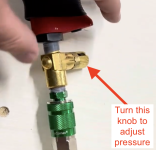
I'd like a shop friendly inline air adjuster and am looking for ideas or links to such. My air source is a long way away for now.
I will practice similar stuff more before doing more skins, perhaps aim for having the frame pieces not so deep. Note, edge rivets look pretty good, these were squeezed pneumatically.

I think I am airworthy, just ugly. My plan is to build on, consider doing this part over if the rest of the plane looks better.

Any pointers additionally? I am going to go shoot a video and upload to show.
 
Last edited:
A photo would help us.

Others may disagree.
-I prefer a swivel set. It takes some adjustment to get the rubber ring perfect, but it's very forgiving of off perpendicular.
-I prefer a RTI mini regulator at the gun and full pressure to the regulator. It never changes. I have a Sioux 3X and start at 22 psi for #3 and 30 psi for #4 rivets. Minor adjustments for length.
-I use tungsten bucking bars
-I prefer gun and bar but do use a pneumatic if I have a row of duplicate rivets.
-I use a strip of heavy packing tape on the factory side to protect the skin.
-I practice lefty and righty. Both are natural now.
-Index finger points at the work. Second finger is the trigger finger.
 
Last edited:
Learning to rivet can be tough, stick at it. I would build a new VS. I wouldn't carry on working on the empennage until you have your riveting dialled in. We've all been there! Practice. Find air pressures that work for you. For me, with a 3x gun, this is 40 psi for shorter 3/32 rivets. Your pressure will probably be slightly different, but go too high and you'll get damage like you are seeing. Also be sure your dimples are perfect first - And I don't recommend using tanks dies. Good quality spring back dimple dies work well. Hang in there, keep practicing.
 
I use the needle restrictor from my tool kit, air set at 90, and twist so the gun purrs like a kitten, not roaring like a lion. That’s a favorite quote from my eaa sheet metal class years ago. The point is control in my opinion.
 
A photo would help us.

Others may disagree.
-I prefer a swivel set. It takes some adjustment to get the rubber ring perfect, but it's very forgiving of off perpendicular.
-I prefer a RTI mini regulator at the gun and full pressure to the regulator. It never changes. I use 22 psi for #3 and 30 psi for #4 rivets. Minor adjustments for length.
-I use tungsten bucking bars
-I prefer gun and bar but do use a pneumatic if I have a row of duplicate rivets.
-I use a strip of heavy packing tape on the factory side to protect the skin.
-I practice lefty and righty. Both are natural now.
-Index finger points at the work. Second finger is the trigger finger.
There is now a video, is there a specific photo angle or view that will help answer?
 
There is now a video, is there a specific photo angle or view that will help answer?
Next questions
-What mushroom set was used?
-What pressure?

My guess is a small set and too much pressure, but that's a guess.
Either way, practice first.
 
Practice, practice, practice! I must have driven 500 rivets before I got started on my empennage. And because I’m a glutton for punishment, I drilled half of them out for practice.

Hold the gun straight. Use the minimum pressure to get the job done. I shoot for about a 3 s burst to get the job done. If it’s less than that, the pressure is too high.

I run maximum pressure to an inline restrictor at the gun. Make adjustments from there to get the desired results.


I don’t mean to sound harsh, but I don’t think you’re ready to continue with the rest of the tail. I would use that metal for practice.

I too like the swivel mushroom set with the rubber guard. I used it for most of the build. But you do need to be proficient using the smaller fixed set that you were using. The swivel set is larger and sometimes won’t fit well in some spots.
 
Last edited:
  • Like
Reactions: RNB
Lots of good advice above. I'll add to it.

As a new builder, I have some observations from my own experiences when I first started building. First, I could be mistaken but it appears you DO have an inline regulator for your rivet gun. Screen grab from your video:
Screenshot 2025-06-05 at 7.04.56 PM.png

I keep my air compressor at 90psi and use my inline regulator (same as yours above) to adjust pressure at the rivet gun. Before I start a riveting session, I put the rivet set on a piece of wood and pull the trigger. I have enough experience now that I can tell how hard the gun should hit the wood just by doing this. You need to adjust the pressure up for AD4 rivets. You also need to turn the pressure up a few extra clicks if you're using a longer and/or offset rivet set. After a session of AD4 rivets, I always turn the pressure down when I'm done just in case I forget to test the pressure on the block of wood next time I use the gun. You'll need some experience to know how hard it should hit the wood but just start out lightly and work your way up. You'll get the hang of it pretty fast.

Don't release pressure on the gun against the material until after you stop squeezing the trigger.

As for the rivet set itself, I started with a bare mushroom set and had one rivet with a slight smiley so I switched to the swiveling rivet set with the red rubber collar around it. That set left rings around all my rivets. It's like it picked up some grit or something. It basically scuffed a ring around the rivets where the red collar touched the skin. No big deal after paint but I didn't like it. I then switched to putting a piece of masking tape on the head of the classic mushroom set and that solved all my problems. No scuffed ring, no more smilies. That has been my go-to setup now through thousands of rivets (first 3 kits are 95% done). I replace the tape after maybe 20-30 rivets or so? Just a guess but I think the tape adds a little bit of friction to help the set stay centered over the rivet. Then again, it could all just be in my head. Either way, I will always use the masking tape on the rivet set because I get good results and don't want to change. I also bought a swiveling mushroom set without the red collar but never tried it. Too chicken to change at this point.

I wouldn't set any more rivets until you can do some practice riveting. Practice kit from Vans or scraps or whatever. If your dimples are set properly, a good rivet will have virtually no deformation of the skin.
 
Last edited:
Your tool looks very flat. My mushroom heads have a pronounced convex shape. This requires a bit of effort to ensure you are perpendicular, but no risk of the edges denting the skin. Take a look at yours and compare to some pics on the internet. I have built two planes and never used a set with rubber edges, so it is possible to develop the skill.
 
Swivel sets with rubber edges can help, but the real problem is not holding the gun fully perpendicular to the surface. Index finger points at the work. Second finger is the trigger finger. For riveting I set the tank outlet pressure @60psi.

I do what I call the superman squeeze: Apply full continuous pressure to both haves of the equation, prior to, and for the full duration or the riveting, plus an extra 2 seconds after the gun has stopped. As said above keep pushing the gun onto the rivet head to maintain contact until well after you have released the trigger. Otherwise the gun can give one more hit as you are pulling it away and that can land anywhere creating dents, smiling rivets or worse.

Lastly tungsten bucking bars are the bomb.

25+ years A&P
 
Let go of the trigger before releasing pressure on the rivet gun. The only way those could happen is the pressure on the gun being way to high and losing control of it. The VS rivets in the video were probably difficult to set because the underlying rib needed better fluting.

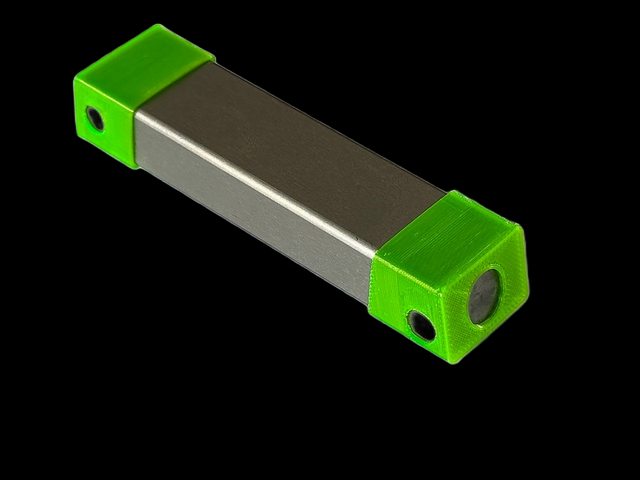
The other thing that could cause those kind of dents is the bar falling off the shop head. I created a cover for the ATS 6007 Tungsten Bucking Bar that most builders are using that will help prevent a lot of these problems. It helps locate the bar blindly, prevents the bar from coming off the rivet head, prevents marring if the corner of the bar does hit the workpiece.
94ZmlTml.png

 
Thank you everyone for the replies. I am going to focus on my technique and tools, not the machine countersinking or dimpling being too deep.

My reason for wanting a gauge at or near the tool is to have a more precise idea of tool pressure.
 
An old adage about docking a boat comes to mind: don't go any faster than you want to hit the dock. Could be applied to air pressure as well. Turn it way down and let the tungsten bar do the work. If it's not getting the job done, turn it up one click, rinse and repeat until you find your sweet spot. And yes, you'll want to replace that VS. I had a dented aileron on my -8 and I rebuilt it in one weekend at the end of the project. It's amazing what experience will do for you :)
 
Thank you everyone for the replies. I am going to focus on my technique and tools, not the machine countersinking or dimpling being too deep.

My reason for wanting a gauge at or near the tool is to have a more precise idea of tool pressure.
You have a restrictor, turn it all the way in first, and then work your way out. You will be able to tell a big difference, you might not have it in far enough to be doing anything. The purr vs roar you will get by playing with that, just on a flat board or your table and listen to the difference. I watched your video and looks like a gun control issue, but do see some slight under dimple (even in your edges, there is a bit of a wave in the metal), so be sure to watch some other videos on setting up the tools properly, DRDT and squeezers, as that will make that last bit of difference in my opinion.
 
I'll add one thing I didn't see in a brief scan of the replies.

Never remove pressure from the bucking bar for any reason while the gun is energized. The aluminum components are pretty thin/weak on their own. A single hit from the gun on unsupported aluminum can cause a substantial "divot". That appears to have been the case more than once from what I saw. Best of luck.
 
It sounds like you got plenty of good advise and a plan.

If you want to try a regulator...
I use two HF Whip Hoses. One has a RTI Mini Regulator for the rivet gun. The other has a HF mini regulator for the pneumatic and drill. It doesn't need to be as precise. The whip is long enough to reach the work and the regulator rests on the floor. I keep an old sock over it for protection.

The RTI is very accurate and locks. I also use one on my HF Black Widow paint gun. When I hook either one up, the pressure is exactly the same and never varies during the work. I have a Sioux 3X and dial it 23psi for #3 rivets and 30psi for #4 rivets. Minor adjustments for long rivets. Typically a rivet sets in a 2-3 second burst.

I teach new builders to use a word as a cadence. Maybe say "aluminum" out loud. Gun trigger released at the end. If it doesn't set fully, choose a longer word or dial up pressure a psi or two. Once you have a cadence, every rivet will set more consistently.
 
Last edited:
Lots of good advice.
I built my entire airplane with a mushroom set exactly the same as yours. The same set built some odd 14 airplanes or so. It’s not the set, but some like the guarded swivels and have good luck with them. It might help.
As others have noted, your symptoms point to the rivet gun wandering, not staying square, and hitting when it is away from the material.
Some of this may be caused by your set up. It is critical that your piece is firmly clamped to a surface so it can’t move, flex, or bounce. This is hugely important!
It is also important that you are in a good position to firmly hold the gun against the work while it is hitting. Brace yourself in an athletic position that will not allow the gun to move, wander, or leave the material. Lock yourself in.
Once you start having some success, you will naturally feel when your setup is good.
While I don’t believe there is an air worthiness issue, if you can slide a .001 feeler guage between the skin and rib all the way to the rivet shaft, it is unacceptable. Regardless, as much as it hurts, I would reskin the VS.
Education is expensive, whether is a college degree, or an airplane build.
Keep the faith. You will get it and good for you to stop and get some advice.
 
One more tip...

Whenever possible I rest the back of my left hand on the skin while holding the "barrel" of the rivet gun with my index finger and thumb. That steadies the gun so it can't drift off the rivet. My right hand pulls the trigger. It's very stable. Of course, this only works if you have a helper holding the bucking bar which is pretty rare for me.

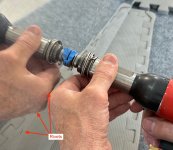
If you look closely at the photo below, you'll see some rivets with very little distortion to the skin. I'm a new builder and nothing I do will win any kind of award. Just trying to highlight that it is possible to set a "clean" rivet. Trust me, if I can do it, anybody can do it.

IMG_4717.jpg
 
Back
Top