Van's Air Force

The definitive Van's Aircraft support community! Buying, building or flying an RV? Join our exclusive family of mentors and enthusiasts!

Another Andair Fuel Selector Question

FlyHigh

Well Known Member
Friend
Hello everyone,
There are MANY Andair threads here and I have been reading for hours and can't find my answer. So, here it is.
Andair (asc) has a valve that has a "BOTH" position. Question: Is there room for AND is there any reason that I shouldn't use a "Both" on an RV-8 ?
 
There's a lot of information available if you search the Internet for something like "select both on a low wing aircraft".

The summary is that you cannot, by regulation, have a "both" setting for a low-wing aircraft unless you make significant changes to the design of the fuel system. As I understand it, there can be no risk of drawing air into the fuel pump from an empty tank (even if the other tank is not empty).
 
I have an RV3 that came with a selector that has BOTH. I have flown it that way until I uncovered a pickup during a landing. I don't use that setting anymore.
 
To glom onto your thread here, does anyone have input on retrofitting an andair valve to an 8A? I have the stock Vans valve and I don't like it.
 
THANKS for the replies..3 for 3 on NO.
NO it will be.
Another NO here. Also, the Andair valve I had for the 7 was supposed to be Left and Right and Off. I found that if I stopped in the middle of L & R it was was open to both although the faceplate was not marked for a Both setting. I emailed Andair a few times about the issue but never received a reply.
 
Ref. Post #2....Hence the reason that ASC/Andair description says that the FS20x4 was designed for high-wing aircraft.
Thanks to all...
 
To glom onto your thread here, does anyone have input on retrofitting an andair valve to an 8A? I have the stock Vans valve and I don't like it.
Well you can see how I did it starting at around Post #13 here:


I have an 8 and not an 8A bot I don't know if that matters in this case.
 
Hello everyone,
There are MANY Andair threads here and I have been reading for hours and can't find my answer. So, here it is.
Andair (asc) has a valve that has a "BOTH" position. Question: Is there room for AND is there any reason that I shouldn't use a "Both" on an RV-8 ?
Pour some water in two separate glasses.. then take two straws, one in each. Try to drink both glasses at the same time. As soon as one glass goes empty and sucks air, you won’t be able to get any water from the other side either. That’s why you don’t want BOTH on a low wing..
 
Pour some water in two separate glasses.. then take two straws, one in each. Try to drink both glasses at the same time. As soon as one glass goes empty and sucks air, you won’t be able to get any water from the other side either. That’s why you don’t want BOTH on a low wing..
Unless the low wings have the proper design (basically, sufficient dihedral given where the tanks are located). The Rockwell Commanders were low wings and had a “both” position on their fuel selectors if memory serves.
 
Unless the low wings have the proper design (basically, sufficient dihedral given where the tanks are located). The Rockwell Commanders were low wings and had a “both” position on their fuel selectors if memory serves.
How would dihedral make any difference? If you run a tank dry, it's dry, doesn't matter what dihedral the wing has.

Consider the experiment with the glasses and straws...the glass has a dihedral of effectively 90 degrees.
 
Unless the low wings have the proper design (basically, sufficient dihedral given where the tanks are located). The Rockwell Commanders were low wings and had a “both” position on their fuel selectors if memory serves.
I’ll take a look at my buddies Commander.. but if that’s the way the plane is set up, the fuel valve HAS to be lower than the fuel pickup.. so that there’s gravity heads pressure on the fuel valve.
 
How would dihedral make any difference? If you run a tank dry, it's dry, doesn't matter what dihedral the wing has.

Consider the experiment with the glasses and straws...the glass has a dihedral of effectively 90 degrees.
I think the tanks are way out in the wings and that’s above where the valve is, due to the dihedral. So a low wing can work like a high wing.
 
I think the tanks are way out in the wings and that’s above where the valve is, due to the dihedral. So a low wing can work like a high wing.
Indeed, that is correct. Interesting...learn something every day (I was thinking fuel tanks would always be inboard...that'll teach me!).

Found the Commander 112 maintenance manual and yep...tanks outboard, higher, and a 5-position valve.

But...to the OP...that is NOT the case for RVs... :)
 
THANKS to ALL For the enlightenment.
As long as this thread has been resurrected...I am getting ready to order an Andair fuel valve...Do I want the model with the straight down (90 deg.) fittings since the provided space is quite sparse ?
YES, I amgoing to order the Left, Right, Off ...NO BOTH.
The one that ACS sells says that it is for RV's. OR Do I order something different from Andair for and RV8 ??
 
Last edited:
Another NO here. Also, the Andair valve I had for the 7 was supposed to be Left and Right and Off. I found that if I stopped in the middle of L & R it was was open to both although the faceplate was not marked for a Both setting. I emailed Andair a few times about the issue but never received a reply.
The reason the valve is open to both is so that one does not stop all fuel flow when switching tanks. It's not designed to run in that "middle" position, it's just designed to prevent a hydraulic shock/hammering of turning the fuel supply "hard" off as you switch tanks.
 
THANKS to ALL For the enlightenment.
As long as this thread has been resurrected...I am getting ready to order an Andair fuel valve...Do I want the model with the straight down (90 deg.) fittings since the provided space is quite sparse ?
YES, I amgoing to order the Left, Right, Off ...NO BOTH.
The one that ACS sells says that it is for RV's. OR Do I order something different from Andair for and RV8 ??
I think there’s one where LEFT and RIGHT are 180 degrees apart, and another one where they are only 90 degrees apart. I like the shorter throw of 90 degrees, but I have seen where some guys mount it in a way that’s left and forward. I would try to mount it so left is at the 10 o’clock position, and right is at the 2 o’clock position.
 
I’ll take a look at my buddies Commander.. but if that’s the way the plane is set up, the fuel valve HAS to be lower than the fuel pickup.. so that there’s gravity heads pressure on the fuel valve.
Or it has a cross over tube running between the tanks. That is pretty much the only way you could trust a dual feed setup with low wings. Unless the commander is a mid wing, I don’t know how you could get the selector below the tank bottom and still be inside the fuselage.
 
After you park your plane you can set the fuel selector to BOTH and it will allow gravity to then level the fuel in BOTH tanks (provided you parked relatively level). :) This is handy if you desire to have both tanks even before your next flight.
 
That is an FS20x7-T. The input fittings can be attached pointing left right or down.
On Andair's website it is much cheaper than at ACS but delivery times are unpredictable
 
Just be aware that Andair fuel inlet fittings are not restricted to 90deg left, right or down.
When ordering under the "Choose fittings", the option of "Banjo Fittings" allows for any input angle.
These fittings simplified the input from tank lines to the Andair Fuel selector in an RV-7A.
 
TANK YOU Penguin & Dundee, I don't have any experience with Andair. When I go to their website, I think that I have found what I need, and then, I find something else and start second guessing my choice. I like the idea of banjo fittings, however, I also like the idea of a standard, tighten it down, AN fitting.
 
Or it has a cross over tube running between the tanks. That is pretty much the only way you could trust a dual feed setup with low wings. Unless the commander is a mid wing, I don’t know how you could get the selector below the tank bottom and still be inside the fuselage.
The Commander is a low wing with dual feed and has no cross tube, as I’m understanding that term. It does have a vent line connecting both tanks.

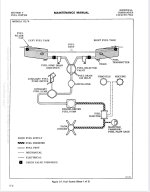
The secret is that the fuel tanks in the wing are sufficiently outboard that the wing dihedral does the rest, giving it a gravity feed like a high wing. So its switch includes a BOTH selection.

I suspect putting the fuel way out there had a bunch of effects on the design, affecting everything from spin characteristics to wing structure, but the good news is that the design apparently generates very few fuel starvation accidents. “BOTH” is like a nosewheel, it solves a lot of problems. 😂

Not to scale, but it gives you the gist:

IMG_2347.jpeg
 
Just be aware that Andair fuel inlet fittings are not restricted to 90deg left, right or down.
When ordering under the "Choose fittings", the option of "Banjo Fittings" allows for any input angle.
These fittings simplified the input from tank lines to the Andair Fuel selector in an RV-7A.
I would be very careful with banjo fittings; they are convenient but have a much higher pressure drop than elbows due to the design.

It's better to call Andair (I know not easy) to get their lead time on the valve you want. They are fairly easy to talk to, and e-mails seems to be hit and miss. I found after calling them to check availability then place the order on their web site. They will also make a very nice custom engraved bezel if you want that.
 
Last edited:
The Commander is a low wing with dual feed and has no cross tube, as I’m understanding that term. It does have a vent line connecting both tanks.

The secret is that the fuel tanks in the wing are sufficiently outboard that the wing dihedral does the rest, giving it a gravity feed like a high wing. So its switch includes a BOTH selection.

I suspect putting the fuel way out there had a bunch of effects on the design, affecting everything from spin characteristics to wing structure, but the good news is that the design apparently generates very few fuel starvation accidents. “BOTH” is like a nosewheel, it solves a lot of problems. 😂

Not to scale, but it gives you the gist:

View attachment 88749
That’s interesting. Never would have guessed the tanks would be installed on the outer part of the wing.
 
I had called Andair once before on a separate issue and, YES, great to talk with. She wanted me to e-mail more info and response never received. I wanted to convert a gifted -8 valve to a -6....answer was NO can do. I am also thinking NO to the banjos.
 
After you park your plane you can set the fuel selector to BOTH and it will allow gravity to then level the fuel in BOTH tanks (provided you parked relatively level). :) This is handy if you desire to have both tanks even before your next flight.
I don’t mind having the tanks at different levels.. why would you want to level them out? Having more fuel on one side is a safety feature, desirable really.. you simply use the fullest tank for takeoff.
Having a “BOTH” option on a RV is a recipe for an accident.. maybe not for you, or whoever you sell the plane to if you explain to them never to select that in flight, but eventually someone down the line will use it, and inevitably one tank will suck air, and the engine will lose power.
 
That’s interesting. Never would have guessed the tanks would be installed on the outer part of the wing.
Me either. I thought a low wing “both” was basically impossible until my Commander-owning friend informed me!
 
THANKS to ALL For the enlightenment.
As long as this thread has been resurrected...I am getting ready to order an Andair fuel valve...Do I want the model with the straight down (90 deg.) fittings since the provided space is quite sparse ?
YES, I am going to order the Left, Right, Off ...NO BOTH.
The one that ACS sells says that it is for RV's. OR Do I order something different from Andair for and RV8 ??
90 degree fittings are to be avoided in your fuel system, as they create fuel pressure drops. Better to use 45 degree fittings. Ideally, get the selector valve that comes with straight, male AN6 fittings. Then simply bend the aluminum tubing to make bends where possible. If/when 100LL goes away, tight fuel system bends will become more of an issue. Something for you to consider.

Charlie
 
THANKS Charlie. I know on certified aircraft, tight 90 deg. bends in confined areas is frowned upon. My question: Andair valves sre a little on the larger side, as compared to the Van's, is there enough room on an 8 for the straight fitting valve ??
 
The Cozy MKIV my buddy and I build used the a cheap and simple ON/OFF valve. After hearing about the dangers of un-porting a tank, here on this great platform, I tried several times to convince him that we should replace it with a Left/Off/Right Andair valve. I was able to convince him by demonstrating the two straw suction, with one straw having a hole in it!
 
90 degree fittings are to be avoided in your fuel system, as they create fuel pressure drops. Better to use 45 degree fittings. Ideally, get the selector valve that comes with straight, male AN6 fittings. Then simply bend the aluminum tubing to make bends where possible. If/when 100LL goes away, tight fuel system bends will become more of an issue. Something for you to consider.

Charlie
Of course, 90's should be avoided but there are hundreds EFII and SDS users that have a 90 on the suction lines going to their Andair valves plus a filter (decent pressure drop) before the valve, (To protect the Walbro pump) plus a 90 or two in the wing root. These are being used on IO540's rated at ~ 300 hp. Flow rates are in the 40 gals/hr. range. I performed pressure drop tests lining up 4 hard 90's and could not measure a pressure drop difference at 40 gals/hr. (Given I did not have a manometer set-up that was ultra-sensitive but still could not measure a pressure drop.) Mogas, warm at altitude does need to be respected. Banjo fittings I did not test but if one is worried about a Andair 90 fitting look at the design of a banjo fitting which they sell for their valves. (To be fair Cirrus uses banjo fittings on the supply side, but they are 1/2")

Avoid 90's if possible but given the width of a Andair valve not going to be easy.
 
So, what i have garnered after reading and learning about the Andair fuel valve is that, with the 90 deg. fittings on the supply side of valve, there will be a pressure drop, the straight male fittings are the best, but, since space is limited on an 8, I will have 90 deg. bends in the aluminum tubing and banjo fittings still, for the most part, I will have 90's, maybe banjos aren't the best with 3/8 (-6) lines.... I have to ask... Even though the stock Van's brass valve isn't very pretty or near as smooth operating...are my thoughts warranted of sticking with the plans and staying with the original ?? Thoughts ?
My "gifted" Andair is still available to me, it is the correct L, R, Off, but has 1/2" (-8) straight fittings and valve is ported as such and a bit larger. Could I reduce the 1/2" to 3/8" for inlet and outlet and not have the pressure drop through the valve ?
 
Last edited:
Of course, 90's should be avoided but there are hundreds EFII and SDS users that have a 90 on the suction lines going to their Andair valves plus a filter (decent pressure drop) before the valve, (To protect the Walbro pump) plus a 90 or two in the wing root. These are being used on IO540's rated at ~ 300 hp. Flow rates are in the 40 gals/hr. range. I performed pressure drop tests lining up 4 hard 90's and could not measure a pressure drop difference at 40 gals/hr. (Given I did not have a manometer set-up that was ultra-sensitive but still could not measure a pressure drop.) Mogas, warm at altitude does need to be respected. Banjo fittings I did not test but if one is worried about a Andair 90 fitting look at the design of a banjo fitting which they sell for their valves. (To be fair Cirrus uses banjo fittings on the supply side, but they are 1/2")

Avoid 90's if possible but given the width of a Andair valve not going to be easy.
I also have 90’s on the suction side of both my planes and have no pressure issues. I always thought the major drawback to sharp bends was turbulence creating cavitation and thus air bubbles and that this only happened under pressure, as in downstream from the pump. Though not my expertise. Pressure drop on the suction side is not really a problem due to the strength of the pumps we use. We have seen cases where the tank skin gets dented when the vent lines clog.
 
I also have 90’s on the suction side of both my planes and have no pressure issues. I always thought the major drawback to sharp bends was turbulence creating cavitation and thus air bubbles and that this only happened under pressure, as in downstream from the pump. Though not my expertise. Pressure drop on the suction side is not really a problem due to the strength of the pumps we use. We have seen cases where the tank skin gets dented when the vent lines clog.
Yes, the pumps are "strong". And that, coupled with restriction upstream actually increases the likelihood of turning the liquid fuel into vapor through the lowered local pressure. Add to that high temps and auto fuel (in my case), and the 90's become one more increment towards the bad side. If you are trying to increase cavitation margin, then avoid 90's wherever possible.

You are not likely to see pressure issues as long as the fuel in the lines remains a fluid, but that one magic combo of temp, fuel formulation and circumstance can turn that slug of fuel into an unpumpable fog of vapor in an instant. Then you got zero fuel pressure
 
Yes, the pumps are "strong". And that, coupled with restriction upstream actually increases the likelihood of turning the liquid fuel into vapor through the lowered local pressure. Add to that high temps and auto fuel (in my case), and the 90's become one more increment towards the bad side. If you are trying to increase cavitation margin, then avoid 90's wherever possible.

You are not likely to see pressure issues as long as the fuel in the lines remains a fluid, but that one magic combo of temp, fuel formulation and circumstance can turn that slug of fuel into an unpumpable fog of vapor in an instant. Then you got zero fuel pressure
That makes sense. Thanks for the clarification.
 
How ironic...I just opened my e-mail from FlyBoys and see that they have the Newton Fuel selector that I can use my own fittings (45's). Price is 1/2 of Andair....Thoughts? They only have 1 review posted on it.
Thanks
 
How ironic...I just opened my e-mail from FlyBoys and see that they have the Newton Fuel selector that I can use my own fittings (45's). Price is 1/2 of Andair....Thoughts? They only have 1 review posted on it.
Thanks
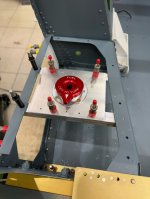
I have the newton valve and it’s a really nice bit of kit, but I’m not flying yet.

I think it’s the same valve that Vans fitted to the revamped factory -10.
IMG_7720.jpeg
 
snipped I will have 90's, maybe banjos aren't the best with 3/8 (-6) lines snipped
90 degree bends in the aluminum tubing are much more desirable, compared to 90 AN fittings. The pressure drop will be greatly reduced. Using a 45 degree fitting and a 45 degree bend in the aluminum tubing is better than using a 90 degree fitting, but not as good as a straight fitting with a 90 degree bend in the aluminum tubing. Banjo fittings are very restrictive. They are great for brake systems, where you have high [800 PSI] pressure, but very little fluid flow. Your fuel system on the other hand will have 2 - 60 PSI, depending on whether the engine uses a carburetor [1-5 PSI] mechanical fuel injection [20-30 PSI] or electronic fuel injection [40-60 PSI] but can have flow rates in excess of 20 gallons per hour. I suggest that you download the FAA's AC 43-13-1B at:

FAA AC 43.13-1B download

Refer to Chapter 9, Section 2 for info on aircraft hydraulic systems. FYI, this document is "The Bible" as concerns building/repairing aircraft.

Charlie Kuss
 
snipped Pressure drop on the suction side is not really a problem due to the strength of the pumps we use. We have seen cases where the tank skin gets dented when the vent lines clog.
Larry, you have this backwards. A fuel pump will raise fuel pressure on it's output side, but creates suction on the inlet side. This lowers the pressure on the fuel, below atmospheric and thus increases the chances of cavitation and the fuel changing state to vapor [vapor lock]. Modern fuel injected cars no longer have vapor lock issues. The fuel pump is installed submerged in fuel inside the gas tank. NONE of the fuel lines are under suction. Gas tanks collapse when the vent system malfunction & the evap emissions system runs.

The fuel pump in your car can generate 100 PSI They are all under 35+ PSI. Pressure increases the boiling point of the fuel, in this case eliminating any chance of vapor lock. The RV fuel system as designed by Van are under suction from the electric boost pump, located in the cockpit on FI models. When the electric pump is not running, the system [carb or FI] is under suction from the mechanical pump all the way back to the fuel tanks. Some builders move the electric pumps into the wing roots. This greatly reduces the length of fuel line under suction when the electric pumps are on.
Liquid cooled engines pressurize the cooling systems for the same reason. Pressure increases the boiling point of liquids. Suction does the opposite.
 
Last edited:
Larry, you have this backwards. A fuel pump will raise fuel pressure on it's output side, but creates suction on the inlet side. This lowers the pressure on the fuel, below atmospheric and thus increases the chances of cavitation and the fuel changing state to vapor [vapor lock]. Modern fuel injected cars no longer have vapor lock issues. The fuel pump is installed submerged in fuel inside the gas tank. NONE of the fuel lines are under suction. This is why cars can collapse a fuel tank. [the fuel pump in your car can generate 100 PSI] They are all under 35+ PSI. Pressure increases the boiling point of the fuel, in this case eliminating any chance of vapor lock. The RV fuel system as designed by Van are under suction from the electric boost pump, located in the cockpit on FI models. When the electric pump is not running, the system [carb or FI] is under suction from the mechanical pump all the way back to the fuel tanks. Some builders move the electric pumps into the wing roots. This greatly reduces the length of fuel line under suction when the electric pumps are on.
Liquid cooled engines pressurize the cooling systems for the same reason. Pressure increases the boiling point of liquids. Suction does the opposite.
Thanks for straightening me out on this point. makes perfect sense.
 
I don’t mind having the tanks at different levels.. why would you want to level them out? Having more fuel on one side is a safety feature, desirable really.. you simply use the fullest tank for takeoff.
Having a “BOTH” option on a RV is a recipe for an accident.. maybe not for you, or whoever you sell the plane to if you explain to them never to select that in flight, but eventually someone down the line will use it, and inevitably one tank will suck air, and the engine will lose power.
Don't worry, I don't operate the plane this way. :rolleyes:

There may be a reason where I might want to level fuel, but not via adding more. Plus, I've used the feature to empty a fuel tank by transferring to the other tank (involves jacking up one wing).

I don't have a "BOTH" position on the valve. The Andair folks told me about the valve's capability even though it is not marked. Moving the selector midway between L and R is effectively BOTH.

It does come in handy for utility purposes.
 
...Moving the selector midway between L and R is effectively BOTH.
This statement requires some clarification. In a true "BOTH" selector valve, both fuel sources are 100% open. In the Andair "halfway" position, the L/R ports are partly blocked. So the sequence is 100% on left, as you move the valve it starts to close that down as it opens the right port, ultimately fully open on right and fully closed on left.

Not to be pedantic, but while its true that both ports are open to the tanks, I'd be hesitant to expect 100% rated fuel flow through two partly blocked ports. So the term "effectively" is my concern. I don't think they are functionally equivalent.
 
This statement requires some clarification. In a true "BOTH" selector valve, both fuel sources are 100% open. In the Andair "halfway" position, the L/R ports are partly blocked. So the sequence is 100% on left, as you move the valve it starts to close that down as it opens the right port, ultimately fully open on right and fully closed on left.

Not to be pedantic, but while its true that both ports are open to the tanks, I'd be hesitant to expect 100% rated fuel flow through two partly blocked ports. So the term "effectively" is my concern. I don't think they are functionally equivalent.
Again guys, this "feature" has never been proposed by me or Andair as something to use inflight.

It is just some interesting info about the valve, which some might find a use for while the airplane is on the ground.

I'm done.
 
Again guys, this "feature" has never been proposed by me or Andair as something to use inflight.

It is just some interesting info about the valve, which some might find a use for while the airplane is on the ground.

I'm done.
I think you made it clear it needs to be used for "utility" purposes and not flight and appreciate the input. Others can nit-pick the input if they want, but as experimental builders and flyers need to evaluate the risk/reward and actually read and think about it.
 
Back
Top