Van's Air Force

The definitive Van's Aircraft support community! Buying, building or flying an RV? Join our exclusive family of mentors and enthusiasts!

Normal CHTs & Ground Ops

echozulu

Well Known Member
Patron
What does everyone see as normal CHT wise?
I have about 10-ish hours on my engine. I've been running it very rich very hard down low, but do not see any drop in CHTs. I'm thinking it's broken in, in which case maybe what I have is normal?

I did a flight today at 1500ft, 25MP 2500RPM I was seeing 20 gal/hr to keep the CHTs in check. With the exception of #4, all of my CHTs were around 380F. #4 was around 340F. OAT was 71F or ISA+17. Every takeoff I see CHTs go above 400F.

If this is normal, what do you do on the ground? In the Texas heat the CHTs are almost uncontrollable with any sort of ground running. Full rich and the CHTs just keep climbing. Any sort of delay and I have seen as high as 425F just sitting there.
 
Forgot about that. I have SDS set to 25 BTDC at cruise.
One thing I found running SDS is that 25 degrees BTDC on an SDS ignition is more advanced than 25 degrees BTDC on magnetos. Why? Mechanical slop in mags retards them a degree, maybe two. You might try retarding the SDS to 23 degrees and seeing if that helps. Obviously, it is pretty easy to adjust. Presumably, the same situation exists for most flywheel triggered EI's.
 
Edit: if you can get to 425 just sitting on the ground, you have a major issue. A lycoming at idle should never get near 400. Makes me really wonder about major issues with timing. I would call ross and get his input. If you can sit there on the ground and temps keep going up and up, we really start to worry about detonation, even though that is rare at idle rpms.


I would say not normal. On a 75* day i can climb to 10k with chts around 380. 25/2500 in level flight at 1500 agl should be 375 or less imho, assuming you are not just a bit rich of peak. 20 gph is insanely rich of peak for that power setting.

At 10 hours, the rings should have seated and high temps gone. Some folks don’t even see much of a drop if the engine was run for 2 hours on the test stand. It is uncommon to have elevated temps beyond 5-7 hours.

Have you checked timing with a timing light? This is important for systems like sds. If you don’t have a timing light, you can drop advance to 20* and see if the temps drop.

Are you sure you got the right wires from the Hall effect sensors at the crank connected to the right cpus? If you got this wrong or accidentally changed the offset numbers in the config it will mess up your advance. Too much advance equals too much heat.

My guess is that the baffling may have issues causing the high temps. You can search here for best practices for baffling work.

.
 
Last edited:
The baffles look good. There is no deposits blowing past the baffles on the cowling, and I can see rubbing all the way around. I will try dropping the advance down to 23 to see if that helps. It's possible the hall sensors were swapped as the CPUs were replaced. Thanks for the suggestions, I'll take a look.

I don't believe I ever saw a drop on this engine, although the engine was installed and ground run by a mechanic first so it's possible it happened on that very first ground run. Came out of Aerosport and I think they do a test stand run as well.
 
The baffles look good. There is no deposits blowing past the baffles on the cowling, and I can see rubbing all the way around. I will try dropping the advance down to 23 to see if that helps. It's possible the hall sensors were swapped as the CPUs were replaced. Thanks for the suggestions, I'll take a look.

I don't believe I ever saw a drop on this engine, although the engine was installed and ground run by a mechanic first so it's possible it happened on that very first ground run. Came out of Aerosport and I think they do a test stand run as well.
Be sure to read my edits
 
If you've seen 425 degrees, you may have already glazed the cylinder walls. Borescope. As LR has said, that is way high on the ground. My ground temps are more like 265 on warm days without cowl flaps and 370 after departure. Something is wrong.

You say no deposits blowing past baffles. Rubbing is good, but you might want to snake a borescope in there when the cowl is on to verify. The sheetmetal of the baffles should be sealed to the engine with RTV everywhere. Areas that get overlooked include at the front of the engine and sometimes at the rear bottom near the cylinders.

Double check your magnet position setting. Maybe 25 degrees is not really 25 degrees. That shouldn't cause high ground temps though. I'd guess air leakage. How's your oil temps?

Ed
 
Edit: if you can get to 425 just sitting on the ground, you have a major issue. A lycoming at idle should never get near 400. Makes me really wonder about major issues with timing. I would call ross and get his input. If you can sit there on the ground and temps keep going up and up, we really start to worry about detonation, even though that is rare at idle rpms.


I would say not normal. On a 75* day i can climb to 10k with chts around 380. 25/2500 in level flight at 1500 agl should be 375 or less imho, assuming you are not just a bit rich of peak. 20 gph is insanely rich of peak for that power setting.

At 10 hours, the rings should have seated and high temps gone. Some folks don’t even see much of a drop if the engine was run for 2 hours on the test stand. It is uncommon to have elevated temps beyond 5-7 hours.

Have you checked timing with a timing light? This is important for systems like sds. If you don’t have a timing light, you can drop advance to 20* and see if the temps drop.

Are you sure you got the right wires from the Hall effect sensors at the crank connected to the right cpus? If you got this wrong or accidentally changed the offset numbers in the config it will mess up your advance. Too much advance equals too much heat.

My guess is that the baffling may have issues causing the high temps. You can search here for best practices for baffling work.

.

Some reference info the group may already know :
Ross sent me the wire colors ( red and green) corresponding to the TOP SENSOR ( first to see the trigger magnet) and the LOWER Sensor the second one to see the magnet. If the wires are plugged in wrong AFTER THE TDC IS PROGRAMMED IN THE CPU, several degrees of error are possible. I reversed the gender of my firewall connectors so that is not possible. I was assured on the phone that if the timing mark on the flywheel matches the TDC indicator on the case, it is correct and you cant hurt anything whichever sensor is connected to particular CPU.
HOWEVER, don't forget to reference TRUE TDC after the 10 degree offset for initial programming. I'm no expert, just trying to share/help,
 
Some reference info the group may already know :
Ross sent me the wire colors ( red and green) corresponding to the TOP SENSOR ( first to see the trigger magnet) and the LOWER Sensor the second one to see the magnet. If the wires are plugged in wrong AFTER THE TDC IS PROGRAMMED IN THE CPU, several degrees of error are possible. I reversed the gender of my firewall connectors so that is not possible. I was assured on the phone that if the timing mark on the flywheel matches the TDC indicator on the case, it is correct and you cant hurt anything whichever sensor is connected to particular CPU.
HOWEVER, don't forget to reference TRUE TDC after the 10 degree offset for initial programming. I'm no expert, just trying to share/help,
I agree that swapping the top and bottom will only advance one by about 5 and retatrd the other by 5, so this is not likely the issue. However, there are not many things that will make a lyc climb to 425 at idle on the ground. Timing is by far the most likely cause here. I don't think that even a REALLY bad baffling job can cause this kind of runaway heat during idle grd ops (referencing the OPs comments of just watching the CHTs keep rising if he cannot take off quickly enough after starting). It is one thing for CHTs to be high, but it is another thing to have them just continue to endlessly rise. The latter points to more serious issues.

The OP needs to get a timing light on that engine before the next flight. That will tell the tale. Several errors could have been made that would cause excessive timing at idle. The two most commomn would be errors in placing the magnets on the ring gear and inadvertently changing the TDC offset numbers in the config area.

The sds tables are a bit clunky to work through. Very possible that he accidentally changed the advance adder for only the 750 RPM category; Also could have done the same in one of the upper numbers in the MAP table.. That would explain why only idle is getting excessively hot. The inflight temps are on the hot side, but nothing that we haven't seen before. The idle temps are WAYYYY beyond normal.

OP: if you don't know how to set things up for a timing test, just post that and we can provide instructions.

Larry
 
Last edited:
I've never done a timing test, but I'm at an airport with good maintenance resources and I believe this is a pretty standard procedure for timing mags so they should know how to do it.

I will double check SDS programming. I haven't touched it at all beyond doing some fuel trim programming, but I will verify I did not inadvertently change any settings. It was sent back to SDS due to chasing some other issues, and it came back with 25 degrees of advance set by default at most regimes but I had just assumed that a newer ECU version was flashed but maybe I have incorrect values elsewhere.

This engine has an SDS supplied flywheel so my assumption is the magnets are mostly correctly located. I don't think the hall sensors are swapped as the temps for me are different left and right, not front and back. I assume if the sensors are swapped I should see lower temps on 3,4 & 5. I'll double check the plugs regardless, easy enough to do.
 
I've never done a timing test, but I'm at an airport with good maintenance resources and I believe this is a pretty standard procedure for timing mags so they should know how to do it.

I will double check SDS programming. I haven't touched it at all beyond doing some fuel trim programming, but I will verify I did not inadvertently change any settings. It was sent back to SDS due to chasing some other issues, and it came back with 25 degrees of advance set by default at most regimes but I had just assumed that a newer ECU version was flashed but maybe I have incorrect values elsewhere.

This engine has an SDS supplied flywheel so my assumption is the magnets are mostly correctly located. I don't think the hall sensors are swapped as the temps for me are different left and right, not front and back. I assume if the sensors are swapped I should see lower temps on 3,4 & 5. I'll double check the plugs regardless, easy enough to do.
if the flywheel came from sds i am sure it was done correctly. unfortunately no one at the airport is going to be able to help with verifying timing. you need an old school automotive timing light and rig up a pointer behind the flywheel. nothing at all like mag timing that the aviation guys are used to.

I would call ross at sds and let him know you are getting 425 chts at idle on the ground. he should have some ideas on what could be wrong and steps for checking things. he may have a procedure for validating tdc without running the engine. the sds manual has a listing of default values. may be worth cross checking your settings with this
 
Last edited:
This has been a helpful thread so far. I too am using SDS EFI, set to 20° timing for break-in per the manual, and I have their supplied flywheel with preinstalled magnets. I've double-checked the ignition and fuel maps in both ECUs and made sure they both match the default values, but will also double-check the sensor connectors at the ECU tomorrow.

I'm working my way through the Mahlon ground run procedure (https://vansairforce.net/threads/new-engine-help.232395/post-1819828) since my engine was a field overhaul with the assistance of an experienced A&P. Between each run I park in the shade, uncowl, and put a fan on top of the engine blowing down to assist in cooling. OAT about 85°F. Oil temp and pressure are good and it runs smooth, but I think I need to adjust the throttle idle stop a bit...

On my 1000 RPM run my temps kept going up, with #4 a fair bit higher than the others, and I shut down around 330°F.
The next run (cowled) at 1200RPM, #4 was in line with the others and I shut down when the first one hit 320°F.
I'm now working through the 1400RPM runs. The first one ended when I hit 320°F rather than the 5 minute mark. The second one, same thing after about 5 minutes, though it seems to be happening a little slower each run. Going to idle slows it down and it seems like it might stabilize but I don't want to find out where it stops. Both leaning to roughness and running really rich did not seem to affect the rate of increase very much.
Part of me wants to start up from cold and run at idle for a couple minutes and see what happens but I also don't want to run unnecessarily.

EGTs seem a little high (1400 ish) but I think that might be an effect from the timing.

Question:
Is this sort of thing expected during these initial ground runs, with brand-new cylinders, pistons, and rings? My thought was that things had to wear in a little bit and the high CHTs were due to friction of the rings on the new cylinders.

Assuming this is not super out of line, my plan for first flight was to position the aircraft such that I'd have minimal taxi time between startup, runup checks, and takeoff, to buy as much temperature margin as possible until getting up to speed.
 
Last edited:
What does everyone see as normal CHT wise?
I have about 10-ish hours on my engine. I've been running it very rich very hard down low, but do not see any drop in CHTs. I'm thinking it's broken in, in which case maybe what I have is normal?

I did a flight today at 1500ft, 25MP 2500RPM I was seeing 20 gal/hr to keep the CHTs in check. With the exception of #4, all of my CHTs were around 380F. #4 was around 340F. OAT was 71F or ISA+17. Every takeoff I see CHTs go above 400F.

If this is normal, what do you do on the ground? In the Texas heat the CHTs are almost uncontrollable with any sort of ground running. Full rich and the CHTs just keep climbing. Any sort of delay and I have seen as high as 425F just sitting there.
Also breaking in a 540, EFII Fuel and Ignition. In flight your CHT's seem ok, and engine is probably broken in. Mine CHT's seemed to drop fairly soon at 4 to 5 hours. (Lycoming Thunderbolt) Also through fuel at the engine to reduce CHT's and that seems to be a common theme. At idle on the ground my CHT's stay under 300 F even in the Florida heat. To get over 400 at idle seems high. I like to keep my ascent at 500 FPM and that keeps CHT's under 400 in climb, 24 squared and 19.2 GPH.

Why do you stay down low? I can still get 70% HP at 5,500 ft and much cooler. Currently in climb (500 FPM) add 5% more fuel than my initial mapping calls for. That seems to give me a little more cushion. Good luck !
 
Yeah, most of my first 5 hours was done at around 5000 to 8000 shooting for 75% with full throttle. Since I didn't see a CHT drop and with the clouds hanging out at 3000 here in Texas the past few days I figured maybe the power gauge isn't that accurate so I did 2 hours at 1500 running about 75 to 80% power to see if I can get that CHT drop. No change.

Up higher at around 5k to 8k my CHTs are around 360 to 370ish so I wasn't too concerned until I did this last flight and felt the amount of fuel I had to throw at the engine to keep it cool might have been excessive.
 
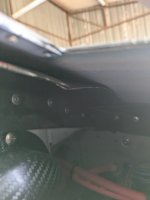
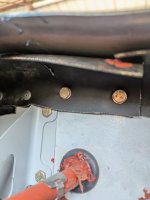
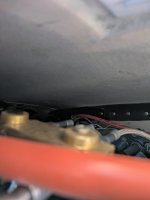
Had some time and swung by the hangar. Didn't have my borescope with me so I got some pictures of the baffles with my phone as best as I could through the oil door. Looks like everywhere is nice and tight except the back which has some baffles that are cut too long. I THINK that in flight the pressure will force it up against the cowling but easy enough to trim.

Went through the SDS settings and may have found the smoking gun. From 500 through 1100 the RPM fuel values on both ECUs were set to 113. The printout I have from SDS says these should be 165 all the way to 2500RPM. I also went through and retarded timing from 25 to 23 everywhere except the lower RPMs where I left them per the printout.

Didn't have time to test today but hopefully that is indeed the issue.
 

Attachments

  • PXL_20250430_193851253.jpg
    PXL_20250430_193851253.jpg
    1.5 MB · Views: 68
  • PXL_20250430_193848603.jpg
    PXL_20250430_193848603.jpg
    2 MB · Views: 67
  • PXL_20250430_193846559.jpg
    PXL_20250430_193846559.jpg
    1.3 MB · Views: 68
This has been a helpful thread so far. I too am using SDS EFI, set to 20° timing for break-in per the manual, and I have their supplied flywheel with preinstalled magnets. I've double-checked the ignition and fuel maps in both ECUs and made sure they both match the default values, but will also double-check the sensor connectors at the ECU tomorrow.

I'm working my way through the Mahlon ground run procedure (https://vansairforce.net/threads/new-engine-help.232395/post-1819828) since my engine was a field overhaul with the assistance of an experienced A&P. Between each run I park in the shade, uncowl, and put a fan on top of the engine blowing down to assist in cooling. OAT about 85°F. Oil temp and pressure are good and it runs smooth, but I think I need to adjust the throttle idle stop a bit...

On my 1000 RPM run my temps kept going up, with #4 a fair bit higher than the others, and I shut down around 330°F.
The next run (cowled) at 1200RPM, #4 was in line with the others and I shut down when the first one hit 320°F.
I'm now working through the 1400RPM runs. The first one ended when I hit 320°F rather than the 5 minute mark. The second one, same thing after about 5 minutes, though it seems to be happening a little slower each run. Going to idle slows it down and it seems like it might stabilize but I don't want to find out where it stops. Both leaning to roughness and running really rich did not seem to affect the rate of increase very much.
Part of me wants to start up from cold and run at idle for a couple minutes and see what happens but I also don't want to run unnecessarily.

EGTs seem a little high (1400 ish) but I think that might be an effect from the timing.

Question:
Is this sort of thing expected during these initial ground runs, with brand-new cylinders, pistons, and rings? My thought was that things had to wear in a little bit and the high CHTs were due to friction of the rings on the new cylinders.

Assuming this is not super out of line, my plan for first flight was to position the aircraft such that I'd have minimal taxi time between startup, runup checks, and takeoff, to buy as much temperature margin as possible until getting up to speed.
Normal.

Yes, things get hot even at low rpms during the first couple of hours. You are correct, there is pretty intense friction and therefore heat. Your cylinders walls look like a mountain range at the microscopic level. Peaks and valleys. The ring is scraping over the peaks and is grinding them flat at the top. When done, about 1/3 of the peaks will be worn off and polished.

Your first flight plan is good. I will add that you should keep a shallow climp on first flight to improve cooling. If temps get too high, just pull back on the power and try again when things cool down.

It is tough for those of use that are breaking in engines with no test stand time. Heat, during the first hour can be intense and if you get much over 435 or so, you will glaze the cylinders. Only takes a few seconds at those temps. Priority 1 is keeping temperature in line. Priority 2 is pushing the engine to 75% power.
 
Last edited:
Had some time and swung by the hangar. Didn't have my borescope with me so I got some pictures of the baffles with my phone as best as I could through the oil door. Looks like everywhere is nice and tight except the back which has some baffles that are cut too long. I THINK that in flight the pressure will force it up against the cowling but easy enough to trim.

Went through the SDS settings and may have found the smoking gun. From 500 through 1100 the RPM fuel values on both ECUs were set to 113. The printout I have from SDS says these should be 165 all the way to 2500RPM. I also went through and retarded timing from 25 to 23 everywhere except the lower RPMs where I left them per the printout.

Didn't have time to test today but hopefully that is indeed the issue.
Sorry, but don’t think that is your issue. There is no mixture , rich lean or otherwise, that you can throw at a lycoming that will cause it to reach 425* at idle. I am sure someone will be along shortly and tell you this is an intake leak, but you need to ignore that and find some expert help. Sorry, but timing is the only thing that makes sense beyond major flaws in the engine build, such as incorrect cam timing and a few others. Your problem is severe enough that 2* less advance means nothing. If you want to experiment, drop it to 15*, maybe 10.

If the temps were also high in cruise, i would think mechanical issues in the cylinder. But because it is limited to idle, that doesn’t make sense.

I don’t mean to keep raining on your parade. I am really just pushing you to get some assistance, as i think you need it. Please call ross and get his input. He is happy to help and very knowledgeable. I am confident he will have troubleshooting ideas for you.
 
Last edited:
Sorry, but don’t think that is your issue. There is no mixture , rich lean or otherwise, that you can throw at a lycoming that will cause it to reach 425* at idle. I am sure someone will be along shortly and tell you this is an intake leak, but you need to ignore that and find some expert help. Sorry, but timing is the only thing that makes sense beyond major flaws in the engine build, such as incorrect cam timing and a few others. Your problem is severe enough that 2* less advance means nothing. If you want to experiment, drop it to 15*, maybe 10.

If the temps were also high in cruise, i would think mechanical issues in the cylinder. But because it is limited to idle, that doesn’t make sense.

I don’t mean to keep raining on your parade. I am really just pushing you to get some assistance, as i think you need it. Please call ross and get his input. He is happy to help and very knowledgeable. I am confident he will have troubleshooting ideas for you.
I don't think it's a timing issue. The engine was run at Aerosport after it was built with a different SDS ECU but the same hall sensor and flywheel. The CHTs for idle and full power runs done at Aerosport for around 2 hours of total time show very normal numbers. I doubt that bolting it onto the airframe materially changes the timing, I believe the flywheel only goes on one way.

I think it must be an installation issue. Something with this airframe or with the ECU that was installed. I have an email out to Ross but didn't get a reply yet, we'll see if he has any other ideas.

I'm planning on doing a timing check either way since it's not that difficult but I just can't see how the timing has changed from when the engine was run on the test stand. It's better than my next idea which is to check the CHT wiring and probes with boiling water.
 
I don't think it's a timing issue. The engine was run at Aerosport after it was built with a different SDS ECU but the same hall sensor and flywheel. The CHTs for idle and full power runs done at Aerosport for around 2 hours of total time show very normal numbers. I doubt that bolting it onto the airframe materially changes the timing, I believe the flywheel only goes on one way.
Might check with Aerosport to see if they retard the timing for initial engine runs. That would make some sense from their perspective. In addition to slightly retarding your base timing, you might also want to look at your advance/manifold pressure curves and temporarily set those to zero.
 
I don't think it's a timing issue. The engine was run at Aerosport after it was built with a different SDS ECU but the same hall sensor and flywheel. The CHTs for idle and full power runs done at Aerosport for around 2 hours of total time show very normal numbers. I doubt that bolting it onto the airframe materially changes the timing, I believe the flywheel only goes on one way.

I think it must be an installation issue. Something with this airframe or with the ECU that was installed. I have an email out to Ross but didn't get a reply yet, we'll see if he has any other ideas.

I'm planning on doing a timing check either way since it's not that difficult but I just can't see how the timing has changed from when the engine was run on the test stand. It's better than my next idea which is to check the CHT wiring and probes with boiling water.
i don't disagree with what you are saying. However, your chts at idle are WAY higher than the rest of us see. Therefore, it would seem that something is different with your setup than the rest of us.

The sds cpu has a couple hundrerd config settings in it that significantly impact how the engine runs. So the fact that it worked fine for aerosport doesn't mean too much given you now have it connected to a different cpu. FYI, the timing is controlled via config settings, so changing the cpu could absolutely change your timing.

I'm sure Ross will be able to help you out. Suggest you call him. maybe he is not good with email.

I will stop here. Don't want to push too hard or suggest i am trying to get you to do things my way.
 
Last edited:
Just wanted to close the loop here. The issue was the baffle seals, in other words water is wet....

I used RTV to seal all the gaps between the rubber seal and metal, and that brought every cylinder except 5 & 6 in line.
I then investigated more and pinpointed the issue to how I overlapped the baffle seals at the corner, I could see some black marks now on the cowling where the air was shooting through that gap. I cut the baffle seals at the overlap and sealed the slit from the inside with RTV. This way the baffle seals all lay flat against cowling as much as possible.

Test run today with 90F ground temperatures showed everything is good. Had to dial a bit of extra fuel in while I was waiting in line but all cylinders were hovering around 330 with #5 a bit higher, but it was also higher in flight. Need to redo the baffles at some point to make it not look like a hack job and possibly bring the temps down further, but it works at this point.
 
Makes sense. I've seen installations that looked all sealed up but were real gappy at the front. Sometimes folks overlap the rear corners of the rubber seal so that wind just blows through. On a four cylinder, there's a tab near the base of the oil filler that might not have got bent or gooped. These airplanes mostly cool pretty well as long as all the edges and corners are sealed up well. Attention to detail. I was having a CHT problem that turned out to be advance. When that's what it is, cowl flaps don't help much.

Ed
 
Back
Top