Van's Air Force
You are using an out of date browser. It may not display this or other websites correctly.
You should upgrade or use an alternative browser.
You should upgrade or use an alternative browser.
Inverted Fuel Pickup
- Thread starter Archie167
- Start date

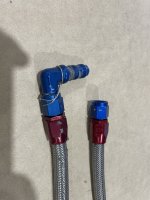
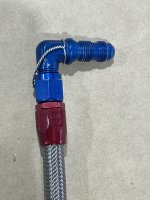
I did a few on tanks that i fixed (leak repair). I just used a couple earls an fittings and ordered a 3’ section of aeroquip hose. Cut to match your existing hose and then assemble. I do all my lines this way. It is not that difficult on e you get the hang of it. If this is a new build, aren’t the lengths listed in the plans? I am a 6 builder, so not sure how much details is in the modern plans. Back then we got more drawings than instructions.Hi all, can anyone tell me the physical length of the inverted fuel pick up fuel line? Have the hardware, just need to source a fuel line the correct length because they are unavailable through Vans atm. Thanks.
The -7 I purchased came with the flop tube installed. A guy asked me if my engine had an inverted oil system? No? Why have an inverted fuel system without an inverted oil system?
They also pointed out the flop tank has about 2 gallons unusable.
They also pointed out the flop tank has about 2 gallons unusable.

Most all flop tubes are made from Aeroquip 701/Stratoflex 156 hose. "Rubber' liner. Spruce has them, in different lengths with the counterweights. But, if you like, get a 2 foot piece of -6, remove yours, cut to fit, cut off the crimp collars, then reclamp the counter weight.The -7 I purchased came with the flop tube installed. A guy asked me if my engine had an inverted oil system? No? Why have an inverted fuel system without an inverted oil system?
They also pointed out the flop tank has about 2 gallons unusable.
I already reassembled and resealed the tank. I still don’t have inverted oil….Most all flop tubes are made from Aeroquip 701/Stratoflex 156 hose. "Rubber' liner. Spruce has them, in different lengths with the counterweights. But, if you like, get a 2 foot piece of -6, remove yours, cut to fit, cut off the crimp collars, then reclamp the counter weight.
Did anyone actually answer your question???? I'm guessing you were looking for something along the lines of 16" B-nut to end of weight??? Sorry I cant help either, mine is installed and the tank sealed up. You are super polite! I am with Rockyfatcat though and "future proofed" my airplane.......Thanks everyone!
Its all good thanks mate. Unfortunately the old hose was disposed of before we had a chance to take measurement. I have all the fittings and counterweight but probably safest bet is wait until they’re back in stick at Vans and order a new one. Cheers.Did anyone actually answer your question???? I'm guessing you were looking for something along the lines of 16" B-nut to end of weight??? Sorry I cant help either, mine is installed and the tank sealed up. You are super polite! I am with Rockyfatcat though and "future proofed" my airplane.......
I removed my flop tube last year, as it was due for replacement, but decided to go to a normal fuel pickup. The consensus is that it is not necessary for most aerobatics. Anyway, it is still on the workbench. Measured the hose this morning. From the tick mark on one ferule to the tick mark on the other ferule, measured 8 7/8".Its all good thanks mate. Unfortunately the old hose was disposed of before we had a chance to take measurement. I have all the fittings and counterweight but probably safest bet is wait until they’re back in stick at Vans and order a new one. Cheers.
Best regards, Merrill

I removed my flop tube last year, as it was due for replacement, but decided to go to a normal fuel pickup. The consensus is that it is not necessary for most aerobatics. Anyway, it is still on the workbench. Measured the hose this morning. From the tick mark on one ferule to the tick mark on the other ferule, measured 8 7/8".
Best regards, Merrill
That's been my experience. I fly all the standard Sportsman category figures in my -6 and have neither inverted fuel or oil. I've looked closley at the engine logs after doing half Cubans, immelmans, and other figures that are not purely positively loaded and have not seen any serious degradation in oil pressure.
I'm less worried about fuel starvation (although I haven't not seen that either) than I am some insidious engine damage from lack of lubrication.
--Ron

I have thought of doing that as well. Some have said it isn't possible.....I removed my flop tube last year, as it was due for replacement, but decided to go to a normal fuel pickup. The consensus is that it is not necessary for most aerobatics. Anyway, it is still on the workbench. Measured the hose this morning. From the tick mark on one ferule to the tick mark on the other ferule, measured 8 7/8".
Best regards, Merrill
 .....but if a flexible tube goes to the aft section of the tank, even though it's from a different exit fitting location, a stiff one should go there as well. It just needs to sit where the original plans have it sitting from the mid-tank fitting. Do you have pictures of yours?
To clarify, I removed the flop-tube and capped the inverted fuel exit at the front of the tank. Then installed Van's standard fuel pickup that exits from the stock inspection panel. So now, the fuel supply lines from both tanks are the same and stock non-inverted configuration. Sorry for any confusion.I have thought of doing that as well. Some have said it isn't possible.....
Merrill

Yes - rubber tubes have a ten year life if I recall correctly. I just changed out the new, never-seen-fuel 20+ year old flop tube on my F1 project, and probably should have just installed a standard pick-up - while I do a fair amount of aero, it is all gentleman’s stuff at this point in my life, and inverted fuel isn’t necessary (as stated above). I figure that 10 years in the Rocket could well be as long as I fly it - who knows?This has turned into an interesting discussion about removing this flop tube completely. Why are you all doing this? Does the tube need replacing periodically?

Unless you have inverted oil, (and fuel injected)why would you want inverted fuel? A sustained negative G flight, do you really want the engine making power while the oil pressure goes to zero? I like that my engine will lose power if the oil pressure goes to zero. I also like the ability to use all of my fuel.. I have almost no unusable fuel with my standard pickups.This has turned into an interesting discussion about removing this flop tube completely. Why are you all doing this? Does the tube need replacing periodically?


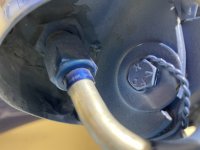
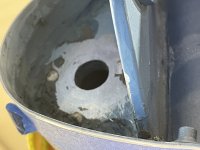
AN cap. You can buy from Spruce. It makes a good purge fitting should you need it someday.So how are you guys sealing off the fuel pick up hole in the tank where the flop tube connects?
Having just done it not eh wing rack, I’d say that you’d need rubber arms with no bones to do that….but I haven’t tried, so can’t; say for sure!Is it possible to replace the flop tubes and/or change to a standard pickup without removing the tanks from the aircraft?
Asking for a friend
Sure! You’d need the wings off and mount your pickup in the big round access panel closest to the cockpitIs it possible to replace the flop tubes and/or change to a standard pickup without removing the tanks from the aircraft?
Asking for a friend
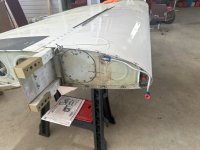
Yes, I did it. It is a stretch to do it and you need much patience and a sense of position when using a wrench, by feel, etc. Also, mirrors and very good lighting in the tank. After removing the flop-tube, the difficulty of doing that (along with the consensus in many threads here, that the flop-tube was not necessary) lead me to not replace it, but change to a standard pickup.Is it possible to replace the flop tubes and/or change to a standard pickup without removing the tanks from the aircraft?
Asking for a friend
Merrill
Keep us up-to-date on your method of your conversion. Leaving the tank on? Curious minds want to know...........!After much deliberation, I’ve decided to revert to a standard fuel pickup and ditch the floppy tube. My aeros will be of the gentle positive g type. This will save maintenance down the track also. Thanks everyone for the ideas and perspective. Cheers
Yep---eat lunch first----NOT alot of room in the wing root to be working on that.Is it possible to replace the flop tubes and/or change to a standard pickup without removing the tanks from the aircraft?
Asking for a friend

RV8Squaz
Well Known Member
FWIW, on my right tank with the standard fuel pickup, unusable fuel is 4 ounces. On the left take with the inverted pick up, unusable fuel is 13 ounces.The -7 I purchased came with the flop tube installed. A guy asked me if my engine had an inverted oil system? No? Why have an inverted fuel system without an inverted oil system?
They also pointed out the flop tank has about 2 gallons unusable.
This was determined with the airplane in a level attitude and running the fuel boost pump until dry.
In flight planning. I use a conservative 1 gallon of unusable fuel on each side.
Attachments


Quick note...
I was recently asked about wildly excessive unusable fuel, after the installation of a flop tube by a popular shop. I wouldn't have believed it if I hadn't seen it, but it turned out the tube was installed in the wrong place, thus the clunk weight couldn't reach the bottom of the tank.
Correct:
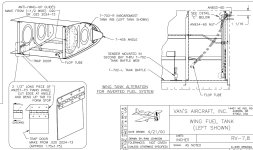
As installed, aft of the tank support angle:
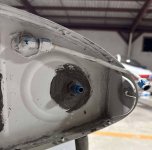
Tube too short, incomplete trap door, open lightening hole in rib, and no anti-hangup protection. Trust but verify.
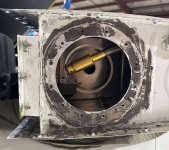
I was recently asked about wildly excessive unusable fuel, after the installation of a flop tube by a popular shop. I wouldn't have believed it if I hadn't seen it, but it turned out the tube was installed in the wrong place, thus the clunk weight couldn't reach the bottom of the tank.
Correct:
As installed, aft of the tank support angle:
Tube too short, incomplete trap door, open lightening hole in rib, and no anti-hangup protection. Trust but verify.

Saber25
Well Known Member
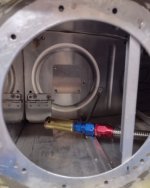
And when that O ring eventually fails you have a brass fitting score the bottom tank skin. I took mine out for that reason seeing the wear marks in the aluminum. Much easier to buy a Pitts or Laser with the system designed exclusively for hard acro. Gentlemen acro in the RV4 is done effortlessly with a standard non inverted system.
Attachments

And when that O ring eventually fails you have a brass fitting score the bottom tank skin.
Just polishing the pins here, but adding a rub rail to the skin stiffener solves that issue.
Saber25
Well Known Member
There wasn't much info on inverted fuel systems except for what the #1150 plans that Van sent to build my completed in 1989 RV4. I'm not sure a rub rail as you show was in the info packet. It does appear that it would keep the brass pickup off the tank lower skin. While my flying is described as aggressive by fellow pilot team members and friends, the G limitation on the 4 is simply too low for my liking hence the purchase of a Pitts S1S and later, a very solidly built Laser 200. That one often returns with 9 G's and -3 indicated on the meter. I save my beautiful Miss Fusion for lighter activities that weigh no more than 135# in the back seat.
Probably the issue is that the 90* fitting is pointing too high. Ther is not a lot of flex in those lines and must get it centered if you want it to make it all the way to top and bottom. Putting the fitting too far aft also shortened the length, reducing the flex.Quick note...
I was recently asked about wildly excessive unusable fuel, after the installation of a flop tube by a popular shop. I wouldn't have believed it if I hadn't seen it, but it turned out the tube was installed in the wrong place, thus the clunk weight couldn't reach the bottom of the tank.
Correct:
View attachment 88100
As installed, aft of the tank support angle:
View attachment 88102
Tube too short, incomplete trap door, open lightening hole in rib, and no anti-hangup protection. Trust but verify.
View attachment 88103
I'm not sure a rub rail as you show was in the info packet.
It's not.
Probably the issue is that the 90* fitting is pointing too high.
Yeah, that too.
Putting the fitting too far aft also shortened the length, reducing the flex.
The cardinal sin. Going back to the OP's question, the flop tube should be "as long as possible without fouling anything".

After procrastinating for too long I decided to dive in and replace the flop tube in the right fuel tank. Figured I would try to do it with the tank in place on the aircraft and the back up plan was to remove the tank. Happy to report that it is indeed possible to replace the flop tube on an RV-8 with the tank in place.es, I did it. It is a stretch to do it and you need much patience and a sense of position when using a wrench, by feel, etc. Also, mirrors and very good lighting in the tank. After removing the flop-tube, the difficulty of doing that (along with the consensus in many threads here, that the flop-tube was not necessary) lead me to not replace it, but change to a standard pickup.
Merrill
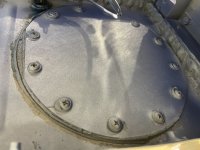
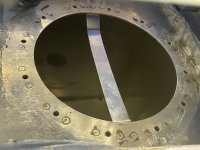
The cover plates were installed per the plans and instructions when I built the tanks. This included the cork gasket which I did not replace when reassembling the parts. Vans flop tube service bulletin provided guidance in the disassembly and reassembly of the flop tube and tank even though mine had been safety wired from day one. I used a small razor blade to start cutting through the pro-seal/gasket, then I used automotive plastic trim removal tools to slowly wedge between the cover plate and the inboard rib slicing slowly through the seal without damaging either. Once the cover plate was removed, the remaining pro-seal/cork gasket was easily cleaned up with some elbow grease and acetone. I did not want to use MEK, Polygone or any other pro-seal dissolving chemicals because I did not want those to come into contact with the fuel tank edge seals and compromise them. I also used a sealant cutter on a 90* drill attachment to clean things up. The flop tube itself was a bit harder to remove. The outside cleaned up nicely but it took a lot of effort to break the pro-seal bond on the inside of the tank. Leaving the bulkhead fitting nut partially on allowed me to use the socket wrench to move the bulkhead fitting up and down as directed in the SB and finally break that seal. The inside of the tank was thoroughly cleaned, the new flop tube was safety wired, 30 grams of pro-seal was mixed up and the flop tube was bolted back into place and the cover plate was reinstalled minus the cork gasket. Allowed everything to cure for four days, filled the tank up and I was happy to see that there were no leaks. Fuel feed was tested on the ground then the flight test was done verifying fuel feed in all attitudes.
I have to say that the flop tube I removed looked and acted just like the brand new one. It was flexible, no deterioration that I could discern, even the O-ring on the weighted end still looked brand new. I had zero problems with this setup for the last 730 hours of flight but everything I've read indicated that these rubber hoses "need to be replaced" every 10 years. My tanks were built in 2009 and the aircraft first flew in 2015 so these flop tubes have been in the wing for 17 years. Based on what I've seen in the right tank, I don't think that I'm going to replace the left tank flop tube for a while. I don't think that the possibility of creating a leak where none existed before is worth it at this time.