Van's Air Force

The definitive Van's Aircraft support community! Buying, building or flying an RV? Join our exclusive family of mentors and enthusiasts!

Engine power loss forces off-field landing: builder/maintainer error

DrillBit

Well Known Member
Friend
The pilot in this story achieved perhaps a best-possible outcome, but the aircraft owner, builder, and maintainer chose poorly, to say the least. They are all one and the same person--namely me. Comes now the penitent, seeking the solace of public confession in the Chapel of VAF.

On Saturday, March 15, 2025, I was forced to land in a cow pasture 3.5 nautical miles NW of the Byron, CA airport (C83) after my RV-9A’s IO-320 engine suddenly lost all power. There were no signs of any trouble during three previous flights that same day.

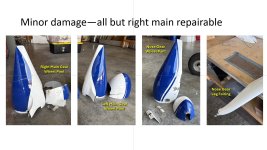
No one was hurt, most importantly my Young Eagle passenger, taking his very first flight in a light aircraft. 😱 Except for cracked and shattered wheel pants the airframe was undamaged. More could be said about the in-flight actions and decisions I took and all that…but for the Safety forum I’ll focus on the cause.

The NTSB quickly ruled the event was an incident: I could move N748PK to its home base at nearby Livermore airport (LVK). However, the Oakland FSDO requested the plane to be otherwise left alone: They would come out to inspect it (and its logbooks) in-person. Mutual availability ultimately aligned two weeks later, March 29, 2025.

In the interim, I downloaded the engine data from 8PK’s Dynon EFIS, which showed all 4 cylinders went cold at precisely the same time, coinciding with fuel flow dropping from 6-7 gph (normal for LOP operations) to 1 gph. Indicated fuel pressure remained at 27-30 psi until the prop stopped windmilling just before touch-down.

On the appointed day two (count ‘em—two!) ASI’s arrived at my hangar. I had already taken off the top cowling, but from the topside nothing was out of sorts. As I knelt to remove the lower cowl I looked into the snout of the air intake for the first time since pre-flighting the airplane the morning of the 15th.

Zoinks! There it was, big as life. A rubber flap (baffle seal material, actually), curled up against the air filter in the FAB, covering about 80% of the snout’s inlet area.

“Hey guys, you’ll want to shine your flashlights in here and take a picture. Pretty sure this is why the engine lost power. And it’s on me, 100%, and twice on Sunday.”

Now how in the world did a baffle seal find its way into the FAB?

During the last condition inspection (August 2024, tach hours 191.9) I noticed the K&N filter had started fretting the bottom of the FAB. Not deep enough to break through a generous epoxy layer exposing any fibers, but it was clearly going to do so sooner or later. This VAF thread discusses the issue. A common solution is firmly bonding a metal plate to the bottom of the FAB for the air filter to bear on.

But the elliptical hole in the FAB top was too small to pass a rigid plate that was larger than the filter. (The odds of making and positioning a plate the exact size and shape of the as-installed filter were rather slim, I thought). Besides, it would be such a PITA, cleaning out the oily-fuelish ooze that coats the FAB’s innards, then thoroughly roughening the smooth epoxy for good bonding.

And then I had my not-so brilliant idea: cut an "O"- shaped rubber “gasket” from leftover baffle sheet. So easily passed into the FAB to sit between the bottom edge of the filter and the bottom of the FAB, the extra “squeeze” on the filter would immobilize its vibration and stop the fretting. What could possibly go wrong?

Looking into the snout to check that no critters or other foreign matter have taken up residence is, I swear, a faithfully performed part of every pre-flight. In 40 hrs and 26 flights since the last CI, the gasket material was always visible, peeking out past the bottom of the filter, exactly where I had put it. Surely it could never move?

Alas, it did move. [And don't call me Shirley.] The rubber gasket had slipped forward, allowing it to flip up in the incoming air flow. I honestly thought it couldn’t move. [Well, what did you expect—remember that slippery, oily-fuelish ooze that accumulates in the FAB?] I couldn’t have been more wrong. Or more humbled.

After taking off the bottom cowl, I opened the FAB alternate air door and found that the back half of the "O", which of course slipped forward too, had been sucked up against the mouth of the fuel servo throttle body, blocking about 90% of its intake area. I hadn’t gotten to opening the alternate air door before committing to land—we were less than 2000 AGL when the power went out. Evidently it wouldn’t have changed the outcome anyway.

The blocked airflow also explained the drop in fuel flow. The injection servo sends fuel up to the spider in proportion to mass airflow through the intake. But with the airflow so severely restricted, the air-fuel mixture, if any, that did reach the cylinders was evidently incombustible. I thus have the dubious distinction of taking out not just one, but two sides of the combustion trinity! Now that takes…talent?

I am so very aware how much of a lucky so-and-so I am. When that ill-conceived gasket slipped I didn’t run out of altitude, airspeed, and ideas all at the same time. It could have happened down low, just after take-off, and turned out so much worse.

The moral of the story: Any contemplated changes, my fellow Experimenters, especially ones related to fuel and airflow systems, deserve serious second and third thoughts. Preferably, by second and third brains in the heads of others. [A sentiment the FSDO ASIs expressed quite forcibly.] It may be highly unlikely anyone in the VAF community could possibly pull a boneheaded move like mine. But if this bit of public flagellation prompts even one aviator/builder to think twice, seek constructive feedback, and avoid a misadventure like mine, I gladly offer up this egregious example of what not to do.Picture2.jpgPicture3.jpgPicture4.jpgPicture5.jpg

 
Good job Kurt. Glad you are OK, along with your Young Eagle. Also, a very well written and documented write-up of the incident. We all can learn from other people's mistakes, and it takes courage to admit to our own, especially on a public forum.
 
Thanks for sharing! I'm just starting to work on the FWF, and I've gone back and forth about what I'll do about the FAB design to make it a bit tougher. Your story is great food for thought! Glad to hear you made it down safe.
 
The pilot in this story achieved perhaps a best-possible outcome, but the aircraft owner, builder, and maintainer chose poorly, to say the least. They are all one and the same person--namely me. Comes now the penitent, seeking the solace of public confession in the Chapel of VAF.

On Saturday, March 15, 2025, I was forced to land in a cow pasture 3.5 nautical miles NW of the Byron, CA airport (C83) after my RV-9A’s IO-320 engine suddenly lost all power. There were no signs of any trouble during three previous flights that same day.

No one was hurt, most importantly my Young Eagle passenger, taking his very first flight in a light aircraft. 😱 Except for cracked and shattered wheel pants the airframe was undamaged. More could be said about the in-flight actions and decisions I took and all that…but for the Safety forum I’ll focus on the cause.

The NTSB quickly ruled the event was an incident: I could move N748PK to its home base at nearby Livermore airport (LVK). However, the Oakland FSDO requested the plane to be otherwise left alone: They would come out to inspect it (and its logbooks) in-person. Mutual availability ultimately aligned two weeks later, March 29, 2025.

In the interim, I downloaded the engine data from 8PK’s Dynon EFIS, which showed all 4 cylinders went cold at precisely the same time, coinciding with fuel flow dropping from 6-7 gph (normal for LOP operations) to 1 gph. Indicated fuel pressure remained at 27-30 psi until the prop stopped windmilling just before touch-down.

On the appointed day two (count ‘em—two!) ASI’s arrived at my hangar. I had already taken off the top cowling, but from the topside nothing was out of sorts. As I knelt to remove the lower cowl I looked into the snout of the air intake for the first time since pre-flighting the airplane the morning of the 15th.

Zoinks! There it was, big as life. A rubber flap (baffle seal material, actually), curled up against the air filter in the FAB, covering about 80% of the snout’s inlet area.

“Hey guys, you’ll want to shine your flashlights in here and take a picture. Pretty sure this is why the engine lost power. And it’s on me, 100%, and twice on Sunday.”

Now how in the world did a baffle seal find its way into the FAB?

During the last condition inspection (August 2024, tach hours 191.9) I noticed the K&N filter had started fretting the bottom of the FAB. Not deep enough to break through a generous epoxy layer exposing any fibers, but it was clearly going to do so sooner or later. This VAF thread discusses the issue. A common solution is firmly bonding a metal plate to the bottom of the FAB for the air filter to bear on.

But the elliptical hole in the FAB top was too small to pass a rigid plate that was larger than the filter. (The odds of making and positioning a plate the exact size and shape of the as-installed filter were rather slim, I thought). Besides, it would be such a PITA, cleaning out the oily-fuelish ooze that coats the FAB’s innards, then thoroughly roughening the smooth epoxy for good bonding.

And then I had my not-so brilliant idea: cut an "O"- shaped rubber “gasket” from leftover baffle sheet. So easily passed into the FAB to sit between the bottom edge of the filter and the bottom of the FAB, the extra “squeeze” on the filter would immobilize its vibration and stop the fretting. What could possibly go wrong?

Looking into the snout to check that no critters or other foreign matter have taken up residence is, I swear, a faithfully performed part of every pre-flight. In 40 hrs and 26 flights since the last CI, the gasket material was always visible, peeking out past the bottom of the filter, exactly where I had put it. Surely it could never move?

Alas, it did move. [And don't call me Shirley.] The rubber gasket had slipped forward, allowing it to flip up in the incoming air flow. I honestly thought it couldn’t move. [Well, what did you expect—remember that slippery, oily-fuelish ooze that accumulates in the FAB?] I couldn’t have been more wrong. Or more humbled.

After taking off the bottom cowl, I opened the FAB alternate air door and found that the back half of the "O", which of course slipped forward too, had been sucked up against the mouth of the fuel servo throttle body, blocking about 90% of its intake area. I hadn’t gotten to opening the alternate air door before committing to land—we were less than 2000 AGL when the power went out. Evidently it wouldn’t have changed the outcome anyway.

The blocked airflow also explained the drop in fuel flow. The injection servo sends fuel up to the spider in proportion to mass airflow through the intake. But with the airflow so severely restricted, the air-fuel mixture, if any, that did reach the cylinders was evidently incombustible. I thus have the dubious distinction of taking out not just one, but two sides of the combustion trinity! Now that takes…talent?

I am so very aware how much of a lucky so-and-so I am. When that ill-conceived gasket slipped I didn’t run out of altitude, airspeed, and ideas all at the same time. It could have happened down low, just after take-off, and turned out so much worse.

The moral of the story: Any contemplated changes, my fellow Experimenters, especially ones related to fuel and airflow systems, deserve serious second and third thoughts. Preferably, by second and third brains in the heads of others. [A sentiment the FSDO ASIs expressed quite forcibly.] It may be highly unlikely anyone in the VAF community could possibly pull a boneheaded move like mine. But if this bit of public flagellation prompts even one aviator/builder to think twice, seek constructive feedback, and avoid a misadventure like mine, I gladly offer up this egregious example of what not to do.View attachment 85200View attachment 85199View attachment 85198View attachment 85197
WHEW!! Nice job (doesn't exactly express my sentiments but......) reacting to your emergency (that most of us, thankfully, will not have to deal with) and saving both your airplane and, more importantly, your 'crew'! I can't imagine what he/she had to say! I would imagine things were a little quiet after things got really quiet! :oops:

Could you explain in more detail what we are seeing in pictures a)-e)? I might be most confused about what's happening in e). As an aside, I have eliminated all RTV around the air box and filter. Too much of chance of even a little piece going where it isn't welcomed. That being said, it was the plans recommendation at the time of my construction. No more!

Thanks! Welcome back!! And it takes amazing self-exposure to admit what happened on such a potentially critical forum. But: there but before the grace of God go we all!! You gave everyone who read this a chance to be better! I'm sure EVERY one of us who read this was suddenly picturing their own airbox/air filter setup! Or going out to the hangar to actually take a LOOK!!👀
 
Glad you’re ok. I had some wear in the AirBox of our -6. Laid another layer of fiberglass over the wear, and a little extra epoxy over the cloth to keep it smooth. its humbling how such a simple change can have such big consequences. Thanks for sharing.
 
Thanks for sharing! I'm just starting to work on the FWF, and I've gone back and forth about what I'll do about the FAB design to make it a bit tougher. Your story is great food for thought! Glad to hear you made it down safe.
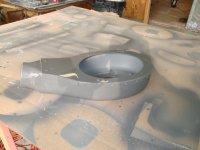
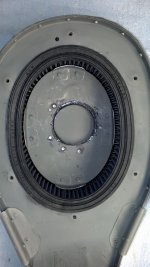
The stock FAB has two problems that should be addressed:
- The engine vibration will eventually cause the air filter to ablate the bottom fiberglass of the FAB.
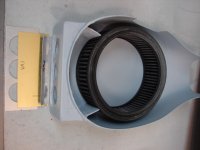
- The same vibrations tend to transform the cylindrical filter to a conical filter (see photo).

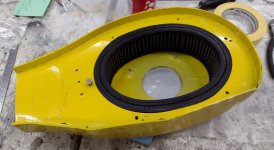
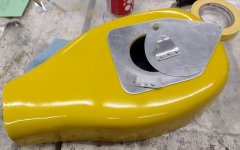
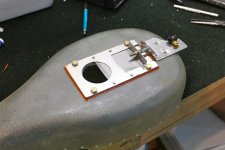
I piece of 0.032” aluminum and some proseal between the aluminum and the bottom of the FAB addressed this problem. I also added some brackets to help the filter keep it shape. The aluminum plate also serves to sandwich in the FAB bottom and the alt air port flange - so you are not relying on rivet heads not pulling through the glass.

Note - all fasteners are in proseal to guard against vibrating loose and going into the engine.

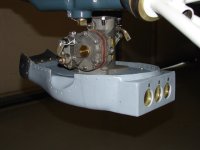
The last photo is a standard FAB with the top plate inverted. This allows for a taller filter and better lines up the FAB with the engine are inlet on an RV-10 James cowl.

Carl
 

Attachments

  • IMG_0068.jpeg
    IMG_0068.jpeg
    114.9 KB · Views: 189
  • IMG_0069.jpeg
    IMG_0069.jpeg
    144.4 KB · Views: 174
  • IMG_0066.jpeg
    IMG_0066.jpeg
    178.8 KB · Views: 167
  • IMG_0065.jpeg
    IMG_0065.jpeg
    174.6 KB · Views: 177
The stock FAB has two problems that should be addressed:
- The engine vibration will eventually cause the air filter to ablate the bottom fiberglass of the FAB.
- The same vibrations tend to transform the cylindrical filter to a conical filter (see photo).

I piece of 0.032” aluminum and some proseal between the aluminum and the bottom of the FAB addressed this problem. I also added some brackets to help the filter keep it shape. The aluminum plate also serves to sandwich in the FAB bottom and the alt air port flange - so you are not relying on rivet heads not pulling through the glass.

Note - all fasteners are in proseal to guard against vibrating loose and going into the engine.

The last photo is a standard FAB with the top plate inverted. This allows for a taller filter and better lines up the FAB with the engine are inlet on an RV-10 James cowl.

Carl
I disagree that the filter is predestined to wear the bottom of the fab.
My opinion is that it happens because people attempt to utilize the same filter for far too long
K&N does promote these as lifetime filters, but we have known for a long time that at least in the application on an RV that after a couple years, the filter is no longer the same as it was when it came out of the box new.
It is shrinkage of the filter that causes enough clearance for the filter to rattle around inside the fab.
I recommend the filter be replaced every 2 to 3 years. It is a pretty minimal cost for preventative maintenance compared to many of the other expendable parts on the airplane.
I also disagree with riveting anything to the airbox on the interior side of the filter, regardless of what technique is used to help assure that it never becomes detached. Adding additional parts that have no barrier to them finding their way into the engine is not a good plan in my opinion.
If the filter is replaced at regular intervals, as I suggested, adding clips to maintain its shape should not be necessary.
 
Excellent work flying the airplane. Thanks for sharing.
... So one day I was outside my hangar watching a buddy attempt takeoff in his Van's aircraft. He aborted the takeoff. I thought I heard some strange "burps and farts" of the engine as he aborted. After the abort, his taxi route took him past my hangar where I was standing, so he pulled in. He was puzzled and couldn't figure out why the engine stumbled and "bogged down". He mentioned that he was going to do a high power run-up and try again...

I asked if he minded me taking a look before he attempted further flight. I grabbed a flashlight and started my search at the intake. I saw exactly the FAB modification scenario you described above, with almost complete blockage of the filter. With a long needle nose pliers, I pulled out the "FAB Air Flow ShutOff Wrap", formerly known as the inappropriate air filter tightener gasket. It had been "glued" in place under the air filter. Yikes.

Let's all be careful out there.
 
I piece of 0.032” aluminum and some proseal between the aluminum and the bottom of the FAB addressed this problem. I also added some brackets to help the filter keep it shape. The aluminum plate also serves to sandwich in the FAB bottom and the alt air port flange - so you are not relying on rivet heads not pulling through the glass.
My FAB kit is from the mid 90's. The assembly back then is the filter is held in place by the bottom plate and that plate is held in place by 6, -3 bolts placed around the inside of the filter. These 6 bolts also force the filter into its oval shape. Kind of a pain to get on and off, but it's very secure.
 
I also disagree with riveting anything to the airbox on the interior side of the filter, regardless of what technique is used to help assure that it never becomes detached. Adding additional parts that have no barrier to them finding their way into the engine is not a good plan in my opinion.
I totally agree (and, incidentally, really appreciate your learned comments on the forum). However, it's my understanding that the plans call for riveting the alternate air system in place, which is inside the filter. It gives me the Willie's. What are best practices for dealing with this dilemma?
 
I totally agree (and, incidentally, really appreciate your learned comments on the forum). However, it's my understanding that the plans call for riveting the alternate air system in place, which is inside the filter. It gives me the Willie's. What are best practices for dealing with this dilemma?
In the OP, picture a), the bucktails of the rivets for the alternate air ring and the platenut for the screw the door pivots on are encased in generous dollops of flox. The estimable Dan Horton overlaid the ring hardware with a layer or two of fiberglass (or Kevlar? or fireproof dragon throat...).

There's another platenut in the rear, where an Adel clamp anchors the Bowden cable going to the alt air door. I put a bit of compression on the wire to keep the door firmly closed. That platenut is outside the filter, so I don't worry as much about that. Anything inside the filter is well worth the worry.
 
...I pulled out the "FAB Air Flow ShutOff Wrap", formerly known as the inappropriate air filter tightener gasket. It had been "glued" in place under the air filter. Yikes.

Let's all be careful out there.
Dayyyyam! More than a handful of my hanger neighbors and EAA Chapter 663ers at Livermore have said they would have thought the FABAFSOW/IAFTG was appropriate--without even trying to glue it like I didn't. One shouldn't just stop at second and third opinions; a minority report might be the negative you really needed to list to!
 
Nice landing. You got the important part right.

Tuition in this case (new wheel pants) was fortunately cheap. Thanks for taking the rest of us to class with you.
 
I disagree that the filter is predestined to wear the bottom of the fab.
My opinion is that it happens because people attempt to utilize the same filter for far too long
K&N does promote these as lifetime filters, but we have known for a long time that at least in the application on an RV that after a couple years, the filter is no longer the same as it was when it came out of the box new.
It is shrinkage of the filter that causes enough clearance for the filter to rattle around inside the fab.
I recommend the filter be replaced every 2 to 3 years. It is a pretty minimal cost for preventative maintenance compared to many of the other expendable parts on the airplane.
I also disagree with riveting anything to the airbox on the interior side of the filter, regardless of what technique is used to help assure that it never becomes detached. Adding additional parts that have no barrier to them finding their way into the engine is not a good plan in my opinion.
If the filter is replaced at regular intervals, as I suggested, adding clips to maintain its shape should not be necessary.
This filter was two years old at the last CI in 2024. The rubber wasn't nearly as "heat hardened" or as shrunken as the 4-year-old predecessor it replaced. I don't recall seeing excessive wear of the FAB bottom at the 2023 CI or earlier. I will put in a new filter before flying again and go with 2 yrs max time in service going forward. (And take off the silly "lifetime filter" sticker to boot!)

It still seems I need more gronk on the filter for sure. Pouring in a self-leveling layer of epoxy to increase the squeeze 1/16" or so, or applying an Al (or stainless?) "O" plate to the bottom and encasing it in 'glas laminations that extend up the sides of the FAB would seem to follow Scott's guidance. If I were to rivet the "O" plate to the FAB, it would be for positioning, the rivets all outside of the filter, prior to laminating it.

Agree with sanitizing the interior of the filter to the greatest possible extent. Maybe I shouldn't be so complacent with the plans-specified attachments. I'm pretty sure I used epoxy on the ring as well as the rivets. A layer of 'glass on the inside, a la Horton, would add a belt to my the flox-entombment suspenders. If the ring were thicker, one could tap a hole for the door pivot screw, rather than have a platenet on the inside, yearning to break free and cry havoc!
 
Wow, excellent aviating and I am glad the outcome has been with absolute minimum damage. Excellent writing too, thank you for sharing.
 
...
Could you explain in more detail what we are seeing in pictures a)-e)? I might be most confused about what's happening in e). As an aside, I have eliminated all RTV around the air box and filter. Too much of chance of even a little piece going where it isn't welcomed. That being said, it was the plans recommendation at the time of my construction. No more!
...
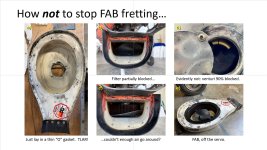
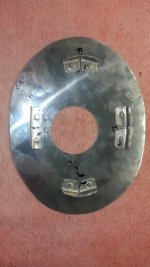
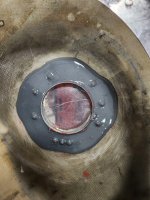
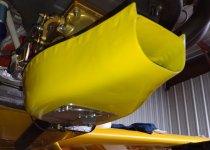
a) Shows the bottom of the fab where fretting/abrasion had begun. What prompted me to install the IAFTG (inappropriate air filter tightener gasket--thanks, clam!

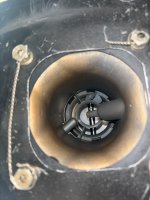
b) Is what I saw when I looked into the air intake "snout" of the bottom cowling. Vertical induction on this IO-320-D2A (ECI Titan parts, assembled by AeroSport Power). The FABAFSOW (FAB Air Flow Shut Off Wrap--thanks, again, clam!!) blocked about 80% of the cross-sectional area of the narrow part of the snout. The picture was taken after the lower cowl was removed.

c) Shows where the FABAFSOW was after the FSDO guys poked around looking at it with the lower cowl still in place. I was trying to describe the FAB's form, fit, and function to them, which they (not having seen many uncowled RV's) weren't getting. I took off the lower cowl to do a better show and tell, and I realized I hadn't taken a picture of the culprit in flagrante myself, but they had pulled the flap down. I included this pic to show the K&N's red grille--the only thing you should see in the snout unless you've added an IAFTG.

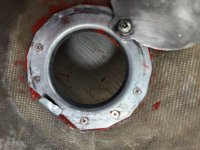
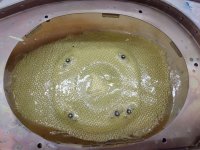
d) View through the opened alternate air door with the FAB still bolted to the top mounting plate at the bottom of the injection fuel servo. The in-flight direction is upward, towards the top of the pic. The rear part of the IAFTG, having slipped forward to form the FABAFSOW in pic b), had it's back half sucked up towards the fuel servo venturi. The split gold-anodized aluminum is clamped around the venturi, and the top plate bolts to it from above. The ring has nicely rounded edges to help the ram air, having flowed in from all 360 degrees around the filter, make the 90 degree turn up into the servo, the intake manifold, then to the cylinders intake valves.

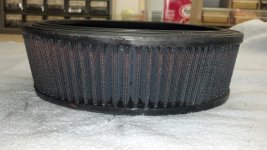
e) The FAB, dismounted from the fuel servo plate, showing the K&N filter's elliptical shape when installed. There are over-moulded rubber seals on the top and bottom of the filter, which bear against the servo plate and fab bottom forming a seal. If the FAB bottom is worn by fretting, or the air filter's thickness has shrunk (the most noticeable change is often shrinkage of the filter diameter, sometimes more on one edge than the other, which makes for the conical distortion Carl F illustrated above), unfiltered air can get into the engine, but worse the filter ain't squozen enough and engine vibration rattles it around in the FAB, eating into the fiberglass. The ill-advised "O" gaskets back half remains in its position, sucked up to cover 90% of the venturi intake because it slipped forward--at a survivable altitude, thanks be to God.

Regarding the red RTV at the intake end of the FAB, that's there to better seal the black rubber baffle material to the outside of walls. The rubber goes around an extension of the snout opening in the bottom cowl, and if done properly, will keep the ram air from flowing into the lower cowl area, robbing the engine of an inch or so of manifold pressure. I didn't do a particularly good job, especially with the gap-osis at the upper left and right corners. Well, I might as well re-do that part as long as I'm at it.

I'm not very concerned about slapdash hunks of RTV breaking off, because the material is outside the filter. Although, come to think of it, pieces of rubber or foam have been known to break off and cause problems on other kinds of aerospace vehicles. Could a hunk of RTV bust through the K&N filter grille? I'm certainly not going to dismiss anything about the FAB out of hand at this point! Do a much neater RTV job for the do-over is on the checklist....
 
I totally agree (and, incidentally, really appreciate your learned comments on the forum). However, it's my understanding that the plans call for riveting the alternate air system in place, which is inside the filter. It gives me the Willie's. What are best practices for dealing with this dilemma?
I designed a lot of the different details on many of the RV models, but that particular detail was not one of them and I have never liked it.

I do not have it installed on my personal airplane.
 
It still seems I need more gronk on the filter for sure. Pouring in a self-leveling layer of epoxy to increase the squeeze 1/16" or so, or applying an Al (or stainless?) "O" plate to the bottom and encasing it in 'glas laminations that extend up the sides of the FAB would seem to follow Scott's guidance. If I were to rivet the "O" plate to the FAB, it would be for positioning, the rivets all outside of the filter, prior to laminating it.

For consideration:

If you locate the filter in the correct position in the FAB, and then build up a lip around its outside circumference with epoxy+flox, you'll and up with a pretty strong structure to hold its position and shape on the "dirty" side of the filter where it won't get sucked into the engine if it breaks.

And if the lip is high enough, it'll still hold the filter in place even if it shrinks, so you won't need to excessively "squeeze" it.

- mark
 
My FAB kit is from the mid 90's. The assembly back then is the filter is held in place by the bottom plate and that plate is held in place by 6, -3 bolts placed around the inside of the filter. These 6 bolts also force the filter into its oval shape. Kind of a pain to get on and off, but it's very secure.
Mine is like that also...except 4 bolts holds the filter, and is easy to change... so, why did they change it? There is no wear on the FAB base... The FAB only directs the air... It does not hold the filter.
I would not install a current FAB if it uses the fiberglass as the base plate to hold the filter. There is no benefit to doing it this way.
 
Good job! Fly the airplane all the way till it stops. You fulfilled your primary responsibilities as PIC and got everyone safely on the ground. Well done!
 
Good reminder for everyone, practice engine failure recovery procedures, we do it on the big birds and we have at least two donks👍
 
Excellent outcome for the situation! Good job on safely landing and thanks for sharing your findings. I am curious how the situation went with the Chapter and the Young Eagle flight. I'm guessing there was some excitement back at the airport... or did they even know?
 
Mine is like that also...except 4 bolts holds the filter, and is easy to change... so, why did they change it? There is no wear on the FAB base... The FAB only directs the air... It does not hold the filter.
I would not install a current FAB if it uses the fiberglass as the base plate to hold the filter. There is no benefit to doing it this way.
If my memory has not failed me the legacy O-320 installation uses an aluminum plate as your describe for securing the filter but the O-360 has the filter sitting on the floor of the airbox. My 1999 RV-6 has an O-320 with the bolts and plate holding the filter up off the airbox floor. I installed the alternate air door when that mod was released but have since removed it because I didn't like presenting a possibility of something getting sucked up the intake.

There are lessons here to be learned, being able to discuss them in the absence of a serious accident is a bonus.
 
Excellent outcome for the situation! Good job on safely landing and thanks for sharing your findings. I am curious how the situation went with the Chapter and the Young Eagle flight. I'm guessing there was some excitement back at the airport... or did they even know?
They knew. I declared an emergency on the Byron CTAF as I turned back towards the airport, which the ramp boss at the YE Rally monitors as flights RTB. I’ll post the juicy details in a separate thread, including a link to some citizen drone journalism with audio from emergency services radio chatter.
 
Good recovery and debrief. Not sure I would have taken any steps to involve the NTSB/FSDO in this little incident. Was the presence of a Y.E. passenger a factor in that decision, or the need to recover the aircraft within public view?

What are the don't-invite-the-man-into-your-life options in a scenario with minimal airframe damage and no injuries?

Edit: I think what you posted as I was typing explains the lack of options. The cat was very clearly out of the bag here, and the regulatory creatures did what they do once they smelled blood in the water... 👀
 
There is a lot of talk on this thread about riveting stuff inside the air filter. I learned the hard way not to do this. My plane had brackets on the inside of the filter, one came loose, got sucked into the carb, was thankfully caught by the air flow fins, but it still resulted in a 20-30% power reduction and significantly rich mixture. I removed all internal brackets and bonded a metal plate to the bottom to prevent fretting.

Thread I made about this: https://vansairforce.net/threads/ai...-mount-air-filter-on-o-360-carbureted.231554/
 

Attachments

  • IMG_6472.jpeg
    IMG_6472.jpeg
    1.2 MB · Views: 94
I designed a lot of the different details on many of the RV models, but that particular detail was not one of them and I have never liked it.

I do not have it installed on my personal airplane.

Scott, do you have an alternate air on your RV?
 
Good recovery and debrief. Not sure I would have taken any steps to involve the NTSB/FSDO in this little incident. Was the presence of a Y.E. passenger a factor in that decision, or the need to recover the aircraft within public view?

What are the don't-invite-the-man-into-your-life options in a scenario with minimal airframe damage and no injuries?

Edit: I think what you posted as I was typing explains the lack of options. The cat was very clearly out of the bag here, and the regulatory creatures did what they do once they smelled blood in the water... 👀

Yes, Byron Airport Ops reported the occurrence to the Feds, and came out to the site to take pictures which were transmitted in near real time. The NTSB weekend duty officer called it an incident, not an accident, right away.

I don’t think it’s unreasonable for the FSDO to check out a then-unexplained engine power loss, even if there was only minor damage to the plane and no humans or cows were harmed. Not sure if power-loss alone is a regulatory must-investigate, but it’s likely an agency SOP and it’s surely in the interests of the aviation community to find the cause, disseminate the results and discuss avoidance in future. Much as this thread appears to be doing. 😊

I will say the FSDO guys were thoroughly professional throughout. They were just as complimentary as all y’all have been about my handling of the emergency, and were clearly operating under a compliance and promoting future safety approach, rather than a punitive rush to enforcement action.

IMHO, the foundation of aviation safety is having the humility to admit one’s own mistakes. We are all human; we will all make mistakes. And no human pilot could live very long without learning from everyone else’s mistakes as well as their own.
 
In the OP, picture a), the bucktails of the rivets for the alternate air ring and the platenut for the screw the door pivots on are encased in generous dollops of flox. The estimable Dan Horton overlaid the ring hardware with a layer or two of fiberglass (or Kevlar? or fireproof dragon throat...).

There's another platenut in the rear, where an Adel clamp anchors the Bowden cable going to the alt air door. I put a bit of compression on the wire to keep the door firmly closed. That platenut is outside the filter, so I don't worry as much about that. Anything inside the filter is well worth the worry.
So here is my latest solution......just begging for accolades, flame throwers, requests for patent rights, etc. 🤣 I actually feel pretty good about this "solution", although still admit there is some risk. Seems like it's a question of weighing the risks of ingesting something into the engine versus not ingesting any air. I fly IFR quite a bit, and flying through rain and snow are not unusual. We also have a ton of birds in my area.
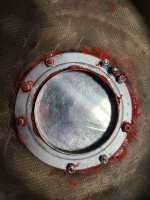
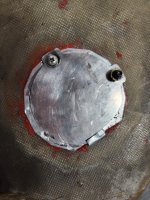
I installed an additional circular plate on tbe inside to prevent fiberglass erosion.
Plates are secured with countersunk screws with nylock nuts. Plates are sealed with red RTV. Inside assembly is encased in Proseal.
1000005961.jpg1000005962.jpg1000005963.jpg1000005990.jpg
 
Installed an alternate air door on the bottom of this box. First photo was taken during layup, so the alt air hole has not been cut yet. The exterior door assembly is screwed to an interior aluminum baseplate. The baseplate, nutplates, and the nutplate rivets are all encapsulated under a kevlar wear ply, which was placed with a fuel proof epoxy.

Encapsulation.jpg

Kevlar is resistant to abrasion. The only potential loose hardware might be one of the rivet heads attaching the wire connection bracket...three -4's in a low stress application.

Alt Air Door 3.jpg

Alt Air Door.jpg

Alt Air Door 2.jpg
 
Thanks drillbit for the well written recap of your incident. All's well that ends well. Nobody hurt, minimal damage to the airframe. The young eagles participant has a great story to tell
 
Updating and closing out the saga: happy to report wing reattachment and landing gear fairing repairs are complete and 748PK flies once more. Truly amazing how well the engine runs when it can breathe.

On the bottom of the FAB, I went with thin 0.020 Al sheet, epoxied and riveted, then one one layer of Kevlar twill lamination over it, then leveled the FAB and poured a layer of white-tinted epoxy, forming a smooth surface for the filter to seal against. Every bit of "interior" hardware sealed away. When and if the filter starts fretting the epoxy again, I'll see how well the Kevlar layer below holds up.
 
Updating and closing out the saga: happy to report wing reattachment and landing gear fairing repairs are complete and 748PK flies once more. Truly amazing how well the engine runs when it can breathe.

On the bottom of the FAB, I went with thin 0.020 Al sheet, epoxied and riveted, then one one layer of Kevlar twill lamination over it, then leveled the FAB and poured a layer of white-tinted epoxy, forming a smooth surface for the filter to seal against. Every bit of "interior" hardware sealed away. When and if the filter starts fretting the epoxy again, I'll see how well the Kevlar layer below holds up.
Do you have photos of the inside? Why did you put fiberglass over the Al sheet? If it was bonded in place, it should not move.
 
filter dams.jpegfilter on plane.jpeg


I had a friend ingest a bird into the air inlet right after takeoff and the engine failed. Fortunately he had enough runway to set back down and stop. Got me thinking. Will you have time to pull the alternate air if you even remember to do it?
So I developed this idea. The warm air from the bottom of the engine will get sucked past the reed valves and the engine continues to run with only a slight degradation of power if the fwd inlet, and the fwd part of the filter is blocked. This was tested with static full power runs with the air inlet in the cowl totally restricted and no loss of power was detectable. In normal conditions, the reed valves stop any air from going thru the rear of the filter and overboard, so there is no loss from ram effect. If severe ice on the front of the filter is the problem, the ice cannot go thru the filter to the rear portion and contaminate it as well. This method also removes the risk of parts coming loose and going thru the engine. One less knob on the panel.
Patent not pending so have at it.
 
That's a nice design Chris. Is it a true reed valve, and if so, what is the reed material? Or is it a top hinged swinging door?
 
In many parts of the country leaving the airplane outside could very well result in loss of the airplane. I would have told the FAA that they have one hour to get there, after that the airplane will be gone.
 
Dan
It is a true reed valve made from thin brass shim material. There is an aluminum piece above the holes that limit the travel to prevent the shim/valve from getting hung up in the open position. That should be visible in the picture. The three holes have the same surface area as the inlet, and only one piece of shim was used to cover all three holes. I am sorry I don't remember the thickness exactly and I no longer own the plane.
 
Do you have photos of the inside? Why did you put fiberglass over the Al sheet? If it was bonded in place, it should not move.
Hey Nick, sorry for the belated response.

I used a few pop rivets to locate and clamp the Al plate while the flox cured. Four of them were inside the filter, where their mandrels, if they vibrated out over time, could go up the vertical intake. I had encapsulated the rivets around the flange of the alternate air opening in flox for version 1.0 of the FAB. I suppose I could have done the same here, but, well, for some reason it felt better going full belt and suspenders, covering the bottom with a layer of Kevlar twill to boot.

IMG_0138.jpg

Fun fact--Kevlar really does resist abrasion! I shoulda-coulda laminated a neatly trimmed ply, rather than an oversize piece with raggedy edges going up the sides of the FAB. If it were regular fiberglass, a few minutes of 80 grit sanding would have gotten rid of it. Oh well, I suppose the less than smooth surfaces on the outside of the filter might do some aerodynamic boundary layer magic to promote robust airflow through the filter. Yeah, that's my story. Dr. Smith won't read this, will he? 😧

Anyway, this was the result after pouring a thin layer of white-tinted epoxy on the FAB floor, then reattaching the top plate, with some .032 Al spacers around the elliptical opening, compensating for the raised floor level. It's overbuilt and doesn't pass the Rutan Test. But it's (nearly?) bullet-proof.

IMG_0160 (2).jpg
 
In many parts of the country leaving the airplane outside could very well result in loss of the airplane. I would have told the FAA that they have one hour to get there, after that the airplane will be gone.
I'm sorry I implied that the FAA insisted on seeing the plane before it was moved. Not so! They were fine with getting the plane out of the field and back to an airport as soon as possible. I was asked to keep them updated on the plane's location, which I did.

The plane did remain on the spot it came to rest the first night. I didn't get in touch with Arrowhead Towing and Removal until the next morning. They went out to the field to reconnoiter, then went back to their yard to get an appropriate truck. We met up later that afternoon and moved the plane (wings on) to a better location in the field: level ground, better sheltered from the wind, and not visible from the road. By that time there wasn't enough daylight left to drain the tanks, take off the wings, and load it all onto the roll-back flatbed to go back to Livermore.

So another night in the field before it got back to my hangar about 6 pm the next day. It was quite a rural stretch of Contra Costa County, and I wasn't too worried about humans messing with the plane. The cows, on the other hand...

1755318803429.png
 
Back
Top