Van's Air Force

The definitive Van's Aircraft support community! Buying, building or flying an RV? Join our exclusive family of mentors and enthusiasts!

Abnormal Stability in RV-6?

skyboltr

I'm New Here
Sponsor
I have several 100's of hours in various RV's, 4,6,7, +8's. I've also done a fair amount of transition trying for new buyers and have just recently started working with a new owner of an RV-6 (tailwheel version 0-320 fixed pitch tip up canopy). I ferried it back for the new owner and it flew as most other RV's very well with no surprises. Depending on ones experience I typically go to the practice area and start with the very basics, demonstrating the characteristics of the planes stability and getting them used to the sight pictures and very basic pitch and power exercises both for them to learn their new mount and me to see what they know. So, much to my surprise, when I was demonstrating longitudinal pitch stability, aircraft trimmed for 100mph, no flaps, and simply add full thrust to witness the pitch increasing and the tendency to stay at 100mph, the aircraft pitched down (rather dramatically) and accelerated significantly with no tendency to ever pitch up regardless of the airspeed? I'm baffled! I don't believe I've flown anything that behaved this way and I've flown a lot of GA airplanes both certified and experimental in my 28,000+ hours.
Has anybody seen this withRV-6 or 7's? All I can think of is that the motor mount is wrong because in all other respects it handles well and like it should.
 
I don't have any RV knowledge. But from the RC model days that sure sounds like a thrust angle issue. I'm sure the brain trust here will know way more.
 
I would also suspect of an aft CG loading. Did you have something on the baggage compartment? Does it have an wood (light) prop?

Check the weight and balance and the weighing too, if possible. This behavior is NOT normal and it clearly indicates that something is wrong.

If you do fly it again, try to trim it at 100 kt, then, apply fed stick pressure and let it go to 120 kt and once very stable, feel the control force required to hold 120. If it requires a pull (aft or pitch up) force, the CG is behind the stick-free neutral point and certainly behind the aft CG limit if the aircraft was properly built.

Other minor changes in the aircraft may also affect the location of the stick-free neutral point, like the shape of the elevator trailing edge, the geometry and balance (mass) of the elevator horn area and several other changes.

Fabricio
 
I’d definitely do an old0-school weight and balance to see where the airplane is at your loading condition. I know - we all tend to to just hop in and go for local flying, assuming it is what it was before….but an airplane that is new to you and the owner might have an odd empty CG… worth checking at least…and maybe worth re-weighing!
 
I would check for excessive down angle of the engine centerline relative to the airframe. With an excessive down angle, adding agressive thrust will pull the nose down. The desired angle is baked into the engine mount from vans. However, if someone made a custom mount or made a significant welding repair, you have no idea how close to factory specs it is. A bent mount could do the same, as would shims or incorrect work where the longerons meet the firewall support structure. This is a 6 after all, so totally up to the builder to get the measurements correct. Leave the longerons too long and now the firewall is tipping forward/downward and adding to the down angle of the engine cl. I vaguely remember the mount has a couple degrees down or up, and a few degrees right to offset P factor.

Too much engine down angle would cause the airframe to fly at a more pronounced up angle to offset that force compared to the rest of the fleet, especially at cruise speed. Worth looking at.

If you had a serious aft CG state, it really can't be missed in the landing phase. You almost have to push the stick to flare at least in the 6. heard through the grapevine, not admitting I have done this:-)
 
Last edited:
Thanks for all the responses thus far. Because this RV-6 handless well in all other respects except dynamic longitudinal stability I'm leaning towards an anomaly with the engine mount. I couldn't figure how that could be off coming from a factory jig but then the comment about the actual longeron length changing the angle of the firewall could actually explain that. I also agree with getting a fresh weight and balance although it seems to handle just fine in slow flight, approach, and landing. I'll follow up with whatever I find.
 
I thought I read here somewhere that the motor mount (engine to tubing) can be installed incorrectly resulting in something like this?
 
Yeah agree with the others, sounds like a thrust line problem, and that's hard to understand how such would happen in a kit. Any chance there was prior damage history?
 
Engine mount - check the engine mount isolators & spacer washers are installed per plans.
Horiz Stab- Also check that the horizontal stabilizer angle of incidence is correct, that a 1/8" spacer is sandwiched between the Horiz front spar & rear deck.
This is a good mystery- please advise what you find!
 
Engine mount - check the engine mount isolators & spacer washers are installed per plans.
Horiz Stab- Also check that the horizontal stabilizer angle of incidence is correct, that a 1/8" spacer is sandwiched between the Horiz front spar & rear deck.
This is a good mystery- please advise what you find!
I appreciate all the comments and will post what I find as soon as I can, thanks.
 
Yeah agree with the others, sounds like a thrust line problem, and that's hard to understand how such would happen in a kit. Any chance there was prior damage history?
Apparently you haven’t built a 3,4, or 6. Nothing pre punched and many of the parts are not cut to exact length. Building one of these is substantially more involved than the assembly activity in more modern kits. You actually had to build a jig first and if you didn’t get that righ or messed up a few dimensions before clamping it together, viola, it doesn’t match the plans.
 
Apparently you haven’t built a 3,4, or 6. Nothing pre punched and many of the parts are not cut to exact length. Building one of these is substantially more involved than the assembly activity in more modern kits. You actually had to build a jig first and if you didn’t get that righ or messed up a few dimensions before clamping it together, viola, it doesn’t match the plans.
Ditto!
 
The quickest things to check for thrust lien problems are if the spinner is still centered in the cowl (if not, something has changed, or been changed) and if you take off the cowl, look for washers between the firewall or motor mount that might change the original geometry. A more insidious problem would be if the motor mount isolators were recently changed and the top (or bottom) sets were installed incorrectly. Or….the isolators NEED to be changed because they are worn out….

Just spitballing!

Paul
 
Apparently you haven’t built a 3,4, or 6. Nothing pre punched and many of the parts are not cut to exact length. Building one of these is substantially more involved than the assembly activity in more modern kits. You actually had to build a jig first and if you didn’t get that righ or messed up a few dimensions before clamping it together, viola, it doesn’t match the plans.
Very true! Although is it reasonably possible when building a 6 to get the plane of the firewall wrong? And I'm assuming the engine mount comes pre-welded. Those two components set the thrust line. Could either be "wrong enough" to account for this behavior?
 
After the wB checks out, I wonder how the plane reacts lets say full throttle or close to speed, stable/trimmed, pull the power- does the plane pitch up? if so I would say this is an engine thrust line issue. I would also review the position of the elevator at these different speeds, might indicate a horizontal stab position offset. My 6A is fairly stable on the pitch axis at different speeds, however, I do need to slightly trim the roll axis based on speed.
 
Very true! Although is it reasonably possible when building a 6 to get the plane of the firewall wrong? And I'm assuming the engine mount comes pre-welded. Those two components set the thrust line. Could either be "wrong enough" to account for this behavior?
I would find it really hard to believe anyone could. You would have to be quite a hack and this is the first RV of any type that I have heard of this symptom. It seems to be the only symptom as well. Anything is possible though, and folks are just “spit balling” as PD says….;)
I have seen some really rough examples and even they fly better than they should.
 
I have several 100's of hours in various RV's, 4,6,7, +8's. I've also done a fair amount of transition trying for new buyers and have just recently started working with a new owner of an RV-6 (tailwheel version 0-320 fixed pitch tip up canopy). I ferried it back for the new owner and it flew as most other RV's very well with no surprises. Depending on ones experience I typically go to the practice area and start with the very basics, demonstrating the characteristics of the planes stability and getting them used to the sight pictures and very basic pitch and power exercises both for them to learn their new mount and me to see what they know. So, much to my surprise, when I was demonstrating longitudinal pitch stability, aircraft trimmed for 100mph, no flaps, and simply add full thrust to witness the pitch increasing and the tendency to stay at 100mph, the aircraft pitched down (rather dramatically) and accelerated significantly with no tendency to ever pitch up regardless of the airspeed? I'm baffled! I don't believe I've flown anything that behaved this way and I've flown a lot of GA airplanes both certified and experimental in my 28,000+ hours.
Has anybody seen this withRV-6 or 7's? All I can think of is that the motor mount is wrong because in all other respects it handles well and like it should.

Nothing to add outside of my commending your 28000 hours. I made some calculations and you have spent well over 3 years of your life flying airplanes!
 
Another thing to check is to Check declarage (or however you spell it) between the main wing and stab.

Does the stab have the right AOA. Can change speed stability.
 
Good advise and assume you’re already looking at the thrust line. As far as longitudinal stability goes, you can check it without power adjustment so as to isolate the airframe. Three tests though likely six iterations. First, level flight trimmed near best glide. Slow via miny zoom by raising the nose not by power reduction. Do your back stick forces increase in a normal manner? Repeat but push into a slight dive, same for forward forces? Return to steady conditions and check the short period via a stick rap (small impulse bumb) forward and observe then a stick rap aft and observe. Phugoid. Trim then pull to slow ten knots and let go, sinusoidal airspeed out of phase with sinusoidal altitude dampening in magnitude through several cycles? Probably hold these till after checking the thrust line though by these you’ll confirm no contributing airframe issues. After these and the mounting inspection, then you should be good to return to your trimmed and add power check as well as its reciprocal reduce power.
 
Another thing to check is to Check declarage (or however you spell it) between the main wing and stab.

Does the stab have the right AOA. Can change speed stability.
It could change stability but not in the manner observed. You’ve got a fixed value whatever this value is, hence power responses should be in kind even if they might have different trimmed starting points for a given set of flight conditions. What would impact here is an abnormal position of the horizontal stabs or some other modification impacting prop wash changes over the stabs. Something could also impact wash over wing root though for this to happen, you’d be right back to the thrust line concern which would likely be a bigger contributor directly and for which the one fix would fix all contributing factors.
 
It could change stability but not in the manner observed. You’ve got a fixed value whatever this value is, hence power responses should be in kind even if they might have different trimmed starting points for a given set of flight conditions. What would impact here is an abnormal position of the horizontal stabs or some other modification impacting prop wash changes over the stabs. Something could also impact wash over wing root though for this to happen, you’d be right back to the thrust line concern which would likely be a bigger contributor directly and for which the one fix would fix all contributing factors.
This does presume, however, that a lack of mention of other effects equates an absence of other effects… It is fair to ask are there other times flying in which unusual observations have occurred? Heavy nose, longer takeoff rolls? Feels like a Cessna not a RV? Such could suggest a horizontal stab with insufficient nose up moment and could support the decalage hypothesis though also begs further question regarding impact, or lack thereof, from prop wash from such a stab. But this would go back to my previous comment about isolating airframe stability from thrust contribution. If the wing gained in the presence of prop wash while the tail did not or gained insufficiently, you would have a down pitch on power addition even with a straight thrust. Still seems to me thrust line is more likely.
 
This does presume, however, that a lack of mention of other effects equates an absence of other effects… It is fair to ask are there other times flying in which unusual observations have occurred? Heavy nose, longer takeoff rolls? Feels like a Cessna not a RV? Such could suggest a horizontal stab with insufficient nose up moment and could support the decalage hypothesis though also begs further question regarding impact, or lack thereof, from prop wash from such a stab. But this would go back to my previous comment about isolating airframe stability from thrust contribution. If the wing gained in the presence of prop wash while the tail did not or gained insufficiently, you would have a down pitch on power addition even with a straight thrust. Still seems to me thrust line is more likely.


Your right I think thrust line is the more likely the culprit but less decalage would show up as very low trim change with speed and might be exaggerating the effect. Curious as to what the conclusion is to this one.
 
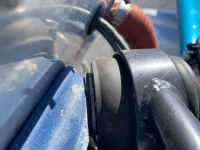
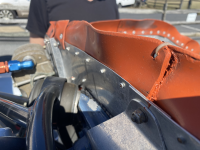
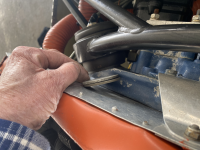
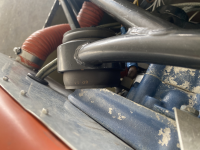
I wanted to update everyone who commented with ideas regarding this stability issue with this RV-6. I took the cowlings off today to investigate and I'm almost certain I've found the culprit. The Lord mounts are oriented correctly and in very good condition but for some unknown reason the upper mounts have two 1/8" thick washers between each lord mount and the engine block. So that would tip the engine forward 1/4"! My understanding is that there should not be any at the top, but one washer in between the two lower mounts, which there are.
 

Attachments

  • tempImageGezYC8.png
    tempImageGezYC8.png
    13.2 MB · Views: 119
  • tempImageUiid3Y.png
    tempImageUiid3Y.png
    12.4 MB · Views: 118
I wanted to update everyone who commented with ideas regarding this stability issue with this RV-6. I took the cowlings off today to investigate and I'm almost certain I've found the culprit. The Lord mounts are oriented correctly and in very good condition but for some unknown reason the upper mounts have two 1/8" thick washers between each lord mount and the engine block. So that would tip the engine forward 1/4"! My understanding is that there should not be any at the top, but one washer in between the two lower mounts, which there are.
How's the cowling "reveal" look relative to the spinner bulkhead? How's the gap between the spinner and cowl look from the side?
 
How's the cowling "reveal" look relative to the spinner bulkhead? How's the gap between the spinner and cowl look from the side?
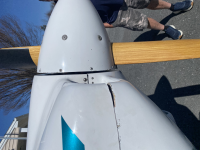
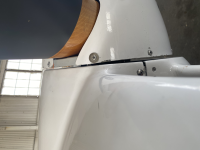
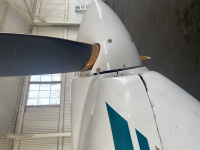
It doesn't show a significant sag but I think there is enough space to remove those two upper washers and get the spinner top flush with the cowl top. tempImagezPbnYQ.png
 
I wanted to update everyone who commented with ideas regarding this stability issue with this RV-6. I took the cowlings off today to investigate and I'm almost certain I've found the culprit. The Lord mounts are oriented correctly and in very good condition but for some unknown reason the upper mounts have two 1/8" thick washers between each lord mount and the engine block. So that would tip the engine forward 1/4"! My understanding is that there should not be any at the top, but one washer in between the two lower mounts, which there are.
You are correct, there shouldn't be any washers between the top Lord mounts and the engine, only on the bottom side.
 
I wanted to update everyone who commented with ideas regarding this stability issue with this RV-6. I took the cowlings off today to investigate and I'm almost certain I've found the culprit. The Lord mounts are oriented correctly and in very good condition but for some unknown reason the upper mounts have two 1/8" thick washers between each lord mount and the engine block. So that would tip the engine forward 1/4"! My understanding is that there should not be any at the top, but one washer in between the two lower mounts, which there are.
The washers are more like 1/16" each. Looking at drawing number 46A, I see no washers between the engine and the upper motor mount rubber and one between the engine and the lower hard durometer rubber. So that would be about an eighth forward at the top which would lower the prop somewhat more than that amount. Those washers at the top need to go and then you can deal with cowl fit.

I notice that there are some pretty good gaps where the hinge pins slide in at the front. This is a massive air leak into the lower cowl. I've seen this cause CHT/oil temp problems.

Ed
 
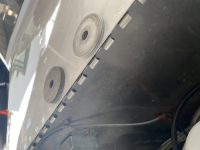
Today I removed the washers from the upper lord mounts and here are a few before and after pictures. The washers were adding just under 1/4" (.240) of nose down cant to the thrust line. Now the spinner is more correctly aligned with the cowling. I couldn't test fly today as the winds were rather gusty 90 degrees to the runway. I am quite confident that this was the issue all along but will post the resulting change in the flight characteristics as soon as possible.
 

Attachments

  • tempImagemeqC7W.png
    tempImagemeqC7W.png
    8.9 MB · Views: 193
  • tempImageoD88eV.png
    tempImageoD88eV.png
    10.4 MB · Views: 196
  • tempImagee5RLvE.png
    tempImagee5RLvE.png
    13.2 MB · Views: 168
  • tempImageW9B2V3.png
    tempImageW9B2V3.png
    12.7 MB · Views: 161
  • tempImageBg3LDv.png
    tempImageBg3LDv.png
    10.3 MB · Views: 206
Well that does look better. I have no idea if this change is enough to account for the strange in-flight behavior. Let us know!
 
So here's the follow up on the Stability Issue with this RV-6. After removing the washers, as previously posted, I was able to go fly it this AM in perfectly glass smooth air at neutral CG and around 1500lbs. The difference was noticeable before I even leveled off and started trials in various configurations. First off, the plane climbed better and was at least 15 mph faster in cruise. All through the speed ranges it took noticeably less power for a given speed. The positive dynamic stability is now back to normal and the airplane seeks its trimmed airspeed as power is changed, and most importantly, when you apply full thrust the nose now pitches up as it should.
I'm still quite puzzled as to why those washers were put there in the first place but really glad that that was all that was needed to make this a typically fantastic little airplane again. The new owners are quite relieved as well! Thanks for sharing thoughts and theories and hope this thread helps someone else that may be trouble shooting a stability issue with their particular plane.
 
I wanted to update everyone who commented with ideas regarding this stability issue with this RV-6. I took the cowlings off today to investigate and I'm almost certain I've found the culprit. The Lord mounts are oriented correctly and in very good condition but for some unknown reason the upper mounts have two 1/8" thick washers between each lord mount and the engine block. So that would tip the engine forward 1/4"! My understanding is that there should not be any at the top, but one washer in between the two lower mounts, which there are.
Maybe someone wanted to avoid “trim stall,” and wanted pitch down with power for the stall case? (Amazing how we can overly scare such.) Though such thinking hurts the low of glide slope situation. Maybe they were previous Lake/SeaRey/Icon flyers and wanted similar “feel” to responses? (Hate typing such, but we all know how texts get interpreted, I’m not being serious here.)
 
Today I removed the washers from the upper lord mounts and here are a few before and after pictures. The washers were adding just under 1/4" (.240) of nose down cant to the thrust line. Now the spinner is more correctly aligned with the cowling. I couldn't test fly today as the winds were rather gusty 90 degrees to the runway. I am quite confident that this was the issue all along but will post the resulting change in the flight characteristics as soon as possible.
(Serious this time) After your initial ‘how’s it flying’ flight, assume you’ll investigate power on stall with power off buildup first, and may want to do your level accels again so as to update performance numbers. Do decels too as you’ll have both your drag model and power required from them with which you can generatethrust available and power available from excess thrust and excess power power curves the accels produced. Drag curve shouldn’t have changed but doubt you have them readily accessible. https://www.kitplanes.com/using-level-accelerations-to-determine-climb-performance/
Takeoff should improve too. As should total endurance and max range. Over-the-top maneuvering should have gotten easier.
 
Back
Top