Van's Air Force

The definitive Van's Aircraft support community! Buying, building or flying an RV? Join our exclusive family of mentors and enthusiasts!

parts under cowling: heat resistance / flammability

I am currently designing an oil cooler duct to make the oil cooler more effective. I would use PET-CF as the filament due to its high heat resistance (stable up to 205°C, melting point 250°C).
In terms of heat resistance, there isn’t much more available in the consumer sector. Other users have also implemented such projects using significantly ‘inferior’ materials. Nevertheless, I wonder if I need to worry about the heat resistance.

I would also like to know your opinion regarding flammability. In the data sheets for PET-CF, sometimes there is no information, but sometimes it says ‘flammable.’
Personally, I believe that everything burns if you make it hot enough, so I don’t think it’s a real problem. But I would also like to know your opinion on this.

A better option would be PPS-CF, which is classified as flame-retardant and also very heat restistant (up to 250°C) according to the data sheet, but it cannot be processed with a consumer printer.
 
I am currently designing an oil cooler duct to make the oil cooler more effective. I would use PET-CF as the filament due to its high heat resistance (stable up to 205°C, melting point 250°C).
In terms of heat resistance, there isn’t much more available in the consumer sector. Other users have also implemented such projects using significantly ‘inferior’ materials. Nevertheless, I wonder if I need to worry about the heat resistance.

I would also like to know your opinion regarding flammability. In the data sheets for PET-CF, sometimes there is no information, but sometimes it says ‘flammable.’
Personally, I believe that everything burns if you make it hot enough, so I don’t think it’s a real problem. But I would also like to know your opinion on this.

A better option would be PPS-CF, which is classified as flame-retardant and also very heat restistant (up to 250°C) according to the data sheet, but it cannot be processed with a consumer printer.
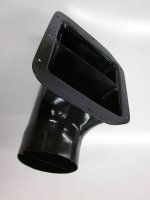
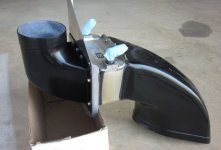
Might want to check out airflow systems. They sell duct work for oil coolers.
 
I am currently designing an oil cooler duct to make the oil cooler more effective. I would use PET-CF as the filament due to its high heat resistance (stable up to 205°C, melting point 250°C).
In terms of heat resistance, there isn’t much more available in the consumer sector. Other users have also implemented such projects using significantly ‘inferior’ materials. Nevertheless, I wonder if I need to worry about the heat resistance.

I would also like to know your opinion regarding flammability. In the data sheets for PET-CF, sometimes there is no information, but sometimes it says ‘flammable.’
Personally, I believe that everything burns if you make it hot enough, so I don’t think it’s a real problem. But I would also like to know your opinion on this.

A better option would be PPS-CF, which is classified as flame-retardant and also very heat restistant (up to 250°C) according to the data sheet, but it cannot be processed with a consumer printer.
We use FDM, SLS, and MJF printed parts for various things at AeroSouth. For anything under the cowl however, we would make these from composites with a flame retardant resin system such as those from ProSet. https://www.prosetepoxy.com/product/fire-retardant-epoxies/
When it comes to material choices, best is to follow the regulations applied to Part 23 aircraft. This is not an area to cut corners.
 
Max air temperature is (ballpark) 225F. Exposure to radiant heating near an exhaust can create higher surface temperature.

I have no concern for the fire resistance of an oil cooler duct. Given the typical fuel or oil fire, there's not enough additional fuel in a duct to make a significant difference.
 
You should really go with Nylon carbon-fiber. It requires a hardened nozzle and an enclosure to keep drafts off of the model while it's printing. It's what the motorcycle and car engine tweakers are using. There's a whole level above that, but those materials require a much higher level (and expensive!) printer.

There's a great wealth of information in this link: 3D materials properties
 
I used PAHT-CF for a number of under cowling parts (oil cooler duct and shroud, inlets, cable clamps), and it's held up fine coming up on 200 hours. No visible heat damage to any of the parts. I did a non-scientific test involving a propane torch and it did not keep burning after I removed the flame, which satisfied me that it would not be the thing that killed me in the event of a fuel or oil driven engine fire.
 
You should really go with Nylon carbon-fiber. It requires a hardened nozzle and an enclosure to keep drafts off of the model while it's printing. It's what the motorcycle and car engine tweakers are using. There's a whole level above that, but those materials require a much higher level (and expensive!) printer.

There's a great wealth of information in this link: 3D materials properties
This is a good choice, did an oil cooler shroud two years ago (remote mounted on FW) with this material. On inspection last month, zero impact from heat
 
You kids crack me up :)
You old people crack me up too! ;)
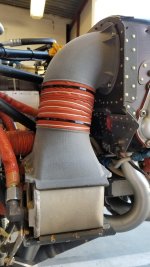
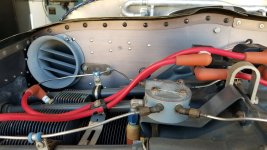
To recap for the search-averse among us, I've had the setup below for about 5 years now. No heat deflection, as evidenced by the bolts maintaining preload. Search if you want to know more.

As always, using plastic parts "underhood" has some caveats: don't use it near radiant heat sources, like exhaust tubing. Don't use it as a structural member. Oil cooler ducts are quite low-stress, so to me a perfect place to use it.

The only processes I'd consider for underhood applications are SLS and MJF, both with PA-12 (nylon). Send your .stl files to Jawstec.com or Shapeways.com or any number of vendors. A week later you have high-quality and robust parts. I would never use a consumer-grade machine to make parts like this. Save it for headset hooks etc.

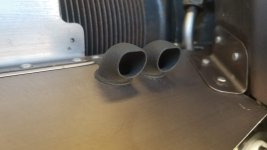
1739408272224.jpeg1739408293008.jpeg1739408649510.jpeg
 

Attachments

You old people crack me up too! ;)
To recap for the search-averse among us, I've had the setup below for about 5 years now. No heat deflection, as evidenced by the bolts maintaining preload. Search if you want to know more.

As always, using plastic parts "underhood" has some caveats: don't use it near radiant heat sources, like exhaust tubing. Don't use it as a structural member. Oil cooler ducts are quite low-stress, so to me a perfect place to use it.

The only processes I'd consider for underhood applications are SLS and MJF, both with PA-12 (nylon). Send your .stl files to Jawstec.com or Shapeways.com or any number of vendors. A week later you have high-quality and robust parts. I would never use a consumer-grade machine to make parts like this. Save it for headset hooks etc.

View attachment 80779View attachment 80780View attachment 80781
Wow, those look really sweet! Thanks for the files. For those wondering about cost, i went to the Shapeways website and uploaded the files for the bellmouth and elbow pieces for an instant quote using the MJF printing process. The bellmouth quote was about $40, while the elbow was $352.
 
Last edited:
Wow, those look really sweet! Thanks for the files. For those wondering about cost, i went to the Shapeways website and uploaded the files for the bellmouth and elbow pieces for an instant quote using the MJF printing process. The bellmouth quote was about $40, while the elbow was $352.
Thanks! And you're welcome.

But, apparently Shapeways is no longer the way to go... Below is a quote for all 3 parts from Craftcloud. As low as $193 shipped. This is SLS, but MJF was just a few $$ more. SLS and MJF are equivalent as far as I'm concerned.

1739480251373.png

And if you insist on getting these made in the US, here's Jawstec's quote in MJF:

1739480556509.png
 
Just to keep you up to date here. I was not comfortable with the PHAT-CF or PET-CF for use under the cowling. Both materials have a high heat resistance, but they are flammable. I tested this with a strong lighter and once they were burning, they kept on burning.

I decided to buy the expensive PPS-CF. It is UL 94 V0 certified and therefore flame retardant. For me, this is absolutely essential to be able to fly with a good conscience.
 
Back
Top