Van's Air Force

The definitive Van's Aircraft support community! Buying, building or flying an RV? Join our exclusive family of mentors and enthusiasts!

Recalcitrant Tanks Close-out Plate….Any Clever Ideas?

Ironflight

VAF Moderator / Line Boy
Mentor
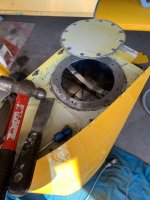
I’ve only spent a few days tinkering around with this, but it’s got me a bit stumped - maybe someone has a clever idea for a different attack!

I have to remove one of the factory-installed tank close-outs on the F1 because this twenty-something year old tank (which has never had fuel in it, but is tight as a drum) has a twenty-something year old rubber flop tube in it- and I’d a lot rather change it out now, before mounting the wings than afterwards, when it cracks, leaks, or falls off inside the tank!

I have opened up tanks, changed fuel quantity senders, and repaired tanks many times with pro-seal, so I am not a rookie at working with this stuff….but this one has me stumped! The factory did an incredible job of sealing the plate with pro-seal, and the pro-seal was REALLY GOOD STUFF. Add to this that skin flanges, spar, tank rib flange right at the spar, and the forward tank attach fitting all conspire so that you can’t get a tool in at a shallow angle to try and wedge between the plate and the rib. The screws came out fine, and I have been able to cut away the pro-seal build-up around the edge with a razor knife. I have used PolyGone on the Pro-seal I can get to, and it converts it to goo very well, and quickly.

But I figure I’ve got a ring of Pro-seal that extends from the outer diameter of the plate in towards the center probably an inch, and I can’t get the PolyGone in there to do its work. I’m actually considering just cutting a round hole in the middle of the plate with a fly-cutter or hole saw, and then closing it again with a second plate on top! But I’d rather get the plate off if anyone has any ideas.

I just hate opening up this well-built, factory sealed tank, but that flop tube is just too old…..
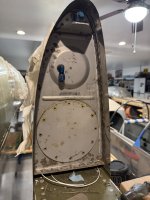
IMG_5796.jpeg
 
Did you ever remove a windshield from a newer car----the ones bonded in, not the rubber channel style?

1737611929596.webp

What does heat do to the pro-seal?

Safety wire and a couple wooden handles might help.
 
How about a narrow metal putty knife with the tip bent at a 90 degree angle? I think you’ll find that once you get part of the plate to separate from the rib, it will come off a bit easier than you might think.

Skylor


I’ve only spent a few days tinkering around with this, but it’s got me a bit stumped - maybe someone has a clever idea for a different attack!

I have to remove one of the factory-installed tank close-outs on the F1 because this twenty-something year old tank (which has never had fuel in it, but is tight as a drum) has a twenty-something year old rubber flop tube in it- and I’d a lot rather change it out now, before mounting the wings than afterwards, when it cracks, leaks, or falls off inside the tank!

I have opened up tanks, changed fuel quantity senders, and repaired tanks many times with pro-seal, so I am not a rookie at working with this stuff….but this one has me stumped! The factory did an incredible job of sealing the plate with pro-seal, and the pro-seal was REALLY GOOD STUFF. Add to this that skin flanges, spar, tank rib flange right at the spar, and the forward tank attach fitting all conspire so that you can’t get a tool in at a shallow angle to try and wedge between the plate and the rib. The screws came out fine, and I have been able to cut away the pro-seal build-up around the edge with a razor knife. I have used PolyGone on the Pro-seal I can get to, and it converts it to goo very well, and quickly.

But I figure I’ve got a ring of Pro-seal that extends from the outer diameter of the plate in towards the center probably an inch, and I can’t get the PolyGone in there to do its work. I’m actually considering just cutting a round hole in the middle of the plate with a fly-cutter or hole saw, and then closing it again with a second plate on top! But I’d rather get the plate off if anyone has any ideas.

I just hate opening up this well-built, factory sealed tank, but that flop tube is just too old…..

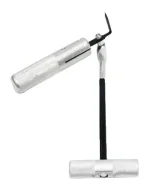
View attachment 79156
 
Paul,
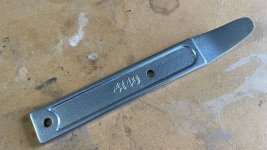
I have removed many plates at that location using a "skin lap separation tool" that we use for separating sealed skin laps on airliners. i have some Boeing supplied ones, but they are available on the market. Super must have for tank plates. Its spring steel, smooth and the angle is just enough to get the plate started at the edge of the rib blister and work your way around each side. You should then be able to use plastic scrappers or wood wedges to get the remainder. Use a plastic mallet to get the tip started under the plate ..youll get the idea.
 

Attachments

  • maxresdefault.jpg
    maxresdefault.jpg
    234.5 KB · Views: 215
What about cutting an access hole in the back instead of disturbing a very well sealed plate? Standard MO when repairing fuel tank leaks.
 
Hi Paul,
I just finished doing this on the 8 during its annual inspection last fall since it was time for all fuel, oil, and flop-tube replacements. Sadly, when I built the plane I thought a flop tube in each tank was a good idea..... not so much anymore.

I used a heat gun concentrated on one point of the plate, then I bashed a stiff 1" putty knife under the plate on the side edge where I was able to swing the hammer.

I bashed away thinking about how much a new tank will cost me, and how was I ever going to match the paint when I finished the replacement tank.

I had to reheat multiple times to soften the pro-seal. I recall swearing quite a lot for quite a few hours.

Then it came off... since the putty knife was not long enough to reach the far side of the plate, the last 20% required a lot of pulling and levering.

Then I remembered I had one more to do.
 

Attachments

  • IMG_5748.JPG
    IMG_5748.JPG
    1.4 MB · Views: 173
Paul: Heat is your friend in getting stuck plates off. I suspect that when it was installed, there was either little or no mold release used. We destroyed a $40,000 heated gasket making tool because the guy that installed the tool on the fresh sealant, forgot to apply mold release. The tooling guys were pretty steamed when we sent it back for repair. We were using if for the very first time. It was to augment our other set of heated tools as we were increasing production rates at that time.
 
Thanks for the ideas - and the link to that skin lap tool - I think that shape might be my friend!

I already tried a “bone saw” loop of safety wire - can’t get it to stay in the groove because there is no groove (yet) and the plate is so close to the rib (that layer of Proseal must be a 0.001” thick…very nicely applied….). I actually used a piece of “Safe-T-Cable” because it is braided, so it has “teeth”…but not long enough to put handles on each end. I am thinking of making a hoop for it, sort of like a coping saw - that might be good once I get this started.

I have experimented with heat already, but being very cautious because I don’t want to hurt the Pro-Seal on the rest of the tank, and aluminum conducts so well! I tried the heat gun on one of the scraps that I cut away, and it took a LOT of heat to get this old pre-seal to change state at all. This is really good stuff - they probably have different Haz Mat rules in the Czech Republic (or at least they did back then….)

Paul
 
How about a guitar "E" string? Pretty thin. Mine are .008". Another option is ask SafeLite for some of the Kevlar string they use to remove windshields.
 
Grind one end of a hacksaw blade to a thin edge, then bend 90 degrees. Heat the end with a torch till glowing and see if that will work it's way under the edge.
 
When you replace it use access hatch sealant. Skygeek sells it, not cheap.

PPG Aerospace® PR-1773 B-2 Dark Red PRC Standard Spec Corrosion Inhibitive Access Door Sealant - 6 oz 654-SemKit​


Dave
 
If it's really stuck that strongly, perhaps it's time to think outside the box... you could cut out the middle of the existing plate, trim it back so it's even with the opening in the rib, and then install a new plate over the top. That would leave the glued-on perimeter of the existing plate sandwiched between your new plate and the rib - obviously it wants to stay there!
 
Paul: The trick with heat, is high heat, low airflow and use a nozzle to concentrate the heat in a small area. You want to heat an area about the size of a nickle in under a minute to just hot enough you can't put your finger on it for more than a couple of seconds. Then try getting an edge tool under that area and slice the sealant. It helps if you have a couple of tools, so that as you get the edge to lift, you can leave the 1st one in and work with the 2nd and 3rd (if you have 3). Once you've lifted 2 inches or so of the perimeter, you should be able to use an x-acto or single edge razor blade to cut the sealant while maintaining a lifting pressure.

When it comes time to reseal it, do yourself and the next owner a favor and do a FIP gasket rather than a total wet sealing of the panel.
 
I have no experience with this whatsoever. Multiple above recommendations are for a wire and for heat. That makes me think of a foam cutting heat wire. It seems that that would concentrate heat exactly where you want it on the pro-seal and that you could get a wire cutting action in at the same time.
 
Something for consideration. Is the current situation a result of bounding one's approach by the cult of Vans techniques?

I assume all of the companies that make the polysulfide sealants have an access door specific sealant like the original DeSoto product. Would the fuel tank access door sealant have been a better application here versus the integral tank sealant? Mooney specifies the different sealants depending on joint construction, future access, etc. I've removed/replaced many such access panels that utilized to aforementioned non-generic sealant. Held for decades but most were removed by applying constant pressure only; no heat, sawing action, etc.

Make no mistake that Vans and others do a good job of simplifying product/materials/tooling needs. Just saying there could be more suitable product options for this closeout is all. Best of luck.
 
Freemasm: We didn't specify different sealants for making door gaskets vs being used as faying surface sealants, other than worklife times or temp limits. Gaskets were typically made using B-1/2 worklife, while there were areas and tasks that specified using B-2 or B-6 due to the times required to complete the operations. There were some areas that specified a different sealant due to operating temp limits,
 
In the Navy, we used a piece of thick plexiglass that was cut into about a 2" X 6" strip, then beveled to a dull knife edge on the end. We'd use a mallet to 'gently' drive it just under the access plate. As soon as it gives any at all, the whole seal will immediately let go. Wet-sealed a lot of panels with 8802 (pro-seal) on navy aircraft. Even the most difficult ones eventually come off this way.
 
I have no experience with this whatsoever. Multiple above recommendations are for a wire and for heat. That makes me think of a foam cutting heat wire. It seems that that would concentrate heat exactly where you want it on the pro-seal and that you could get a wire cutting action in at the same time.
Don't think you want to try this.....the current flowing through the wire will take a detour into the tank.........and possibly you if you touch the tank..... ;)

Foam isn't conductive.
 
Dental picks work well for removing aged polysulfide sealant. In your situation,I'd try one with a narrow chisel tip and angled end.
 
Hi Paul,
I just finished doing this on the 8 during its annual inspection last fall since it was time for all fuel, oil, and flop-tube replacements. Sadly, when I built the plane I thought a flop tube in each tank was a good idea..... not so much anymore.

I used a heat gun concentrated on one point of the plate, then I bashed a stiff 1" putty knife under the plate on the side edge where I was able to swing the hammer.

I bashed away thinking about how much a new tank will cost me, and how was I ever going to match the paint when I finished the replacement tank.

I had to reheat multiple times to soften the pro-seal. I recall swearing quite a lot for quite a few hours.

Then it came off... since the putty knife was not long enough to reach the far side of the plate, the last 20% required a lot of pulling and levering.

Then I remembered I had one more to do.
Curious as to what the flop tube looked like when you took it out........... :unsure:
 
Freemasm: We didn't specify different sealants for making door gaskets vs being used as faying surface sealants, other than worklife times or temp limits. Gaskets were typically made using B-1/2 worklife, while there were areas and tasks that specified using B-2 or B-6 due to the times required to complete the operations. There were some areas that specified a different sealant due to operating temp limits,
My real point was, there are better applications available than those introduced through Vans. Flop
Tubes have a rather finite life. Access will be needed again. I’m all for avoiding future grief when able.
 
Last edited:
Heat gun on the plate while working with a putty knife or equivilent. If they used PRC 1422 that is what it takes. It needs to get to 180 deg or so and the sealant will weaken. Make sure you just heat the plate so that the heat doesn’t get to the rib flanges.
 
your playing 8's? how many strings do you go through?
I don't play a ton. I like the 8s because they bend really nice and theu are easier to play. Acoustic guitar. I have a nice Zager and a cheapo Fender.
I also play blues harp and ukulele.
Just fooling around.
LL
 
I don't play a ton. I like the 8s because they bend really nice and theu are easier to play. Acoustic guitar. I have a nice Zager and a cheapo Fender.
I also play blues harp and ukulele.
Just fooling around.
LL
When i had to open up a tank on the F1 is used a narrow putty knife sharpened and then drove it with a mallet. Once started it wasn't too bad to work it all free.
 
I’ve only spent a few days tinkering around with this, but it’s got me a bit stumped - maybe someone has a clever idea for a different attack!

I have to remove one of the factory-installed tank close-outs on the F1 because this twenty-something year old tank (which has never had fuel in it, but is tight as a drum) has a twenty-something year old rubber flop tube in it- and I’d a lot rather change it out now, before mounting the wings than afterwards, when it cracks, leaks, or falls off inside the tank!

I have opened up tanks, changed fuel quantity senders, and repaired tanks many times with pro-seal, so I am not a rookie at working with this stuff….but this one has me stumped! The factory did an incredible job of sealing the plate with pro-seal, and the pro-seal was REALLY GOOD STUFF. Add to this that skin flanges, spar, tank rib flange right at the spar, and the forward tank attach fitting all conspire so that you can’t get a tool in at a shallow angle to try and wedge between the plate and the rib. The screws came out fine, and I have been able to cut away the pro-seal build-up around the edge with a razor knife. I have used PolyGone on the Pro-seal I can get to, and it converts it to goo very well, and quickly.

But I figure I’ve got a ring of Pro-seal that extends from the outer diameter of the plate in towards the center probably an inch, and I can’t get the PolyGone in there to do its work. I’m actually considering just cutting a round hole in the middle of the plate with a fly-cutter or hole saw, and then closing it again with a second plate on top! But I’d rather get the plate off if anyone has any ideas.

I just hate opening up this well-built, factory sealed tank, but that flop tube is just too old…..

View attachment 79156
Heat is your friend here. First, take a piece of .032 Al sheet 1"x6" and put a 90* bend with 1" for the bottom of the "L" Use a fine file to put a sharp tapered edge on the end of it. Use your heat gun to warm up a small area and use the new tool in one of the four cormers. Once you get through, you can easilly tap the side of the tool to work around the perimeter. You will be surprised how soft it gets with some heat. Don't need to heat the whole cover; Just the area you are working on.
 
It takes a lot of percussive maintenance to get one off. I think this is the main plus for the cork gaskets... you can tear them and then clean up the open surfaces later. More chance of leaking, but easier maintenance.
 
I don't play a ton. I like the 8s because they bend really nice and theu are easier to play. Acoustic guitar. I have a nice Zager and a cheapo Fender.
I also play blues harp and ukulele.
Just fooling around.
LL
I KNEW we had more in common than just airplanes! I use Ernie Ball Super Slinky 9-42 on my Fender Strat and other electric guitar(s) and Dean Markley 10-47 on my 1957 Epiphone FT-79 Texan acoustic. I'll bring my guitar up when I come up to see your project!. A man can't have too many guitars..........or airplanes! ☺️
 
Paul: The trick with heat, is high heat, low airflow and use a nozzle to concentrate the heat in a small area. You want to heat an area about the size of a nickle in under a minute to just hot enough you can't put your finger on it for more than a couple of seconds. Then try getting an edge tool under that area and slice the sealant. It helps if you have a couple of tools, so that as you get the edge to lift, you can leave the 1st one in and work with the 2nd and 3rd (if you have 3). Once you've lifted 2 inches or so of the perimeter, you should be able to use an x-acto or single edge razor blade to cut the sealant while maintaining a lifting pressure.

When it comes time to reseal it, do yourself and the next owner a favor and do a FIP gasket rather than a total wet sealing of the panel.
THIS!!! is exactly what I had to do to get it removed
 
Occam's razor, "the simplest answer is usually the correct one."
In the time spent cogitating on all this, could have cut a new hole, done the work, and slapped a new cover on.
From a bonified 'cogitator', I know about these things. :)
 
Well it’s open! And quite frankly, like almost any problem, once you completely understand it, the solution is usually self-evident.

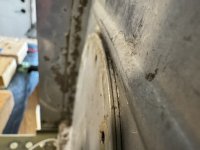
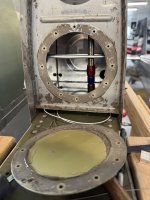
I was going to just sit and let it wait on one of those cool skin lap separation tools to arrive, but was walking past it today, frustrated with another bit of custom work that was not going my way, and took a closer look at the joint. I took a picture with my phone in Macro mode, and sure enough - there was a flange riveted to the outside of the rib material, then the plate was screwed on top of that. And the tools I had been using (including razor blades and X-acto knives) had been dropping between the flange and the rib, not between the flange and the plate.

I pulled the heat gun back out, along with a razor blade, and it quickly sunk into the appropriate gap. I then went back to a thin piece of steel I had turned into a very sharp-ended knife blade/pry bar, worked it in, and then slid it around the perimeter, following the heat. Five minutes and the plate was off! Heat was the answer - and getting a sharp edge into the appropriate gap.

The Czechs really did do a beautiful job on these tanks - the Pro-seal is very neat and well-sealed.

IMG_5802.jpegIMG_5804.jpeg
 
Well it’s open! And quite frankly, like almost any problem, once you completely understand it, the solution is usually self-evident.

I was going to just sit and let it wait on one of those cool skin lap separation tools to arrive, but was walking past it today, frustrated with another bit of custom work that was not going my way, and took a closer look at the joint. I took a picture with my phone in Macro mode, and sure enough - there was a flange riveted to the outside of the rib material, then the plate was screwed on top of that. And the tools I had been using (including razor blades and X-acto knives) had been dropping between the flange and the rib, not between the flange and the plate.

I pulled the heat gun back out, along with a razor blade, and it quickly sunk into the appropriate gap. I then went back to a thin piece of steel I had turned into a very sharp-ended knife blade/pry bar, worked it in, and then slid it around the perimeter, following the heat. Five minutes and the plate was off! Heat was the answer - and getting a sharp edge into the appropriate gap.

The Czechs really did do a beautiful job on these tanks - the Pro-seal is very neat and well-sealed.

View attachment 79289View attachment 79290
I would be interested to know what shape the flop tube is in if you are going to dissect it.
 
Well it’s open! And quite frankly, like almost any problem, once you completely understand it, the solution is usually self-evident.

I was going to just sit and let it wait on one of those cool skin lap separation tools to arrive, but was walking past it today, frustrated with another bit of custom work that was not going my way, and took a closer look at the joint. I took a picture with my phone in Macro mode, and sure enough - there was a flange riveted to the outside of the rib material, then the plate was screwed on top of that. And the tools I had been using (including razor blades and X-acto knives) had been dropping between the flange and the rib, not between the flange and the plate.
What is it Rosann Rosannadanna said? "It's always something!"
 
Was there anything wrong with the flop tube, once you got that plate off?
Well the flop tube LOOKS perfect….a typical braided jacket hose…but consulting with Tom at TS Flightlines, he said its rubber lined (Nylon is too stiff for a flop tube) and that based on when the tank was closed up, its well past twice its service life, even though it hasn’t seen fuel - so we’re going to replace it. You can’t see the rubber inside the jacket…..
 
Well the flop tube LOOKS perfect….a typical braided jacket hose…but consulting with Tom at TS Flightlines, he said its rubber lined (Nylon is too stiff for a flop tube) and that based on when the tank was closed up, its well past twice its service life, even though it hasn’t seen fuel - so we’re going to replace it. You can’t see the rubber inside the jacket…..
Good choice to replace the line. I have seen a few during reseal repairs that were so stiff, they likely had usable fuel down to about half. Something that will bite a guy that thinks he has plenty of gas.
 
I just removed mine as well. Never saw a drop of fuel. My build took so long, it reached TBO. I installed a standard pickup and capped the fitting outside for a future purge line.
 
I was told that one can pop Pro-seal loose with an application of dry ice and give it a whack. I've never tried it, maybe someone here has?
 
I was told that one can pop Pro-seal loose with an application of dry ice and give it a whack. I've never tried it, maybe someone here
Don’t know if this trick works but would caution anyone to not try it on a plate that is close to other prosealed joints, like the rib flanges. You wouldn’t want to accidentally cause a whole lot more work, like resealing that whole side rib.
 
I was told that one can pop Pro-seal loose with an application of dry ice and give it a whack. I've never tried it, maybe someone here has?
Yep, we do it often in heavy jet overhaul. It's even a recommended process in Airbus manuals for removing bonded fittings. Not usually necessary for the tank work..I like the skin separation tools. If you dry ice chill a tank plate, chances of compromising the adjacent sealed areas is nil. It's just a pain to contain the dry ice, and the area re-warms quick when the ice is moved off. We sometimes "bag" sections of lap joints using plastic and tape.
 
Yep, we do it often in heavy jet overhaul. It's even a recommended process in Airbus manuals for removing bonded fittings. Not usually necessary for the tank work..I like the skin separation tools. If you dry ice chill a tank plate, chances of compromising the adjacent sealed areas is nil. It's just a pain to contain the dry ice, and the area re-warms quick when the ice is moved off. We sometimes "bag" sections of lap joints using plastic and tape.
See…. This is the reason why we keep guys like around!! 😁
 
Back
Top