Van's Air Force

The definitive Van's Aircraft support community! Buying, building or flying an RV? Join our exclusive family of mentors and enthusiasts!

Help me understand this instrument approach procedure

ctennis

Well Known Member
While out practicing some approaches today, had a situation occur that hadn't happened to me before - hoping the hive mind can explain.

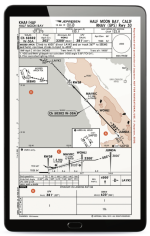
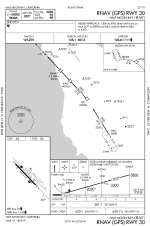
RNAV 30 HAF chart below. IAF is SAPID, IF is JUMDA, FAF is WOHLI.

Garmin GPS175. Loaded the approach and had choice of VECTORS or SAPID. Chose SAPID. Went direct SAPID in the GPS.

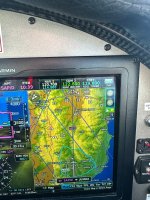
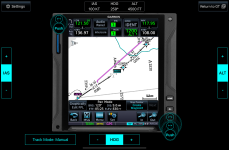
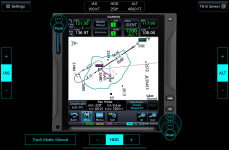
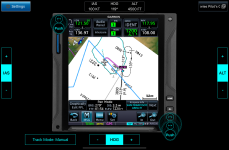
Noticed that our NAV path was direct SAPID, but the procedure shown on the map actually went ahead and charted a turn back to bring us inbound to the approach at JUMDA instead. See a pic of the moving map, but note that our GPS waypoint was SAPID.

The system essentially gave us a much nicer and closer inbound to the IF JUMDA vs having to fly all of the way to the IAF SAPID, do a procedure turn , and come back in. But...we didn't request that, so I don't understand the how or the why.

On the second approach, it did the same thing again. This time I forced a DIRECT to SAPID. The moving map changed to show us going there, but about 2 seconds later, switched back to showing us making a turn into JUMDA instead like shown in the image.

On the third approach, it had us actually going out to SAPID. I couldn't get it to repeat the short circuit. I loaded the approach the same way, and was direct SAPID the same way.

I found this 10 year old article explaining that IFs are valid ways of starting an approach - https://www.aopa.org/news-and-media...ent-approach-vectors-iaf-and-intermediate-fix. But at least when loading the approach, the IF of JUMDA isn't an option for a transition. The only way I could think to short circuit the IAF is either vectors to final, or loading the approach and issuing a direct to an IF. But in this case, we weren't either of those - yet the GPS decided that's what we wanted.

I'm sure it's all explainable and I'd love to have a teachable moment!
 

Attachments

  • KHAF RNAV30.png
    KHAF RNAV30.png
    292.8 KB · Views: 439
  • IMG_8871.JPG
    IMG_8871.JPG
    2.1 MB · Views: 417
  • IMG_8873.JPG
    IMG_8873.JPG
    2.2 MB · Views: 427
SAPID is a fly-by waypoint, the navigator is computing a turn based on ground speed in order to achieve the acute turn between the inbound and outbound legs from SAPID.

I teach this approach all the time out of KSQL/KPAO.
-Greg
 
I would guess that the first two times you were setup to fly “by” SAPID, which is standard default, and the last time it required you to fly “over” SAPID. When you do a fly “by”, it will lead the turn, which will put you on the inbound course while keeping you in a standard rate turn, at your present speed. If it is a fly “over”, then it need you to actually fly over the fix. I would ask, what did you do differently in the flight plan to changed it from a fly by, to a fly over.

Fly “over” fixes are on approaches, SID’s, and STARS.

This should explain when and why about fly over, and fly by fixes.


Last edited:
I’ve found that when I’m out of tolerance for the capture at an IAF (90deg or whatever) then I need to load the hold in order to do the procedure turn.
In my experience when a procedure turn is required, the navigator isn’t smart enough to figure that out. Are you saying that it did?

You have to do the procedure turn here either way. I’m pretty sure you can’t join the initial segment by doing a U-turn
 
On the chart, SAPID is not charted as a “fly-by waypoint”. Even if it was, the fact that your navigator had you turn nearly 6 miles prior to SAPID tells me something else is going on here.
 
is there any chance you selected activate leg instead of direct to? if not, in some cases there is also a prompt to skip the procedure turn. that may explain why it intercepted the course to JUMDA without going through the hold. should be able to verify in the gps175 simulator on the ipad
 
I’ve found that when I’m out of tolerance for the capture at an IAF (90deg or whatever) then I need to load the hold in order to do the procedure turn.
In my experience when a procedure turn is required, the navigator isn’t smart enough to figure that out. Are you saying that it did?

You have to do the procedure turn here either way. I’m pretty sure you can’t join the initial segment by doing a U-turn

But that's exactly what happened. We never went to the IAF and never did a procedure turn. The navigator just turned us around ~180 degrees had us join at the intermediate fix.
 
is there any chance you selected activate leg instead of direct to? if not, in some cases there is also a prompt to skip the procedure turn. that may explain why it intercepted the course to JUMDA without going through the hold. should be able to verify in the gps175 simulator on the ipad

Yeah, never did any type of leg activation. Only direct to on the navigator after the approach was loaded.
 
SAPID is a fly-by waypoint, the navigator is computing a turn based on ground speed in order to achieve the acute turn between the inbound and outbound legs from SAPID.

I teach this approach all the time out of KSQL/KPAO.
-Greg

This is cool, I guess (as far as I know) hadn't ever flow an approach with a fly-by waypoint as the IAF. So since it becomes optional, the navigator essentially found the most optimal way to "fly by" was the route it put me on.

I do wonder though, if I had needed to actually go to SAPIC and do a full procedure turn, how I would have told the navigator that was my intention.
 
If no radar coverage I think the technically proper way to start this approach from this north direction (90/270 or greater) would either be a course reversal on protected side at SAPID using the HILPT because of the high terrain on east side of the bay. Try entering Direct Sapid...Hold as published Sapid...Then enter the Approach via Sapid. Once you do the hold entry and are direct SAPID...exit hold and commence approach.


Screen Shot 2025-01-25 at 8.35.07 AM.png
 
Just to add a bit- none of the Garmin navigators include the approach hold at SAPID when you load this approach (as it will for procedure turns). In order to fly the hold depicted at SAPID for course reversal you'd click on SAPID in the flight plan, select "HOLD AT WAYPOINT" and enter the hold details. From the direction you flew the navigator would proceed to SAPID and enter the hold.

Try these out on the Garmin iPad GTN/GPS simulators and you'll see exactly the behavior you had in flight.
 
TIL it turns out the holding pattern at SAPID is not part of the approach, not a course reversal or a PT because it’s drawn with a thin line. It is only a “published hold” which the ATC may instruct to enter for sequencing or some other purpose. That is why the Garmin is not giving it as an option for the reversal. If the hold was shown on the plate in bold it would be in the Garmin’s procedure with an option to remove (eg when cleared for straight in etc).

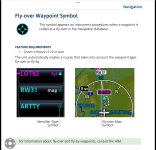
Also found this in the manual about fly over symbology

1737870608217.jpeg

Great question!
 
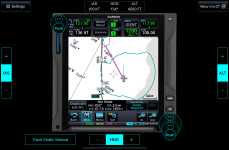
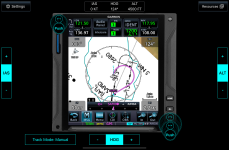
Attached are a couple of reference routings for the entry at SAPID based on the plane's location and heading from the GTN simulator.

ex1 shows what happens if we're near SAPID when we activate the approach. The most efficient route is to establish us on a turn back directly to SAPID before sequencing us on.

ex2 is another example. This time we're near SAPID and pointed towards the segment. The GPS wants to turn us towards SAPID, and as we get near to the next leg, go ahead and anticipate the turn away from SAPID onto that leg.

ex3 is a bit more interesting. Now we're behind SAPID and flying away. In this case we fly a big teardrop. Note that the teardrop is simply a turn to get us back to SAPID. It has nothing to do with the depicted hold, since it's not part of the procedure.

ex4 is an example if we're inbound to SAPID from somewhat of a 180degree off course and it anticipates the turn before we get there. You can see it anticipates the turn quite a bit before we get to SAPID.

ex5 is a more extreme version of ex4. Basically we get close enough to the inbound course long before we get to SAPID, so it turns inbound and established that segment without ever getting particularly close to SAPID.

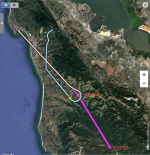
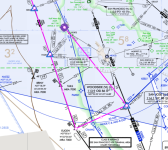
And last, the KHAF.png is based on my flight data in question. The magenta line shows the approach SAPID->JUMDA, and the blue->orange line shows the flight path. As you can see, we were direct SAPID, but as we got close to the inbound leg the navigator calculated at we should go ahead and make the turn inbound, a good 10+ miles away from SAPID, but an efficient leading turn onto the next leg. It also somewhat miscalculated, and we overshot, and by the time we got lined up we were actually on the JUMDA->WOHLI segment.

This is all legal and fascinating, but I still wonder if under real IFR (forgetting this specific approach, but just this at any random airport) would ATC recognize that this is what happened or would I get questioned for not flying "direct to SAPID" ?
 

Attachments

  • KHAF.png
    KHAF.png
    3 MB · Views: 88
  • ex5.PNG
    ex5.PNG
    991.4 KB · Views: 82
  • ex4.PNG
    ex4.PNG
    896.1 KB · Views: 77
  • ex3.PNG
    ex3.PNG
    929.9 KB · Views: 68
  • ex2.PNG
    ex2.PNG
    883.6 KB · Views: 68
  • ex1.PNG
    ex1.PNG
    938.4 KB · Views: 80
Attached are a couple of reference routings for the entry at SAPID based on the plane's location and heading from the GTN simulator.

ex1 shows what happens if we're near SAPID when we activate the approach. The most efficient route is to establish us on a turn back directly to SAPID before sequencing us on.

ex2 is another example. This time we're near SAPID and pointed towards the segment. The GPS wants to turn us towards SAPID, and as we get near to the next leg, go ahead and anticipate the turn away from SAPID onto that leg.

ex3 is a bit more interesting. Now we're behind SAPID and flying away. In this case we fly a big teardrop. Note that the teardrop is simply a turn to get us back to SAPID. It has nothing to do with the depicted hold, since it's not part of the procedure.

ex4 is an example if we're inbound to SAPID from somewhat of a 180degree off course and it anticipates the turn before we get there. You can see it anticipates the turn quite a bit before we get to SAPID.

ex5 is a more extreme version of ex4. Basically we get close enough to the inbound course long before we get to SAPID, so it turns inbound and established that segment without ever getting particularly close to SAPID.

And last, the KHAF.png is based on my flight data in question. The magenta line shows the approach SAPID->JUMDA, and the blue->orange line shows the flight path. As you can see, we were direct SAPID, but as we got close to the inbound leg the navigator calculated at we should go ahead and make the turn inbound, a good 10+ miles away from SAPID, but an efficient leading turn onto the next leg. It also somewhat miscalculated, and we overshot, and by the time we got lined up we were actually on the JUMDA->WOHLI segment.

This is all legal and fascinating, but I still wonder if under real IFR (forgetting this specific approach, but just this at any random airport) would ATC recognize that this is what happened or would I get questioned for not flying "direct to SAPID" ?
As has been mentioned, the holding pattern is an Arrival Hold, not a HILPT, and therefore not a published segment of the procedure. So, the navigator is using it's program logic to maneuver onto the approach, and it is treating SAPID as a Fly-by, since there isn't a reason for it to be in the database as a Flyover. If the hold was a HILPT, this would (should) be entirely different. Ifit were me, I would navigate closer to SAPID before activating the approach to get a result more in line with what a person would do hand flying it.
 
It also somewhat miscalculated, and we overshot, and by the time we got lined up we were actually on the JUMDA->WOHLI segment.
something very similar happened to me yesterday on a practice approach. i was on the inbound course between two IAFs when the ATC broke me off the approach for traffic and i was flying parallel to the course in the opposite direction. the ATC cleared to rejoin the approach and i went Direct To the initial IAF. as happened with the OP the garmin recalculated the turn to recapture the leg between the two IAFs but it did not take into account 50kt crosswind aloft. It ended up overshooting the final course but recaptured from the other side just fine. I only had to make sure to stay above the MSA while the garmin sorted itself out.
 
TIL it turns out the holding pattern at SAPID is not part of the approach, not a course reversal or a PT because it’s drawn with a thin line. It is only a “published hold” which the ATC may instruct to enter for sequencing or some other purpose. That is why the Garmin is not giving it as an option for the reversal. If the hold was shown on the plate in bold it would be in the Garmin’s procedure with an option to remove (eg when cleared for straight in etc).

Also found this in the manual about fly over symbology

View attachment 79419

Great question!
Exactly! This is the best answer yet.

In my opinion, this is a very poorly drawn/designed approach. I think it should be drawn with a bold line as HILPT or at least have a restriction from which direction the approach can be commenced at the IAF.

The other peculiar thing is that the bold line isn’t drawn continuously from the IAF, SAPID to the IF, JUMDA. It’s kind of drawn as a feeder route with an arrow. Except feeder routes are drawn with a thin line arrow. I believe the line between the IAF and the IF should have been drawn with solid continuous bold line.

This is a good topic for Bruce Williams.
 

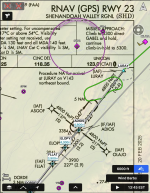
The Jepp chart in the article more clearly depicts the arrival hold...I haven't spoken NOAA in years but i think practically coming from north low IFR they would route you down V27 since all the SFO departures will be in your way - you could file direct SAPID from EUGEN on V27. What Norcal will do i have no idea other than be annoyed with you.Screen Shot 2025-01-26 at 5.54.53 PM.png
 
Last edited:
Exactly! This is the best answer yet.

In my opinion, this is a very poorly drawn/designed approach. I think it should be drawn with a bold line as HILPT or at least have a restriction from which direction the approach can be commenced at the IAF.

The other peculiar thing is that the bold line isn’t drawn continuously from the IAF, SAPID to the IF, JUMDA. It’s kind of drawn as a feeder route with an arrow. Except feeder routes are drawn with a thin line arrow. I believe the line between the IAF and the IF should have been drawn with solid continuous bold line.

This is a good topic for Bruce Williams.
yes, send this to Bruce Williams for the Pilot Workshops IFR Mastery crew. He might even check to see if the hold depicted is correct, or should be a bold-line HILPT.
 
Yeah, never did any type of leg activation. Only direct to on the navigator after the approach was loaded.

I teach students to activate the approach instead of using direct to function. The reason we used to do this is mostly to form good habits due to limitations on legacy equipment, but perhaps there's something about this approach that is causing your GPS175 to treat SAPID as an enroute waypoint vs. IAF?
 

The Jepp chart in the article more clearly depicts the arrival hold...I haven't spoken NOAA in years but i think practically coming from north low IFR they would route you down V27 since all the SFO departures will be in your way - you could file direct SAPID from EUGEN on V27. What Norcal will do i have no idea other than be annoyed with you.View attachment 79515
What does the Jepp plate for this approach look like? I've always used the FAA plates, but it seems that the Jepp plates have a better depiction of the approach.
 
RNAV (RNP) approaches are becoming commonplace around the world.

I had a deal a number of years back at Grand Cayman (non-radar environment) where the airplane in front and I were both cleared for the same approach, coming from the same direction. The other airplane was approximately 10 miles in front of us. We were both cleared to an IF on the final approach course. The turn to final at that IF would be approximately 90 degrees. The aircraft in front entered a course reversal pattern at the IF to align with the final approach course. Seeing this on the TCAS I confirmed with the preceeding airplane that they were, in fact, turning outbound to do a course reversal. This was a surprise to ATC. Our approach clearance was cancelled to allow the preceeding airplane to perform the course reversal and return inbound. There weren't any "NoPT" wedges shown.

We had planned to do a direct 90 degree turn to the final approach course and complete the approach.

Who was right?

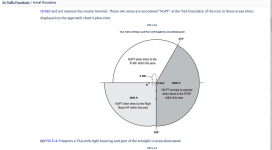
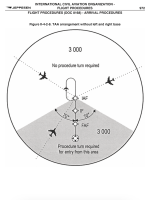
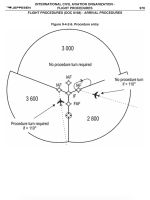
After digging a good bit into the Jeppesen publications we came upon this RNAV chart explaining where course reversals are required. (Yes, some charts show NoPT, but when they do, not at all IF or IAF points). As it turns out, up to a 110 degree turn to the approach course is permitted without a procedure turn (or course reversal). This is ICAO. The FMC on our airplanes know this rule and will insert a holding pattern if intercepting at, or greater than, 110 degrees. The possible fly-by "shortcuts" at the turn(s) are factored into the design of the approach.

Most all of my RNAV approaches are outside of the USA. Do the USA procedures differ from ICAO?

IMG_0101.png
IMG_0100.png
 
Do the USA procedures differ from ICAO?
Based on what my Garmin did on a recent practice approach I'd say it's different in the U.S. On the pic below I was established on the LURAY to ADIOS leg, then broken off the approach by ATC for traffic (someone doing the same same thing but they were not talking), and then cleared to re-join from LURAY. The angle to the final was ~150° . the Garmin did a standard rate turn, flew through the final and captured from the other side. It basically invented its own random course reversal.


1738091410870.png
 
RNAV (RNP) approaches are becoming commonplace around the world.

I had a deal a number of years back at Grand Cayman (non-radar environment) where the airplane in front and I were both cleared for the same approach, coming from the same direction. The other airplane was approximately 10 miles in front of us. We were both cleared to an IF on the final approach course. The turn to final at that IF would be approximately 90 degrees. The aircraft in front entered a course reversal pattern at the IF to align with the final approach course. Seeing this on the TCAS I confirmed with the preceeding airplane that they were, in fact, turning outbound to do a course reversal. This was a surprise to ATC. Our approach clearance was cancelled to allow the preceeding airplane to perform the course reversal and return inbound. There weren't any "NoPT" wedges shown.

We had planned to do a direct 90 degree turn to the final approach course and complete the approach.

Who was right?

After digging a good bit into the Jeppesen publications we came upon this RNAV chart explaining where course reversals are required. (Yes, some charts show NoPT, but when they do, not at all IF or IAF points). As it turns out, up to a 110 degree turn to the approach course is permitted without a procedure turn (or course reversal). This is ICAO. The FMC on our airplanes know this rule and will insert a holding pattern if intercepting at, or greater than, 110 degrees. The possible fly-by "shortcuts" at the turn(s) are factored into the design of the approach.

Most all of my RNAV approaches are outside of the USA. Do the USA procedures differ from ICAO?

View attachment 79644
View attachment 79645
This is how all of our RNPs are as well.
No way you can enter the approach from 180deg without a PT. If being vectored the max divergence to the initial segment is 45deg. Otherwise the same 110 deg. I’m pretty sure we are ICAO compliant.

The GTN doesn’t care about any of this as far as I can tell. It’ll just treat everything as a fly by waypoint irrespective of intercept angles except the MAP unless you manually insert the reversal or holding (which for us is quite often not coded at all and requires manual input)
 
Thanks for posting. I like the dive & drive from JUMDA to WOHLI representation on the Jepps. I see the 3800' from SAPID to JUMDA... but there is no altitude for the hold... is it assumed to be at or above the MSA of 4500'? 3800 seems to low for the surrounding terrain (on the FAA chart). There's 9.9 miles to drop the 700'.

I've never seen an arrival hold before... I would have assumed the same as the OP. Thanks for the good discussion all...
 
yes, send this to Bruce Williams for the Pilot Workshops IFR Mastery crew. He might even check to see if the hold depicted is correct, or should be a bold-line HILPT.
This is from Bruce Williams:

I looked at this approach again in the Garmin PC Trainer, and I suspect the confusion the pilot expresses is related to the turn anticipation feature and the fact that SAPID is a fly-by wayoint and the anchor for an arrival hold.
I started the procedure from over OSI, and the GTN did its turn anticipation thing and showed a turn well before reaching SAPID.
The hold at SAPID is an arrival hold (the 8260-3 for the procedure, available at the FAA Instrument Flight Procedures Information Gateway, notes "CHART ARRIVAL HOLDING AT SAPID: HOLD S, LT 313.23 INBOUND"), not a HILPT or missed approach hold. Iwrote about arrival holds in the July 2024 issue of AOPA Pilot. Arrival holds are not in the database like HILPT, so if you are cleared to fly an arrival hold, you must build it.
The last changes to the 8260 for that approach includes a summary of changes, viz.:
1. REMOVED PLANVIEW NOTE FROM: "PROCEDURE NA FOR ARRIVALS AT SAPID ON V25 - V87 SOUTHEAST BOUND AND T259 SOUTHWEST BOUND." - PROCEDURE NOW HAS HOLDING AT SAPID WHICH ALLOWS SOUTHBOUND TRAFFIC FROM V25-V87 AND T259.
...
14. ADDED HOLDING AT SAPID WITH LT - ATC REQUESTED.

He included the following links:


Back
Top