Van's Air Force

The definitive Van's Aircraft support community! Buying, building or flying an RV? Join our exclusive family of mentors and enthusiasts!

Tank repair - inboard rib - cut proseal (how?)

blaplante

Well Known Member
Patron
I'm sure this has been discussed but my search came up empty.

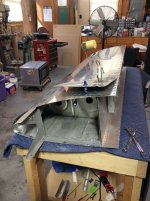
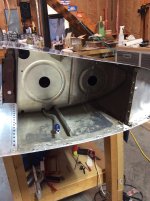
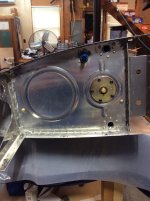
Issue: RV-6A tank, leak at inboard rib nose. I've been into it twice trying to effect repairs, but it hasn't been successful. I'm thinking it is time to just extract the inboard rib completely, fully clean up, and install a new rib. OK, simple enough, except...

Once I drill out the countersunk rivets holding the rib in, how do I cut the proseal? It's one thing if they weren't countersunk, could get a knife in there or something... but with the countersinks nested, how will I ever get it apart?
 
I'm sure this has been discussed but my search came up empty.

Issue: RV-6A tank, leak at inboard rib nose. I've been into it twice trying to effect repairs, but it hasn't been successful. I'm thinking it is time to just extract the inboard rib completely, fully clean up, and install a new rib. OK, simple enough, except...

Once I drill out the countersunk rivets holding the rib in, how do I cut the proseal? It's one thing if they weren't countersunk, could get a knife in there or something... but with the countersinks nested, how will I ever get it apart?
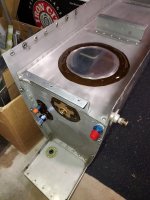
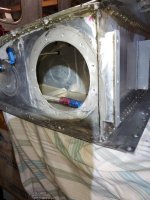
Been there, done that. First, drill out all of the rivets. You will likely have to remove longitudinal rivets, too. After that, I cut the inner rib out, cutting as close to the rib flange as I could. Then, I used a heat gun and a pair of pliers to peal away the flange in sections. The proseal comes out easily with heat. Finally, I used a phenolic scraper (Yardstore) and MEK to remove the proseal residue. I reassembled by putting a significant bead of proseal when I installed the replacement rib. The inside is not (easily) accessible, but the proseal bermed-up along the flange and I have not had any leaks in over 450 hours. Hope I didn’t jinx myself. 🙄.

This is doable, if a bit scary. Good luck.
 

Attachments

  • IMG_0476.jpeg
    IMG_0476.jpeg
    1.4 MB · Views: 142
  • IMG_0477.jpeg
    IMG_0477.jpeg
    1.4 MB · Views: 138
  • IMG_0486.jpeg
    IMG_0486.jpeg
    1.3 MB · Views: 138
I'm sure this has been discussed but my search came up empty.

Issue: RV-6A tank, leak at inboard rib nose. I've been into it twice trying to effect repairs, but it hasn't been successful. I'm thinking it is time to just extract the inboard rib completely, fully clean up, and install a new rib. OK, simple enough, except...

Once I drill out the countersunk rivets holding the rib in, how do I cut the proseal? It's one thing if they weren't countersunk, could get a knife in there or something... but with the countersinks nested, how will I ever get it apart?
The proseal can be cut with a thin blade and the parts need to be prised apart. It is very tenacious.

I think you may be better off leaving the existing rib in place (otherwise a new rib will also need the nose bracket to line up with the fuselage bracket, which will necessitate fitting the tank to the wing while getting the brackets aligned and drilled).

Did you cut an access hole in the baffle to get full access to the rib and did you use polygone or similar to clean off the old sealant?

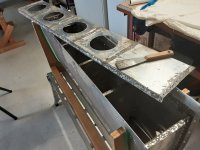
Edit: pic attached of thin blade paint scraper tool that I used to get the back baffle off the tank. There are many countersink rivets so the principle is the same as for removing the root rib. If the rib is cut with snips etc as suggested in post #2 above then that will make it easier to get it out.

20221125_155812.jpg
 
Last edited:
Been there, done that. First, drill out all of the rivets. You will likely have to remove longitudinal rivets, too. After that, I cut the inner rib out, cutting as close to the rib flange as I could. Then, I used a heat gun and a pair of pliers to peal away the flange in sections. The proseal comes out easily with heat. Finally, I used a phenolic scraper (Yardstore) and MEK to remove the proseal residue. I reassembled by putting a significant bead of proseal when I installed the replacement rib. The inside is not (easily) accessible, but the proseal bermed-up along the flange and I have not had any leaks in over 450 hours. Hope I didn’t jinx myself. 🙄.

This is doable, if a bit scary. Good luck.
I agree and have used the same process.
This provides a huge access improvement and allow working on a small area at a time.
Polygone is also very helpful.
 
Rebuilding tanks for a friend with an RV-6 with fuel delivery problems at present…. Forget MEK and all the other smelly chemicals. You want a product called Poly Gone (Aircraft Spruce sells it). Paint it on with a cheapo brush and it will dissolve poly. That said, I’d recommend building a wing jig to hold the tank so that Poly Gone won’t run down towards the other ribs. As for getting the doublers off the inboard rib, submerging the rib seemed to work for me. I wrapped the rib in a latex glove and pouring Poly Gone into the glove and propping the rib up such that the Poly Gone will submerge the Proseal.

To be clear and agree with the posts above, MEK works… Poly Gone works much better.

Heat helps too. It might help to physically cut the Polysulfide sealant to get the rib out, but getting the sealant off of the existing metal is best with Poly Gone.

Getting a phenolic scraper as mentioned above is going to be a huge help too.

To be absolutely clear, all of this is a data point of 1, as this is my first rodeo with removing Polysulfide sealant, but it works well in that 1 data point. Good luck.
 
At the rear baffle, along the top and bottom seam, there will be a place where the old Proseal meets the new Proseal- how well does that transition seal?
 
At the rear baffle, along the top and bottom seam, there will be a place where the old Proseal meets the new Proseal- how well does that transition seal?
That was my question as well... I have my tank open now with access to the rib, but haven't removed it. Was planning to essentially re-caulk the inside seam with new proseal. I found there was a void in the proseal coverage along the seam right where I was finding leaks on the outside... Managed to hold for 25 years, but eventually all of the remedies people tried on the outside over the years couldn't keep up.

If new proseal will stick to old proseal, this *could* be an easier fix. If not, maybe i'm into removing the rib... But i'd like to avoid that.
 
Any reason not to do the traditional way, to cut an access point in the baffle to gain a nice access to the rib and seal everything. I must be missing something here.
 
I used a 2” wide metal drywall mud knife (Home Depot) to separate the ribs from tank skins on all tanks I played with. Apply heat gun along 3 or 4 dimpled holes, work the mud knife in & work it down to a dimple, twist a bit to get past it & slide the blade along to the next dimples, repeat. Sometimes o positioned the knife like a chisel & tapped it with a hammer, sometimes I’d hold the knife sideways & tap it like splitting wood. Don’t be afraid to put the heat to it. I clean it up with Polygon.
 
Any reason not to do the traditional way, to cut an access point in the baffle to gain a nice access to the rib and seal everything. I must be missing something here.
Original post: "I've been into it twice trying to effect repairs, but it hasn't been successful." By cutting the usual hole in the baffle, etc.
Perhaps I'm incompetent.
 
Original post: "I've been into it twice trying to effect repairs, but it hasn't been successful." By cutting the usual hole in the baffle, etc.
Perhaps I'm incompetent.
Looks like I missed that. Did you access it from the baffle or from the oil pickup. I would think accessing from the baffle should give plenty of access to even remove/scuff old proseal and reseal it . It certainly seems less of the risk than replacing the whole rib as it would need to be done semi blind
 
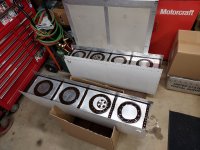
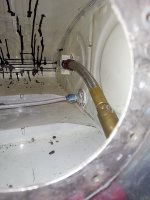
I've done a BUNCH of leak repairs to 4,6,8 and 10 fuel tanks. Some full re-seal, some just the trouble spots. i try do do the repairs without removing any fasteners through paint, so I typically cut/install the "traditional" access holes/covers. The I/B rib can be accessed through the existing large fuel line pick up plate if installed, or the end bay baffle plate, existing or made for the repair. I have attached some miscellaneous pictures to see the process I typically use. New sealant over old (properly cured) sealant is fine, as long as it's clean and lightly abraded with Scotchbrite.
 

Attachments

  • TankRV10.jpg
    TankRV10.jpg
    1.4 MB · Views: 107
  • Tank end rib.jpg
    Tank end rib.jpg
    1.5 MB · Views: 93
  • Sealed baffle covers.jpg
    Sealed baffle covers.jpg
    1.7 MB · Views: 88
  • End rib slosh.jpg
    End rib slosh.jpg
    1.3 MB · Views: 94
  • Baffle access.jpg
    Baffle access.jpg
    2.1 MB · Views: 106
New sealant over old (properly cured) sealant is fine, as long as it's clean and lightly abraded with Scotchbrite…

Agreed. Old sealant should be sanded and also important use the adhesion promoter product (PPG PR-148) appropriate for the sealant and substrate.
 
Looks like I missed that. Did you access it from the baffle or from the oil pickup. I would think accessing from the baffle should give plenty of access to even remove/scuff old proseal and reseal it . It certainly seems less of the risk than replacing the whole rib as it would need to be done semi blind
I said baffle in the text you quoted.
I'm certainly considering re-opening that access hole when I replace the whole rib. Real problem there is that the leak is right forward, and so even with a hole in the baffle you are reaching thru the whole tank (from aft to fore) when trying to do from the baffle. Pretty much means you have two mutually exclusive choices: SEE the WORK *OR* DO THE WORK.
 
I said baffle in the text you quoted.
Looks like I missed that part (baffle) again.
I totally understand the "SEE the WORK *OR* DO THE WORK" and have done, it is not as reassuring to not see what you are doing but I still see less risks especially that you can potentially test the repair part before closing the access point in the baffle.
 
When I'm in there, I am more FEELING THE WORK as I'm spreading the sealant along the seams. SEEING comes after to confirm I got everywhere I wanted.
A side note, if you have already resealed in there before, it would be a good idea to scrape as much of the previous sealant out as you can before again applying another layer, especially if previous layer attempts were kind of dabbed over leak areas. It would be impossible to get new sealant into any little gaps, cracks or crevasses, better to clean the seam down to bare metal if you can.
 
I said baffle in the text you quoted.
I'm certainly considering re-opening that access hole when I replace the whole rib. Real problem there is that the leak is right forward, and so even with a hole in the baffle you are reaching thru the whole tank (from aft to fore) when trying to do from the baffle. Pretty much means you have two mutually exclusive choices: SEE the WORK *OR* DO THE WORK.
You basically feel the work, then look at the work. Alot of sealing is feeling especially when smoothing into the corners. I use finger tip to smooth and a cut off 1/2 " brush to apply. Trim the bristles to about 1/2 in length, cut the handle down to 2".
 
... if you have already resealed in there before, it would be a good idea to scrape as much of the previous sealant out as you can before again applying another layer, especially if previous layer attempts were kind of dabbed over leak areas. It would be impossible to get new sealant into any little gaps, cracks or crevasses, better to clean the seam down to bare metal if you can.
Hence why I'm leaning toward pulling the whole inboard rib, since I've been in there twice already and removing all that through an aft access hole isn't easy.

To the person concerned about paint damage, this is the inboard rib, so the top rivets are hidden under the intersection strip. A few bottom ones aren't hidden but that area has so much damn blue stain on it that I'm not too concerned about the paint down there.
 
I had the right tank start leaking on my -6 shortly after taking delivery.

Leakage evidence was indicated by staining and was found at the most inboard lower aft corner, extending outboard six to eight inches and up the aft wall inboard rib intersection a few inches.

I removed the tank, removed the inboard access panel and found that the sealant had gone “soft” in all the leaking/stained areas.

I utilized plastic scrapers to remove all the proseal possible in the obvious areas and continued for a few inches as “insurance”.

Most of the removal work was accomplished blind by feel and confirmed with an inspection mirror after getting my arm out of the access hole.

Everything got a good clean up with MEK.

I utilized a combination of syringes and brushes to reapply the proseal, utilizing popsicle sticks, brushes and/or my finger tips to press in and/or smooth out.

I ended up re-sealing the tank mostly blind and confirmed proper sealant application with flashlight and mirror.

That tank has been good ever since (3 years) but have now found the need to do the opposite side tank.

I would be tempted to give it on more try before drilling rivets. That takes it to a whole new level.

Good luck which ever way you proceed.
 
The RV-7A I recently purchased had a pin hole leak at the outboard tip; so I scotch brighted, cleaned, and filled with epoxy and then followed on with a fillet of JB Weld. Did a pressure test three days later and put it back on. Not leaking so far after two months.

Doug
 

Attachments

  • Epoxy and JB Weld.jpg
    Epoxy and JB Weld.jpg
    92.8 KB · Views: 30
I was reluctant to post this, but if I ever get access to the outboard tank rib, i would add a second fuel level sensor so i have one on both the inboard and outboard rib, the modern efis can then be calibrated to show accurate fuel quantities from near full to empty. The selection of the sensor has to be carefully thought out so the two sensors can be wired in parreoll to properly combine the two readings. I got 12 computers in my plane, might as well use them.
 
Spruce has it but anyone you know who works in aerospace knows that stuff like that is tossed daily as it expires. Find someone who works at an airplane factory and I'll bet they can get as much expired product as you would ever need.
 
Back
Top