Juliet Delta
Member
Has anyone put a winterization kit on there RV7A. Also are you instrument guys running static wicks




 Following closely!
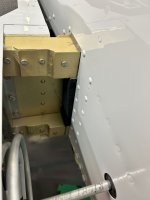


There are a number of things you can do to the cabin to seal out winter temps , ensure control tubes are sealed off were they enter the cabin, seal off the slider skirt ( if you have one ) closed cell Insulation make your interior quite & Warmer , one place I missed on my first build was the spar web gap Pictured here!
That looks like window AC foam. The only thing I don’t like about it is it retains moisture. I know this because I use it on my canopy and front baggage door. I’ll live with it in those spots but I’d think again to put it at the spar. Good thinking though on how to stop the air in that spot.How did you seal that area?
Sounds like a chunk of closed cell foam would work.That looks like window AC foam. The only thing I don’t like about it is it retains moisture. I know this because I use it on my canopy and front baggage door. I’ll live with it in those spots but I’d think again to put it at the spar. Good thinking though on how to stop the air in that spot.
I fly in Minnesota and Wisconsin down to zero Fahrenheit. I put a couple strips of blue painters masking tape on each of the cowl cheeks to make them a little smaller. That works very well to bring the CHT up to the mid 300 range. The tape amazingly stays put even at 160 knots. I completely cover the il cooler. I have two heat muffs with the inlet air for the cabin heat going into the first heat muff and then routes the hot air from that muff directly to the second heat muff. That way the air coming out of the second heat muff is very toasty.Has anyone put a winterization kit on there RV7A. Also are you instrument guys running static wicks
Do you have a picture example of your painters tape set up? I thought about this but I was worried about it getting ingested. Does it hold up to rain?I fly in Minnesota and Wisconsin down to zero Fahrenheit. I put a couple strips of blue painters masking tape on each of the cowl cheeks to make them a little smaller. That works very well to bring the CHT up to the mid 300 range. The tape amazingly stays put even at 160 knots. I completely cover the il cooler. I have two heat muffs with the inlet air for the cabin heat going into the first heat muff and then routes the hot air from that muff directly to the second heat muff. That way the air coming out of the second heat muff is very toasty.
Many years ago I talked to the guy that invented static wicks for aircraft. As I recall he said the only time you need them is if you are going close to supersonic.
Static wicks are only necessary when the aircraft visits airspeeds over 200 knots.Has anyone put a winterization kit on there RV7A. Also are you instrument guys running static wicks
Which is why Cessna puts them on a 172?Static wicks are only necessary when the aircraft visits airspeeds over 200 knots.

 www.rvplasticparts.com

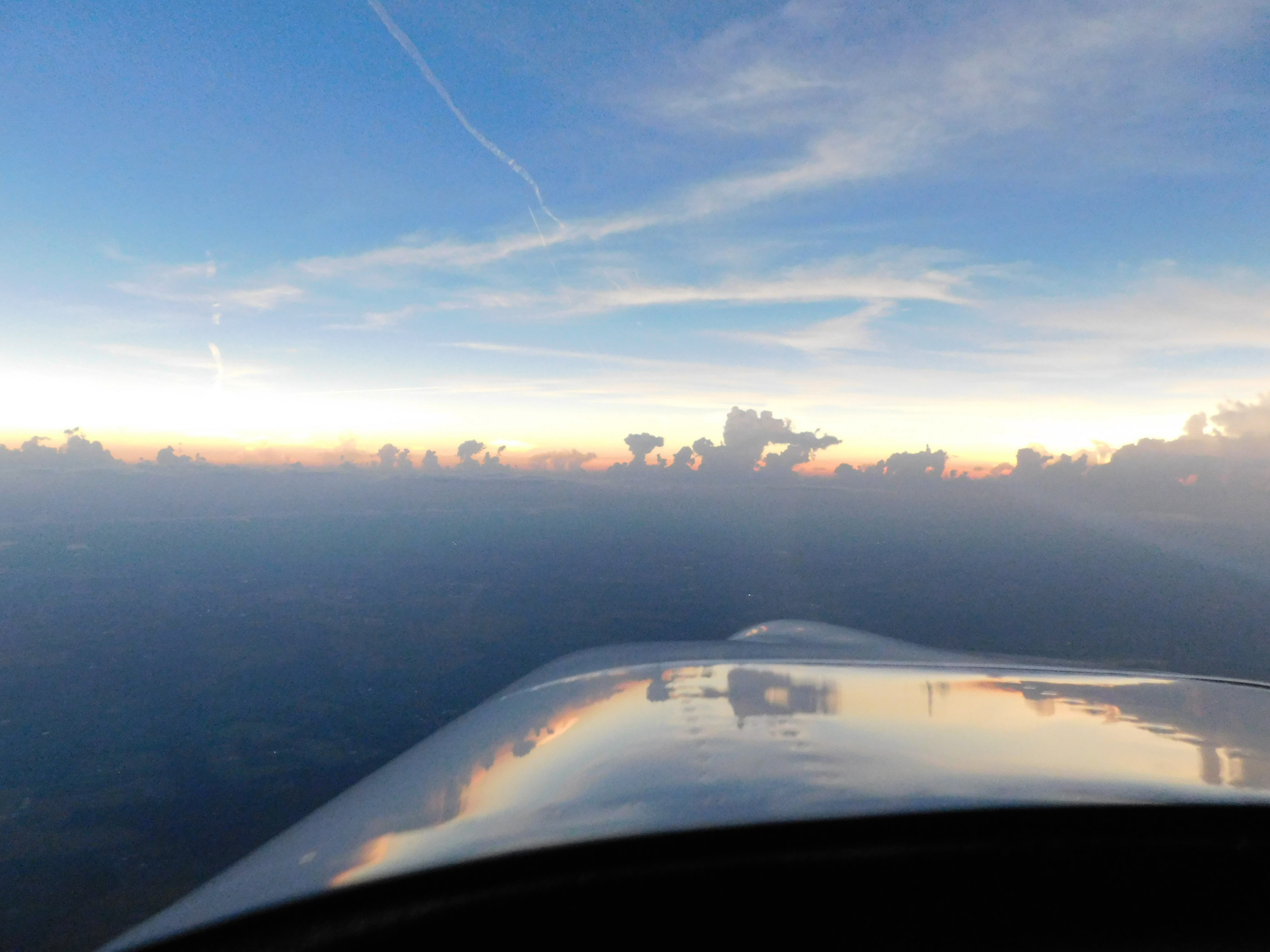
Do you have a picture of them installed? I like this, what’s the vortex generator vs none advantage? What width did you go with?Cowl inlet “blockers” from Steve Melton (RVPlasticParts). The ones for the RV8 are slightly different than the SBS airplanes.
RVPlasticParts | United States | 3D Printing Service | Van's RV Aircraft 3/5
I know that they bleed off the build up of electrical charges. When I was going through A&P school I asked the question why do some have it and others don’t? The answer was 200 kts.Which is why Cessna puts them on a 172?
You also don’t see any static wicks on fighter jets and I think they go over 200 kts!I know that they bleed off the build up of electrical charges. When I was going through A&P school I asked the question why do some have it and others don’t? The answer was 200 kts.
I guess there is a more involved answer about how much electrical charge builds up at what speed, to require the static wicks.
While working at a regional airline with 168 or so CRJ200’s I listened in to a group of engineers discussing lightning strikes. It was ery obvious that they did not have any good tools to explain why some aircraft were repeatedly struck by lightning and others were not.
Going back to the first answer. You will not find many static wicks on aircraft that don’t visit 200 kts.
Do you have a picture of them installed? I like this, what’s the vortex generator vs none advantage? What width did you go with?
Yeah, I got some version of the same answer, but It's definitely not a one size fits all answer. My bringing up the 172 was somewhat tongue in cheek. Back in the day when we first got Loran, I learned pretty quickly that flying in certain types of precip would wreak havoc with reception. same with ADF. That hasn't been an issue for years now in slow piston singles, but the static wicks are still there, probably just because we've always done it that way.I know that they bleed off the build up of electrical charges. When I was going through A&P school I asked the question why do some have it and others don’t? The answer was 200 kts.
I guess there is a more involved answer about how much electrical charge builds up at what speed, to require the static wicks.
While working at a regional airline with 168 or so CRJ200’s I listened in to a group of engineers discussing lightning strikes. It was ery obvious that they did not have any good tools to explain why some aircraft were repeatedly struck by lightning and others were not.
Going back to the first answer. You will not find many static wicks on aircraft that don’t visit 200 kts.
Maybe your next test could be moving the tape strip & compare covering the inboard 1/3, than the outboard 1/3. See what different effect each have.I tested this while I have inlet inserts on order from Steve at RVplasticparts.com. It actually works and raised temps about 30 to 40 degrees across all cylinders.
I used closed cell neoprene foam because its known to not retain moisture , but after seeing other corrosion issues with pushrod tubes in this area , I’ll be checking the condition there @every annualHow did you seal that area?

That’s exactly what I have in my RV-8 and it puts out good heat. I do not have a dual heat setup, just one heat muff that gets input air from the right intake into the muff then scat tube back to the heater control box on the lower firewall. I contacted Acft Spruce and they put me in touch with the guy that builds these. I needed a custom orientation of the scat tube connectors so Dave Edwards made one with reclocked connections to simplify my installation. My heat is much better now, give Dave a call, 702-306-3590.Anyone with a RV-8 in series dual heat muff set up? Or some other options for more heat? My heat is anemic in the cabin once you get in the teens in cruise. I’m considering going with this: https://customweldingproducts.com/products/
I did contact him and got mine on order. Thanks!That’s exactly what I have in my RV-8 and it puts out good heat. I do not have a dual heat setup, just one heat muff that gets input air from the right intake into the muff then scat tube back to the heater control box on the lower firewall. I contacted Acft Spruce and they put me in touch with the guy that builds these. I needed a custom orientation of the scat tube connectors so Dave Edwards made one with reclocked connections to simplify my installation. My heat is much better now, give Dave a call, 702-306-3590.
FYI- I made a mockup with cardboard and duct tape and sent it to Dave, the real one he sent back fit perfectly.