Van's Air Force

The definitive Van's Aircraft support community! Buying, building or flying an RV? Join our exclusive family of mentors and enthusiasts!

Slightly fluctuating EGT and lagging CHT on startup on cylinder 2

SwimmingDragon518

Well Known Member
Patron
Hello,

I have a very subtle problem that I noticed the other day when I was in normalize mode at startup. It looks like EGT on #2 fluctuates a little and CHT lags a bit behind the rest of the cylinders. Can't feel much seat of the pants but if my tip up prop is resting slightly open on its handle at startup, there is now a vibration. All goes to normal after warming up. Anyone seen this? The consensus with my A&P and savvy is that it's probably not a sticking exhaust valve since there's not rough vibration, but no ideas beyond that.

Thanks all!
P.S. It's an RV7A with an O360-A1A, Hartzell C/S

link:
 
Don't be fooled by the engine not being rough ..it will be eventually. It's easy enough to pull the valve cover and valve spring to check it.
I'm in the middle of troubleshooting this problem. Same cylinder, same lag. It eventually manifested itself as a rough running engine on takeoff.
Here's a recent thread I started about the problem.
Just yesterday I confirmed that the #2 exhaust valve is sticking. My reamer is on the way.
 
Classic Lycoming "morning sickness". There are published procedures for testing the valve guide clearance (wobble test), and reaming the valve guide. There are also published procedures for lapping the exhaust valve without removing a cylinder.

It won't get better by itself. I was lulled by the symptom being intermittent and only when first starting the engine, and only at low RPM. Then the valve stuck and bent the pushrod. New pushrod, pushrod shroud and seals, and new valve guide reamers... has run fine ever since.
 
We were originally going to do the wobble test but both savvy and my AP (Bruce from VAF) came to the conclusion that it’s probably not a stuck valve due to no roughness. Second AP was present and he also felt very confident nothing was up with the cylinder. We borescoped #2 and all looked great. Please note the video is in normalized mode that’s why the fluctuations are so clear. Obviously something is a little different there, waiting for response from savvy for engine data.
 
We were originally going to do the wobble test but both savvy and my AP (Bruce from VAF) came to the conclusion that it’s probably not a stuck valve due to no roughness. Second AP was present and he also felt very confident nothing was up with the cylinder. We borescoped #2 and all looked great. Please note the video is in normalized mode that’s why the fluctuations are so clear. Obviously something is a little different there, waiting for response from savvy for engine data.
The borescope won’t tell you about a sticky valve. Your symptoms are how mine started. Give it time, the spread will get worse, then the roughness during startup will show up…then you’ll do the wobble test.
Really, all the mechanic needs to do is remove the valve spring and push the valve in and out by hand to know if it’s sticky….pretty simple.
 
The borescope won’t tell you about a sticky valve. Your symptoms are how mine started. Give it time, the spread will get worse, then the roughness during startup will show up…then you’ll do the wobble test.
Really, all the mechanic needs to do is remove the valve spring and push the valve in and out by hand to know if it’s sticky….pretty simple.
Hey Mike,

I read your thread and story and I'm glad everything turned out well. Looking closer at the engine data you posted in that thread, I think it's a bit different than what I'm seeing.

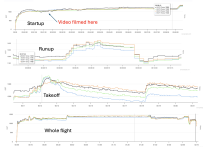
The EGT isn't necessarily lagging behind, it's just fluctuating subtly. The EGTs on cylinder 2 trend higher than the rest of the cylinders, but dip below them once in a while during fluctuation. Below is engine data from my most recent flight.

Screenshot 2025-01-03 at 6.56.21 PM.png
 
Hey Mike,

I read your thread and story and I'm glad everything turned out well. Looking closer at the engine data you posted in that thread, I think it's a bit different than what I'm seeing.

The EGT isn't necessarily lagging behind, it's just fluctuating subtly. The EGTs on cylinder 2 trend higher than the rest of the cylinders, but dip below them once in a while during fluctuation. Below is engine data from my most recent flight.

View attachment 77681
I reread my post and it comes across a bit sanctimonious…sorry about that. Yours might not be a sticky valve, time will tell.
 
Quick Update on the issue having worked on this most of the day:

I've personally experienced the Lycoming morning sickness and this is definitely not it. At less than 400 hours on this engine, with the updated valve guides, I wouldn't expect it to have happened with so little time. We looked at the valve and stem with the borescope and it was very clean, no signs of coking up or carbon. There was no sign of the exhaust valve sticking and causing the cylinder to run cold. Yes, we could have easily taken off the valve cover, rocker and definitively wobbled the valve stem to confirm, but this wasn't in line with the symptoms shown in the engine data.

The intake tube hoses were looking pretty sad. There was also what looks like it might be a small tear in the intake paper gasket on Cylinder #2, but no signs of fuel staining.
Looking at the Run Up graph above, you can see that when the MAP is low at idle, the #2 EGT rises, and as the MAP increases during the run up, the EGT starts to fall.
I'm thinking that we have a possible induction leak that is making that cylinder go lean when the MAP is low. At cruise, MAP is high, so a tiny leak wouldn't have much effect.
This was all confirmed with the EMS data that we uploaded to Savvy.

We are going to get the intake hoses and gaskets replaced, then do some more testing.
 
Quick Update on the issue having worked on this most of the day:

I've personally experienced the Lycoming morning sickness and this is definitely not it. At less than 400 hours on this engine, with the updated valve guides, I wouldn't expect it to have happened with so little time. We looked at the valve and stem with the borescope and it was very clean, no signs of coking up or carbon. There was no sign of the exhaust valve sticking and causing the cylinder to run cold. Yes, we could have easily taken off the valve cover, rocker and definitively wobbled the valve stem to confirm, but this wasn't in line with the symptoms shown in the engine data.

The intake tube hoses were looking pretty sad. There was also what looks like it might be a small tear in the intake paper gasket on Cylinder #2, but no signs of fuel staining.
Looking at the Run Up graph above, you can see that when the MAP is low at idle, the #2 EGT rises, and as the MAP increases during the run up, the EGT starts to fall.
I'm thinking that we have a possible induction leak that is making that cylinder go lean when the MAP is low. At cruise, MAP is high, so a tiny leak wouldn't have much effect.
This was all confirmed with the EMS data that we uploaded to Savvy.

We are going to get the intake hoses and gaskets replaced, then do some more testing.
Your probably right but just for a data point for others…I have a #2 exhaust valve that will have to be removed with a drift due to being so tight on a factory new IO-360-M1B with 230 hours on it.
 
Bruce

At 400 hours your due to do the wobble test per Lycoming instructions, so why not just do it to confirm all is ok. It’s really quite quick and easy.

Regards Peter
 
It’s really quite quick and easy.
my experience is basically limited to an oil change and the engine is due for the valve check. i also need to replace intake gaskets and hoses. I wonder if o should look for an A&P or try to do it myself. I don’t even have the spring removal tool. You are right that it does not look hard but i kind of doubt my mechanical skills. 😬
 
Carl

Thanks for correcting this. Maybe I read an old service bulletin.
It seems on our RV’s quite a number of people have had problems with #2 exhaust valves.


Regards Peter
 
Out of an abundance of caution, Bruce and I will do the wobble test soon. That being said, after full engine data analysis by savvy, they say there’s no sign of a sticky exhaust valve. Does anyone see anything here that indicates a sticky valve is the culprit?
 
Last edited:
Out of an abundance of caution, Bruce and I will do the wobble test soon. That being said, after full engine data analysis by savvy, they say there’s no sign of a sticky exhaust valve. Does anyone see anything here that indicates a sticky valve is the culprit?
Good call to do the wobble test. It’s so easy (takes about 30 minutes) and immediately identifies or eliminates a sticking exhaust valve as the culprit.

I also had the full engine data analysis by Savvy including the FEVA 2.1 Exhaust Valve Condition Screening Report, Trend Analysis and Report Card all of which have been done every 50 hours since new (Thunderbolt). I’ve also submitted the full 11 picture per cylinder boroscope review several times and had a special request boroscope review of just the suspect cylinder (#4, IO-540). No indication of a valve problem was noted. The wobble test showed a very sticky exhaust valve.
 
Good call to do the wobble test. It’s so easy (takes about 30 minutes) and immediately identifies or eliminates a sticking exhaust valve as the culprit.

I also had the full engine data analysis by Savvy including the FEVA 2.1 Exhaust Valve Condition Screening Report, Trend Analysis and Report Card all of which have been done every 50 hours since new (Thunderbolt). I’ve also submitted the full 11 picture per cylinder boroscope review several times and had a special request boroscope review of just the suspect cylinder (#4, IO-540). No indication of a valve problem was noted. The wobble test showed a very sticky exhaust valve.

Hi Larry,

So you had no indication of a stuck valve by EGT? What drove you to do the wobble test?
 
Hello,

I have a very subtle problem that I noticed the other day when I was in normalize mode at startup. It looks like EGT on #2 fluctuates a little and CHT lags a bit behind the rest of the cylinders. Can't feel much seat of the pants but if my tip up prop is resting slightly open on its handle at startup, there is now a vibration. All goes to normal after warming up. Anyone seen this? The consensus with my A&P and savvy is that it's probably not a sticking exhaust valve since there's not rough vibration, but no ideas beyond that.

Thanks all!
P.S. It's an RV7A with an O360-A1A, Hartzell C/S

link:
Common problem for the IO-360 .. #2CYL ex valve sticking.. easy to compress the ex valve spring, remove split keepers and springs. Valve should slide easily without any wobble. There's a service bulletin with specs for permissable wobble
 
At 800 Hrs since new on my IO-390 angle valve I recently started experiencing the classic morning sickness, in my case on number 4. One time it lasted a good minute or more, so I got the message and just completed the guide reaming (along with lapping the valve seats to clear some thin spotty lead deposits while there), and it was a very satisfying experience. A couple things to share:
  1. The McFarlane reamer is a must- works like a dream
  2. Each guide particularly the one with the valve that actually stuck, delivered a satisfying amount of black crud on the reamer
  3. Each valve, particularly number 4, needed to actually be emphatically pushed in, and after reaming slid smoothly
Since a seriously sticking valve can become disastrous, and can happen in other regions of operation, not just cold start up, I discovered an interesting predictor. If you periodically check your EFIS logs and graph exhaust gas temperatures, you will find momentary EGT drop outs on suspect cylinders well before a noticeable stuck valve, such as at start up occurs. That might well be the time to do the exhaust valve guide reaming. The drop outs in my case occurred right at landing and taxi, associated with the substantial change in power, heat and airflow - so valve sticking loss of clearance clearly can happen not just when cold.
 
At 800 Hrs since new on my IO-390 angle valve I recently started experiencing the classic morning sickness, in my case on number 4. One time it lasted a good minute or more, so I got the message and just completed the guide reaming (along with lapping the valve seats to clear some thin spotty lead deposits while there), and it was a very satisfying experience. A couple things to share:
  1. The McFarlane reamer is a must- works like a dream
  2. Each guide particularly the one with the valve that actually stuck, delivered a satisfying amount of black crud on the reamer
  3. Each valve, particularly number 4, needed to actually be emphatically pushed in, and after reaming slid smoothly
Since a seriously sticking valve can become disastrous, and can happen in other regions of operation, not just cold start up, I discovered an interesting predictor. If you periodically check your EFIS logs and graph exhaust gas temperatures, you will find momentary EGT drop outs on suspect cylinders well before a noticeable stuck valve, such as at start up occurs. That might well be the time to do the exhaust valve guide reaming. The drop outs in my case occurred right at landing and taxi, associated with the substantial change in power, heat and airflow - so valve sticking loss of clearance clearly can happen not just when cold.
Good input on checking for the "tell". What engine oil are you using and frequency of change? This is the first 390 that it was not cyl 2 that I've seen.
 
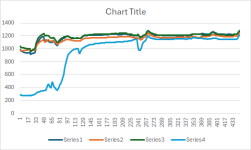
Yes, I too was surprised it was not number 2, although in the reaming process it ran a close second in terms of the amount of crud removed and the force required to push the valve in. Hey, at least at 800 Hrs., seems to appear much earlier for many, so I considered myself lucky. FYI, here's the graph of the worst morning sickness.1749077355515.pngss,

I use Phillips X/C 20W50 with Camguard at 25-30Hr. intervals
 
Probably already mentioned in above posts but important enough to repeat:
Morning sickness ignored can lead to splitting the case for new cam and tappet bodies. $$$$$$
 
I never had anything dramatic like this. If you look in my video you can see the fluctuation would only happen in normalize mode with very subtle oscillations. I added some MMO to oil and gas and oscillations went away.
 
Out of an abundance of caution, Bruce and I will do the wobble test soon. That being said, after full engine data analysis by savvy, they say there’s no sign of a sticky exhaust valve. Does anyone see anything here that indicates a sticky valve is the culprit?
Wobble test result?
 
Didn’t do one. We borescoped and AP and Savvy both agreed no reason for wobble test.
I also don’t see anything that points to a sticking valve in your first post. However, it is my opinion that not doing wobble tests on a scheduled basis is false economy. Yes, many people get plenty Of warning signs. But not all do. Sometimes it is on the edge of sticking and one day a unlikely collection of variables occurs and sticks like glue. Now you have bent pushrods and possibly cam issues depending upon how log you ran it that way and where it stuck. The engine manufacturer recommends that this is done on a fixed timeline. Suggest you follow that. Sure, current symptoms show no sticking, but will you be one of the lucky ones that gets warnings first?
 
I also don’t see anything that points to a sticking valve in your first post. However, it is my opinion that not doing wobble tests on a scheduled basis is false economy. Yes, many people get plenty Of warning signs. But not all do. Sometimes it is on the edge of sticking and one day a unlikely collection of variables occurs and sticks like glue. Now you have bent pushrods and possibly cam issues depending upon how log you ran it that way and where it stuck. The engine manufacturer recommends that this is done on a fixed timeline. Suggest you follow that. Sure, current symptoms show no sticking, but will you be one of the lucky ones that gets warnings first?
Agreed. I thought it was a 500 hour test but I was wrong (as usual) and looks like it's at 400 hours. I'll get it scheduled, thanks.
 
I also don’t see anything that points to a sticking valve in your first post. However, it is my opinion that not doing wobble tests on a scheduled basis is false economy. Yes, many people get plenty Of warning signs. But not all do. Sometimes it is on the edge of sticking and one day a unlikely collection of variables occurs and sticks like glue. Now you have bent pushrods and possibly cam issues depending upon how log you ran it that way and where it stuck. The engine manufacturer recommends that this is done on a fixed timeline. Suggest you follow that. Sure, current symptoms show no sticking, but will you be one of the lucky ones that gets warnings first?
Actually, looks like my engine came with the improved exhaust valve guide material, so it's recommended at 1000 hours. I'll add it to the next annual anyways for peace of mind.
 
Actually, looks like my engine came with the improved exhaust valve guide material, so it's recommended at 1000 hours. I'll add it to the next annual anyways for peace of mind.
Good idea. It is my opinion that they exotic guide materials help to reduce wear but do nothing to prevent carbon build up, which causes the sticking. I would not trust lycoming on this as they have being throwing all the wrong stuff at this problem. For decades. Wasn’t many years ago when they didn’t even recommend a wobble test. We also see guys here with the problem appearing well before the recommended time.
 
Back
Top