Van's Air Force

The definitive Van's Aircraft support community! Buying, building or flying an RV? Join our exclusive family of mentors and enthusiasts!

Intermittent Zero BlowBy? With Bore Scope Pictures Attached

RudiGreyling

Well Known Member
Aviators, I am baffled and reaching out for opinions and experiences before considering taking my engine to a shop. Based in South Africa, our fleet is small, and experience is limited, so I am seeking a wider audience for insights.

Summary: My RV10, equipped with a standard Lycoming IO540-D4A5 engine (390 hours since new), has a #6 cylinder with a Zero/80 blowby when cold, but it shows compression when hot after landing. (All other cylinders are good with 77+/80.)

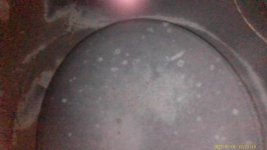
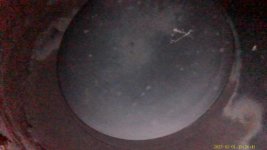
Detail: During my annual inspection last week, my #6 blowby was 0/80, with hissing in the exhaust. This was a real surprise as there was no roughness during the last flight and mag checks. I performed a borescope inspection and could not see evidence of a failing exhaust valve. Local advice was to take it for a short flight and check the blowby again.

I marked TDC for #6 on the spinner, and there was no compression on #6 when hand-pulling the prop through TDC when cold. (I know normally not to touch the prop, but this is not normal operations. I confirmed dead mag checks on switches during every engine shutdown.)

I taxied out for a short test flight, performed good mag checks, and experienced no roughness, so I took off and stayed high and close to the field. I could not discern any power loss. After landing, I verified the dead mag switch check, got out, and hand-pulled the prop through #6 TDC. Now there was normal compression, similar to the resistance of other cylinders.

I let it cool down for 60 minutes, hand-pulled the prop through #6 TDC, and once again, there was zero compression resistance when cold. I pulled the cowls and confirmed the blowby test for #6 was 0/80 again, no compression.

HELP, WHAT IS GOING ON HERE?

Thank you in advance...
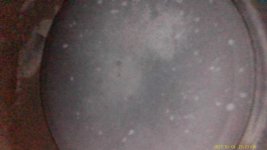
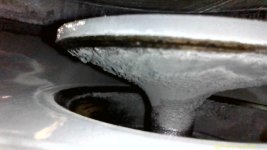
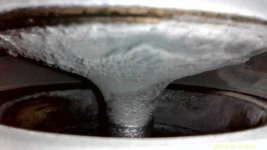
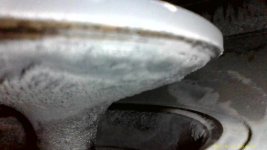
IMG_0045.JPG
IMG_0067.JPG
IMG_0044.JPG
IMG_0139.JPG
IMG_0140.JPG
IMG_0141.JPG
 
If it was me doing the blow- by test, I think what I would find out is that I’m checking TDC on the exhaust stroke instead of TDC on the compression stroke. I’m sure you didn’t do that, so the only thing I can think of to do is to lap that #6 exhaust valve/seat and see if that helps. Sounds like things are fine when hot and running.
 
Possibly it's the lighting, but the valve seat contact looks odd...uneven width, like the valve and seat are not concentric when it closes, and the valve isn't rotating.

An LED light strip is a huge help with borescope viewing. Feed it through the same or another hole. https://www.amazon.com/dp/B0C33SHHNP?ref=ppx_yo2ov_dt_b_fed_asin_title&th=1

If it looks the same with different lighting, I'd start with a wobble check.
 
Possibly it's the lighting, but the valve seat contact looks odd...uneven width, like the valve and seat are not concentric when it closes, and the valve isn't rotating.

An LED light strip is a huge help with borescope viewing. Feed it through the same or another hole. https://www.amazon.com/dp/B0C33SHHNP?ref=ppx_yo2ov_dt_b_fed_asin_title&th=1

If it looks the same with different lighting, I'd start with a wobble check.
Agree, but maybe first take a short video of valve while rotating the prop back and forth slightly so we can see how the valve seats and unseats
 
Maybe you have too little dry tappet clearance and need a shorter pushrod. I had a Continental C90 that had similar problems and we cured it with a shorter pushrod.
 
Aviators, I am baffled and reaching out for opinions and experiences before considering taking my engine to a shop. Based in South Africa, our fleet is small, and experience is limited, so I am seeking a wider audience for insights.

Summary: My RV10, equipped with a standard Lycoming IO540-D4A5 engine (390 hours since new), has a #6 cylinder with a Zero/80 blowby when cold, but it shows compression when hot after landing. (All other cylinders are good with 77+/80.)

Detail: During my annual inspection last week, my #6 blowby was 0/80, with hissing in the exhaust. This was a real surprise as there was no roughness during the last flight and mag checks. I performed a borescope inspection and could not see evidence of a failing exhaust valve. Local advice was to take it for a short flight and check the blowby again.

I marked TDC for #6 on the spinner, and there was no compression on #6 when hand-pulling the prop through TDC when cold. (I know normally not to touch the prop, but this is not normal operations. I confirmed dead mag checks on switches during every engine shutdown.)

I taxied out for a short test flight, performed good mag checks, and experienced no roughness, so I took off and stayed high and close to the field. I could not discern any power loss. After landing, I verified the dead mag switch check, got out, and hand-pulled the prop through #6 TDC. Now there was normal compression, similar to the resistance of other cylinders.

I let it cool down for 60 minutes, hand-pulled the prop through #6 TDC, and once again, there was zero compression resistance when cold. I pulled the cowls and confirmed the blowby test for #6 was 0/80 again, no compression.

HELP, WHAT IS GOING ON HERE?

Thank you in advance...
Your provided a good description of what you are seeing, good photos of the valves. I thought you had good observational skills noting poor compression when the cylinder was cold. I can see a few reasonable responses to what you observed:

1. Do nothing (minimalist approach): Lycoming SI 1191A describes the compression check procedure. Step 1 is to warm up the engine. From your description, it appears that when you follow step 1 your results (compression check and pulling the prop through #6 compression stroke) are normal. You describe no signs of valve sticking (no rough running on startup), no operational abnormalities. So you arguably have a non-problem.

2. Do something: Lycoming SI 1485A recommends the wobble test (SB 388) at 1000 hours. You might choose to learn how to do it now. But there is apparently no evidence to suggest you have an operational problem that would call for an early wobble test.

3. Do something else: Scott suggested lapping the #6 valve. Since your description indicated the cold compression is leaking past the #6 exhaust valve, you could choose to lap #6. That would be a fairly non-invasive procedure to try. Mike Busch demonstrates the procedure here:

I would take the minimalist approach. In the absence of any operational problem, and with the compression normal when following SI 1191A, and with no evidence of burning on the valve face, I'd continue normal operation.
 
No expert here but I usually do my compression leak test cold. Exhaust valve leaks typically do not fix themselves, although if I find one I would then fly or run it for a bit and test again. The symptoms you describe seem to indicate the onset of a sticking valve. As things heat up and expand the valve loosens up and seals giving you compression. Your pics look like, as Dan mentioned, an irregular contact area on the valve. For me, grinding the valve in situ, would also show you if it was tight, at which point you could then ream the guide. The wobble test will tell if it is tight but won't do anything for the seat condition. My 2c.
 
I think post #9 is probably spot on. I would still do a wobble test though.
Same investment in dry tapper clearance and wobble test. Good advice.

Don’t be surprised if they both check out and don’t be surprised if it simply goes away! I had a similar situation and diagnosed the exhaust valve. Did all the tests, all good, and put things back together, problem gone. Whatever was hanging up that valve, piece of carbon, whatever, moved on….. weird!
 
I once had in a Non-Lycoming engine identical symptoms that I continued to fly way too long. Hot engine had great compression, cold had zero compression.
Ended up that the steel valve seat was loose in the aluminum head when cold but when the head heated up valve seat became tight. Not saying that is your issue but
it deserves further investigation.
 
Back
Top