Van's Air Force

The definitive Van's Aircraft support community! Buying, building or flying an RV? Join our exclusive family of mentors and enthusiasts!

V-N and gust limits

enigmakv

Well Known Member
I'm a big fan of seeing the V-N diagram for my airplane. I have scoured the internet and cannot seem to find one for the RV-14/A. I am trying to create one. Re-reading the old Ken Krueger "Flying High and Fast" article has left me with a lot more questions.

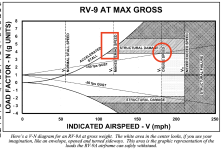
First, in the diagram for the RV-9 in the article, is "Maneuvering Speed" mis-plotted, or is it me? I thought maneuvering speed (corner speed) was right where the accelerated stall meets the structural damage limit.

But the more pressing learning for me is the GUST margins. In the attached diagram there are plots for +/- 50 fps gusts. The diagram implies that Vno (normal operation speed)(top of green arc)(Vc?) is the intersection of the +50fps gust line and the structural damage limit. While that makes sense to me, I have found stuff all over the internet with different plots and intersecting lines.

I can't seem to find any MODERN, definitive article or example of the acceptable gust limits that apply to the V-N. I have seen +/-50fps as in the article but I have also seen +/-15, +/-25, +/-30 and +/-50. It also seems that these were different between CAR3 and FAR23.

Do any of these gust limits apply to Vans aircraft (and specifically the -14/A)? Or do none apply as it is an EAB aircraft?
Can anyone point me to a difinitve document or discussion for modern aircraft?
 

Attachments

  • Screenshot 2024-12-28 at 7.44.25 PM.png
    Screenshot 2024-12-28 at 7.44.25 PM.png
    286.8 KB · Views: 92
Do any of these gust limits apply to Vans aircraft (and specifically the -14/A)? Or do none apply as it is an EAB aircraft?

From a LEGAL (rules) standpoint, none of these apply because it is an experimental aircraft. From a PHYSICS standpoint….it all applies…..
 
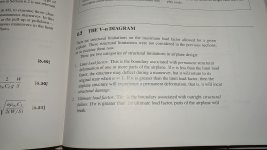
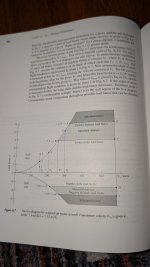
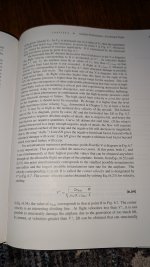
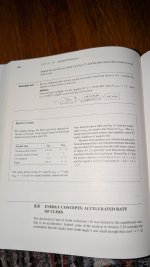
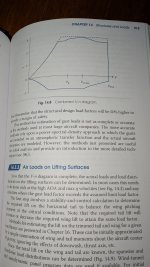
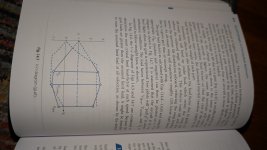
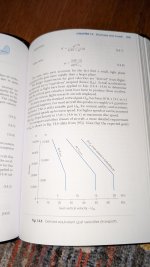
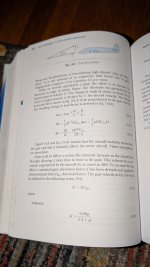
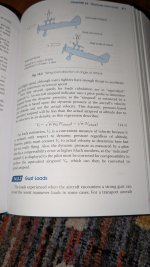
These were from "Aircraft performance and design". John Anderson jr
 

Attachments

  • PXL_20241229_041449698.jpg
    PXL_20241229_041449698.jpg
    704.3 KB · Views: 38
  • PXL_20241229_041511319.jpg
    PXL_20241229_041511319.jpg
    912 KB · Views: 38
  • PXL_20241229_041518823.jpg
    PXL_20241229_041518823.jpg
    1.1 MB · Views: 31
  • PXL_20241229_041530894.jpg
    PXL_20241229_041530894.jpg
    979.2 KB · Views: 34
Last edited:
Looks like this book recommends 30 ft/s or 20mph, but it depends on if you're calculating the gust at Vno, Vdive, or Vturbulence. These were from "Aircraft design: a conceptual approach. 5th edition. Daniel raymer.
 

Attachments

  • PXL_20241229_043053539.jpg
    PXL_20241229_043053539.jpg
    1,013.3 KB · Views: 13
  • PXL_20241229_043046401.jpg
    PXL_20241229_043046401.jpg
    809.8 KB · Views: 12
  • PXL_20241229_043034173.jpg
    PXL_20241229_043034173.jpg
    996.6 KB · Views: 12
  • PXL_20241229_043027355.jpg
    PXL_20241229_043027355.jpg
    918.4 KB · Views: 10
  • PXL_20241229_043017633.jpg
    PXL_20241229_043017633.jpg
    1.1 MB · Views: 10
Last edited:
It appears the Va line on the diagram is misplaced, but it may be that the diagram was made for acrobatic weight, and then Va applied for max gross. VA increases with weight, so it might just be highlighting the range of VA from lightweight to heavy.

Vno line appears correct using a 50fps gust factor. When your 1g speed plus a 50fps gust causes you to exceed structural limits, you've defined Vno.
 
As previously mentioned, i also assume the Va line in the diagram is not depicted correct.
However, i don‘t think it is due to aerobatic weights as the RV-9 is non-aerobatic.
The weight does have a influence on Va though! A V/N diagram is weight dependent on some values!

Va at max gross weight is at its maximum. The lighter you get, the lower the Va gets.
As the diagram says „RV-9 at max gross“, (in my understanding) the vertical Va line should meet the curve at the point where structural damage meets the curve as well.

Apart from the discussion, please note that the values in this diagram are given in mph and not in knots.
Do not take those values for granted, or even a rough guess, if you use knots as unit in your aircraft.
 
I'm a big fan of seeing the V-N diagram for my airplane. I have scoured the internet and cannot seem to find one for the RV-14/A. I am trying to create one. Re-reading the old Ken Krueger "Flying High and Fast" article has left me with a lot more questions.

First, in the diagram for the RV-9 in the article, is "Maneuvering Speed" miss plotted, or is it me? I thought maneuvering speed (corner speed) was right where the accelerated stall meets the structural damage limit.

But the more pressing learning for me is the GUST margins. In the attached diagram there are plots for +/- 50 fps gusts. The diagram implies that Vno (normal operation speed)(top of green arc)(Vc?) is the intersection of the +50fps gust line and the structural damage limit. While that makes sense to me, I have found stuff all over the internet with different plots and intersecting lines.

I can't seem to find any MODERN, definitive article or example of the acceptable gust limits that apply to the V-N. I have seen +/-50fps as in the article but I have also seen +/-15, +/-25, +/-30 and +/-50. It also seems that these were different between CAR3 and FAR23.

Do any of these gust limits apply to Vans aircraft (and specifically the -14/A)? Or do none apply as it is an EAB aircraft?
Can anyone point me to a definitive document or discussion for modern aircraft?
The Maneuvering Speed (Va) of an aircraft is an airspeed limitation determined by the aircraft designer.
At speeds exceeding the maneuvering speed, full deflection of any flight control surface can result in damage to the aircraft structure.

Good luck
 
It appears the Va line on the diagram is misplaced, but it may be that the diagram was made for acrobatic weight, and then Va applied for max gross. VA increases with weight, so it might just be highlighting the range of VA from lightweight to heavy.

Vno line appears correct using a 50fps gust factor. When your 1g speed plus a 50fps gust causes you to exceed structural limits, you've defined Vno.
Since the 9 is not aerobatic and the referenced graphic was specifically addressing the 9, I suspect your “acrobatic weight” notion needs some reevaluation.
 
The gust velocities required to be used for certified aircraft are given in FAR 23. Perhaps not the most recent issue, which has changed the paragraph numbers, but certainly in older versions. As Iron mentioned not required to be used for the design of experimentals. The same section describes how to determine Va and the other V speeds.
 
The gust velocities required to be used for certified aircraft are given in FAR 23. Perhaps not the most recent issue, which has changed the paragraph numbers, but certainly in older versions. As Iron mentioned not required to be used for the design of experimentals. The same section describes how to determine Va and the other V speeds.
I have searched a lot of versions of FAR 23 on the internet and still have not found difinitive (post 2000) information. I HAVE found all of the above quoted values (15,25,30,50) in various publications including FAR23 and CAR3.

I get that experimentals are not technically subject to FAR23, but am curious as to what gust factor Vans uses when computing Vno. For that matter, what gust factor is used in determining Vno for the Cirrus, etc. Nobody seems interested in publishing a detailed V-N Diagram for any aircraft manufactured or experimental.

Still, it would ease my obsessive mind to know what gust factor is being used to calculate the Vno.
 
Looks like this book recommends 30 ft/s or 20mph, but it depends on if you're calculating the gust at Vno, Vdive, or Vturbulence. These were from "Aircraft design: a conceptual approach. 5th edition. Daniel raymer.
Agent4573,
Thank you for the excerpts from the books! That is indeed some of what I have been looking for. I looked up those books and at +$100 per book I can't yet justify purchasing but they seem to be right up my alley.

Still, I'd like to know the current regulatory values as well as the values used in designing the aircraft.
 
Still, I'd like to know the current regulatory values as well as the values used in designing the aircraft.
Regulatory - there are none, this is EAB.
As far as actual design values, that's proprietary to Vans and you'll probably never get them.
 
I’ll just point out that Part 25 applies to Transport Category Aircraft, as opposed to Part 23 which applies to smaller aircraft. The old Part 23:


"(1) The airplane is assumed to be subjected to symmetrical vertical gusts in level flight. The resulting limit load factors must correspond to the conditions determined as follows:
(i) Positive (up) and negative (down) gusts of 50 f.p.s. at VC must be considered at altitudes between sea level and 20,000 feet. The gust velocity may be reduced linearly from 50 f.p.s. at 20,000 feet to 25 f.p.s. at 50,000 feet.
(ii) Positive and negative gusts of 25 f.p.s. at VD must be considered at altitudes between sea level and 20,000 feet. The gust velocity may be reduced linearly from 25 f.p.s. at 20,000 feet to 12.5 f.p.s. at 50,000 feet."

Van’s probably will not tell you what they used, but for at least the RV-14 they seem to have relied on the old Part 23 requirements as their design guidelines, e.g., landing gear loads (check out their drop test video. Part 23 requirements are mentioned several times.).

Other design questions have been asked in the past and they have declined to answer. In addition to possibly being Proprietary Data, it leads to a thousand other questions that they don’t have the staff, time or inclination to answer (and that was before Chapter 11).
Those numbers all check with my books as well. I think 50 fps at Vno (or Vc per the FAR) and 25 at Vne/Vd would be realistic starting points for creating you're own V-N diagrams.

It also wouldnt surprise me if the FAA points everyone to part 25 for the gust velocities and shapes, and then just has them apply a different gust alleviation factor based on aircraft sizing for the smaller part 23 planes.
 
I don't own one. Never flown in one. Don't have the resources to build one. Hope to purchase one soon.
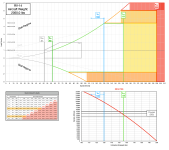
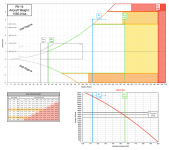
So all I can do now is dream and do stuff like this...
 

Attachments

  • Screenshot 2025-01-01 at 9.03.16 AM.png
    Screenshot 2025-01-01 at 9.03.16 AM.png
    1 MB · Views: 34
  • Screenshot 2025-01-01 at 9.02.32 AM.png
    Screenshot 2025-01-01 at 9.02.32 AM.png
    1 MB · Views: 32
I’ll just point out that Part 25 applies to Transport Category Aircraft, as opposed to Part 23 which applies to smaller aircraft. The old Part 23:


"(1) The airplane is assumed to be subjected to symmetrical vertical gusts in level flight. The resulting limit load factors must correspond to the conditions determined as follows:
(i) Positive (up) and negative (down) gusts of 50 f.p.s. at VC must be considered at altitudes between sea level and 20,000 feet. The gust velocity may be reduced linearly from 50 f.p.s. at 20,000 feet to 25 f.p.s. at 50,000 feet.
(ii) Positive and negative gusts of 25 f.p.s. at VD must be considered at altitudes between sea level and 20,000 feet. The gust velocity may be reduced linearly from 25 f.p.s. at 20,000 feet to 12.5 f.p.s. at 50,000 feet."

Van’s probably will not tell you what they used, but for at least the RV-14 they seem to have relied on the old Part 23 requirements as their design guidelines, e.g., landing gear loads (check out their drop test video. Part 23 requirements are mentioned several times.).

Other design questions have been asked in the past and they have declined to answer. In addition to possibly being Proprietary Data, it leads to a thousand other questions that they don’t have the staff, time or inclination to answer (and that was before Chapter 11).
Dude!
That OLD 23.333 is EXACTLY what I have been looking for!
It seems to be the most difinitive and modern design information. I know I had seen it somewhere before (a few years ago) in my searching but was having difficulty finding it again. So much is in those old, stale law school websites that it becomes hard to track it down.
Thanks for the solid reference!
 
I’ll just point out that Part 25 applies to Transport Category Aircraft, as opposed to Part 23 which applies to smaller aircraft. The old Part 23:


"(1) The airplane is assumed to be subjected to symmetrical vertical gusts in level flight. The resulting limit load factors must correspond to the conditions determined as follows:
(i) Positive (up) and negative (down) gusts of 50 f.p.s. at VC must be considered at altitudes between sea level and 20,000 feet. The gust velocity may be reduced linearly from 50 f.p.s. at 20,000 feet to 25 f.p.s. at 50,000 feet.
(ii) Positive and negative gusts of 25 f.p.s. at VD must be considered at altitudes between sea level and 20,000 feet. The gust velocity may be reduced linearly from 25 f.p.s. at 20,000 feet to 12.5 f.p.s. at 50,000 feet."

Van’s probably will not tell you what they used, but for at least the RV-14 they seem to have relied on the old Part 23 requirements as their design guidelines, e.g., landing gear loads (check out their drop test video. Part 23 requirements are mentioned several times.).

Other design questions have been asked in the past and they have declined to answer. In addition to possibly being Proprietary Data, it leads to a thousand other questions that they don’t have the staff, time or inclination to answer (and that was before Chapter 11).
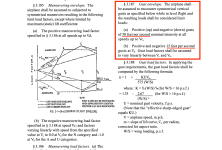
Here was the old CAR 3 info...

I don't know specifically when it changed but I think FAR23 took over in the late 1960s.
 

Attachments

  • CAR3 Gusts.png
    CAR3 Gusts.png
    458.8 KB · Views: 11
Back
Top