

Van's Air Force
You are using an out of date browser. It may not display this or other websites correctly.
You should upgrade or use an alternative browser.
You should upgrade or use an alternative browser.
Learning to fly in a RV-10
- Thread starter MarkAJ
- Start date


If you ever hope to get paid to fly. Try for a first class.Perhaps the very first thing I should do is see if I can Get a Class III Medical, and go from there.
Anyone out there got any ideas of what Insurance Co. might insure a new student?
Know that you can, or know that you can’t.
Last edited:
All but one aviation insurance company use independent agents. Call Jenny at the Gallagher agency (they advertise on this forum) and have a free conversation. Then call AVEMCO (they don’t use independent agents). Their reputation is that they’ll insure anyone - for the right (expensive) price.Perhaps the very first thing I should do is see if I can Get a Class III Medical, and go from there.
Anyone out there got any ideas of what Insurance Co. might insure a new student?
My guess (these things change all the time):OK, you have all convinced me that I should learn to fly in a slower airplane, that way I can earn the hours of flying my RV-10 by myself, how many hours do you suggest for getting a lower rate of insurance?
There are 2 things.
1. Total time, somewhere between 200 hrs with instrument rating or 300 hrs with no instrument rating.
2. Time in type (e.g., RV-10). If zero, you’ll need 2 - 10 hrs dual in a -10 before coverage. After that, 50-100 hours in type to get a good rate.
But don’t believe me. Call Jenny or Leah at Gallagher Agency.
First 50 hours, anything for PPL. Instructor match for personality and schedule mesh matter most. I suggest ground school before and passed written and renter policy before flying and then fly at least 3x a week. No less than two.
Next 50 hours, in a year, rent anything low wing, take some glass IFR instrument background training. Your panel investment will be better served. It will also helps guard away any bad habits.
Get your high performance endorsement, might be along with complex depending on available planes. The rest is up to you and the insurer.
Next 50 hours, in a year, rent anything low wing, take some glass IFR instrument background training. Your panel investment will be better served. It will also helps guard away any bad habits.
Get your high performance endorsement, might be along with complex depending on available planes. The rest is up to you and the insurer.
You can certainly build an RV-10 and learn to fly it, as has been mentioned. The issues have been discussed. But here's a different approach.
If you can afford a -10, buy something like a used Cessna 182 now. It's a good solid competent plane that has a little less performance and handling compared to the -10. Learn to fly it. While flying it, you'll learn a lot about your own needs and goals. After a couple years of flying and owning it AFTER you get a license, you'll have a much better idea of the viability of the RV-10 for you.
You'll find out if your family will actually travel with you, you'll get a relationship with an insurance broker, you'll learn about hangar availability and cost, you'll get an idea about the maintenance required to own an airplane of similar complexity, and many related things. Plus, having time in other similar planes - and a license - will make building and owning an RV-10 feasible.
Dave
If you can afford a -10, buy something like a used Cessna 182 now. It's a good solid competent plane that has a little less performance and handling compared to the -10. Learn to fly it. While flying it, you'll learn a lot about your own needs and goals. After a couple years of flying and owning it AFTER you get a license, you'll have a much better idea of the viability of the RV-10 for you.
You'll find out if your family will actually travel with you, you'll get a relationship with an insurance broker, you'll learn about hangar availability and cost, you'll get an idea about the maintenance required to own an airplane of similar complexity, and many related things. Plus, having time in other similar planes - and a license - will make building and owning an RV-10 feasible.
Dave

Truer words have never been written.I'll quote one of my early mentors who often said, "I'll go ahead and fill out the accident report and leave the date blank."
[email protected]
I'm New Here
I would like to recommend getting your PPL in a trainer first. The RV-10 is a wonderful, efficient airplane and is fairly easy to fly . However; it does have a somewhat fragile main and nose landing gear, hence the service bulletins referencing crack inspections etc.. In addition the airplane is very clean and takes some experience and planning to descend and land to prevent shock cooling that $50K+ Lycoming IO-540. Wouldn’t you rather save wear and tear on your newly built RV-10 and get your practice in a training airplane?
I would also recommend buying a finished or used RV-10 unless you have previous mechanic experience. The likelihood of you finishing a homebuilt RV-10, even a fast build kit is not feasible unless you have an A&P or experienced home builder helping you due to the complexity of the RV-10.
I would also recommend buying a finished or used RV-10 unless you have previous mechanic experience. The likelihood of you finishing a homebuilt RV-10, even a fast build kit is not feasible unless you have an A&P or experienced home builder helping you due to the complexity of the RV-10.
One who logs sim time would be DR. Totally legitimate with the appropriate simulator.
In many cases when an airline pilot transitions to a different type the first time they fly the "real" airplane is with a load of passengers in the back and an instructor in the right seat.
I'm going to guess that the original poster is flying Microsoft Fight Sim or X Plane, not a level D Frasca sim. Or even a $10,000 set up from Sportys. Can't log that time unless it is an FAA approved device. I sure wish I could log the many hundreds of hours I have in DCS and MSFS using VR goggles!
As for the main question, having trained in a C172 and then rented C172s and C182s for many, many years, and now having my own RV-10 with over 100 hours in the seat -- the RV-10 is not a learning plane. It is faster than a C172 and has a lot more power. It also is more delicate - I have had my share of carrier landings in C172s where I smash onto the runway hard enough to bounce. Ask me about my first night landing, where I hit so hard that we sprung back into the air and just went around without missing a beat. A Cessna can take that abuse and the rental shop has a pro mechanic checking it every 100 hours. If I landed my RV-10 the way I've landed 172s a handful of times, I would be leaving parts of wheel fairings all over the runway.
A C172 is a great trainer plane because you have to actually learn how to fly by feel. How do you land in a crosswind? What does ground effect feel like? How do you nurse a plane into the air when you are hot, heavy, and high? What does sight picture look like in the pattern with a wing over your head, rather than blocking your view of the field on downwind and base. When I am flying solo or with a light passenger, I like to do "fun" takeoffs in the RV-10 where I lift off, accelerate to about 90 knots, and then pull back into a 20 degree nose up climb. Feeling slow in the pattern? Hit the gas and add 20 knots in the RV in seconds. The C172 can't do any of that and you have to actually "fly" the plane. There is a lot of learning to be gained from flying a plane that requires you to actually manage the flight.
An RV-10 isn't an F-15, but the performance does rival or exceed planes that cost over a million dollars from Cirrus or Columbia, and a new pilot should think about this the same way. When I taught my teenager to drive, we did it in our Subaru for the first year. I didn't hand him the keys to my 450hp V-10 Audi for his first trip around the block. Yes, he could have learned in the Audi just like you could technically learn in the RV, but getting the basics down in something more forgiving and docile, like a Cessna or a Subaru is a much better way to learn.
Finally, the RV-10 adds two levels of complexity over a Cessna you may not have considered. Since it has 260hp, flying it requires a high performance endorsement, and a CFI may not be willing to give you that before you have earned your ppl and you have enough experience with using rudder to offset the force of the prop with less-powerful planes, before stepping up to the RV. Second, the RV-10 has a constant speed prop with a third lever controlling prop pitch. That is also more complexity than you are going to want in the beginning. A C172 has a fixed pitch prop and is better for learning. A natural progression would be to learn in the C172, get your high performance endorsement and learn how to use a constant speed prop in a 182, which flies about the same as a 172, and then go to the RV once you are ready.
I would also recommend buying a finished or used RV-10 unless you have previous mechanic experience. The likelihood of you finishing a homebuilt RV-10, even a fast build kit is not feasible unless you have an A&P or experienced home builder helping you due to the complexity of the RV-10.
I disagree with this last paragraph regarding the feasibility of building an RV-10. While it is a major undertaking (took me 3115 hrs build time, not counting time out of the shop researching various things, and time in training classes), it doesn't require an A&P to build.
Van's provides a very detailed build manual/drawings that take the builder step by step through the build. They start out with lots of instructions for building the empennage, and then with subsequent kits reduce the hand holding as it is expected the builder has learned a lot in the previous work. There are also several good hands-on classes you can take to help get you started and learning how to build. EAA offers a few, and I found the basic sheet metal class very valuable. Synergy Air offers a great class for starting to build your empennage where they work with you as you build the empennage in their shop over 1-2 weeks. This allows you to try various tools and building techniques, with close supervision and support. Highly recommended.
I know a number of RV-10 builders, with various backgrounds and experience, and they have all been successful. But you do need to enjoy working with your hands, and have a strong enough desire/drive to complete the long project. If you don't have the desire or like working with your hands, then I agree you will be better off buying instead of building.
As for training, I agree with most all of the other posters to this thread. An RV-10 is NOT a training airplane! Do your training in a 172, or perhaps an RV-12 or Grumman Cheeta if you can find a school that has these aircraft available. Then transition to the RV-10 once you have about 150 - 200 hours as PIC.
Cheers.
I agree that getting your license in a simpler airplane would be best, but I don't think there is anything difficult about flying an RV-10. It is a better flying, more forgiving aircraft than the SR-20's and SR-22's that are cropping up at many flight schools.I would like to recommend getting your PPL in a trainer first. The RV-10 is a wonderful, efficient airplane and is fairly easy to fly . However; it does have a somewhat fragile main and nose landing gear, hence the service bulletins referencing crack inspections etc.. In addition the airplane is very clean and takes some experience and planning to descend and land to prevent shock cooling that $50K+ Lycoming IO-540. Wouldn’t you rather save wear and tear on your newly built RV-10 and get your practice in a training airplane?
I would also recommend buying a finished or used RV-10 unless you have previous mechanic experience. The likelihood of you finishing a homebuilt RV-10, even a fast build kit is not feasible unless you have an A&P or experienced home builder helping you due to the complexity of the RV-10.
I'll stop there and just say I disagree with the points made in the remainder of this post.

...and everything is just fine...until it isn't.I let my 16 yo son fly the Cheyenne II and Cessna 340 from the right seat including takeoff and landing. Never close to a situation where I had to take control. Too many of the naysayers are probably not competent in any airplane, starting with a 152.
Pretty sure people are not saying that it isn't possible, just that there are MUCH better avenues. Just because you can doesn't mean you should.
You going to let your son do his first solo in that Cheyenne or 340? There are MUCH better and arguably safer training aircraft.
As a naysayer, I'll have to disagree with your generalized statement; I am very competent in the aircraft I have flown, especially in a 152.
Do you run the Air Wagner youtube channel? Is this Jerry?I let my 16 yo son fly the Cheyenne II and Cessna 340 from the right seat including takeoff and landing. Never close to a situation where I had to take control. Too many of the naysayers are probably not competent in any airplane, starting with a 152.
IYKYK. Kids, Colonels and up make great voice controlled autopilots.
Last edited:
Something else to consider: I would personally not want to embark on a build having net-zero experience flying GA airplanes. There's just a thousand little details and decisions you will have to make during your build, and with no background of experience to lean on you will make a ton of mistakes. Go get your PPL flying flight school junk or purchase a trainer and learn on that. The sell it on and build your dream airplane, you'll be glad for both the piloting experience, and the general aviation awareness that will guide you project.
Very good point
My son received his PPL 4 years ago, flying some of his hours in my RV-10 but received all of his formal instructions in a C-172.
After getting his license, the insurance company wanted 10 hours of dual time with a "qualified instructor"and therein "flies" the conundrum.
Will you find a qualified instructor with RV-10 experience to teach you how to flight test and learn to fly at the same time?
If you read the insurance fine print, I think it says: "qualified instructor with RV-10 experience", even perhaps stating a minimum number of RV-10 hours
for the instructor to be considered "qualified".
Start building and plan on getting your license once you get to within a year of first flight. Flying off your 40 hours is simply not advisable for a newly minted pilot .
However, I believe the rules allow for 2 pilots to be onboard for phase one and that would be an option to accumulate time and experience in your RV-10.
There's just a thousand little details and decisions you will have to make during your build, and with no background of experience to lean on you will make a ton of mistakes.
My son received his PPL 4 years ago, flying some of his hours in my RV-10 but received all of his formal instructions in a C-172.
After getting his license, the insurance company wanted 10 hours of dual time with a "qualified instructor"and therein "flies" the conundrum.
Will you find a qualified instructor with RV-10 experience to teach you how to flight test and learn to fly at the same time?
If you read the insurance fine print, I think it says: "qualified instructor with RV-10 experience", even perhaps stating a minimum number of RV-10 hours
for the instructor to be considered "qualified".
Start building and plan on getting your license once you get to within a year of first flight. Flying off your 40 hours is simply not advisable for a newly minted pilot .
However, I believe the rules allow for 2 pilots to be onboard for phase one and that would be an option to accumulate time and experience in your RV-10.
As a simulator enthusiast who used a very fancy PC sim to help practice for PPL and IR, and recently transitioned 152 -> 172 -> 172RG -> RV-9A -> RV-8A, please understand that you don't know what you don't know. Everyone responding here has hundreds or thousands of hours flying real airplanes and it's not the same. A pilot may be one or two stupid mistakes away from dying at any time, and airplanes not intended for primary training are less tolerant of errors. RVs aren't hard to fly, in the grand scheme of things, but they will not put up with the same mistakes you can make in a 152. You can turn an RV into a wad of crumpled, unsalvagable aluminum in seconds with the wrong inputs. The cessna too, but not as easily.I'm not going to let anyone "HARSH MY MELLOW" I have read all the flight reviews I can find on the RV-10, By all accounts they talk about how relatively easy this airplane is to handle for such a high performance airplane!
Can you learn to do it? Sure. Take smaller steps. Develop good reflexes and decision making. Don't start in an RV-10.
As a data point, AIG through Gallagher wanted 200 hours to be insured in the 10 with 10 hours of transition training.My guess (these things change all the time):
There are 2 things.
1. Total time, somewhere between 200 hrs with instrument rating or 300 hrs with no instrument rating.
2. Time in type (e.g., RV-10). If zero, you’ll need 2 - 10 hrs dual in a -10 before coverage. After that, 50-100 hours in type to get a good rate.
But don’t believe me. Call Jenny or Leah at Gallagher Agency.
The insurance discount with instrument rating was insignificant for a low time pilot with 200 hours.
So I am a low time pilot with and instrument rating (180hrs). I just finished building a -10 and when I started the build insurance wasn’t an issue. After covid the requirements changed and I am uninsurable until I get to 250 hours. There is no way they are going to cover a 0 time pilot to learn how to fly in a RV-10.Perhaps the very first thing I should do is see if I can Get a Class III Medical, and go from there.
Anyone out there got any ideas of what Insurance Co. might insure a new student?
As has been pointed out in other responses, your plan is doable but not recommended. When you start as a student pilot you will be fairly hard on aircraft especially during landings. A 150 or a 172 is a tank which expects the abuse from student pilots and can do it flight after flight without complaints.
Now imagine spending thousands of hours building this fabulous machine and then immediately subjecting it to a rookie pilot who is going to abuse it (that’s you by the way). Not likely to be a good outcome in my opinion.
From an overall cost/ risk equation the money that you might save by not having to rent an aircraft to perform your flight training would be offset by the risk of damaging your new baby.
As always this is purely my opinion. Which ever path you take, good luck.
Now imagine spending thousands of hours building this fabulous machine and then immediately subjecting it to a rookie pilot who is going to abuse it (that’s you by the way). Not likely to be a good outcome in my opinion.
From an overall cost/ risk equation the money that you might save by not having to rent an aircraft to perform your flight training would be offset by the risk of damaging your new baby.
As always this is purely my opinion. Which ever path you take, good luck.
I wasn't going to weigh in on this but....
First off, welcome to aviation Mark. We're opinionated for sure but everyone here is honestly trying to be of service.
My suggestion is to go to your friendly neighborhood flight school and take a discovery flight. Ask all of the questions you can think of, get a little time on the controls and see how it all feels. If you find yourself in love, congrats, go get your medical squared away. You'll also get a sense of what these fine people are talking about. For me learning to fly was like when I learned to play the guitar. It was love from the beginning but dang did I SUCK for a long time. I'm still no Chuck Yeager and mainly fly on CAVU days but I keep the shiny side up as appropriate, feel confident taking my family with me and have accumulated 300 safe hours.
Now that I'm also a builder, it is that love of flight that keeps me making progress. I'm blessed that there's a Rocket and a Gamebird that fly formation over my farm and pour motivation down from the skies.
First off, welcome to aviation Mark. We're opinionated for sure but everyone here is honestly trying to be of service.
My suggestion is to go to your friendly neighborhood flight school and take a discovery flight. Ask all of the questions you can think of, get a little time on the controls and see how it all feels. If you find yourself in love, congrats, go get your medical squared away. You'll also get a sense of what these fine people are talking about. For me learning to fly was like when I learned to play the guitar. It was love from the beginning but dang did I SUCK for a long time. I'm still no Chuck Yeager and mainly fly on CAVU days but I keep the shiny side up as appropriate, feel confident taking my family with me and have accumulated 300 safe hours.
Now that I'm also a builder, it is that love of flight that keeps me making progress. I'm blessed that there's a Rocket and a Gamebird that fly formation over my farm and pour motivation down from the skies.
I would get your license to make sure you really love to fly before waste years and money building the plane. I got my license 2 years ago then decided to build the RV10. Got another year to go before finishing. In between building I have gotten several endorsements and working Instrument next. I plan to do the fly off myself. Flying is a constant learning and training in order to gain and maintain proficiency. Start that asapI have a confession to make, I'm not currently a pilot, my intention is to build my RV-10, have someone fly off the 40 hrs of time and then learn to fly
in it, what do you think about that?
Norman CYYJ
Well Known Member
If you have unlimited resources you can learn to fly in any plane including a triple seven. We all start of not knowing and if it be a big heavy fast plane you won't know any different.I was not aware that the clean stall speed was so high, my bad, oh well, I still think I can learn to fly in my RV-10
I have been monitoring this thread. I started flying 35 years ago and loved it! I went to school over 25 years ago and got my A&P and it paid the bills. I flew when I could. I flew in things that you wouldn’t believe, but never got my ppl til this year.
I now own 2 aircraft and fly my 65 Aircoupe everyday. I had well over 150 hours in my logbook when I got my ppl and probably had at least another 100 that I didn’t log for obvious reasons. My -7 was purchased as a project with 61 hours ob it and is getting the full IFR upgrade.
The OP needs to understand that I tell everyone who isn’t a pilot; “if you don’t have money to burn, you don’t need to be anywhere near an aircraft”. If you do. Get your 3rd class medical before you do anything PERIOD. If you can’t get a medical. Don’t waste your money. If you would EVER like to get paid to fly. Make it a first class medical. Know that you can, or know that you can’t.
If you are independently wealthy or have the income to handle the kind on expenses that aviation requires. After you get your medical, do your ground school and get your written out of the way, but it is only good for 24 months. You will NEED both in order to solo.
Fly as much as you can as often as you can. Get signed off to solo and fly as much as you can as often as you can. My Aircoupe is a unique aircraft. It is fairly easy to fly, but it does not fly like other aircraft. I probably flew 40+ hours in it figuring it out. I never found a CFI who had any time in one. I did spend alot of time on the phone with a gentleman who owned one for many years before he lost his medical.
The 59th rule of the Ferengi Rules of Acquisition: Free advice is seldom cheap. Get flying BEFORE you buy you buy an aircraft. If the OP can afford to buy a -10 kit he can certainly afford to learn to fly before he commits to building one. If he really loves it, he can fly many many hours building time and earning ratings while he is building one.
Aviation is an expensive hobby. They say that 90% of all students never finish their pilots license. If the OP is part of that 90%, why bother?
I now own 2 aircraft and fly my 65 Aircoupe everyday. I had well over 150 hours in my logbook when I got my ppl and probably had at least another 100 that I didn’t log for obvious reasons. My -7 was purchased as a project with 61 hours ob it and is getting the full IFR upgrade.
The OP needs to understand that I tell everyone who isn’t a pilot; “if you don’t have money to burn, you don’t need to be anywhere near an aircraft”. If you do. Get your 3rd class medical before you do anything PERIOD. If you can’t get a medical. Don’t waste your money. If you would EVER like to get paid to fly. Make it a first class medical. Know that you can, or know that you can’t.
If you are independently wealthy or have the income to handle the kind on expenses that aviation requires. After you get your medical, do your ground school and get your written out of the way, but it is only good for 24 months. You will NEED both in order to solo.
Fly as much as you can as often as you can. Get signed off to solo and fly as much as you can as often as you can. My Aircoupe is a unique aircraft. It is fairly easy to fly, but it does not fly like other aircraft. I probably flew 40+ hours in it figuring it out. I never found a CFI who had any time in one. I did spend alot of time on the phone with a gentleman who owned one for many years before he lost his medical.
The 59th rule of the Ferengi Rules of Acquisition: Free advice is seldom cheap. Get flying BEFORE you buy you buy an aircraft. If the OP can afford to buy a -10 kit he can certainly afford to learn to fly before he commits to building one. If he really loves it, he can fly many many hours building time and earning ratings while he is building one.
Aviation is an expensive hobby. They say that 90% of all students never finish their pilots license. If the OP is part of that 90%, why bother?
Not a wise idea. You don’t want to be a statistic. Get your ticket in a slower, smaller plane. You won’t regret it.I have a confession to make, I'm not currently a pilot, my intention is to build my RV-10, have someone fly off the 40 hrs of time and then learn to fly
in it, what do you think about that?
I've been a CFI for almost 40 years, and an RV-10 owner for over 10 years. Learning in a 10 is certainly POSSIBLE. The airplane has no bad habits that will bite a low time pilot. However, but it makes zero sense learning wise and money wise and is unfair to airplane.
Its like buying your teenage kid a 300k car for their first high school car.
Buy an older Cherokee or 172 and if you buy it right you can get a couple hundred hours out of it, put some lipstick on it, and when the time comes, you'll likely get every dime you paid, maybe more, when you sell it.
A huge part of aviation today is driven by the insurance industry and they will eat you alive. Doing it your way is doable but isn't worth the added overt and covert costs it would create.
Its like buying your teenage kid a 300k car for their first high school car.
Buy an older Cherokee or 172 and if you buy it right you can get a couple hundred hours out of it, put some lipstick on it, and when the time comes, you'll likely get every dime you paid, maybe more, when you sell it.
A huge part of aviation today is driven by the insurance industry and they will eat you alive. Doing it your way is doable but isn't worth the added overt and covert costs it would create.
This is a great post!Do you want to learn to fly or just be able to pilot an airplane? These are two different things in my book. I see pilots all the time that have never learned to fly, but they do just fine getting from point a to b.
Some of the worst pilots I ever flew with were CFI’s. I have also flown with some excellent CFI,s and some relatively new pilots who had inherently good stick and rudder skills with very little formal training.
Follow the advice given here and try to become a pilot, not just someone who can get an airplane from point a to be….
I soloed and got my ticket in a 150. I learned to fly in a ‘42 Aeronca L3.
Regardless of all this fear mongering that everyone wants to fill your ear with how difficult a 10 is to fly....to me, it's a modern day 172. That's about it. Benign would be my single descriptive . Simply put, it has no bad habits.
You can assuredly learn to fly it. Will it be as easy as learning to fly in a 152...? No.
Is building a -10 the easiest decision to attempt....NO.
Anyone physically and intellectually capable of building an airplane of their own choosing is capable of learning to fly it.
I'd ignore all the naysayers and beat to your own drum. Find an instructor who will work with you and do it. And do it right. Don't accept mediocrity and don't be satisfied until you wear your airplane like it's the glove you made for you!
I don't try to feed my ego about these aircraft being hard to fly...I certainly don't possess any super pilot skillsets...just good old fashioned needle, ball and airspeed skills and that and a desire to learn, step by step what the airplane, regulations, airspace and even your own goals all have to do with each other to make your endeavor successful is the key.
Telling anyone, "it can't be done" is silly...cuz it's already been done.
I'm telling you: Follow your own dream and recognize that your decisions may have consequences and you alone will have to decide whether it's worth it.
If you want to be a good pilot and you view that as a process and find someone to help you in that endeavor...my hat is off to you. It's the journey of a life time and one that will define you as a human being, like nothing else, I have ever found. Pilot in Command means something and earning that privilege is well worth the effort.
Sorta like " Yeah...I built it myself, with my own two hands..." no arrogance required, because you did that. It's just a fact.
Anyone almost...can learn to fly. A disciplined approach, a clear goal and commitment to succeed and you cannot be stopped. Impediments will rise and fall.
Don't let anyone talk you out of your goals, let them talk themselves out of theirs instead.
S.
Is there now a requirement for the written prior to solo? Only the medical was required when I did mine. (Some schools required both, but that wasn't regulatory)You will NEED both in order to solo.
Otherwise good advise.
And for the OP: Get your certificate first. When I started on mine I was dead set on a Lance. Years later I've owned a Cardinal RG, a Cherokee 6, and now an RV. Lesson? Plans (and planes) change.
Back when I was being dicked around by my first instructor in 1990. We walked in to the FBO and there was a celebration going on. A student had just solo’d. I turned to my CFI and asked “when do I get to solo?” He said “you need to get your written first”.Is there now a requirement for the written prior to solo? Only the medical was required when I did mine. (Some schools required both, but that wasn't regulatory)
Otherwise good advise.
And for the OP: Get your certificate first. When I started on mine I was dead set on a Lance. Years later I've owned a Cardinal RG, a Cherokee 6, and now an RV. Lesson? Plans (and planes) change.
I had flown about 20 hours and said: “So when were you going to tell me that shit?
If I’m wrong. I will blame a poor instructor who is ok with riding a student to build time.
The fastest distance between 2 points is a straight line. Know what those points are and know what you must do to get there.
Pretty sure no one is saying it isn’t possible to learn in a -10. Just because it’s possible, though, doesn’t necessarily make it a good idea.This is a great post!
Regardless of all this fear mongering that everyone wants to fill your ear with how difficult a 10 is to fly....to me, it's a modern day 172. That's about it. Benign would be my single descriptive . Simply put, it has no bad habits.
You can assuredly learn to fly it. Will it be as easy as learning to fly in a 152...? No.
Is building a -10 the easiest decision to attempt....NO.
Anyone physically and intellectually capable of building an airplane of their own choosing is capable of learning to fly it.
I'd ignore all the naysayers and beat to your own drum. Find an instructor who will work with you and do it. And do it right. Don't accept mediocrity and don't be satisfied until you wear your airplane like it's the glove you made for you!
I don't try to feed my ego about these aircraft being hard to fly...I certainly don't possess any super pilot skillsets...just good old fashioned needle, ball and airspeed skills and that and a desire to learn, step by step what the airplane, regulations, airspace and even your own goals all have to do with each other to make your endeavor successful is the key.
Telling anyone, "it can't be done" is silly...cuz it's already been done.
I'm telling you: Follow your own dream and recognize that your decisions may have consequences and you alone will have to decide whether it's worth it.
If you want to be a good pilot and you view that as a process and find someone to help you in that endeavor...my hat is off to you. It's the journey of a life time and one that will define you as a human being, like nothing else, I have ever found. Pilot in Command means something and earning that privilege is well worth the effort.
Sorta like " Yeah...I built it myself, with my own two hands..." no arrogance required, because you did that. It's just a fact.
Anyone almost...can learn to fly. A disciplined approach, a clear goal and commitment to succeed and you cannot be stopped. Impediments will rise and fall.
Don't let anyone talk you out of your goals, let them talk themselves out of theirs instead.
S.
Your “nay sayers” are generally speaking from thousands and sometimes tens of thousands of hours of experience, and thousands of hours of instruction given. They are NOT trying to build time or make money…they are trying to pass on years of experience.
It may be wise advice to consider what they have to say.

What's hard for me to swallow in particular is those that think that if you don't have as much money as they have you shouldn't even bother to try. Albeit unintentional, condescending nonetheless. It's found all over this forum.
I have ZERO regrets learning in my -14.
I have ZERO regrets learning in my -14.
make it a good idea for whom...? Definitely for anyone who doesn't want to accomplish their own goals....Pretty sure no one is saying it isn’t possible to learn in a -10. Just because it’s possible, though, doesn’t necessarily make it a good idea.
Your “nay sayers” are generally speaking from thousands and sometimes tens of thousands of hours of experience, and thousands of hours of instruction given. They are NOT trying to build time or make money…they are trying to pass on years of experience.
It may be wise advice to consider what they have to say.
I thoroughly disagree with telling everyone else what they should or shouldn't do...or what's a good idea or bad.
Thank God Orville and Wilbur didn't see the world, that way. They instead, chose a path less travelled and defined for us an opportunity to pursue our own little piece of the amazingness of it all.
Amen.
I’m not sure you are comprehending the message; I don’t think anyone is saying “You can’t do this”. There are reasons that have been presented that should be considered when planning your path. The final decision rests with the OP.make it a good idea for whom...? Definitely for anyone who doesn't want to accomplish their own goals....
I thoroughly disagree with telling everyone else what they should or shouldn't do...or what's a good idea or bad.
Thank God Orville and Wilbur didn't see the world, that way. They instead, chose a path less travelled and defined for us an opportunity to pursue our own little piece of the amazingness of it all.
Amen.
Having trained low time pilots for their instrument in many different aircraft, I can safely say that the phrases “watch your altitude”, “watch your heading”, and “watch your speed” are FAR more common when training in a HP aircraft rather than a 172.
Again, the DPE will hold the student to the same standard regardless of the aircraft. Things just happen faster in HP aircraft…

Auburntsts
Well Known Member
Look the OP asked for opinions, which he got, most of which fell on one side or the argument. No one is being forced to agree with or abide by these opinions, nor is anyone being told what they can or can't do.make it a good idea for whom...? Definitely for anyone who doesn't want to accomplish their own goals....
I thoroughly disagree with telling everyone else what they should or shouldn't do...or what's a good idea or bad.
Thank God Orville and Wilbur didn't see the world, that way. They instead, chose a path less travelled and defined for us an opportunity to pursue our own little piece of the amazingness of it all.
Amen.

There are a few things you can’t learn, or are more difficult to learn, in any RV. The consequences of not learning these may never come forth, whereas, if not learned in a trainer, the consequences are immediately evident:
Coordinated control -
In a trainer, if you do not coordinate your controls, you won’t make a coordinated turn. In some trainers, you may not even be able to turn. You can fly most RV’s with your feet off the pedals, albeit poorly.
Taxi operations -
Proper coordination in winds. In a trainer, wind direction and control input awareness may make the difference in whether you taxi straight, or end up in an embarrassing situation, or worse, on your back. Again, most RV’s you can get pretty sloppy with no harm.
Performance, or lack thereof, and energy management -
Low HP/weight trainers require more diligence in managing energy. They typically perform way different when light vs at gross. While this difference is evident in RV’s, it can often be covered up by the impressive power you have. Not so in a trainer. You learn how it feels to not have immediate power at your disposal.
These are just a few things that may never impact you, but they are also things that separate a good stick from someone who can just go from point A - B. ….
You are supposed to learn good habits early
Coordinated control -
In a trainer, if you do not coordinate your controls, you won’t make a coordinated turn. In some trainers, you may not even be able to turn. You can fly most RV’s with your feet off the pedals, albeit poorly.
Taxi operations -
Proper coordination in winds. In a trainer, wind direction and control input awareness may make the difference in whether you taxi straight, or end up in an embarrassing situation, or worse, on your back. Again, most RV’s you can get pretty sloppy with no harm.
Performance, or lack thereof, and energy management -
Low HP/weight trainers require more diligence in managing energy. They typically perform way different when light vs at gross. While this difference is evident in RV’s, it can often be covered up by the impressive power you have. Not so in a trainer. You learn how it feels to not have immediate power at your disposal.
These are just a few things that may never impact you, but they are also things that separate a good stick from someone who can just go from point A - B. ….
You are supposed to learn good habits early
Thanks for the valid and supportive clarification and input. I didn't read where the OP asked if we thought his plan was a good or bad idea...and I will stand by the notion that ANYONE...can do this.I’m not sure you are comprehending the message; I don’t think anyone is saying “You can’t do this”. There are reasons that have been presented that should be considered when planning your path. The final decision rests with the OP.
Having trained low time pilots for their instrument in many different aircraft, I can safely say that the phrases “watch your altitude”, “watch your heading”, and “watch your speed” are FAR more common when training in a HP aircraft rather than a 172.
Again, the DPE will hold the student to the same standard regardless of the aircraft. Things just happen faster in HP aircraft…
What I see is our sport dying before our very eyes and want to encourage that NOT to happen. I built my first RV-4 starting when I was 21 years old and flew it at 24 years old with a whopping 88 hours in my log book, all of which was tail dragger time. 40 odd years and a whole host of airplanes and hours later, it still amazes me, that we get to participate in this endeavor.
So, like you...I have seen many, many differing capabilities of students and pilots...almost all of whom CAN learn.
We need that spirit in this avocation in the absolute worst of ways.
And I will close with that. Let's foster this spirit that people "Can Do This" and then let's all dig in and help.
That's the only way I see any of us surviving with this hobby in the future.
Get your arm around somebodies shoulder and let em know you have their back...and if they need reminders for heading and altitude and airspeed...Thank God you're there to help and humble enough to hand down some of what you've learned along the way.
And for the guy building a -10 wanting to learn in that...let's help get him a ride, get his hands on the stick...and help him understand what will be required of him....for him to be successful and SAFE.
After that, he can a big boy and make up his own mind, as to his goals.
If I had a -10, I'd have my hand in the air to take him for a ride. ( sorry...I don't).
Steve
Not sure I’d agree with “anyone” but most folks can if they have the right attitude, will, and drive.Thanks for the valid and supportive clarification and input. I didn't read where the OP asked if we thought his plan was a good or bad idea...and I will stand by the notion that ANYONE...can do this.
What I see is our sport dying before our very eyes and want to encourage that NOT to happen. I built my first RV-4 starting when I was 21 years old and flew it at 24 years old with a whopping 88 hours in my log book, all of which was tail dragger time. 40 odd years and a whole host of airplanes and hours later, it still amazes me, that we get to participate in this endeavor.
So, like you...I have seen many, many differing capabilities of students and pilots...almost all of whom CAN learn.
We need that spirit in this avocation in the absolute worst of ways.
And I will close with that. Let's foster this spirit that people "Can Do This" and then let's all dig in and help.
That's the only way I see any of us surviving with this hobby in the future.
Get your arm around somebodies shoulder and let em know you have their back...and if they need reminders for heading and altitude and airspeed...Thank God you're there to help and humble enough to hand down some of what you've learned along the way.
And for the guy building a -10 wanting to learn in that...let's help get him a ride, get his hands on the stick...and help him understand what will be required of him....for him to be successful and SAFE.
After that, he can a big boy and make up his own mind, as to his goals.
If I had a -10, I'd have my hand in the air to take him for a ride. ( sorry...I don't).
Steve
The rest I would tend to agree with, with the exception that the OP ASKED for opinions; he got some!
The FAA written exam must be passed prior to your check ride. There is another ‘knowledge test’, made up by and administered by, the cfi, prior to solo. I always made these written tests, so I had something for my records, should the faa come calling. Maybe they’re confusing the two?Is there now a requirement for the written prior to solo? Only the medical was required when I did mine. (Some schools required both, but that wasn't regulatory.
Nobody has ever said that it can’t be done. However, folks who have been involved with this avocation for a long time can and should provide valid reasons to new members of the community why there are certain scenarios that are unwise to do. I remember when it was all the rage to put alternative engines on RV-10’s which was also POSSIBLE to do. Unfortunately it didn't turn out so well and many builders lost many dollars. I almost fell for it and perhaps would have absent sage counsel from someone more experienced in this world than I was at the time.
Insurance drives this world as much as a gas does.
My best counsel is to confer with a quality insurance broker like Gallagher, Falcon, or Avemco and hear what they have to say before committing to a course of action.
Good luck.
Insurance drives this world as much as a gas does.
My best counsel is to confer with a quality insurance broker like Gallagher, Falcon, or Avemco and hear what they have to say before committing to a course of action.
Good luck.
Some of the alternative engine people didn't have to worry about insurance for very long because they were dead. The only alternative engines that I remember surviving long term are the WV based engines. In many cases the time and money spent on the alternatives makes a new Lycoming look like a bargain.Nobody has ever said that it can’t be done. However, folks who have been involved with this avocation for a long time can and should provide valid reasons to new members of the community why there are certain scenarios that are unwise to do. I remember when it was all the rage to put alternative engines on RV-10’s which was also POSSIBLE to do. Unfortunately it didn't turn out so well and many builders lost many dollars. I almost fell for it and perhaps would have absent sage counsel from someone more experienced in this world than I was at the time.
Insurance drives this world as much as a gas does.
My best counsel is to confer with a quality insurance broker like Gallagher, Falcon, or Avemco and hear what they have to say before committing to a course of action.
Good luck.

I started building the Cozy MKIV long before I got my PPL, then started the RV-10 build. When I started my flight training, I found it to be a real challenge getting all the stars aligned to schedule a rental aircraft along with an available instructor, then factor in the weather. It was really impairing my training progress. I decided to purchase my own plane for training in, a C-152. That was by far the best decision I ever made. I sold it a few years later (for more $$ than it cost me) when I was almost done with the -10 build. Did my RV-10 training before first flight with Alex D.

IMHO from a pure capability standpoint, RVs are one of the easiest aircraft to fly. From a practicable standpoint, there are things working against the learner:
On a side note...the market for RV-10s and comparable singles is so insane, I ended up moving to a 310R. At almost $200K price difference, it will take me almost 10 years of ownership to break even. I will miss my RV! If anyone's interested in an RV-9A, keep an eye out in classifieds - I will be listing in a few months...
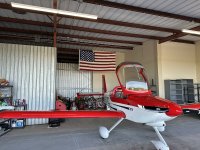
- Insurance - Hull value on the average 10 is over $300K. Insurance will be very expensive for solo.
- Complex aircraft and probably also Technically Advanced (TAA) may be too much at once and frustrate you in the learning experience.
- Gear design is not as robust as the tradition Cessna and Piper trainers. You will have plenty of opportunity to lower the touchdown elevation of the runway when learning. I wouldn't do it in your shinny RV-10.
On a side note...the market for RV-10s and comparable singles is so insane, I ended up moving to a 310R. At almost $200K price difference, it will take me almost 10 years of ownership to break even. I will miss my RV! If anyone's interested in an RV-9A, keep an eye out in classifieds - I will be listing in a few months...
Last edited:
Auburntsts
Well Known Member
I think it really doesn't matter what the avg hull value is. These days a zero or real low time RV-10 pilot is most likely uninsurable at any cost.IMHO from a pure capability standpoint, RVs are one of the easiest aircraft to fly. From a practicable standpoint, there are things working against the learner:
If you were really set on learning in your RV-10, I would first train to solo in a traditional trainer and then advance. However, the insurance may be a big hurtle.
- Insurance - Hull value on the average 10 is over $300K. Insurance will be very expensive for solo.
- Complex aircraft and probably also Technically Advanced (TAA) may be too much at once and frustrate you in the learning experience.
- Gear design is not as robust as the tradition Cessna and Piper trainers. You will have plenty of opportunity to lower the touchdown elevation of the runway when learning. I wouldn't do it in your shinny RV-10.
Very solid advise!Here’s where I am, and so far I still think it’s a decent way to do it. I bought a 50 year old 172, less expensive than the engine and probably the avionics I plan on putting into the 10 I’m building in my garage. I’ve been averaging 75-150 hours a year flying the last 5 years with it. Since I’m building in my garage mostly after the kids go to bed I haven’t been losing either flying or building time because I’m doing the other. I’ve had a lot of good lessons in the 172 flying all over the eastern half of the US. I would like to think I am a proficient pilot in what I am flying, but I’m planning on doing thorough transition training to make the jump to CS props, much more speed, glass panel, and a stick.
If you can afford to build a -10, buy a spam can and get some real world time while you are doing it. Learn what aircraft ownership is like, what traveling GA is like, before committing years to a project. Pluo motivation to get back to building like making a cross country in a 172 and thinking about how much faster you would get there if you finished the rv project.
Last edited:
Interesting thread. I scrolled through the replies to see whether anyone has done this. Finding none, I'll add my two cents. I have actually done this! Twice! From the CFI perspective.I have a confession to make, I'm not currently a pilot, my intention is to build my RV-10, have someone fly off the 40 hrs of time and then learn to fly
in it, what do you think about that?
Briefly, I'm a 12,000-hour ATP, ex-USAF T-37 IP. I built an RV-4, flying for 24 years now, and I'm nearing completion on my RV-10 project. I maintain my CFI mostly for the fun of it. I mostly do RV transition training, tailwheel endorsements, aerobatic instruction, formation instruction. Mostly for fun.
I have taught two new students to fly in their own RVs. One guy purchased my neighbor's RV-10 without a pilot's license, the other was my neighbor lady who built an RV-12 as a post-solo student pilot, most of her training in a C-150, but obtained her Light Sport license in her new RV-12.
The RV-10 guy bought the airplane without a pilot's license. He had bought it from my neighbor who has built a bunch of all models of the RVs. I happened to be down there at my neighbor's house, shooting the breeze, when I overheard the purchaser complaining that he could not find a CFI that his insurance company would insure for his initial training. I offered to do it, and sent him my numbers, which his insurance company agreed would be fine.
And that really will be your difficulty: the insurance. You don't have to insure the airplane, of course. But most people having spent that much time and money building the airplane will want to insure it against loss and liability. That will be expensive! Have no illusions on that point. Having no time in type, experimental airplane, and no flight experience and no license, insuring it for giving instruction: that will be expensive and difficult to find! Your insurance company will insist that the CFI have experience in make and model. That will be hard to find.
If you can find a CFI and insurance, yes, it can be done just fine. The RVs are very honest airplanes and I enjoy instructing in them. The complex RV-10 will take more time for you to learn in. Plus you have to demonstrate knowledge of the avionics and systems on your checkride. Having more complex avionics and systems in the RV-10, you will be tested on those. But the mechanics of learning to fly in the RV-10 are no more difficult than other airplanes.
You will also, however, put more wear and tear on your airplane learning primary instruction in it. You will bounce landings and impose side loads learning crosswind techniques. I personally bought a Cessna 140 to give primary instruction to my children, just to keep the wear and tear off of my beloved RV-4!
In conclusion:
Yes, it can be done just fine. Insurance and CFI experience will be the sticking points. You will put much more wear on the airplane than if you learn first in a cheaper trainer. Were I doing it, I would get the license in a simple and inexpensive trainer first, then transition into the RV-10 that you built with some flight experience already under your belt. But you are the one paying the bills, so you make the choice yourself. There is no wrong answer either way. Don't be afraid to learn in your own airplane. Just know the tradeoffs.
I started my build with 10k cash and ordered the emp kit. Built it and it hung in my garage for while I saved money for the fuselage kit. By the time they shipped the fuse kit I had worked a bunch of side jobs and had enough to order the wings. So on and so forth. Every bit of extra money I had for 4 years went towards the build. For some it may take a decade or more.
Once again, in post after post, there is this assumption that if you want to own an RV you have to have enough money to build the whole thing out of pocket up front. And post after post about insurance. Not a legal requirement. As long as there isn't I will never pay for it.
Once again, in post after post, there is this assumption that if you want to own an RV you have to have enough money to build the whole thing out of pocket up front. And post after post about insurance. Not a legal requirement. As long as there isn't I will never pay for it.
