Van's Air Force

The definitive Van's Aircraft support community! Buying, building or flying an RV? Join our exclusive family of mentors and enthusiasts!

AN hardware everywhere?

edhunter

Well Known Member
Friend
First off, I’m not a builder. I sold my RV9 and am working on a Glastar now, installing a complete SDS system. My question regards the use of AN hardware. Is it considered poor form, or a safety issue, to use “regular” screws, nuts etc for non structural fasteners in aircraft? Say stainless screws w nylock nuts? As in mounting instruments to sub panels, on Adele clamps to hold wires or hoses to engine mounts, map sensors on the fire walls, that sort of thing. I ask because this Glastar has AN screws on everything, every clamp etc. Is that standard practice? Recommended practice?
The thread on using aluminum hose ends (and failures) vs steel ends got me thinking about best practices….
 
Last edited:
I would call it a “best practice”. If you use AN hardware everywhere, then there is no worry about:
  • Wondering if a hardware store grade fastener is adequate for the job, or you need this one to be AN grade. Do you really know the structural strength required for every fastener? I don’t, and don’t want to spend the time trying to figuring it out.
  • Accidentally mixing low grade with hi grade fasteners when removing parts of the airplane, like during maintenance or repair work. If everything is AN hardware……great, because now it is ALL interchangeable for a given size nut, bolt, screw, washer when you go to put things back together.
Semi-pro tip: when buying replacement nuts, washers, common 1/2” length screws for an RV, get them in bags of 100. Yes more $, but cheaper per piece price, and you will use them as hardware gets lost, damaged, or just plain worn out. Need a few replacement bolts of a specific size? Get 5 extras…..trust me, they will eventually be used.
 
As it is experimental, you can do whatever you like. I am an A&P working on a -7 built by another A&P who didn’t share the same values about aircraft only hardware. Just for example i replaced some sloppy adel clamps and found they weren’t in fact aircraft DG clamps.

I don’t care about things like the screws holding the interior sheet metal in place, but in my humble opinion I like mission critical components to be AN/NAS military standard or FAA approved hardware.
 
As it is experimental, you can do whatever you like.
My standard answer to this is: Yes, things (sort of, within some limits) can be done differently than on a type certificated aircraft. But just because the aircraft has an EXPERIMENTAL placard on it does not in any way change the physics of what happens with any specific part. Load on a part low enough for cheap hardware? How does anyone know unless a load analysis was done, or actual load test was done, or the part fails under normal use conditions?

Glad you don’t share the original A&P builder’s lack of appreciation for AN hardware.
 
Just because you can doesn’t mean you should. As posted in another thread, you’re spending well over a hundred grand on the plane. The money saved by using big box store hardware is a rounding error.
 
First off, I’m not a builder. I sold my RV9 and am working on a Glastar now, installing a complete SDS system. My question regards the use of AN hardware. Is it considered poor form, or a safety issue, to use “regular” screws, nuts etc for non structural fasteners in aircraft? Say stainless screws w nylock nuts? As in mounting instruments to sub panels, on Adele clamps to hold wires or hoses to engine mounts, map sensors on the fire walls, that sort of thing. I ask because this Glastar has AN screws on everything, every clamp etc. Is that standard practice? Recommended practice?
The thread on using aluminum hose ends (and failures) vs steel ends got me thinking about best practices….
The only plus for "stainless steel" (I assume you mean commercial or industrial grade, who knows what alloy, 304, 316 or ???) is that they are somewhat corrosion resistant. But they are NOT as strong as steel fasteners. Lots of different AN fastener styles and prefix numbers. And do note that many AN fasteners are available in stainless steel with a "C" suffix (CRES or corrosion resistant). Aircraft Spruce has good guidance in their catalog. I don't see any advantage in not using AN fasteners on an airplane.
 
I agree that not everything needs to be AN, but if you use AN hardware throughout, there is a lot less to explain to the FAA, A&P or future buyer. I keep a stock of hardware, if not for me, for everyone else who comes to borrow fasteners.
 
Here's an alternative view... if you source non-AN hardware for a good vendor, and you know what you bought, there's no reason you can't use it for non-structural items. Things you mentioned liked mounting instrument trays, fixing adel claps and whatnot. I'm a big fan of hex-head bolts for these items, and a source like McMaster proved great for us.
 
I make my living in the certified "Big Jet" industry as well as being an APIA for the last 46 years. I'm used to being able to use only what the Type Certificate and manuals dictate..AN, NAS, MS and the zillion approved vendor equivalents for the engines, airframe and accessories. I also have an engineering backround in aircraft structure. Aside from some very special fasteners, there is really only Alloy Steel, Stainless steel and Titanium fasteners with various platings, most commonly cadmium for the AN most people see. There are two primary types of design, Tension and Shear. We don't see Tension often, because most structural joints are designed in shear. The RV uses no super duty Inconel or specialty fasteners. I have no concern for subbing some of the very well made grade 8 bolts and stainless cap screws for various items on EXP aircraft, and have used some on my build for things like alternator /starter attachment's, valve cover screws (Hate the typical Lyco screws), ect. We are experimental, and can do this, just use common sense. Keeping the "per plans" AN construction of the primary structure is a must do for consistency and peace of mind as well as re-sale, but we are talking more about secondary items and cosmetic attachments.
 
Once you start using some non AN hardware in non-structural places it is hard to keep it separate and can easily get used where you originally did not intend it to be used. Keeping extra hardware separate in your little storage bins doubles the little trays. Every year we take apart non-structural and structural covers and can easily interchange fasteners when reassembling. It is Not worth the money saved and effort having multiple fasteners depending on structural and non-structural (what ever that means).
 
In my humble opinion, it is an airplane, treat it as such by using nothing but AN hardware!!!!
Also there is a substantial difference in dimensional tolerances on SAE (hardware store) hardware vs AN hardware. Just for comparison get yourself a micrometer and measure the difference between a SAE 10-32 bolt diameter to an AN-3 bolt.
 
If you want to be the kind of guy who err's on the side of caution so you don't have to think about it, then sure, all AN all the time.

But I don't see anything wrong with using non-AN hardware in non-critical applications as long as you go into it eyes wide open and understand the ramifications of what you're doing. On my plane I elected to hold the instrument panel on with Allen head screws from Ace hardware. Are they as strong in sheer as an AN screw? Absolutely not. In this application do I really care? Also absolutely not.
 
I would suggest that if you decide to use SAE (hardware store) fasteners - stick to fine thread. Nothing worse than mixing up the 10-32 nuts with 10-24 nuts, etc.
 
As an Aero Engineer, A&P, and DAR, I like to see AN hardware used anyplace that takes loads required to keep the airplane in the air and return it safely to the earth. That said, I have no issue with people substituting some hardware in non-critical places, like using Allen-head #8 screws to hold interior panels and the like. Let’s face it - the Van’s standard battery hold-down “all-thread” in the RV-8 rear battery location is probably not AN all-thread. 😉

Use common sense and if you “don’t know”, then err on the side of AN hardware. I go to ACE a LOT to buy one nut or bolt….but that’s usually to make building fixtures, tools, and jigs that I USE to make “airplane parts”.

There are thousands of guys using Torx-head screws all over their RV’s to hold fairings, inspection panels, and interior panels in place - I seriously doubt any of them are AN (but never looked them up….), so judicious use is probably OK.

Just keep meticulous track of what is stored where in your shop, and don’t mix it up!
 
Last edited:
Just because you can doesn’t mean you should as Joe Bonamassa appropriately put in a song..... ;) 🎵🎸
I needed some countersunk wood screws for a project once and went to a Big Box hardware store (that will remain nameless) and bought a box of what were shiny new screws. They looked like any other screw I would need for my mundane project. Got them home and was installing them in the wheelbarrow handles that were cracking and EVERY one of them snapped off as I torqued them down. 🤬😡 Bottom line: they looked like good screws. I have not shopped there since.
 
I needed some countersunk wood screws for a project once and went to a Big Box hardware store (that will remain nameless) and bought a box of what were shiny new screws. They looked like any other screw I would need for my mundane project. Got them home and was installing them in the wheelbarrow handles that were cracking and EVERY one of them snapped off as I torqued them down. 🤬😡 Bottom line: they looked like good screws. I have not shopped there since.
Yeah, when sourcing non-AN hardware for airplane work, I think it is important go somewhere with clear specifications on the hardware. I love McMaster for this purpose, but I'm sure there are many others.

When we got to the point of our build where we were starting systems installation, I purchased a diverse set of hex head cap screws and associated fasteners in #6-#10 sizes and many lengths. This was a huge time and money saver, and ensured we always had the right hardware on hand for all the various purposes.
 
There are thousands of guys using Torx-head screws all over their RV’s to hold fairings, inspection panels, and interior panels in place - I seriously doubt any of them are AN (but never looked them up….), so judicious use is probably OK.
Not sure what these thousands of guys are using, but our newest military aircraft are largely held together with 100 degree countersunk titanium fasteners with a torx head. There is a lot of surplus stock out there.
 
Not sure what these thousands of guys are using, but our newest military aircraft are largely held together with 100 degree countersunk titanium fasteners with a torx head. There is a lot of surplus stock out there.
Do you have a source for those surplus fasteners? I found a couple for new fasteners but they were $5 a screw…
 
As an Aero Engineer, A&P, and DAR, I like to see AN hardware used anyplace that takes loads required to keep the airplane in the air and return it safely to the earth. That said, I have no issue with people substituting some hardware in non-critical places, like using Allen-head #8 screws to hold interior panels and the like. Let’s face it - the Van’s standard battery hold-down “all-thread” in the RV-8 rear battery location is probably not AN all-thread. 😉

Use common sense and if you “don’t know”, then err on the side of AN hardware. I go to ACE a LOT to buy one nut or bolt….but that’s usually to make building fixtures, tools, and jigs that I USE to make “airplane parts”.

There are thousands of guys using Torx-head screws all over their RV’s to hold fairings, inspection panels, and interior panels in place - I seriously doubt any of them are AN (but never looked them up….), so judicious use is probably OK.

Just keep meticulous track of what is stored where in your shop, and don’t mix it up!
For non structural applications, it is relatively easy to find Torx screws that meet or exceed the strength of a typical AN507 screw, which is listed at 55ksi. Even the plain button head 18-8 passivated SS screws available at McMaster are listed at 70ksi. You can also find Torx screws that meet or exceed the AN standard of the structural AN509 screw, which is listed as 120ksi. These are a bit more difficult to source but it is possible, even with SS.

That said, you also need to be mindful of thread fit specs. Overall, I have had zero issues replacing non structural fasteners with SS Torx head fasteners. I much prefer the Torx head as they do not cam out, and are difficult to strip (unless you use the wrong size bit). Purchased in bulk quantities, they are also affordable.
 
Here's my feelings, as one who builds and maintains current combat aircraft and restores old ones as well as antiques....If the fastener fails, will whatever it is holding together hurt you or kill you in flight...then AN/MS/NAS/C-spec hardware should be used. If it fails and just becomes an irritant item, then exploring standard commercial hardware is ok.
 
Do you have a source for those surplus fasteners? I found a couple for new fasteners but they were $5 a screw…
Not directly. The big aerospace companies I’ve worked for will sometimes have an employee surplus sale but those days appear to be over. Now, all the surplus gets thrown into a bin and a local junk company takes it away. I have seen 55 gallon drums filled with new titanium fasteners going out the door to the scrap guy.
 
Not directly. The big aerospace companies I’ve worked for will sometimes have an employee surplus sale but those days appear to be over. Now, all the surplus gets thrown into a bin and a local junk company takes it away. I have seen 55 gallon drums filled with new titanium fasteners going out the door to the scrap guy.
That is criminal!
 
That is criminal!
Blame it on the scuzzballs that were putting undocumented and fake hardware into the traceable system. All the manufacturers used to sell "Floor Sweepings" by the bucket or barrel, but then the scuzzes would sort it and repackage it and started to recycle it into the system.
 
Blame it on the scuzzballs that were putting undocumented and fake hardware into the traceable system. All the manufacturers used to sell "Floor Sweepings" by the bucket or barrel, but then the scuzzes would sort it and repackage it and started to recycle it into the system.
Yep scuzzballs
 
Grade 8 bolts for main spar attach and prop bolts for fixed pitch props. In both cases AN bolts not available. Spar attach is a popular aerobatic airplane as well as some similar EAB examples. The aerobatic airplanes have been around for 25 plus years.
 
Grade 8 bolts for main spar attach and prop bolts for fixed pitch props. In both cases AN bolts not available. Spar attach is a popular aerobatic airplane as well as some similar EAB examples. The aerobatic airplanes have been around for 25 plus years.
I'm gonna have to disagree here. Prop bolts and main spar bolts ARE available in AN. I especially would not use grade 8 bolts for these situations.
The primary objections here are that grade 8 bolts are much more brittle than AN and they have "cut" threads, whereas AN threads are rolled.

As for prop bolts, they are sometimes difficult to find and are pretty expensive in AN, but they are out there.
For main spar attach, unless you are scratch building, these are almost always supplied in the kit.
 
Last edited:
As an Aero Engineer, A&P, and DAR, I like to see AN hardware used anyplace that takes loads required to keep the airplane in the air and return it safely to the earth. That said, I have no issue with people substituting some hardware in non-critical places, like using Allen-head #8 screws to hold interior panels and the like. Let’s face it - the Van’s standard battery hold-down “all-thread” in the RV-8 rear battery location is probably not AN all-thread. 😉

Use common sense and if you “don’t know”, then err on the side of AN hardware. I go to ACE a LOT to buy one nut or bolt….but that’s usually to make building fixtures, tools, and jigs that I USE to make “airplane parts”.

There are thousands of guys using Torx-head screws all over their RV’s to hold fairings, inspection panels, and interior panels in place - I seriously doubt any of them are AN (but never looked them up….), so judicious use is probably OK.

Just keep meticulous track of what is stored where in your shop, and don’t mix it up!
While I confess that I have on occasion purchased a nut, torx or washer from the aircraft section of my local Ace Hardware,
I think long and hard about not using AN fittings.
Daddyman
 
I'm gonna have to disagree here. Prop bolts and main spar bolts ARE available in AN. I especially would not use grade 8 bolts for these situations.
The primary objections here are that grade 8 bolts are much more brittle than AN and they have "cut" threads, whereas AN threads are rolled.

As for prop bolts, they are sometimes difficult to find and are pretty expensive in AN, but they are out there.
For main spar attach, unless you are scratch building, these are almost always supplied in the kit.
I am not taking a position on this, just stating facts. Saber, that manufactures the prop extensions, has been selling grade 8 prop bolts for a long time. They may have their own inspection process.
 
On my plane I elected to hold the instrument panel on with Allen head screws from Ace hardware. Are they as strong in sheer as an AN screw? Absolutely not. In this application do I really care? Also absolutely not.
Side panels, floors, aft baggage bulkheads, wing inspection plates,, and maybe even the instrument panel could be sheer panels that pick up aircraft loads. Since most of them are attached on all four sides with significant fasteners, they definitely will stiffen against torsion and help in some bending loads. They may help in crash survival as well. I have seen enough FEM analysis in my day job to know there is sheer loads going through those panels for certain load conditions. For panels I definitely would not deviate from the fasteners called out in the plans.
 
I'm gonna have to disagree here. Prop bolts and main spar bolts ARE available in AN. I especially would not use grade 8 bolts for these situations.
The primary objections here are that grade 8 bolts are much more brittle than AN and they have "cut" threads, whereas AN threads are rolled.

As for prop bolts, they are sometimes difficult to find and are pretty expensive in AN, but they are out there.
For main spar attach, unless you are scratch building, these are almost always supplied in the kit.
I agree. There are cases where a harder (more brittle) bolt may not be the best idea.
 
Side panels, floors, aft baggage bulkheads, wing inspection plates,, and maybe even the instrument panel could be sheer panels that pick up aircraft loads. Since most of them are attached on all four sides with significant fasteners, they definitely will stiffen against torsion and help in some bending loads. They may help in crash survival as well. I have seen enough FEM analysis in my day job to know there is sheer loads going through those panels for certain load conditions. For panels I definitely would not deviate from the fasteners called out in the plans.
I get what youre saying, but that kinda throws cold water on the idea of all those skeletonized carbon panels out there. Not to mention how with today's avionics most panels are about 90% air by the time you get done.
 
Most of the time, I find AN nuts bolts and washers cheaper at Spruce than ACE Hardware nuts bolts and washers.
But, ACE is just a few miles away.
 
That is criminal!
Not really. For example at Delta airlines they had a minimum dollar amount to restock something from stores. I’m sure they had some numbers cruncher evaluate how much it cost in manpower to restock stuff to come up with a number.

They had a free-stock section with every imaginable rivet, screw, bolt, washer, nut, clamp, and connector. Next to the section was a barrel for unused stuff.

If you had extra stuff from free-stock after you finished they wanted it in the barrel. They did not want the technician spending time returning stuff to free-stock, and they wanted to prevent mixing of bins.

I have no idea how much scrutiny someone gave the barrels of stuff or the disposition of the hardware after it was collected. But I do know how much time can be wasted when the part you need ain’t right.
 
First off, I’m not a builder. I sold my RV9 and am working on a Glastar now, installing a complete SDS system. My question regards the use of AN hardware. Is it considered poor form, or a safety issue, to use “regular” screws, nuts etc for non structural fasteners in aircraft? Say stainless screws w nylock nuts? As in mounting instruments to sub panels, on Adele clamps to hold wires or hoses to engine mounts, map sensors on the fire walls, that sort of thing. I ask because this Glastar has AN screws on everything, every clamp etc. Is that standard practice? Recommended practice?
The thread on using aluminum hose ends (and failures) vs steel ends got me thinking about best practices….
100%. It's an airplane.
 
Not really. For example at Delta airlines they had a minimum dollar amount to restock something from stores. I’m sure they had some numbers cruncher evaluate how much it cost in manpower to restock stuff to come up with a number.

They had a free-stock section with every imaginable rivet, screw, bolt, washer, nut, clamp, and connector. Next to the section was a barrel for unused stuff.

If you had extra stuff from free-stock after you finished they wanted it in the barrel. They did not want the technician spending time returning stuff to free-stock, and they wanted to prevent mixing of bins.

I have no idea how much scrutiny someone gave the barrels of stuff or the disposition of the hardware after it was collected. But I do know how much time can be wasted when the part you need ain’t right.
I was commenting on the guys that would put undocumented or fake hardware into a traceable system; that kind of affects me directly at work and I would prefer to not have an ace hardware bolt fail.

As far as the excess going into a surplus bin and taken out, I don't have an issue...time is money, for sure. I wish stuff like that was still available!
 
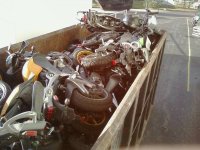
When Harley Davidson shut down Buell:

View attachment 76457
I once worked at a Farm & Fleet store, fixing lawnmowers and such. We had a run of warranty work on 60-80 gallon compressors with 5 HP Marathon motors. It seems that when they were plugged in, the motors would barely turn and make humming noises. The warranty procedure was to replace the motor with a factory new one and DISPOSE of the old one in the dumpster. After checking into it on one slow afternoon, I found that the motor was wired from the factory for 220 but it had a 110 plug on it. Switching a couple of Faston connections made the motor work properly. I advised our management about it and they said "warranty them and dispose of the miswired ones". Such a waste; brand new, perfectly fine motors being thrown in the dumpster...
 
I once worked at a Farm & Fleet store, fixing lawnmowers and such. We had a run of warranty work on 60-80 gallon compressors with 5 HP Marathon motors. It seems that when they were plugged in, the motors would barely turn and make humming noises. The warranty procedure was to replace the motor with a factory new one and DISPOSE of the old one in the dumpster. After checking into it on one slow afternoon, I found that the motor was wired from the factory for 220 but it had a 110 plug on it. Switching a couple of Faston connections made the motor work properly. I advised our management about it and they said "warranty them and dispose of the miswired ones". Such a waste; brand new, perfectly fine motors being thrown in the dumpster...
Once they’re in the dumpster, they’re no longer the company’s property. Just sayin’.
 
"Floor sweepings" in my world:

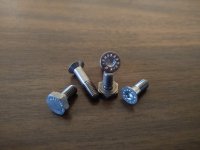
IMG_20241217_082904651.jpg

These happen to be #10 fasteners, and the countersunk carry the PN TX1026V3- _.

It takes a bunch of these to fill a 55 gallon drum!
 
"Floor sweepings" in my world:

View attachment 76462

These happen to be #10 fasteners, and the countersunk carry the PN TX1026V3- _.

It takes a bunch of these to fill a 55 gallon drum!
this thread is already way off the rails, so let me get it in the ditch :)

Are these Ti fasteners compatible with aluminum/steel? I am not sure of the galvanic potential with cadmium/steel/aluminum, but decades of service have shown that to be an acceptable combo.

In the defense world, do you come across any corrosion with Ti screws used in airframes?

Probably a stupid question..

But if you add up the difference, I bet the Ti vs AN hardware would probably save a few lbs.
 
Once they’re in the dumpster, they’re no longer the company’s property. Just sayin’.
That isn’t true; I actually got in a good amount of trouble for pulling them out of the dumpster. Apparently, as long is it’s on the stores property, it is theirs…and because they are being compensated by the warranty, not disposing of them is considered fraud. Now multiply the price of an individual motor by how many were trashed, well, the $$ amount gets pretty large quite rapidly.

They did the same with weed wackers and lawn mowers; it cost more in labor to fix them than just replace them. Most of the weed wackers were run on straight gas a snapped the connecting rod (stamped). About an $8 part but they charged 2 hours labor at $60 hour. So $128 to fix a $70 machine…right in the dumpster. Dozens of them, brand new with less than one tank of gas through them.
 
this thread is already way off the rails, so let me get it in the ditch :)

Are these Ti fasteners compatible with aluminum/steel? I am not sure of the galvanic potential with cadmium/steel/aluminum, but decades of service have shown that to be an acceptable combo.

In the defense world, do you come across any corrosion with Ti screws used in airframes?

Probably a stupid question..

But if you add up the difference, I bet the Ti vs AN hardware would probably save a few lbs.
All of Boeings jets use titanium screws to hold every imaginable panel in place. Every titanium screw is wound into a steel nutplate. I have never seen or heard of an issue.

25 years A&P
 
All of Boeings jets use titanium screws to hold every imaginable panel in place. Every titanium screw is wound into a steel nutplate. I have never seen or heard of an issue.

25 years A&P
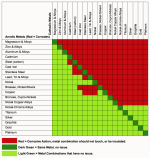
Titanium plays well with anything from a galvanic corrosion standpoint. See attached. As rockyfatcat has stated, it would appear this science has been field validated.for a while.

IMG_0061.png
 
I am not taking a position on this, just stating facts. Saber, that manufactures the prop extensions, has been selling grade 8 prop bolts for a long time. They may have their own inspection process.
When Judy was running Saber, the prop bolts had rolled threads and I think they still do. In the last couple of years, I had an issue with the bolts because they were slightly bent which made the torquing an issue with my Catto prop. They rubbed in spots increasing the torque and then released. Of the 6 I had 3 which needed to be replaced. Sam told me the heat treating process causes the bolts to bend slightly. My conclusion is Saber is making these bolts specifically for our use (correct heat treating and rolled threads). Not sure if they are grade 8 or grade 5 equivalent.
 
When Judy was running Saber, the prop bolts had rolled threads and I think they still do. In the last couple of years, I had an issue with the bolts because they were slightly bent which made the torquing an issue with my Catto prop. They rubbed in spots increasing the torque and then released. Of the 6 I had 3 which needed to be replaced. Sam told me the heat treating process causes the bolts to bend slightly. My conclusion is Saber is making these bolts specifically for our use (correct heat treating and rolled threads). Not sure if they are grade 8 or grade 5 equivalent.

Description from Saber's website...

"While the bolts we stock are not "aircraft-certified", they have been approved for use on certain FAA-certified aircraft. They have superior toughness and ductility compared to the standard AN aircraft bolts. They are machined to close tolerances, and heat treated under strict control so that their high tensile strength does not result in brittleness. AN bolt tensile strength is 125kips and our bolts are 180kips. Over 60,000 of these have been used on experimental and certified aircraft for the past 33 years with a perfect safety record. The heads are single-drilled if required by your application.

Most importantly, these engine and prop bolts have a shorter grip and a LONGER THREAD, which provide a much greater safety margin against bottoming out the threads. "​

 
When Judy was running Saber, the prop bolts had rolled threads and I think they still do. In the last couple of years, I had an issue with the bolts because they were slightly bent which made the torquing an issue with my Catto prop. They rubbed in spots increasing the torque and then released. Of the 6 I had 3 which needed to be replaced. Sam told me the heat treating process causes the bolts to bend slightly. My conclusion is Saber is making these bolts specifically for our use (correct heat treating and rolled threads). Not sure if they are grade 8 or grade 5 equivalent.

Description from Saber's website...

"While the bolts we stock are not "aircraft-certified", they have been approved for use on certain FAA-certified aircraft. They have superior toughness and ductility compared to the standard AN aircraft bolts. They are machined to close tolerances, and heat treated under strict control so that their high tensile strength does not result in brittleness. AN bolt tensile strength is 125kips and our bolts are 180kips. Over 60,000 of these have been used on experimental and certified aircraft for the past 33 years with a perfect safety record. The heads are single-drilled if required by your application.

Most importantly, these engine and prop bolts have a shorter grip and a LONGER THREAD, which provide a much greater safety margin against bottoming out the threads. "​

Apples, Oranges, and other fruit.

As an OEM, certification not withstanding, they have the authority to apply whatever hardware they prudently choose. Look at the ancient fasteners holding one’s power plant together, especially the case bolts with threads in bearing. Drives me nuts. This isn’t the OP’s point. A builder/assembler accepts risks if he deviates from installation instructions/drawings. Examples of experienced “successes”, are not necessarily of any real value.

Reminds me of a gomer I met in an unnamed Florida river town. The prop he procured had a thinner flange thickness than what was spec’d so he cut longer threads in the attach bolts thus reducing strength and adding induced stresses. Probably survived this ignorance but he never knew how close he could have been dancing on the edge of the cliff.

@the OP. Some very good advice up above and some other. Choose wisely/conservatively/safely, Sir.
 
Back
Top