
I have an RV-14 with an IO-390EXP. Our home airport is at 5,400 msl, so normal flying altitudes are commonly 3-6,000 ft above that. The cylinder head temps run really cool, even in warm ambient conditions, generally not more than 300-320º. Now that the ambient temps are cooling for the winter, we are seeing sub 300º on all cylinders pretty commonly. Our A&P is recommending that we try to bring those up above 350º. I understand that a higher timing advance could bring them up a bit. However, both E-mags, and the engine builder do not recommend changing the timing for the purpose of bringing up the cylinder head temps. Has anyone been successful making baffling changes to bring up the cylinder head temps a bit?

Van's Air Force
You are using an out of date browser. It may not display this or other websites correctly.
You should upgrade or use an alternative browser.
You should upgrade or use an alternative browser.
Baffle advice to increase cylinder temps in an RV-14
- Thread starter Wasatch
- Start date


Mike S
Senior Curmudgeon
Inserts for the intakes---one or two screws hold them in place. Easy to remove when it gets warmer. Easy fiberglass/foam project.
Also, consider throttling the outflow of the cowling. Servo or liner actuator with control in cockpit. Push/pull cable even.
Dan Horton has many posts showing his setup------does require more fiberglass work however. See post 8, below.
That way, you can have full cooling when needed if you go somewhere warmer or lower.
Also, consider throttling the outflow of the cowling. Servo or liner actuator with control in cockpit. Push/pull cable even.
Dan Horton has many posts showing his setup------does require more fiberglass work however. See post 8, below.
That way, you can have full cooling when needed if you go somewhere warmer or lower.
Last edited:
You could try to meter your air intakes by gradually taping the inlets. When you find a temperature range you can live with, fabricate some restrictor plates.
Same effect would be to restrict your air outlet.
But first I’d try a degree or 2 of timing advance (not much more!). Have you confirmed your timing marks are accurate.
Same effect would be to restrict your air outlet.
But first I’d try a degree or 2 of timing advance (not much more!). Have you confirmed your timing marks are accurate.
bonefishdave
Well Known Member
Keep in mind, lycoming angle valve cylinders use oil to cool, the suggested temps above 350 might be right for parallel valve cylinders, but my thought is low 300’s are ideal for angle valve cylinders.
Cylinders 1 and 2 are easy to brings temp up. You can experiment with air conditioner ducting foil tape to block air flow. The back cylinders would require decreasing the gap of the baffles where they wrap around the cylinder barrel and heads underneath. I’ts been a while since I built my plane but but I followed Sam James dimensions and my temps are spot on. I only had to block some air to the front of number 1 cylinder
Cylinders 1 and 2 are easy to brings temp up. You can experiment with air conditioner ducting foil tape to block air flow. The back cylinders would require decreasing the gap of the baffles where they wrap around the cylinder barrel and heads underneath. I’ts been a while since I built my plane but but I followed Sam James dimensions and my temps are spot on. I only had to block some air to the front of number 1 cylinder


If you do raise all 4 you might have a shot at creating a sticky valve on cylinders 1, 3 or 4....a first or almost a first.I have an RV-14 with an IO-390EXP. Our home airport is at 5,400 msl, so normal flying altitudes are commonly 3-6,000 ft above that. The cylinder head temps run really cool, even in warm ambient conditions, generally not more than 300-320º. Now that the ambient temps are cooling for the winter, we are seeing sub 300º on all cylinders pretty commonly. Our A&P is recommending that we try to bring those up above 350º. I understand that a higher timing advance could bring them up a bit. However, both E-mags, and the engine builder do not recommend changing the timing for the purpose of bringing up the cylinder head temps. Has anyone been successful making baffling changes to bring up the cylinder head temps a bit?
 Like others have said angle valve engines have lower CHT's (They make it up with hotter oil temps) Ask Lycoming what they recommend. 600 plus hrs. and no issues. FYI, Cyl 2 the hottest of the 4 is where you see a sticky valve the majority of the time.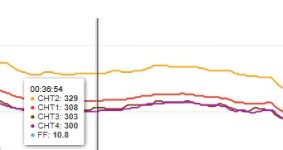
Last edited:

My IO390 on my Bearhawk ran 280-310 degrees and developed sticky exhaust valves. After reaming and cleaning I run it much harder and in winter (WI) put inlet covers tha block about 40%. No problem for the last 500 hours running 300-360 degrees

I have an RV-14 with an IO-390EXP. Our home airport is at 5,400 msl, so normal flying altitudes are commonly 3-6,000 ft above that. The cylinder head temps run really cool, even in warm ambient conditions, generally not more than 300-320º. Now that the ambient temps are cooling for the winter, we are seeing sub 300º on all cylinders pretty commonly. Our A&P is recommending that we try to bring those up above 350º. I understand that a higher timing advance could bring them up a bit. However, both E-mags, and the engine builder do not recommend changing the timing for the purpose of bringing up the cylinder head temps. Has anyone been successful making baffling changes to bring up the cylinder head temps a bit?
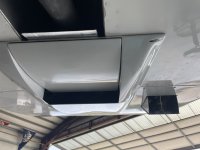
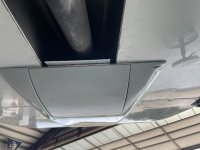
This is a reverse cowl flap I use on my 390EXP. It will give the CHT numbers you what. DanH did the design work I did the flight testing. DanH has the mold, I did not contact him to see if he is interested is selling a kit.
Attachments

czechsix
Well Known Member
Looks really nice Marvin. Aside from temp control, is it measurably faster due to drag reduction when the door is closed? Did you add the other cowl flap on the right before or after the DanH mod?View attachment 74765
This is a reverse cowl flap I use on my 390EXP. It will give the CHT numbers you what. DanH did the design work I did the flight testing. DanH has the mold, I did not contact him to see if he is interested is selling a kit.

I FYI, Cyl 2 the hottest of the 4 is where you see a sticky valve the majority of the time.
View attachment 74741
Ya'll keep talking about a hot #2 like it's some kind of special attribute of the 390. Gee guys...329 isn't hot, and temperature balance is entirely a function of the cowl and baffles.
Recall I've been running variable exit area for more than a decade. With it, I've seen CHT's from 280 to 380 while playing around with configurations and settings. Typical cruise CHT in my part of the world is 325~345 across all cylinders with mixture at peak EGT, i.e. maximum heating of the exhaust valves.
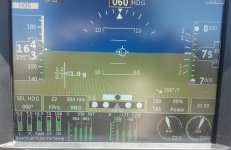
More speed may require best power mixture. Here's an example; I'm in a hurry to get back to the office after a truck auction in Slidell MS, circa 2015. Mixture is roughly 100 ROP, speed 188 true. At 339F, #2 is the coolest cylinder, and the rest are 355~365.
I just had all the springs off the exhausts for a slide and wobble:
Stuck valves on angle heads - Epidemic or Isolated?
I have recently heard of several stuck valves with bent pushrods. Since I travel a fair amount (600 hrs in the two and a half years since completing my 14A), and much of it is over unforgiving terrain or open ocean, should I be concerned? Additionally flying Young Eagles is a passion of mine and...
vansairforce.net
I have an RV-14 with an IO-390EXP...Now that the ambient temps are cooling for the winter, we are seeing sub 300º on all cylinders pretty commonly. Our A&P is recommending that we try to bring those up above 350º.
FWIW (sample of one), I'd shoot for 330 cruise, max 380 climb.
I understand that a higher timing advance could bring them up a bit. However, both E-mags, and the engine builder do not recommend changing the timing for the purpose of bringing up the cylinder head temps.
Agree. Don't do that. It also adds mechanical stress. Plenty of ways to increase temperature without the stress.
Has anyone been successful making baffling changes to bring up the cylinder head temps a bit?
In general, make baffle mods to change each individual cylinder, and cowl mods to change the cylinder temperatures as a group. Reducing either inlet or exit area will raise CHT, for an individual baffle wrap, or for the entire cowl. However, there's more to both than simply reducing area, so individual results vary a lot. Done right, reducing cowl exit area is superior to an inlet reduction.
This is a reverse cowl flap I use on my 390EXP. It will give the CHT numbers you what. DanH did the design work I did the flight testing. DanH has the mold, I did not contact him to see if he is interested is selling a kit.
I am not selling a kit. This was an experiment, conceptually like the outlet afterfairings Larry Vetterman was working with at one point. It makes half the exit area variable for the early RV-14 cowl. Note the Anti-Splat kit on the right. The variable exit allowed Marvin to control CHT, but damping the whole cowl made oil cooling marginal.
This merely reduced mass flow to increase CHT. There was no reduction in wetted area (it actually increases), or flat plate, so no increase in speed. The Aerosplat cowl flap was part of an experiment looking at oil temperature, I no long use that cowl flap. I am slowly working toward a different solution for oil temperature. By slowly, I mean probably next summer.Looks really nice Marvin. Aside from temp control, is it measurably faster due to drag reduction when the door is closed? Did you add the other cowl flap on the right before or after the DanH mod?
czechsix
Well Known Member
Right but that fairing should smooth the airflow behind the stock cowl exit area, especially as the door is closed off...as I recall, Larry Vetterman did get measurable drag reduction/speed increases from the similar design he experimented with (I think it was on an RV-6 or 7). Bummer that you didn't see any speed increase in this case.This merely reduced mass flow to increase CHT. There was no reduction in wetted area (it actually increases), or flat plate, so no increase in speed. The Aerosplat cowl flap was part of an experiment looking at oil temperature, I no long use that cowl flap. I am slowly working toward a different solution for oil temperature. By slowly, I mean probably next summer.
