

Van's Air Force
You are using an out of date browser. It may not display this or other websites correctly.
You should upgrade or use an alternative browser.
You should upgrade or use an alternative browser.
How much gusts is too much?
- Thread starter RayJr
- Start date



This will be an interesting discussion!
I would be curious to know what gusts people have actually seen compared to what they say in this thread.
Let’s assume that if you are willing to accept a 25 knot headwind gust, you are also willing to lose that same 25 knots just after lift off.
Not judging, just curious. It has been my experience that people seem to only consider the headwind increase in a gust but kind of disregard the loss of that headwind…which is arguably more important.
I would be curious to know what gusts people have actually seen compared to what they say in this thread.
Let’s assume that if you are willing to accept a 25 knot headwind gust, you are also willing to lose that same 25 knots just after lift off.
Not judging, just curious. It has been my experience that people seem to only consider the headwind increase in a gust but kind of disregard the loss of that headwind…which is arguably more important.
MCLEODPILOT
Member
Hmmmm.... interesting question. Assuming the taxi out will be workable and there are not any "too narrow" taxiways or obstacles (like corners of hangars) to run into before reaching the runway, the liftoff speed could be increased by the gust factor to mitigate any loss in a gust. I suppose getting the tail up for a long wheel roll at low AOA to prevent an unexpected liftoff would also be prudent. Roll to normal liftoff speed + max gust then smartly liftoff and climb (not too aggressively) to clear the ground plane. Your thoughts???
The airport where my plane is parked right now is reporting 35G48KT. It's clear I'm not going, I would be worried to pull it out of the hangar in this.This will be an interesting discussion!
I would be curious to know what gusts people have actually seen compared to what they say in this thread.
Let’s assume that if you are willing to accept a 25 knot headwind gust, you are also willing to lose that same 25 knots just after lift off.
Not judging, just curious. It has been my experience that people seem to only consider the headwind increase in a gust but kind of disregard the loss of that headwind…which is arguably more important.
MCLEODPILOT
Member
I don't think you could make it to the runway today. YOW!!!

Sam Buchanan
been here awhile
Maybe the question should be posed as "How brutal a ride can you tolerate?".
I agree. I think if I could teleport to the end of the runway lined into the wind then maybe. But I think the whole plane might just go sideways into the woods as it rolled out of the hangarI don't think you could make it to the runway today. YOW!!!

Great question. How much is that for you in an RV? In the summer or spring winds do most call it good anytime after 9-10 am?Maybe the question should be posed as "How brutal a ride can you tolerate?".

Sam Buchanan
been here awhile
Great question. How much is that for you in an RV? In the summer or spring winds do most call it good anytime after 9-10 am?
It doesn't really matter about my threshold, this is a very personalized limit that will vary widely across the pilot population. Then there is the consideration of whether or not the gusts include drastic vertical excursions, and that will depend on altitude, terrain and thermal activity. A brief trip locally in turbulence is more tolerable than a cross country, getting bounced off the canopy gets old real fast..........
There is a lot of RVing going on after 10am, but maybe not as much in Arizona in the summer as there is east of the Great River.
yeah my bad, I meant as in "you".....the whole RV family. Interesting to get everyone's perspective on what their limits are. We definitely get tossed arounf here in the high desert of AZ in the summer months and flying days can be selective based on weatherIt doesn't really matter about my threshold, this is a very personalized limit that will vary widely across the pilot population. Then there is the consideration of whether or not the gusts include drastic vertical excursions, and that will depend on altitude, terrain and thermal activity.
There is a lot of RVing going on after 10am, but maybe not as much in Arizona in the summer as there is east of the Great River.

I've taxi'ed, taken off, and landed in 30+ knot gusty winds, little or no crosswind component. Takeoff was a bit sporty due to rotors over the trees at the departure airport, landing at my more open home airport was less exciting. Taxiing did require attention to control input.
good call.The airport where my plane is parked right now is reporting 35G48KT. It's clear I'm not going, I would be worried to pull it out of the hangar in this.
Given that experience, have you ever experienced a LOSS of 30 knots on departure or approach? That was the point of my comment; I'm pretty sure a LOSS of 30 knots would be a bit more than "sporty"!I've taxi'ed, taken off, and landed in 30+ knot gusty winds, little or no crosswind component. Takeoff was a bit sporty due to rotors over the trees at the departure airport, landing at my more open home airport was less exciting. Taxiing did require attention to control input.
Just trying to get people to think about it. If there is a potential for a 30 knot increase, there is the same potential for a 30 knot loss. One can give you incredible performance and a bumpy ride. The other can end catastrophically.
Again, not judging. Everyone has their own limits. My point is simply to get people to THINK about it.
I like 25 as a limit for myself.
Low level wind shear is definitely something to be aware of and avoid if reported or if conditions favor.Given that experience, have you ever experienced a LOSS of 30 knots on departure or approach? That was the point of my comment; I'm pretty sure a LOSS of 30 knots would be a bit more than "sporty"!
Just trying to get people to think about it. If there is a potential for a 30 knot increase, there is the same potential for a 30 knot loss. One can give you incredible performance and a bumpy ride. The other can end catastrophically.
Again, not judging. Everyone has their own limits. My point is simply to get people to THINK about it.

I agree it depends on gusts. I did my PP and IFR in OKC, where there always seems to be wind. Right now it's 22G32. I've flown in these conditions a lot, but that's only a 10 knot change from the gust, so it was manageable. Getting up to 20 or even 30 gust factors, I'd agree that's hard to make up on the down cycle, so I'm in the 10-15 gust range limit. I'd fly in 25G35 no problem, but I agree that it wouldn't be a fun ride, so that would be only if it was for training in those conditions, not for a joy ride with passengers.

I think there is some "apples to oranges" going on here or at least I hope so. There is a massive difference between a 30 kt headwind, 25 kt headwind with gusts to 30 kts and say 10 kts of headwind with 30 kt gusts! Let's be clear if anyone is saying they would takeoff with 30 kt gusts do your loved ones a favor and stop flying! 
I would say it depends on the aircraft, runway length and the environment, high treeline or mountains.Assuming the wind was down the runway or very close, how much wind and gusts would you taxi, take off in?
Also assuming you were landing elsewhere where the weather was good.
A reported wind of 35G48KT means a wind of 35 kt with gusts up to 48 kt.
The change in wind speed is 13 kt. In this case it may be difficult or impossible to taxi from the parking area to take of position.
However the gusts may not be a problem during the take off if it's a head wind.
When gusts are reported I try to lift of late and then accelerate in the ground effect to a safe climb speed.
Good luck

I've never seen gusts go from 0 knots to 30 knots. 15 knots gusting to 30 knots would be more what I would expect.
Last year I had a landing at an airport with the wind 350 degrees 18G33 (12G21 direct crosswind for RWY31 (150 feet wide)). My expectation the entire landing was that I would not be able to land and after one attempt divert to a different airport twenty miles away that lined up perfectly with the wind direction. The RV-10 handled the crosswind extremely well and it was an easy landing.
Last year I had a landing at an airport with the wind 350 degrees 18G33 (12G21 direct crosswind for RWY31 (150 feet wide)). My expectation the entire landing was that I would not be able to land and after one attempt divert to a different airport twenty miles away that lined up perfectly with the wind direction. The RV-10 handled the crosswind extremely well and it was an easy landing.
I know this is simply an exercise in mental masturbation. But these conditions are not conducive for pattern work. The PAVE checklist is for the pilot to evaluate the risks to the flight and make the necessary decisions.I think there is some "apples to oranges" going on here or at least I hope so. There is a massive difference between a 30 kt headwind, 25 kt headwind with gusts to 30 kts and say 10 kts of headwind with 30 kt gusts! Let's be clear if anyone is saying they would takeoff with 30 kt gusts do your loved ones a favor and stop flying!
My certified aircraft has a nosewheel and is CERTIFIED to land with a 25 kt crosswind. Would I like to test drive that ability? NO THANK YOU!
Would I take off in those conditions if the cross country had a reasonable expectation of mild conditions at the destination? Maybe, but not in my -7

I have just over 200 hours in my 9A. My crosswind max is 8-10k. If it is down the runway I may go up to 15k max. Im getting better at cross winds but I will try and find a double runway to plan a trip around if it looks like it will be windy. Also, I hate the bumps!

I haven't seen very much discussion about whether or not we are talking about flying a tailwheel airplane when you are doing this. Even though the full swivel nosewheel also is affected, I think the taildraggers are affected more on taxi. If the wind is down the runway and gusting then the takeoff part is probably not too big of an issue. Depending on what your runway layout is, the TAXI part might be more sporty than the actual takeoff. And if it is a long taxi then one of your brakes is probably getting a good workout by the time you reach the takeoff point. There was at least one time where I elected to takeoff using the WIDTH of the runway and the RAMP because I did not feel I could safely taxi down taxiway with a very strong direct Xwind.Assuming the wind was down the runway or very close, how much wind and gusts would you taxi, take off in?
Also assuming you were landing elsewhere where the weather was good.
You used the ramp and did your takeoff across the runway? That sounds like a good plan…not.I haven't seen very much discussion about whether or not we are talking about flying a tailwheel airplane when you are doing this. Even though the full swivel nosewheel also is affected, I think the taildraggers are affected more on taxi. If the wind is down the runway and gusting then the takeoff part is probably not too big of an issue. Depending on what your runway layout is, the TAXI part might be more sporty than the actual takeoff. And if it is a long taxi then one of your brakes is probably getting a good workout by the time you reach the takeoff point. There was at least one time where I elected to takeoff using the WIDTH of the runway and the RAMP because I did not feel I could safely taxi down taxiway with a very strong direct Xwind.
There is no such thing as an emergency take off.

Reminder: Max demonstrated crosswind is not a limit or "certification" of any sort. Meaning: If something goes wrong and the xwind was 18kts you won't get anywhere saying "The plane is CERTIFIED for 25!"My certified aircraft has a nosewheel and is CERTIFIED to land with a 25 kt crosswind.
Ever met my ex-wife?There is no such thing as an emergency take off.
Actually first used the width of the runway and THEN the ramp but pretty much the same thing. You had to be there. Large ramp at an airport in the middle of nowhere. No other traffic and I advised some workers of what I was doing who then made sure no vehicle/ground AC traffic could interfere. Given the conditions it was definitely safer taking off into a direct headwind (non gusting but large wind) with plenty of room rather than a long taxi and then takeoff in a very stiff X wind with trees causing wind shear. BUT you are correct and I won't argue with you. "Takeoffs are optional". I evaluated the situation and made the decision.You used the ramp and did your takeoff across the runway? That sounds like a good plan…not.
There is no such thing as an emergency take off.
Key point. Easy to be judgy...You had to be there.
Yes, context definitely makes a difference; pretty sure in most places, that type of maneuver would be frowned upon.Actually first used the width of the runway and THEN the ramp but pretty much the same thing. You had to be there. Large ramp at an airport in the middle of nowhere. No other traffic and I advised some workers of what I was doing who then made sure no vehicle/ground AC traffic could interfere. Given the conditions it was definitely safer taking off into a direct headwind (non gusting but large wind) with plenty of room rather than a long taxi and then takeoff in a very stiff X wind with trees causing wind shear. BUT you are correct and I won't argue with you. "Takeoffs are optional". I evaluated the situation and made the decision.
It also brings up another point to illustrate. It is very easy to contract a case of "getthereitis". It is also difficult to talk yourself out of it once contracted. I am pretty sure everyone here has had to deal with this in their experience, and it is worth highlighting it to encourage people to think about it. Once you make the decision to go, you must assume the responsibility for the consequences of that decision...good or bad.
Last edited:

Pilot135pd
Well Known Member
Nice, with that wind I can easily take off like a helicopter straight up !The airport where my plane is parked right now is reporting 35G48KT. It's clear I'm not going, I would be worried to pull it out of the hangar in this.
Pilot135pd
Well Known Member
The important part of this topic here are the high gusts not the constant wind, crosswind or headwind. How do you handle that one?I have just over 200 hours in my 9A. My crosswind max is 8-10k. If it is down the runway I may go up to 15k max. Im getting better at cross winds but I will try and find a double runway to plan a trip around if it looks like it will be windy. Also, I hate the bumps!

Um............I should probably stay out of this conversation as I have made multiple trips from Montana to Colorado and back in the Cub..........going through Wyoming........where, if the Wind ever stopped blowing, everyone would fall over!You used the ramp and did your takeoff across the runway? That sounds like a good plan…not.
There is no such thing as an emergency take off.

 Many of my arrivals and departures were not what would be classified as 'standard'. If one waited for ideal conditions in Wyoming, many trips would never happen. Yes, the Cub is different from an RV..... Best not ask me about a particular trip when I landed in Casper pretty steady 35 with occasionally gusting to 40. Bottom line: landed, fueled and departed again, all safely done without problems. That's all I'll say. What are the lyrics....And a man's gotta do What a man's gotta do; Gunslinger.....
 I'm in the middle of Oklahoma, very flat. I landed about two weeks ago with 22kts gusting to 28kts and about a quartering crosswind. It was a little sporty landing, but the concern I had after I got on the ground was the taxi. Tower let me remain on the runway and I got the flaps up but the amount of braking I had to do got me very concerned about heat in the wheels and blowing a tire.

I think this is indicative of two different discussions; originally we were discussing large gusts. This example shows a relatively strong steady wind with a small gust of only 6 knots.I'm in the middle of Oklahoma, very flat. I landed about two weeks ago with 22kts gusting to 28kts and about a quartering crosswind. It was a little sporty landing, but the concern I had after I got on the ground was the taxi. Tower let me remain on the runway and I got the flaps up but the amount of braking I had to do got me very concerned about heat in the wheels and blowing a tire.
This scenario is far different than say winds of 15 knots gusting to 38knots.
If the wind is over 15 knots -as wind or gusts, I dont fly. If the crosswind is over 10 knots I dont fly. I dont need to fly and do it for fun so I dont push my limits when it is not enjoyable.The important part of this topic here are the high gusts not the constant wind, crosswind or headwind. How do you handle that one?
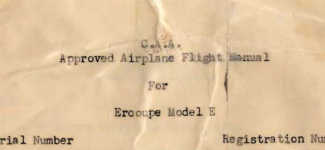
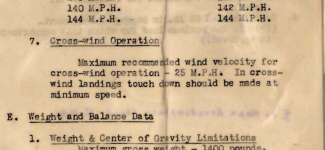
Certified data from the approving agency. There is approved data and acceptable data Approved being the higher standardReminder: Max demonstrated crosswind is not a limit or "certification" of any sort. Meaning: If something goes wrong and the xwind was 18kts you won't get anywhere saying "The plane is CERTIFIED for 25!"
Edit the maximum recommended crosswind operation is 25 mph or 21 knots.
This is from the 1948 Ercoupe. Mine is essentially the same its a 1965 Alon Aircoupe with rudder pedals.
Is that enough certified data for you?

Ever met my ex-wife?
She was sitting next to mine
Your edit to use the word RECOMMEDED makes it a correct statement.Edit the maximum recommended crosswind operation is 25 mph or 21 knots.
However, you'll likely not find a CFI anywhere who will say that is a LIMITATION, or Regulation, or anything else enforceable.
PilotjohnS
Well Known Member
Funny you mention this.
I was with my son landing at KVGT (Vegas) and it was 25G30kt cross wind. we followed a Cirrus in down final, he aborted and went around. i continued and landed. Turns out the gust was due to a sheer line over the runway. The RV was light enough that I was able to power up right before touch down and arrest the rapid descent, and make a really nice landing. the Cirrus tried again and went around for the second time. Finally the Cirrus landed on the perpendicular runway and taxi by me as I was getting fuel.
The RV has a lot of power and can deal with gusts and stuff better than other planes if one keeps their hand on the throttle, and their wits about them.
I was with my son landing at KVGT (Vegas) and it was 25G30kt cross wind. we followed a Cirrus in down final, he aborted and went around. i continued and landed. Turns out the gust was due to a sheer line over the runway. The RV was light enough that I was able to power up right before touch down and arrest the rapid descent, and make a really nice landing. the Cirrus tried again and went around for the second time. Finally the Cirrus landed on the perpendicular runway and taxi by me as I was getting fuel.
The RV has a lot of power and can deal with gusts and stuff better than other planes if one keeps their hand on the throttle, and their wits about them.

This is a great point. My RV-8a handles cross winds much better than any Cessna, Diamond, Cirrus or Bonanza straight tail I’ve flown.Funny you mention this.
I was with my son landing at KVGT (Vegas) and it was 25G30kt cross wind. we followed a Cirrus in down final, he aborted and went around. i continued and landed. Turns out the gust was due to a sheer line over the runway. The RV was light enough that I was able to power up right before touch down and arrest the rapid descent, and make a really nice landing. the Cirrus tried again and went around for the second time. Finally the Cirrus landed on the perpendicular runway and taxi by me as I was getting fuel.
The RV has a lot of power and can deal with gusts and stuff better than other planes if one keeps their hand on the throttle, and their wits about them.
Norman CYYJ
Well Known Member
Probably the ability of the pilot is more relevant than what the plane will handle.This is a great point. My RV-8a handles cross winds much better than any Cessna, Diamond, Cirrus or Bonanza straight tail I’ve flown.
How COOL IS THAT that you have the original document from 1948! Or, someone does, anyway. I have the original factory sign-off papers from the Cub as well, typed up on a typewriter in 1946! She is a Ponca City Cub!Certified data from the approving agency. There is approved data and acceptable data Approved being the higher standard
Edit the maximum recommended crosswind operation is 25 mph or 21 knots.
This is from the 1948 Ercoupe. Mine is essentially the same its a 1965 Alon Aircoupe with rudder pedals.
Is that enough certified data for you?
View attachment 74326View attachment 74327
Ummm.........not sure the Ercoupe is a fair comparison.
 Yours has rudder pedals but most don't. As there was no real way to line up the airplane with the runway in a cross-wind, the trailing-link gear was made to take a fair amount of abuse.....and to land kind of sideways! Back in The Day to save on training expenses, pilots being trained on the new Big Jets (707 comes to mind) were put in an Ercoupe and went out and did landings in a cross wind. The sight picture of going down the centerline looking out the side cockpit windows (well, almost) took some getting used to. At touchdown (which is why it said minimal speed in the manual), the trailing-link gear would take over and YERK (I think that's a word! Pretty sure that is what it must have sounded like! ) the airplane straight! Put a wing down in a -07 and you might be dragging engine nacelle on the ground, so it was landed, more or less, sideways. Like an Ercoupe!
Yes: SuzieQ is easier to land in a strong crosswind than the Cub. Of course, the Cub is lighter, high wing and a whole lot of wing surface!This is a great point. My RV-8a handles cross winds much better than any Cessna, Diamond, Cirrus or Bonanza straight tail I’ve flown.
The Alon Aircoupe and the earlier Ercoupe share many similarities. When you pull power, that puppy will sink. The trailing link landing gear will naturally spin the nose and ‘yerk’ the airplane in line with the true direction of travel. I have flown in, but never flown a 2-axis control Ercoupe.How COOL IS THAT that you have the original document from 1948! Or, someone does, anyway. I have the original factory sign-off papers from the Cub as well, typed up on a typewriter in 1946! She is a Ponca City Cub!
Ummm.........not sure the Ercoupe is a fair comparison.
Famed Boeing test pilot Tex Johnston put his pilots into Ercoupes to teach them how to land in a crab so that they would not hit the pods of the prototype 707 and 717 (KC-135) on the ground in crosswinds. The design also means that you must be prepared to fight the tendency to weathervane by turning the wheel away from the wind, contrary to everything you learned in three-control airplanes.

Erco Ercoupe
www.aopa.org

