Van's Air Force

The definitive Van's Aircraft support community! Buying, building or flying an RV? Join our exclusive family of mentors and enthusiasts!

True Max Flap Speed?

AlpineYoda

Well Known Member
Patron
A completely hypothetical situation - imagine you are taxiing out in an RV-10 for your first night flight in a few years, and there is a 12 knot wind gusting at 60 degrees to the runway. Pucker factor high. You get to the runway and are given an intersection expedited clearance to get ahead of an airliner that's about to go. Pucker factor a little higher. So, you rush through the checklist and, since it is night, forget that the flaps are fully extended and you don't see them hanging down. (In the RV-10, flaps are usually left extended for getting in and out of the plane to avoid stepping on them) You takeoff, are surprised how fast you get off the ground, and then can't get the speed up with the nose very high. At about 800 AGL you realize that the flaps are down and you clean up before circling back.

At the hangar, everything appears to be okay. Flap operation is fine. The extended and retracted positions look right. Nothing looks bent. You pull the wing root covers and the push rods and bellcranks look okay. The torque seal on all the jam nuts is pristine.

Checking the datalog when you get home, you see that your speed maxed out around 110 knots indicated. Max flap extension speed in the -10 is 87 knots indicated.

You know that some planes are tough and the max extension speed is based more on the extension motor than structural damage, and since you didn't EXTEND the flaps at 110, and the motor runs fine, and nothing is bent, you think everything is good to go?

Are you likely okay? Or are you missing something and should check into this more?

Again, totally hypothetical situation.
 
I know someone who went around from a bounced landing in a 10 a few years ago and retracted around that speed. Also no evidence of any damage anywhere. So I imagine you’re probably fine. A thorough inspection is the right course of action.

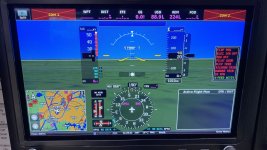
I have flap (and trims) logic based configuration CAS alerts set to add one extra layer of pre takeoff check protection for this. May be worth investigating if you’re avionics allows.
 
I know someone who went around from a bounced landing in a 10 a few years ago and retracted around that speed. Also no evidence of any damage anywhere. So I imagine you’re probably fine. A thorough inspection is the right course of action.

I have flap (and trims) logic based configuration CAS alerts set to add one extra layer of pre takeoff check protection for this. May be worth investigating if you’re avionics allows.

It's a long story, but my flap motor position sensor isn't compatible with my wiring harness. I have a compatible sensor on the shelf to be installed at my next condition inspection. I might take a few nights the next time the weather stinks and just put it in now - a reminder on the screen would be great.
 
Last edited:
It's a long story, but my flap motor position sensor isn't compatible with my wiring harness. I have a compatible sensor on the shelf to be installed at my next condition inspection. I might take a few nights the next time the weather stinks and just put it in now - a reminded on the screen would be great.
Sounds good. Well worthwhile.
I did it after I gave myself a good scare taking off solo with half tanks and full nose up trim after getting distracted on a short turn. 😬

IMG_8286.jpeg
 
My vote is carefully inspect the flaps. If you don’t find any damage and they function fine, they are fine.
 
If nothing looks bent or damaged you're probably ok. As a side note, "unable" is almost always an acceptable response to ATC. Don't be afraid to take the time you need to stay ahead of the airplane.
 
If nothing looks bent or damaged you're probably ok. As a side note, "unable" is almost always an acceptable response to ATC. Don't be afraid to take the time you need to stay ahead of the airplane.
In the airline world an occasional flap overspeed occurs too. They look at the percentage of overspeed, and if it's not excessive, they just extend the flaps, give them a look, and sign the plane off. Same basic plan for you.

Before the days of sophisticated flight data logging, overspeeds were more common, and often not reported to maintenance. You knew when a particular flap or slat had experienced too many speed exceedances when somebody called to say that they found it in their backyard. True.
 
If nothing looks bent or damaged you're probably ok. As a side note, "unable" is almost always an acceptable response to ATC. Don't be afraid to take the time you need to stay ahead of the airplane.

Yeah, I should have slowed down and double checked. Given the choice of breathing a 737's exhaust to the end of the taxiway (and then dealing with wake turbulence) or taking the intersection, I went with the short cut.

I read those accident / what I learned articles in Flying and the AOPA mag very carefully. I always promise myself that I will be careful since every one of them always indicates a string of things that led to a bad outcome. In this case, it was 1, haven't flown at night in a while. 2, was stressed due to the winds. 3, was mentally stressed / distracted due to various world events (don't want to get banned for politics). 4, rushed it due to trying to get in front of the 737. 5, didn't follow check list procedures.

Just glad it didn't end up with a crater and an NTSB report.
 
Well, no one has to tell Mr Anonymous that rushing thru a check list - and at night, to boot - is asking for trouble.
I don’t taxi with flaps down - I don’t want the flaps acting as a backstop for any gravel thrown back by the prop. Drill is flaps up prior to start; flaps to takeoff position in runup checklist. After landing, flaps up. Just prior to shutdown, flaps full down (this is the one I sometimes miss. But it’s easy to lean back inside and put them down).
 
I know this is not popular. You could just keep the flaps up like the majority of GA after landing and placing them in the up position. Then you don’t have to worry about leaving them down. Yes you have to step over your flaps just like every other GA plane does.

Either way people that respond to this story with anything other than thank you for fessing up and sharing so others may learn could go a little easier on the guy.

People make mistakes. Even airline pilots.
 
I know this is not popular. You could just keep the flaps up like the majority of GA after landing and placing them in the up position. Then you don’t have to worry about leaving them down. Yes you have to step over your flaps just like every other GA plane does.
I see in your photo an RV7A? The -10 is noticeably bigger. A bigger step up onto the step, a bigger step onto the wing (not flaps). I can do it. My wife cannot.
 
I see in your photo an RV7A? The -10 is noticeably bigger. A bigger step up onto the step, a bigger step onto the wing (not flaps). I can do it. My wife cannot.
I can see the point. I’ve stepped onto 10s but also Bonanzas, Barons and Pipers, all have that issue. The step on those might be bigger though.
 
A completely hypothetical situation - imagine you are taxiing out in an RV-10 for your first night flight in a few years, and there is a 12 knot wind gusting at 60 degrees to the runway. Pucker factor high. You get to the runway and are given an intersection expedited clearance to get ahead of an airliner that's about to go. Pucker factor a little higher. So, you rush through the checklist and, since it is night, forget that the flaps are fully extended and you don't see them hanging down. (In the RV-10, flaps are usually left extended for getting in and out of the plane to avoid stepping on them) You takeoff, are surprised how fast you get off the ground, and then can't get the speed up with the nose very high. At about 800 AGL you realize that the flaps are down and you clean up before circling back.

At the hangar, everything appears to be okay. Flap operation is fine. The extended and retracted positions look right. Nothing looks bent. You pull the wing root covers and the push rods and bellcranks look okay. The torque seal on all the jam nuts is pristine.

Checking the datalog when you get home, you see that your speed maxed out around 110 knots indicated. Max flap extension speed in the -10 is 87 knots indicated.

You know that some planes are tough and the max extension speed is based more on the extension motor than structural damage, and since you didn't EXTEND the flaps at 110, and the motor runs fine, and nothing is bent, you think everything is good to go?

Are you likely okay? Or are you missing something and should check into this more?

Again, totally hypothetical situation.
Keep flying, and don’t make it a habit. It’ll be fine. Anything in moderation is tolerable.
 
I once heard of a pilot a couple years ago. landed let my I mean his son out to go to the restroom, son gets back in we start and takeoff. 10 minutes later CHT temps are high, plane is flying slower than normal and mushy. Well just what I heard it felt like.

No problems, no damage, hasn't happened since but part of my start checklist is now flaps up.
 
We all make mistakes, it’s human to er! As long as you learned a valuable lesson, checklists are there to catch just this situation, many pilots just say the check list and nothing else!
Like any limit there’s a fudge factor at the design/testing stage, at 88 kts (1 knot after 87) the item doesn't get destroyed and everyone dies. Inspect, operate and learn👍
 
So I'm on a cross country with my father, we're heading west through Arkansas with a 40kt headwind with an IAS of 135kts and suddenly we're a bit nose down and doing 95kts. At first I thought the headwind suddenly increased and about 5 seconds later my father says "why are the flaps down?". I retract the flaps and realize that he had just taken his hat off and on the way to setting it down in his lap hit the flap switch on the stick grip. Fortunately the flaps are progressive and only extended to half but WAY above max extend speed. No damage but certainly scary.
 
I can see the point. I’ve stepped onto 10s but also Bonanzas, Barons and Pipers, all have that issue. The step on those might be bigger though.
I’m pretty sure the PA28 POH allows you to step on the flap (although I never thought it was a great idea). But not the -10. Putting it down reinforces the idea to not use it as a step.
 
I think it’s ruined… I’ll be over and take it off your hands for free so you don’t have to go to all the trouble of rebuilding everything….

( yeah… I know… I’m a giver…)

Steve
 
Sounds good. Well worthwhile.
I did it after I gave myself a good scare taking off solo with half tanks and full nose up trim after getting distracted on a short turn. 😬

View attachment 73759
Hi Richard! Interesting alert system you've set up on your G3x! I'm building an RV-8 with a similar system, and I'm curious about setting up warnings for trim and flaps. Could you elaborate on how to configure these alerts? Thanks!
 
In a Mooney I previously had, with the classic "NO STEP" decal on the flap, and after admonishing my sister to step past the flap, she stepped right on it. After that, flaps down for boarding. You just can't trust passengers and, often, the pilot.

Also, it just seems odd the max full flap speed on the 8, and apparently the 10, is 86 kts. With a typical instrument approach speed of 90 kts, it just adds one more thing to worry about approaching minimums. I vote we just arbitrarily agree to increase the full flap speed to 95 kts. Think that will work?
 
I've done that once or twice before in the -7 but realized it as it jumped off the ground with a high angle of climb.
I've also adopted the flaps down before shut down when flying the Lancair Super ES, very similar to the RV10 in that it sits high and hard to find the step when climbing down. The main difference is that Lancair states that it's okay to step on the flaps, I just don't like doing it. With that said, I have made a pretty major change on my check list both in the RV8 and Lancair. I've moved up "Flaps Up" in the Check list to just after start up and ensuring the Alternator is On. So, I'm actually taxing out with my flaps up way before I get to run up or certainly way before I get close to taking off. Maybe something to consider to ensure you have your flaps up just after you start so you aren't rushed. Outside of just damaging the flaps or flap motor, it has been known to cause many NTSB reports.
 
Also, it just seems odd the max full flap speed on the 8, and apparently the 10, is 86 kts. With a typical instrument approach speed of 90 kts, it just adds one more thing to worry about approaching minimums. I vote we just arbitrarily agree to increase the full flap speed to 95 kts. Think that will work?

When I was getting my instrument rating, my CFII taught me that since GA planes can land easily on partial flaps, extend to the 1/2 setting at FAF. Don't go to full flaps until you break out. That allows for higher speed on approach and it is easier to clean up if you go missed. If you break out high enough, full flaps. If you break out at minimums and don't have time, land on half flaps.

I don't know if that is actually best practice - it was a very busy airport and flying half flaps also prevented us from tying up the airspace while we slowly flew the final leg of the approach - but that is a technique I still employ.
 
When I was getting my instrument rating, my CFII taught me that since GA planes can land easily on partial flaps, extend to the 1/2 setting at FAF. Don't go to full flaps until you break out. That allows for higher speed on approach and it is easier to clean up if you go missed. If you break out high enough, full flaps. If you break out at minimums and don't have time, land on half flaps.

I don't know if that is actually best practice - it was a very busy airport and flying half flaps also prevented us from tying up the airspace while we slowly flew the final leg of the approach - but that is a technique I still employ.
When shooting approaches in my 9A, I drop 10 degrees and shoot the approach at 90 knots. I can easily drop more and slow quickly as I break out, or for a go-around sucking up just 10 degrees of flaps doesn't affect the performance nearly as much as sucking up full flaps. With the performance of our airplanes, the issue of "don't retract flaps on a go-around" is pretty much a non-issue.
 
When shooting approaches in my 9A, I drop 10 degrees and shoot the approach at 90 knots. I can easily drop more and slow quickly as I break out, or for a go-around sucking up just 10 degrees of flaps doesn't affect the performance nearly as much as sucking up full flaps. With the performance of our airplanes, the issue of "don't retract flaps on a go-around" is pretty much a non-issue.
I must be missing something. I guess I'm SUPER OLD SCHOOL, but can someone explain to me why you guys are making approaches at twice stall speed? The listed stall speed for a -9/9A is around 50 mph and you guys are using 100 mph for approach!
 
When I was getting my instrument rating, my CFII taught me that since GA planes can land easily on partial flaps, extend to the 1/2 setting at FAF. Don't go to full flaps until you break out. That allows for higher speed on approach and it is easier to clean up if you go missed. If you break out high enough, full flaps. If you break out at minimums and don't have time, land on half flaps.

I don't know if that is actually best practice - it was a very busy airport and flying half flaps also prevented us from tying up the airspace while we slowly flew the final leg of the approach - but that is a technique I still employ.
I only use 1/2 flaps (20 degrees) until I am about 1.5 miles out or when I break out if I'm still in the clouds at that point but it always effects trim and requires adjustment to stay on GS. Flap speed for anything but full is 100 kts.

I must be missing something. I guess I'm SUPER OLD SCHOOL, but can someone explain to me why you guys are making approaches at twice stall speed? The listed stall speed for a -9/9A is around 50 mph and you guys are using 100 mph for approach!
The stall on an 8 is more like 50 kts but my airport is busy and 90 kts allows me to fit into the traffic better, aligns with all the published times to missed, and cuts the time for the approach in about half.
 
I must be missing something. I guess I'm SUPER OLD SCHOOL, but can someone explain to me why you guys are making approaches at twice stall speed? The listed stall speed for a -9/9A is around 50 mph and you guys are using 100 mph for approach!

Plates have times for 60, 90, 120, 150, 180 knots. I was taught to target 90 knots in case I need to revert to time. 60 would be really slow in an RV-10, and my stall speed is 57 KIAS.
 
Plates have times for 60, 90, 120, 150, 180 knots. I was taught to target 90 knots in case I need to revert to time. 60 would be really slow in an RV-10, and my stall speed is 57 KIAS.
Remember those speeds listed are ground speeds. So if you’re flying into a 15 knot headwind (not unusual on final) using the time listed for 60 would be appropriate with a TAS of 75 knots.
 
I must be missing something. I guess I'm SUPER OLD SCHOOL, but can someone explain to me why you guys are making approaches at twice stall speed? The listed stall speed for a -9/9A is around 50 mph and you guys are using 100 mph for approach!
If making practice approaches in VFR conditions, you're going to have airplanes crawling up your tailpipe at 1.3Vso. If making approaches in actual with bottoms at 400+, you have plenty of time after breaking out to go visual and pull power and drop flaps. If I'm making an approach in actual with expectation of breaking out lower than 400, then yes I pull the speed back as I get closer, but not lower than 75 knots. A constant speed prop and a couple notches of flaps will bleed off a lot of energy in a hurry when you break out.

I don't see the need for dragging an airplane in at 1.3 Vso all the way from the IAF. If low ceilings exist, sure I'll slow it up as I get close, but 90 knots makes for a nice comfort zone against changing winds and gusts, and makes a very nice stabilized approach at a reasonable speed. My CFII and examiner were both good with it.
 
Last edited:
Hi Richard! Interesting alert system you've set up on your G3x! I'm building an RV-8 with a similar system, and I'm curious about setting up warnings for trim and flaps. Could you elaborate on how to configure these alerts? Thanks!
I’ll take a picture of the advanced gauge configuration pages next time I’m in the plane.
Here’s a link to another thread that goes through the basic setup. Also take a read of section 30.4.32.27 in the IM.


The only thing I’ve added to the config above is a delay so it dosent warn until a minute or so after master on or a minute or so after idling the throttle. There’s now an option to make logic signals airspeed dependent as well so you could also do it that way.

It’s worked exactly as intended. I’ve also got a whole stack of other logic signals for the engine/alternator etc so basically the plane never throws a CAS now unless there is actually something wrong.

It’s a very useful feature. I suspect I’ve still only scratched the surface for uses. There’s a few threads on other uses for it.
 
I must be missing something. I guess I'm SUPER OLD SCHOOL, but can someone explain to me why you guys are making approaches at twice stall speed? The listed stall speed for a -9/9A is around 50 mph and you guys are using 100 mph for approach!
Hi Mel- I suspect that it's the same as so many other things that humans do. We do it that way because we've always done it that way.

I was taught by the SUPER SUPER OLD SCHOOL guys that unless there's a logical reason to deviate, fly the approach slow enough that you can get out landing flaps, but fast enough that you're not hanging out clogging up the system for everybody else.

For close to 35 years now I've been flying (and teaching) that way. I don't see any reason whatsoever to be dragging it in at 75 kts or whatever from 5 miles out. You wouldn't do that VFR.
 
Hi Mel- I suspect that it's the same as so many other things that humans do. We do it that way because we've always done it that way.

I was taught by the SUPER SUPER OLD SCHOOL guys that unless there's a logical reason to deviate, fly the approach slow enough that you can get out landing flaps, but fast enough that you're not hanging out clogging up the system for everybody else.

For close to 35 years now I've been flying (and teaching) that way. I don't see any reason whatsoever to be dragging it in at 75 kts or whatever from 5 miles out. You wouldn't do that VFR.
Agree with that!
 
Hi Mel- I suspect that it's the same as so many other things that humans do. We do it that way because we've always done it that way.

I was taught by the SUPER SUPER OLD SCHOOL guys that unless there's a logical reason to deviate, fly the approach slow enough that you can get out landing flaps, but fast enough that you're not hanging out clogging up the system for everybody else.

For close to 35 years now I've been flying (and teaching) that way. I don't see any reason whatsoever to be dragging it in at 75 kts or whatever from 5 miles out. You wouldn't do that VFR.
I’m not Mel, but know him well enough that when he says “approach”, he’s probably thinking final approach from the Base/Final turn to the runway - not an instrument approach speed.

When I was doing “late Phase 1” testing on my RV-8 twenty years ago, testing avionics, I was shooting ILS’s at Beaumont, and was trying to fit in with a couple of friends shooting approaches in their T-38’s. I just kept the RV firewalled and flew the approaches at about 170 knots - I was testing the ILS, I wasn’t trying to land! Beaumont Approach was impressed…..
 
Having actually done something extremely close to the hypothetical situation the OP described, I can attest the flaps and related parts are normally not damaged by the over speed. Just do a thorough post flight inspection. As others effectively said: “stupid happens”.

As far as flying the instrument approach, I personally fly the aircraft clean around 130 - 125 KIAS until a mile prior to the FAF where I slow down to 95 kts then go ten degrees flaps at the FAF slowly decreasing speed to 85 kts. At the MDA/DA I progress to 20 degrees and if needed full flaps slowing to 75 - 70 kts when I know landing is assured. Most instrument runways are plenty long therefore the need for greater than 20 degrees of flaps is normally not an issue. The aircraft flys smoother with fewer trim changes and approach/tower appreciates the higher speeds.

I too have flown an ILS at 160 KIAS clean in my RV7A. It was really smooth with the AP coupled and definitely fun! It did remind me of the T-38 on final but with them flying 240 kts in the radar pattern it’s hard to compete. .😁
 
Back
Top