

Van's Air Force
You are using an out of date browser. It may not display this or other websites correctly.
You should upgrade or use an alternative browser.
You should upgrade or use an alternative browser.
Oil Cooler Shutter
- Thread starter jimbo
- Start date


I haven't compared the two...went with the AntiSplat. Seems well-made, installed without particular difficulty (my A&P installed it) and has been reliable for the two years I've been using it. My problem was with low oil temps. The temperature swings here season over season can be substantial so I needed convenient flexibility. I attached their Bowden cable and ran it through the firewall to the panel. Fixed my problem.I see both Vans and Anti Spat Aero has these for sale. More detailed description with the AntiSplat version. Has anyone compared the two and is there a clear winner or are they pretty much identical? Going to install one to control my oil temps.

BoydBirchler
Well Known Member
I have an Anti-splat version on my RV7 for 1200 hours. I have found that the shutter/ slide needs to be lubricated at least once a year or it will stick enough so that it cannot be repositioned with the Boden cable.
I find, that here in the midwest, I need some restriction most of the year to keep my oil temperature above 140 degrees, I try for around 180...
I find, that here in the midwest, I need some restriction most of the year to keep my oil temperature above 140 degrees, I try for around 180...
Last edited:
My plane has a butterfly valve like a throttle. I'm under the impression that increases in flow vs position in such a valve is very non-linear. The anti-splat shutter should be more linear.
Good reminder...what did you lubricate the shutter with? I haven't done that but it's a good idea and it would certainly be easy to (sparingly) spray some white lithium grease (or something) in there during a condition inspection.I have an Anti-splat version on my RV7 for 1200 hours. I have found that the shutter/ slide need to be lubricated at least once a year or it will stick enough so that it cannot be repositioned with the Boden cable.
I find, that here in the midwest, I need some restriction most of the year to keep my oil temperature above 140 degrees, I try for around 180...
I would caution against lubricating the cable...years of experience with motorcycles and off-road vehicles has shown me that that leads to trouble.
BoydBirchler
Well Known Member
Tri-Flow or any silicone spray lubricant with added Teflon/PTFE.Good reminder...what did you lubricate the shutter with? I haven't done that but it's a good idea and it would certainly be easy to (sparingly) spray some white lithium grease (or something) in there during a condition inspection.
I would caution against lubricating the cable...years of experience with motorcycles and off-road vehicles has shown me that that leads to trouble.


IO-320 9A running Aeroshell W100 Plus. I live in central FL and this was my first summer with my new-to-me 9A. The highest oil temps I have ever seen were 185F during climb. At cruise 56F OAT temp would settle around 161-163F. As temp dropped, pressure would increase from around 77 to 82-84.
I installed the ANTISPLAT shutter a few weeks ago. Below are my findings.
- Installation was straight forward. I had to trim two tabs on my baffle/oil cooler framing. I cut a gasket out of blue baffle material to help clear some rivets in the area as the shutter face is larger than the cooler itself and there were some rivets in the area which would have interfered with mounting. I had an existing opening in my firewall where I removed an RTV plug and ran the cable. Be sure to use some loctite on the Allen bolt which holds the cable to the shutter arm.
- ADD SHUTTER POSITION VERIFICATION TO ALL PHASE OF FLIGHT CHECKLISTS, emergency and go-around.
- Startup to run up I run shutter closed. It definitely speeds up oil warmup.
- run-up thru climb I leave full open with climbs now peaking at 189F with OAT being a bit cooler now, this tells me there is some level of restriction. If you have issues with oil temp being high, this mod may increase your baseline 5-10F
- At cruise I have to move shutter position to nearly full closed to maintain 185F. This has resulted in oil pressures between 75-77 versus 82-84 at 161-163F.
- I leave the shutter almost fully closed during descent, approach and landing to maintain temps around 180F where previously they would drop into the 140s during descent.
Very happy with the product, but learn what your plane likes, do-verify via checklists, and don’t forget that new little black knob on the panel! I purchased with the upgraded ratchet cable and love it. Great tactile feedback.
I installed the ANTISPLAT shutter a few weeks ago. Below are my findings.
- Installation was straight forward. I had to trim two tabs on my baffle/oil cooler framing. I cut a gasket out of blue baffle material to help clear some rivets in the area as the shutter face is larger than the cooler itself and there were some rivets in the area which would have interfered with mounting. I had an existing opening in my firewall where I removed an RTV plug and ran the cable. Be sure to use some loctite on the Allen bolt which holds the cable to the shutter arm.
- ADD SHUTTER POSITION VERIFICATION TO ALL PHASE OF FLIGHT CHECKLISTS, emergency and go-around.
- Startup to run up I run shutter closed. It definitely speeds up oil warmup.
- run-up thru climb I leave full open with climbs now peaking at 189F with OAT being a bit cooler now, this tells me there is some level of restriction. If you have issues with oil temp being high, this mod may increase your baseline 5-10F
- At cruise I have to move shutter position to nearly full closed to maintain 185F. This has resulted in oil pressures between 75-77 versus 82-84 at 161-163F.
- I leave the shutter almost fully closed during descent, approach and landing to maintain temps around 180F where previously they would drop into the 140s during descent.
Very happy with the product, but learn what your plane likes, do-verify via checklists, and don’t forget that new little black knob on the panel! I purchased with the upgraded ratchet cable and love it. Great tactile feedback.
Attachments
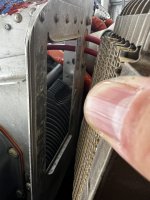
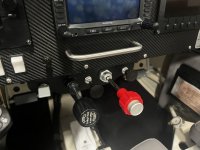
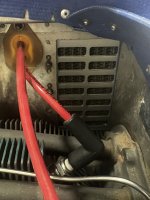
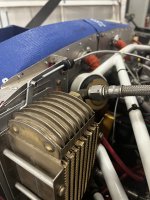
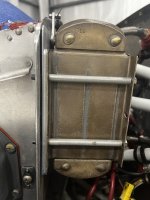
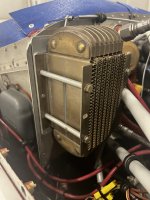

Anti-Splat says it allows more flow than the oil cooler can handle, so that fear may be unfounded.Even when fully open, shutters look like about half the air is still blocked. Not sure that would work for me.
I noticed that in their description as well. It may appear true based on their computer models, but no two RVs are exactly the same. What I’ve seen so far is temps which are slightly higher when full open. While it may allow more than enough volume, some sections of the cooler are blocked which I’m sure will increase the temp of the metal in those areas.Anti-Splat says it allows more flow than the oil cooler can handle, so that fear may be unfounded.
I would say volume passed isn’t everything. Turbulence, etc will likely decrease cooling efficiency as well.
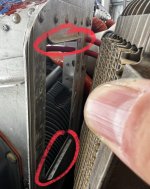
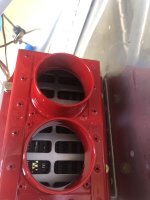
Regarding Anti-Splat installation...I borrowed this attachment to illustrate the curved lips on the plenum side that prevent the oil shutter from sitting flush. My solution was to flatten those out. Another solution would be to form a gasket to accommodate the thickness that those lips add. Either solution would be fine I'm sure. Be aware that the install will likely require four new mounting bolts of a length that will work with the additional thickness of the shutter, or the shutter plus thickness of those curved lips.

Yes, but...Anti-Splat says it allows more flow than the oil cooler can handle, so that fear may be unfounded.
Overall flow may exceed that of the heat exchanger; however depending on proximity to cooler inlet plane, the open shutter can can still blanket some of the fins.
As most process variables are fixed, HEx effectiveness relies almost exclusively on surface area. Negating/blanketing some of that will lower the heat xfer linearly/proportionally.
That said, the subject product has a good reputation. If any experienced oil temp rise isn't acceptable, a slight stand-off from the cooler would probably help a lot. It could be as simple as applying a thicker gasket between the shutter and cooler, depending on desired delta T recovery.
.....I would say volume passed isn’t everything. Turbulence, etc will likely decrease cooling efficiency as well.
Turbulation actually helps the heat xfer, though probably not very noticeable in such a short air circuit. You want any fluid boundary layers disturbed. The free stream molecules get closer to the metal surface and the subsequent warmer molecules mixed with the ones that haven't directly exchanged any energy.
There's your useless knowledge of the day.
Last edited:
Standoff is a very good recommendation/solution for those with higher temps IF you can afford the rearward clearance between the oil cooler and engine mount. Similar to the point I made in a post earlier in that air flow volume can’t be everything. Distribution and efficiency of said volume is a factor.Yes, but...
Overall flow may exceed that of the heat exchanger; however depending on proximity to cooler inlet plane, the open shutter can can still blanket some of the fins.
As most process variables are fixed, HEx effectiveness relies almost exclusively on surface area. Negating/blanketing some of that will lower the heat xfer linearly/proportionally.
That said, the subject product has a good reputation. If any experienced oil temp rise isn't acceptable, a slight stand-off from the cooler would probably help a lot. It could be as simple as applying a thicker gasket between the shutter and cooler, depending on desired delta T recovery.
Last edited:
I simply trimmed them off. I didn’t want to pull the dozen or so rivets holding it in place, and figured bending flat would transfer a lot of pressure on the surrounding aluminum if done while mounted to the baffle. Getting them perfectly flat would also be a challenge unless you removed to rework the metal on a flat surface. Did you remove the part to bend the tabs flat or managed with it mounted?Regarding Anti-Splat installation...I borrowed this attachment to illustrate the curved lips on the plenum side that prevent the oil shutter from sitting flush. My solution was to flatten those out. Another solution would be to form a gasket to accommodate the thickness that those lips add. Either solution would be fine I'm sure. Be aware that the install will likely require four new mounting bolts of a length that will work with the additional thickness of the shutter, or the shutter plus thickness of those curved lips.
View attachment 74215
I was confident in the product so I opted to trim them off and it worked well. Maybe 5 minutes, a dremel and a steady hand.
***One thing I forgot to mention. Just the shutter and gasket alone were enough to push the the oil cooler far enough rearward to where the engine mount became a clearance issue. I had to trim back the aft, inboard tab on the oil cooler to ensure clearance from the engine mount framework. This is visible in image 9670.
My A&P did the install. We talked about it and he ended up just bending them flat...worked out fine. I agree, cutting them off would have worked too.I simply trimmed them off. I didn’t want to pull the dozen or so rivets holding it in place, and figured bending flat would transfer a lot of pressure on the surrounding aluminum if done while mounted to the baffle. Getting them perfectly flat would also be a challenge unless you removed to rework the metal on a flat surface. Did you remove the part to bend the tabs flat or managed with it mounted?
I was confident in the product so I opted to trim them off and it worked well. Maybe 5 minutes, a dremel and a steady hand.
eta: sorry, should have added that they were bent flat while still riveted on. Combination of vise-grip, channel lock, and a hammer. Wasn't elegant, but it was effective.
Last edited:

I know that’s what they say, but on my -4 180HP, I noticed a slight (maybe 10 degrees?) increase in oil temp at wide open, compared to no shutter.Anti-Splat says it allows more flow than the oil cooler can handle, so that fear may be unfounded.
There’s a flat side and a not-so-flat side, so you can’t just flip it around or the arm may contact the engine baffles. Mounting it on the back of the cooler doesn’t really work as well as the front (so I’ve heard). My buddy recently mounted his with the lever down, this way pushing the knob IN will open the cooler (to keep the logic that knobs and levers in the cockpit go forward for takeoff) .For those that have installed one - Can the shutter be attached on the backside of the cooler? Can it also be mounted with the lever on the bottom?
I would mount it in front, but upside down, so you push the Knob IN to cool, pull out to warm up the oil.If it was on the backside and upside down, then it looks like the knob would perform as lever on top and forward mounted. I would how much reduction in performance would occur if rear mounted.

Mike S
Senior Curmudgeon
Methinks an extension that spaces the shutter back half an inch or so, and captures the perimeter soEven when fully open, shutters look like about half the air is still blocked. Not sure that would work for me.
no leakage occurs should help.
Basically you would be creating a plenum that allows all cooling fins to pass air, then throttling the outflow.

Mine is mounted on the backside and seems to function fine there.For those that have installed one - Can the shutter be attached on the backside of the cooler? Can it also be mounted with the lever on the bottom?

Mine is also on the backside and it does help keep the oil temp up. It may work better inside my plenum but I am satisfied in ow it works now.Mine is mounted on the backside and seems to function fine there.
Showplanes has their version too. https://showplanes.com/Item/OCV-01Kit
I close mine almost all the time. I did put a cable on it last month so if I flew from the coldest place on earth - Michigan to almost anywhere else and the temps got hot. It goes to the oil filler door. I hottest my oil has ever gotten is 183 on a real hot day climbing out of KDTN - Shreveport, on a hot, muggy day. Most of the time I struggle to get it to 160.
Attachments
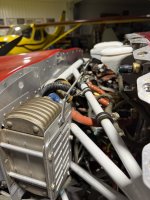
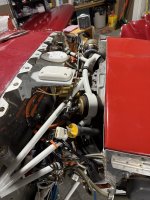
The shutter will work way better on the inlet side of the cooler. Well worth the time to change it.I close mine almost all the time. I did put a cable on it last month so if I flew from the coldest place on earth - Michigan to almost anywhere else and the temps got hot. It goes to the oil filler door. I hottest my oil has ever gotten is 183 on a real hot day climbing out of KDTN - Shreveport, on a hot, muggy day. Most of the time I struggle to get it to 160.
It may work better there but I tried an aluminum plate over the inside after trying aluminum tape. They did little to help keep the oil warmer. I wasnt going to install the shutter at all but had it so I put it on. It helped at least as much as the plate on the inside. Having the cable to open it is more convenient than having to remove the plenum to take the plate out in the summer.The shutter will work way better on the inlet side of the cooler. Well worth the time to change it.
I get the most help in the winter from taping over the cowling inlets. I can go about 25% coverage and still keep the CHT's good.
Mine is an Anti-Splat with Bowden cable....we mounted it upright as pictured and it works that way...."pull hotter".I would mount it in front, but upside down, so you push the Knob IN to cool, pull out to warm up the oil.
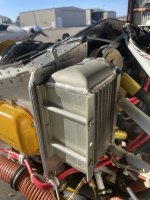
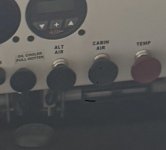
I tweak it maybe a couple of times a flight. It doesn't take much fiddling on my particular airplane to keep the oil temps between 165° and 195° F, even here in a climate that can have pretty extreme variability season-to-season, dat-to-day, even hour-by-hour. I don't feel compelled to be more obsessive than that.Another question for those with the shutter style, is it pretty much set and forget or do you adjust a little/lot when flying?
Curious if your plate blocked the cooler completely?It may work better there but I tried an aluminum plate over the inside after trying aluminum tape. They did little to help keep the oil warmer. I wasnt going to install the shutter at all but had it so I put it on. It helped at least as much as the plate on the inside. Having the cable to open it is more convenient than having to remove the plenum to take the plate out in the summer.
I get the most help in the winter from taping over the cowling inlets. I can go about 25% coverage and still keep the CHT's good.
The plate did not block it completely, but did cover about 2/3 of it. It was a full plate cut out sort of like an envelope with just the top and bottom triangle open. When I tried the aluminum tape first, I blocked half, then full on the inside of the plenum. Then I tried the plate. I am not suggesting the best place to mount the shutter is on the outside. I may move mine inside if I ever get warm temps and see if it helps. I wasnt going to mount it at all and just leave the plate on the inside but figured since I had it and I could open it if needed easily, why not.Curious if your plate blocked the cooler completely?
I was going to fly yesterday but it was barely 10 degrees and the heater is not up to that. I went to the airport this afternoon and the apron had drifted snow over it so I wimped out. The exhaust I have with the small heat muff just doesnt cut it when it is that cold. I wanted to try and tape over part the round inlets I have on my James cowl to see if I could get the oil temp up.

Sounds like you have a sweet spot depending on time of year and could pretty much leave it there? Reason for asking is I’m thinking of putting the control knob near the oil filler door like Rockwood did.I tweak it maybe a couple of times a flight. It doesn't take much fiddling on my particular airplane to keep the oil temps between 165° and 195° F, even here in a climate that can have pretty extreme variability season-to-season, dat-to-day, even hour-by-hour. I don't feel compelled to be more obsessive than that.
I confess that I don't pay much attention to adjusting it. The reason that I put the shutter in was because I was commonly running oil temps of 125° - 130° in fall/winter/spring. Summer ambient temps can be 80° - 90°, rarely approaching 100° so I still needed good airflow. I did not want to kludge a seasonal air blocker over the thing and thought that a variable oil shutter would be a lot more elegant and convenient than duct taping a piece of cardboard over the outlet.Sounds like you have a sweet spot depending on time of year and could pretty much leave it there? Reason for asking is I’m thinking of putting the control knob near the oil filler door like Rockwood did.

I mounted mine on the back. It worked well. However, at about 800 hours it self destructed. The actuator pins wore out the holes in the plates.
I removed it and just tape off the cooler in the winter now.
There were very few times I actually used the shutter other than “open”, most of the year, or “closed” in the winter.
My oil runs cool.
I removed it and just tape off the cooler in the winter now.
There were very few times I actually used the shutter other than “open”, most of the year, or “closed” in the winter.
My oil runs cool.

You mean like this?***One thing I forgot to mention. Just the shutter and gasket alone were enough to push the the oil cooler far enough rearward to where the engine mount became a clearance issue. I had to trim back the aft, inboard tab on the oil cooler to ensure clearance from the engine mount framework. This is visible in image 9670.
Attachments
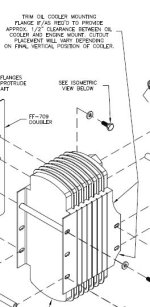
Yes.You mean like this?
For mine it’s closed on startup and ground ops, open for takeoff/climb, mostly closed at cruise and close during descent/approach. Sometimes I fiddle with it a little during cruise, but it’s not necessaryAnother question for those with the shutter style, is it pretty much set and forget or do you adjust a little/lot when flying?
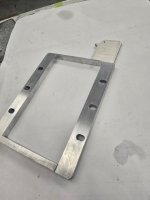
I also had the thought of the Anti-Splat shutter being directly mounted up against the cooler causing partial blockage. So I had a plate machined from 3/8” aluminum to raise the shutter and allow air to fully enter all the fins in the cooler. Also I calculated the total open area of the shutter and found that area is more than the area of the two round air inlets. I just did this so I don’t yet have any temp data. I also have to seal around the cable where it penetrates the firewall! This is in my RV-6.I noticed that in their description as well. It may appear true based on their computer models, but no two RVs are exactly the same. What I’ve seen so far is temps which are slightly higher when full open. While it may allow more than enough volume, some sections of the cooler are blocked which I’m sure will increase the temp of the metal in those areas.
I would say volume passed isn’t everything. Turbulence, etc will likely decrease cooling efficiency as well.
Attachments
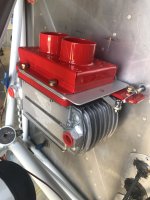
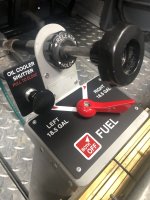
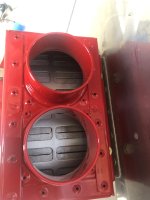

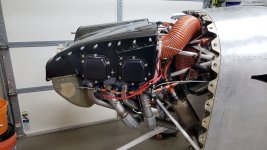
My RV-7A came equipped an earlier version of the Anti Splat shutter. I was originally based in MI but moved to OH.
I have flown in temps ranging from 0F all the way up to the 90's. Even with the shutter completely closed, it is still would struggle to maintain adequate oil temps. The last time I flew in the extreme cold, it was -2F ambient, and the OAT was -14F at altitude. The highest oil temp I could get, even with aggressive throttle settings and the shutter closed, was 125 degrees. The difference with the shutter was more pronounced when ambient temps were in the 20-40 degree range.
In terms of high ambient temps, I do think the shutter restricts airflow somewhat. I have had oil temps up to 205-210F when ambient temps were in the 90's, and this did limit max effort climbs.
I have not found the need to fiddle with in flight at all. It is basically closed in the winter (Nov-Mar) and opened any other time.
The shutter does require lubrication. If not, it gets sticky.
Given I rarely open in winter, and never close in summer, I could easily get away with just taping the oil cooler inlet in winter. The shutter also does not address over cooling of the cylinders in extreme cold, for which taping of the cowling inlets is required anyways.
I have flown in temps ranging from 0F all the way up to the 90's. Even with the shutter completely closed, it is still would struggle to maintain adequate oil temps. The last time I flew in the extreme cold, it was -2F ambient, and the OAT was -14F at altitude. The highest oil temp I could get, even with aggressive throttle settings and the shutter closed, was 125 degrees. The difference with the shutter was more pronounced when ambient temps were in the 20-40 degree range.
In terms of high ambient temps, I do think the shutter restricts airflow somewhat. I have had oil temps up to 205-210F when ambient temps were in the 90's, and this did limit max effort climbs.
I have not found the need to fiddle with in flight at all. It is basically closed in the winter (Nov-Mar) and opened any other time.
The shutter does require lubrication. If not, it gets sticky.
Given I rarely open in winter, and never close in summer, I could easily get away with just taping the oil cooler inlet in winter. The shutter also does not address over cooling of the cylinders in extreme cold, for which taping of the cowling inlets is required anyways.
