Van's Air Force

The definitive Van's Aircraft support community! Buying, building or flying an RV? Join our exclusive family of mentors and enthusiasts!

Aero LEDs connectors / missing Molex Housings

MechaSteve

Well Known Member
I am working on the landing lights and it seems there is something missing. Either documentation, or connector parts.

The wiring harness for the wing lights (WH-00032 and WH-00033) has Molex 0.093” style pins. I believe for Molex 1490 series connectors.

The Aero LEDs landing light comes with a different style Molex connector, MX150 style.

Are there 093 style pin that should be in the lighting kit along with housings, or am I supposed to cut and replace the pins on the wiring harness?
 
I cut them off and crimped on new terminals. I found the Molex connectors that AeroLED supplies were physically very large, and extremely difficult to insert the pins in correctly. I trashed them and used Molex Squba connectors, which are watertight, compact, and rated to carry 2.5x the amps drawn by the lights. Sourced from Digikey.
 
I am debating the merits of sealed connectors.

I can replace all of the connectors with Mini-Fit-Jr connectors, and I have the correct crimper.
Mini-Fit-Jr is not sealed, but neither are the connectors originally specified.
With gold pins these would be about $5 per pair.

The next most economical option overall looks like Switchcraft Micro-Con-X connectors or Mini-Con-X.
These might be bulkier, but they are proper sealed twist-lock connectors, and I believe they can be crimped with a round d-sub crimper.
these would be more expensive at $16-19 per pair.

It looks like the correct crimping tool for the MX150, MXP120, Squba, or even the original 093 crimps would be $100-200.
 
Everyone has their preference but I've become a fan of the JReady Deutsch knock-off connectors. Specifically, the ones with closed barrel "solid" contacts. Waterproof, secure and super simple to crimp.

That said, I've owned and ridden KTM's in all kinds of weather and water for years. These bikes are loaded with basic, old school unsealed Molex connectors and they've never been the source of a problem.

But the Deutsch style connectors make me sleep better at night.
 
I have used the cheaper crimpers before, and they work fine for JST connectors, but the molex connectors are designed for overlapping round crimping on the insulation.

I looked at the JRready connectors, but I found Pro Wire USA had slightly better options.

From what I can tell Pro Wire seems to have something closer to the name brand TE Connectivity contacts. They list the DTM #20 contacts as working with 18-22AWG which covers the wires for the lights.

Plus, Pro Wire sells a cheap economy crimper.
 
First thing I do with any provided Molex open connector is throw them in the trash and then pull out my Deutsch connectors. DT or DTM depending on current rating. They are amazing, weather sealed, reliable and can be un-pinned with a small flat-tipped screwdriver.
 
Yep. I’m convinced. I got some JRready gold pins that I ordered from Amazon today.

The 18 AWG wire definitely fits in the #20 contacts.
 
I have used the cheaper crimpers before, and they work fine for JST connectors, but the molex connectors are designed for overlapping round crimping on the insulation.

I looked at the JRready connectors, but I found Pro Wire USA had slightly better options.

From what I can tell Pro Wire seems to have something closer to the name brand TE Connectivity contacts. They list the DTM #20 contacts as working with 18-22AWG which covers the wires for the lights.

Plus, Pro Wire sells a cheap economy crimper.
I wanted to use the DTM #20 for the elevator servo trim, but I saw that Ray Allen uses 24 awg. Not sure why but it seems with the criticality of making a good connection they could have sprung for the extra micro-gram of weight and used 22 awg. I tested both 24 and 26 awg wire using the pull-tug test (Instron back in Indiana) and passed. This is with the JD ready tooling and pins.
 
I wanted to use the DTM #20 for the elevator servo trim, but I saw that Ray Allen uses 24 awg. Not sure why but it seems with the criticality of making a good connection they could have sprung for the extra micro-gram of weight and used 22 awg. I tested both 24 and 26 awg wire using the pull-tug test (Instron back in Indiana) and passed. This is with the JD ready tooling and pins.
If I understand you right, then you could use a #20 connector with smaller awg by taking the 24 or 26 and stripping twice the normal length and then folding the stripped wire back over itself to double the crimped area thickness.
 
If I understand you right, then you could use a #20 connector with smaller awg by taking the 24 or 26 and stripping twice the normal length and then folding the stripped wire back over itself to double the crimped area thickness.
Sorry, passed is not very clear. My order of attempts was going to be:
1) Strip the required ~ 1/4 in for the 26 awg and test
2) Strip as in 1 but tin and soldier the stripped end:
3) Strip the required ~ 1/2 in and fold it back and squeeze and test

The 26 awg stripped ~ 1/4 in. and squeezed (I did squeeze twice on the barrel about 1/16 of an in apart) passed the pull test perfectly.
 
When the quality of the connection might be suspect (due to potentially insufficient AWG), assuming you are set up to do soldering, is it preferable to "solder join" to a more robust wire AWG/type, and then put the connection on the new wire?
 
Everyone has their preference but I've become a fan of the JReady Deutsch knock-off connectors. Specifically, the ones with closed barrel "solid" contacts. Waterproof, secure and super simple to crimp.

That said, I've owned and ridden KTM's in all kinds of weather and water for years. These bikes are loaded with basic, old school unsealed Molex connectors and they've never been the source of a problem.

But the Deutsch style connectors make me sleep better at night.
I totally agree. I installed the Molex connectors with the AeroLed lights. The very first time I have any issue I plan to replace those with the Deutsch style. In fact I have already purchased them to have them available.
 
Sorry, passed is not very clear. My order of attempts was going to be:
1) Strip the required ~ 1/4 in for the 26 awg and test
2) Strip as in 1 but tin and soldier the stripped end:
3) Strip the required ~ 1/2 in and fold it back and squeeze and test

The 26 awg stripped ~ 1/4 in. and squeezed (I did squeeze twice on the barrel about 1/16 of an in apart) passed the pull test perfectly.
I would be careful with #2. Solder is not necessarily always better. If you tin the stripped end with solder you could cause a hard point stress-wise where the solder ends and the stranded copper continues. Since Deutsch (like Dsubs) pins and sockets are designed to have a small amount of bare wire conductor between the crimped pin and wire insulation without strain relief it's a gotcha. That would be the area where a soldered joint interface could break over time. It's a fatigue failure due to vibration. Many of the ultralight aircraft accidents that occurred when they first came out were attributed to soldered wire connections. While it seemed like a good idea to solder everything in sight there were the aforementioned fatigue failures due to vibration without proper strain relief. The type of pins we are discussing do not have the proper geometry for strain relief provisions. This bare conductor section below the pin combined with the backshell clamping provides approved strain relief.
 
I would be careful with #2. Solder is not necessarily always better. If you tin the stripped end with solder you could cause a hard point stress-wise where the solder ends and the stranded copper continues.

+1. This is well known in the marine/boating world, where soldered joints are never recommended due to vibration-induced failure.
 
I would be careful with #2. Solder is not necessarily always better. If you tin the stripped end with solder you could cause a hard point stress-wise where the solder ends and the stranded copper continues. Since Deutsch (like Dsubs) pins and sockets are designed to have a small amount of bare wire conductor between the crimped pin and wire insulation without strain relief it's a gotcha. That would be the area where a soldered joint interface could break over time. It's a fatigue failure due to vibration. Many of the ultralight aircraft accidents that occurred when they first came out were attributed to soldered wire connections. While it seemed like a good idea to solder everything in sight there were the aforementioned fatigue failures due to vibration without proper strain relief. The type of pins we are discussing do not have the proper geometry for strain relief provisions. This bare conductor section below the pin combined with the backshell clamping provides approved strain relief.
Sorry, passed is not very clear. My order of attempts was going to be:
1) Strip the required ~ 1/4 in for the 26 awg and test
2) Strip as in 1 but tin and solder the stripped end:
3) Strip the required ~ 1/2 in and fold it back and squeeze and test

The 26 awg stripped ~ 1/4 in. and squeezed (I did squeeze twice on the barrel about 1/16 of an in apart) passed the pull test perfectly.


Was not saying option 2 was better. I really like Duetsch (Or JD Ready) DT and DTM connectors using the barrel connectors. Since they rate DTM's down to 22 awg and Ray Allen uses 24 awg wanted to evaluate the options. Since option 1 worked well and the preferred option (no soldier) evaluation over. Since we all know solder causes brittleness wanted to now find out the impact. I stripped to the appropriate length 2 26 awg wires soldiered and then crimped both using a single crimp. Bent both 90 degrees at the interface of the barrel and wire and one broke at 84 and the other 88 bends. Not really a difference and was surprised. My thought was it's possible the soldered one did not wick up to the insulation, so this time stripped 4 wires stripping an additional 1/4 in to insure there was solder on 2 of the wires) at the barrel to wire interface. Did the same test and the 2 with solder broke at ~ 50% of the bends the 2 with no solder. So obviously the solder does make it more brittle. Next, I repeated the test stripping the correct length and solder one crimped both and mounted in a DTM 2 conductor connector. Since the Duetsch connector snubber holds the interface to pin a little over 1/4 in. further back wanted to see if bending at the end made a difference. I bent the leads 90 degrees back and forth (180 degrees total) and after 500 bends still holding. Would I solder if I don't need to, why take a chance but I am convinced in a DTM connector I would not have an issue.

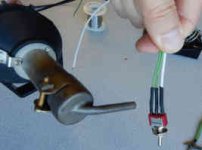
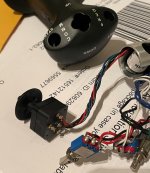
As a side comment most if not all of our stick grip micro-switches are soldered and that area the switches are exposed to a decent amount of vibration. Sometimes we don't have a choice and need to evaluate.
 
Last edited:
As a side comment most if not all of our stick grip micro-switches are soldered and that area the switches are exposed to a decent amount of vibration. Sometimes we don't have a choice and need to evaluate.

Yes. Good observation. However most soldered wires as used on switches and the like are covered by heat shrink that provides for strain relief by gripping not only the terminal but also gripping to the wire insulation. Dsubs, Deutsch, Weatherpack and Molex pins and sockets do not accommodate heat shrink over the crimped pins lest they not insert into the connector. Most rely on the backshell clamp or silicon inserts for relief except the simple Molex. As you point out it's not germane now since you are doing the fold-over method.
 
Yes. Good observation. However most soldered wires as used on switches and the like are covered by heat shrink that provides for strain relief by gripping not only the terminal but also gripping to the wire insulation. Dsubs, Deutsch, Weatherpack and Molex pins and sockets do not accommodate heat shrink over the crimped pins lest they not insert into the connector. Most rely on the backshell clamp or silicon inserts for relief except the simple Molex. As you point out it's not germane now since you are doing the fold-over method.
Can you provide pics of your micro switches in your stick grip with strain relief? Mine are from a well-known experimental stick grip supplier and do not have this feature I'm pretty sure. (certain)
 
Last edited:
Can you provide pics of your micro switches in your stick grip with strain relief? Mine are from a well-known experimental stick grip supplier and do not have this feature I'm pretty sure. (certain)
It's called heat shrink.
Heat shrinking.jpg
 
Back
Top